
Bright, playful, and unexpectedly wholesome — these Easter eggs hide a creamy center made from cottage cheese and peanut butter, then wear a glossy chocolate coat.
They’re quick to make, fridge-set, and perfect for a weekend project with kids or a protein-rich treat for snack time.
If you want an Easter candy that balances nostalgia with nourishment, this one hits the mark.
Try it when you want something different from the usual store-bought candy.
Biscoff cookie butter cheesecake cookies make a fun pairing for a spring dessert board.
Why You’ll Love This Cottage Cheese and Peanut Butter Easter Eggs
- Protein-packed and satisfying without being heavy.
- Kid-friendly texture that holds shape when chilled.
- Uses pantry staples you likely already have.
- Easily customizable for diet needs and flavor preferences.
- Quick assembly with no baking required.
- Great make-ahead snack for holiday gatherings.
The flavor is a sweet-savory mashup: tangy cottage cheese softens the richness of natural peanut butter while honey and vanilla round the edges. The powdered sugar creates a smooth, slightly powdery interior that contrasts with the crisp chocolate shell. Expect a creamy, slightly grainy center that melts on the tongue against a firm outer shell.
"I was skeptical at first, but these are now my go-to Easter treat — creamy, not too sweet, and my kids loved decorating them. Five stars!" — real reader
Key Ingredients for Cottage Cheese and Peanut Butter Easter Eggs
Cottage cheese — Full-fat small-curd cottage cheese gives the best creamy structure and mouthfeel. Choose fresh, high-quality cottage cheese; low-fat versions can be runnier and produce a less stable center. If you substitute Greek yogurt, expect a tangier, looser filling that may need more powdered sugar to firm up.
Natural peanut butter — The oil-separated, no-sugar-added type keeps flavor pure and lets you control sweetness. Stir it well before measuring; a smooth, well-mixed peanut butter blends more evenly. If you use a sweetened or stabilized peanut butter, reduce the honey or powdered sugar to avoid over-sweetness.
Powdered sugar — This provides structure and the classic melt-in-your-mouth sweetness while absorbing excess moisture. Sift it as you add to prevent lumps and ensure an even, creamy texture. Using a granulated sugar or an un-sifted substitute will lead to a gritty or loose center.
Chocolate chips — Semi-sweet or milk chocolate chips melt smoothly and set into a shiny shell when tempered using a bit of coconut oil. Choose high-quality chocolate for better snap and sheen. If you swap for candy melts, the result will be brighter and easier to color, but may taste waxier.
If you enjoy a contrast between creamy confections and tender cookies, compare textures with my brown butter pecan toffee cookies.
Full Ingredient List for Cottage Cheese and Peanut Butter Easter Eggs
- 1 cup cottage cheese
- 1/2 cup natural peanut butter
- 1/4 cup honey or maple syrup
- 1 teaspoon vanilla extract
- 1 1/2 cups powdered sugar
- 1 cup chocolate chips
- 1 tablespoon coconut oil (optional)
- Colorful sprinkles (optional)
Step-by-Step Instructions for Cottage Cheese and Peanut Butter Easter Eggs
Step 1: Combine the wet ingredients
In a mixing bowl, combine cottage cheese, natural peanut butter, honey or maple syrup, and vanilla extract. Mix with a hand mixer or sturdy spoon until the mixture is as smooth as possible.
Pro Tip: The mixture should look homogenized with no large white curds and should smell slightly sweet and nutty.
Step 2: Add powdered sugar gradually
Gradually add powdered sugar and stir until fully incorporated, forming a thick, creamy mixture. Use a spatula to press out any remaining lumps and reach a uniform texture.
Pro Tip: The mixture should feel firm to the touch and pull cleanly from the spatula without dripping.
Step 3: Shape into eggs
Scoop portions and shape the mixture into egg shapes with clean, slightly damp hands. Place each egg on a parchment-lined baking sheet for easy transfer to the fridge.
Pro Tip: Each egg should hold its shape and show smooth seams from your fingers; if it’s sticky, dust your hands lightly with powdered sugar.
Step 4: Chill to firm
Refrigerate for about 30 minutes to firm up the shaped eggs. Chilling makes them much easier to coat in chocolate without losing shape.
Pro Tip: After chilling, the eggs should be cool to the touch and slightly firm when gently pressed.
Step 5: Melt chocolate
While the eggs are chilling, melt chocolate chips with coconut oil in 20–30 second bursts in the microwave, stirring between bursts, or use a double boiler to avoid scorching.
Pro Tip: The melted chocolate should be glossy and pourable, not clumpy or grainy.
Step 6: Dip the eggs in chocolate
Dip each chilled egg into the melted chocolate until fully coated, using a fork or dipping tool. Tap off excess chocolate and return to the parchment-lined sheet.
Pro Tip: The chocolate should coat smoothly, forming an even layer that drips off slowly when you lift the egg.
Step 7: Decorate while wet
Optional: Before the chocolate sets, sprinkle with colorful sprinkles or drizzle contrasting chocolate for decoration. Work quickly to ensure decorations stick.
Pro Tip: Sprinkles should sit on the surface and not sink; if they sink, your chocolate is too warm and runny.
Step 8: Set the chocolate
Allow the chocolate to harden in the fridge for another 15–20 minutes before serving. Once set, store or serve immediately.
Pro Tip: The finished eggs should have a firm, slightly shiny shell that gives way to a creamy interior when bitten.
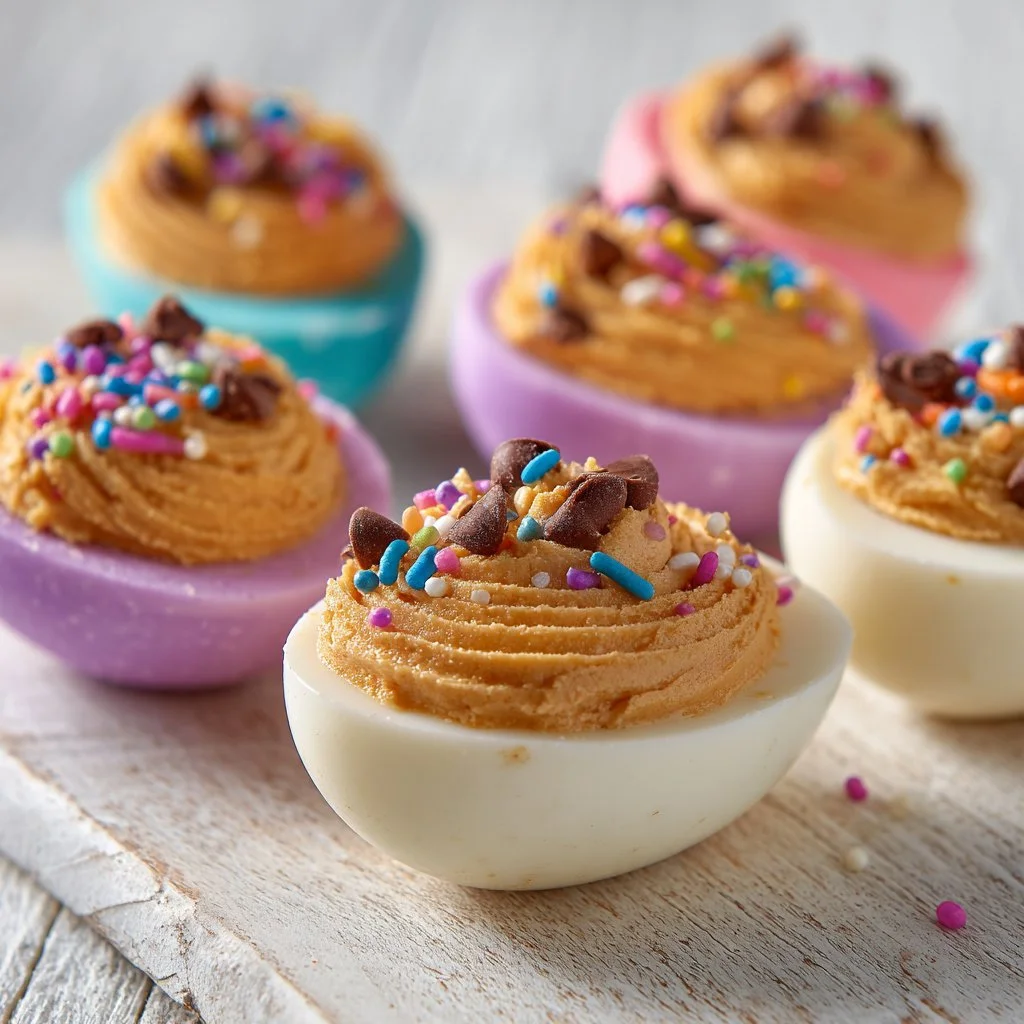
Expert Tips for Cottage Cheese and Peanut Butter Easter Eggs
- Temperature tip: Keep cottage cheese and peanut butter at cool room temperature or slightly chilled for easier blending. Warm ingredients can make the filling too loose.
- Texture troubleshooting: If the filling feels grainy after mixing, beat a little longer or process in a food processor for 10–15 seconds to smooth curds.
- Sweetness balance: Taste before adding all the powdered sugar; if using a sweetened peanut butter, reduce powdered sugar by 1/4 cup.
- Chocolate tempering tip: Add 1 tablespoon of coconut oil to every cup of chocolate chips to loosen the chocolate for dipping and to improve shine.
- Equipment tip: Use a small cookie scoop to portion equal eggs for uniform size and consistent chilling and coating.
- Common mistake: Dipping eggs that aren’t cold enough will cause them to collapse; always chill first.
- Visual cue tip: When tapping off chocolate from the fork, look for a thick, even drip — that indicates the chocolate is at the right viscosity.
- Storage prep: Place eggs on a silicone mat or parchment to prevent sticking and to preserve the shell finish.
For a bright, buttery cookie contrast, try serving alongside buttery shortbread sprinkle bites.
Storage & Freezing for Cottage Cheese and Peanut Butter Easter Eggs
Fridge storage: Store eggs in an airtight container in a single layer with parchment between layers. They keep best for 5–7 days refrigerated.
Freezer storage: Freeze on a baking sheet until solid, then transfer to a freezer-safe container or resealable bag with parchment between layers. Properly stored, they last 2–3 months.
Thawing: Thaw overnight in the fridge for best texture. Avoid room-temperature thawing as moisture can condense on the chocolate shell.
Reheating: No reheating needed; bring to fridge-cool serving temperature for 10–15 minutes before serving if too cold. Use a shallow, airtight container or clamshell to prevent odor transfer.
For more nostalgic candy ideas, you might also enjoy my take on authentic Irish potato candy.
Variations & Substitutions for Cottage Cheese and Peanut Butter Easter Eggs
Almond butter filling — Swap natural peanut butter for almond butter for a milder, slightly sweeter nut profile. The texture will be similar, but flavor shifts to a nuttier, slightly floral note.
Chocolate-free coating — Roll the chilled eggs in crushed nuts, cacao nibs, or shredded coconut instead of dipping in chocolate. This creates a crunchy exterior and keeps the treat lower in refined sugar.
Maple and cinnamon twist — Use maple syrup instead of honey and add 1/4 teaspoon ground cinnamon to the filling. This gives a warming, autumnal flavor that complements peanut butter nicely.
Protein-boosted version — Stir in a tablespoon of unflavored or vanilla protein powder and reduce powdered sugar by 2–3 tablespoons to maintain firmness. Expect a slightly denser texture and more satiety.
Frequently Asked Questions About Cottage Cheese and Peanut Butter Easter Eggs
What cottage cheese is best for these Easter eggs?
Small-curd, full-fat cottage cheese yields the creamiest, most stable filling. Low-fat or large-curd varieties can make the mixture watery or uneven. If you only have large-curd, pulse it in a food processor to break down the curds before mixing.
Can I make these ahead for a party?
Yes — make them 2–3 days in advance and store in an airtight container in the fridge. For longer storage, freeze them up to 2–3 months and thaw overnight in the fridge before serving.
How do I prevent the chocolate from cracking when bitten?
Ensure a thin, even chocolate coating and avoid dropping the eggs from height when transferring. A slightly warmer chocolate will adhere better; add a teaspoon of coconut oil to smooth the shell and reduce brittleness.
Are these safe for kids with nut allergies?
Not with peanut butter. Try sunflower seed butter or soy nut butter as a peanut-free substitute, and check for cross-contact in your ingredients. The texture and flavor will change but the method remains the same.
Can I make mini versions for bite-sized treats?
Yes — use a small cookie scoop to portion and reduce chilling time slightly. Smaller sizes will firm faster and may require a more delicate touch when dipping.
Final Thoughts on Cottage Cheese and Peanut Butter Easter Eggs
These Cottage Cheese and Peanut Butter Easter Eggs offer a refreshing twist on candy: creamy, protein-rich centers wrapped in chocolate for a satisfying bite. If you try them, please leave a star rating in the recipe card below and pin this recipe to Pinterest for future holidays.
Find more background and a similar riff at It Works! Cottage Cheese & Peanut Butter Easter Eggs, compare technique notes with a saved version at Cottage Cheese & Peanut Butter Easter Eggs – Cooked, or explore a three-ingredient alternative idea at Easy 3 Ingredient PB Fit Peanut Butter Easter Eggs Recipe.

Cottage Cheese and Peanut Butter Easter Eggs
Ingredients
Method
- In a mixing bowl, combine cottage cheese, natural peanut butter, honey or maple syrup, and vanilla extract. Mix until smooth.
- Gradually add powdered sugar and stir until fully incorporated, forming a thick mixture.
- Scoop the mixture into egg shapes and place on a parchment-lined baking sheet.
- Refrigerate for about 30 minutes to firm up.
- While the eggs are chilling, melt chocolate chips with coconut oil until glossy and pourable.
- Dip each chilled egg into the melted chocolate until fully coated, tapping off excess.
- Before chocolate sets, add sprinkles or decoration if desired.
- Allow the chocolate to harden in the fridge for 15–20 minutes before serving.