
A warm, braided loaf cooling on the counter is one of the simplest comforts.
This Best Challah Bread Recipe makes two large loaves with a chewy crumb and glossy, golden crust.
It’s a beginner-friendly recipe that rewards a little patience with unbelievable flavor.
You’ll love the braiding ritual as much as the slices you tear away.
Why You’ll Love This Best Challah Bread Recipe
– Rich, eggy crumb that’s tender but not dense.
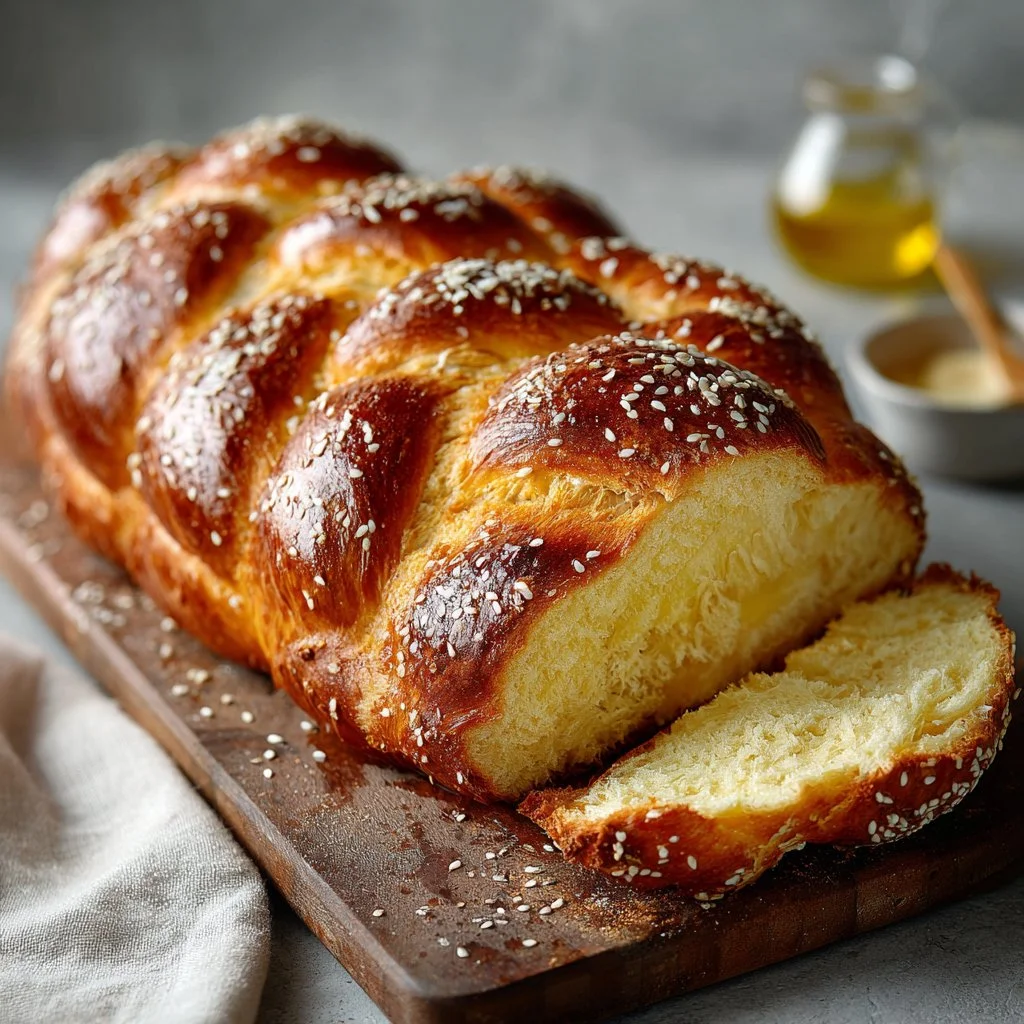
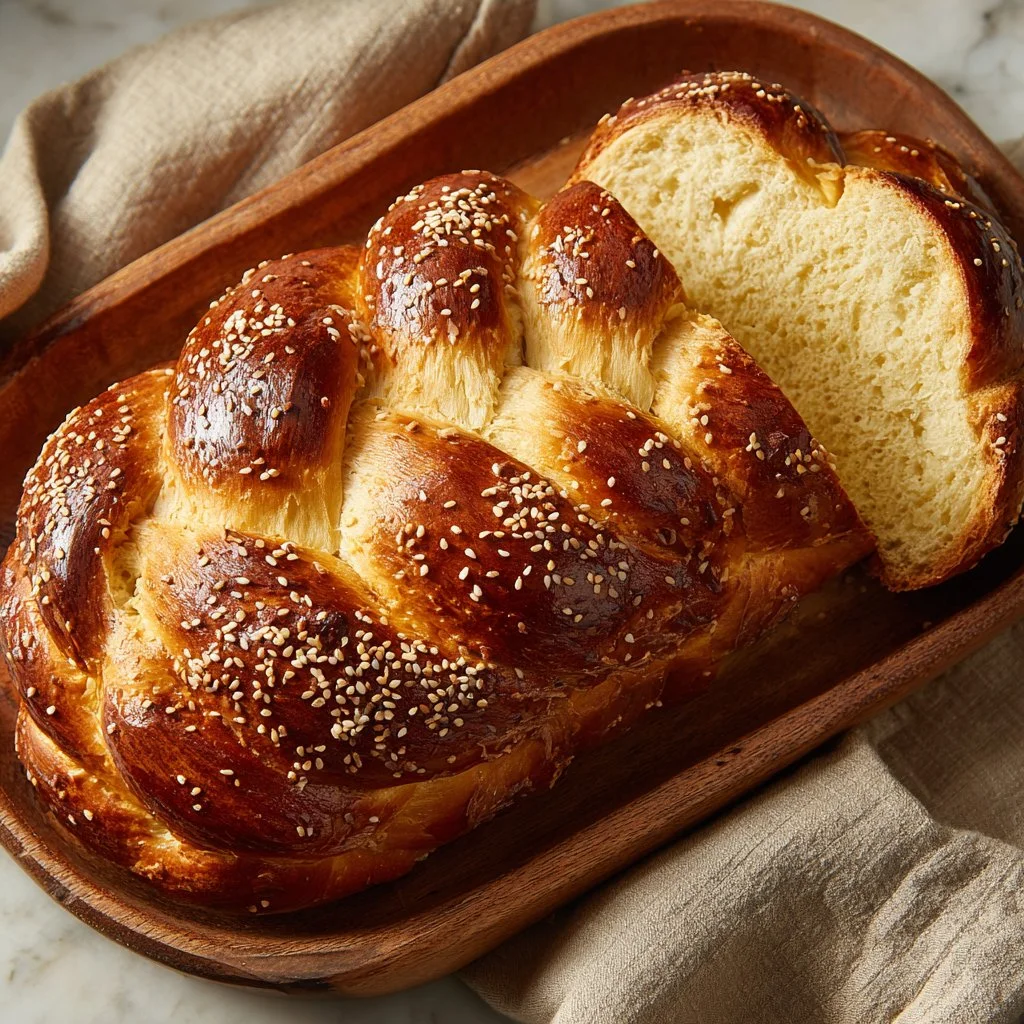
– Shiny, crackly crust after an egg wash.
– Makes two loaves — one to eat and one to freeze or turn into french toast.
– A forgiving dough that tolerates short variations in rising time.
– Versatile for sweet or savory finishes like sesame seeds.
– Great for novice and experienced bakers alike.
– Braiding is therapeutic and impressive for guests.
This loaf tastes slightly sweet with a soft, pillowy interior and a chewy crust that snaps when you slice into it. The texture comes from the eggs and oil, while the long knead and rise build structure and flavor.
“I’ve made dozens of breads and this Best Challah Bread Recipe is the one my family asks for again and again — perfectly golden and so tender. 5 stars!”
Key Ingredients for Best Challah Bread Recipe
Active dry yeast
Active dry yeast is the engine of the dough; it creates the gas that lifts the loaf and develops flavor. Buy fresh yeast and check the expiration date — old yeast yields slow or no rise. If you must substitute, instant yeast can be used at about 25% less by weight and mixed directly with flour; adjust proofing cues rather than strict times.
Large eggs
Eggs add fat, structure, and richness; they tenderize the crumb and give the dough deep color after baking. Use large eggs at room temperature so they incorporate evenly. Replacing eggs with a vegan substitute will change texture significantly — the dough may be less elastic and the crumb denser.
All-purpose flour
All-purpose flour provides the gluten network that traps gas and yields an open but stable crumb. Use a reliable brand and measure by weight if possible for consistency. Swapping whole-wheat will produce a nuttier flavor and firmer crumb; use up to 25% whole-wheat to avoid a heavy loaf.
Vegetable oil
Neutral vegetable oil keeps the crumb tender without adding competing flavors. It also improves shelf life and keeps slices soft for toast. You can substitute melted butter for a richer flavor, but expect a slightly firmer crust and a butterier taste.
Full Ingredient List for Best Challah Bread Recipe
– 1 ¾ cups warm water
– 1 ½ tablespoons active dry yeast
– ½ cup sugar (plus 1 tablespoon extra for proofing the yeast)
– ½ cup vegetable oil
– 4 large eggs (lightly beaten + 1 additional egg for an egg wash)
– 1 tablespoon salt
– 8 to 8½ cups all-purpose flour (plus extra for kneading/dusting)
– Sesame seeds (for dusting — optional)
Step-by-Step Instructions for Best Challah Bread Recipe
Step 1: Proof the yeast
Dissolve 1 ½ tablespoons active dry yeast in 1 ¾ cups lukewarm water with 1 tablespoon of the sugar in a large mixing bowl. Wait about 5 minutes until the surface is visibly foamy and has that yeasty aroma. This confirms the yeast is active and will predict a good rise.
Pro Tip: Look for a thick, bubbly foam and a slightly boozy, bready smell — that’s a healthy proof.
Step 2: Mix the wet ingredients
Stir the remaining ½ cup sugar, ½ cup vegetable oil, and 4 lightly beaten eggs into the proofed yeast mixture, then add 1 tablespoon salt. Mix until the liquids are homogeneous before adding flour.
Pro Tip: The mixture should look silky with no streaks of oil; it will smell sweet and yeasty.
Step 3: Add the flour and form a soft dough
Gradually add 8 to 8½ cups all-purpose flour, about 1 cup at a time, mixing until a soft, slightly tacky dough forms. Stop adding flour once the dough clears the sides of the bowl and becomes cohesive.
Pro Tip: The dough should pull away from the bowl but still feel slightly tacky when you touch it — not dry or crumbly.
Step 4: Knead until smooth
If your mixer is small, turn the dough onto a lightly floured surface and finish kneading by hand. Knead until smooth and elastic, about 8–12 minutes by hand. Clean out and lightly oil the mixing bowl before returning the dough.
Pro Tip: The dough should feel elastic and spring back when pressed; it will be soft but not sticky.
Step 5: First rise
Cover the oiled bowl with plastic wrap and place it in a warm, draft-free spot for about 1 hour, until almost doubled in size. Temperature and yeast activity can shift this time, so watch for volume rather than the clock.
Pro Tip: The dough should nearly double and retain a slight indentation when gently poked.
Step 6: Punch down and second rise
Punch the dough down by pressing your fist into the center, then re-cover and let it rise again for about 30 minutes. This evens out the crumb and rests the gluten for shaping.
Pro Tip: The dough will relax and flatten slightly; it should feel airy and soft.
Step 7: Divide and roll for braiding
Divide the dough in half for two loaves. Then divide each half into 6 equal pieces and roll into strands about 16 inches long. Place the strands side by side and pinch the tops together to start the braid.
Pro Tip: Strands should be uniform thickness and spring back slightly when stretched; if they tear, let them rest 5 minutes and try again.
Step 8: Braid the 6-strand loaf
Start with the outside right strand, move it over 2 strands to the left, then take the second strand from the left and move it all the way across to the far right. Continue the pattern — outside right over two, second from left across, outside left over two, second from right across — until braided. Tuck ends under and reshape to plump the loaf so it’s shorter and wider.
Pro Tip: The braid should hold its form; as you “plump” it, aim for an even height and tidy ends.
Step 9: Prepare for final rise and egg wash
Place loaves on a parchment-lined sheet with at least 2 inches between them. Beat the reserved egg and brush half on the loaves, getting into crevices and down the sides. Let the loaves rise another hour in a warm place, then brush again with the remainder of the egg wash and sprinkle sesame if you like.
Pro Tip: The egg wash should make the surface glossy and slightly tacky before baking; the loaves should puff noticeably during this rise.
Step 10: Bake and finish
Preheat the oven to 375°F. Bake the loaves for 30–35 minutes until deeply golden brown or until an instant-read thermometer reads 190°F. Cool briefly and enjoy one warm with butter; reserve the second for outstanding french toast.
Pro Tip: The finished crust will be a deep golden brown and sound hollow when tapped on the bottom.
Expert Tips for Best Challah Bread Recipe
– Keep liquids around 100–110°F for proofing to activate yeast without killing it; colder delays rise and hotter can kill yeast.
– If the crumb is gummy, the dough was underbaked or not allowed to cool; check internal temp and rest loaves before slicing.
– If your dough tears while braiding, let the strand rest for 5–10 minutes to relax the gluten.
– Use a scale for consistent results; flour volume varies by brand and humidity.
– If your mixer struggles, finish kneading by hand on a floured surface to avoid overheating the motor.
– Avoid adding too much flour during kneading — aim for tacky, not dry dough, to get a tender crumb.
– Common mistake: rushing rises; underproofed challah will be tight and dense. Watch volume cues, not only the clock.
– For the best sheen, apply two thin egg-washes rather than one heavy coat — more even color and fewer drips.
Storage & Freezing for Best Challah Bread Recipe
For short-term storage, keep a cooled loaf in a paper bag inside a sealed container or bread box at room temperature up to 2 days. For longer fridge storage, tightly wrap slices in plastic wrap and store in an airtight container for up to 5 days, though refrigeration can dry bread faster.
To freeze, wrap loaves tightly in plastic wrap, then foil, and place in a freezer bag for up to 3 months. Slice before freezing for easy use; pulled slices thaw quickly.
To thaw, move wrapped loaf or slices to the fridge overnight or leave on the counter for 1–2 hours. Reheat whole or slices in a 325°F oven for 10–15 minutes until warm, or toast slices directly for a crisp edge.
Variations & Substitutions for Best Challah Bread Recipe
– Honey-sweetened challah: Replace ¼ to ½ cup of the sugar with honey and reduce the water by a tablespoon or two. The loaf will have a deeper, floral sweetness and a slightly darker crust.
– Whole wheat blend: Substitute up to 25–30% of the all-purpose flour with whole-wheat flour and add a tablespoon more water if dough feels dry. Expect a nuttier flavor and firmer crumb.
– Raisin or chocolate chip challah: Fold 1 to 1½ cups raisins or chocolate chips into the dough after the first rise and before shaping. This yields a sweeter, dessert-like loaf perfect for breakfast.
– Savory herb challah: Add 2 tablespoons mixed chopped fresh herbs (rosemary, thyme) and reduce sugar slightly. The loaves make excellent sandwich bread with a fragrant savory profile.
Frequently Asked Questions About Best Challah Bread Recipe
Q: How can I tell if my yeast is still good?
A: Proof the yeast in warm water with a pinch of sugar for 5–10 minutes. If it foams and becomes frothy, it’s active. No foam means either water was too hot/cold or the yeast is dead; start over with fresh yeast and check the water temperature (100–110°F).
Q: Can I make this dough using instant yeast?
A: Yes. Use about 25% less instant yeast by weight than active dry and you can mix it directly with the flour. Skip the initial proof step and watch the dough for visual rise cues instead of strict timing.
Q: Why is my challah dense or heavy?
A: Dense challah is usually due to underproofing, insufficient kneading, too much flour, or dead yeast. Ensure the dough doubles during the first rise, knead until elastic, and measure flour carefully (ideally by weight).
Q: Can I make smaller single loaves or rolls with this dough?
A: Absolutely. Portion the dough into smaller pieces for mini braids or rolls, adjusting baking time accordingly — smaller pieces will bake faster, so start checking at 12–18 minutes.
Q: How do I get that shiny, deep brown crust?
A: Use a full egg wash (1 egg beaten with a teaspoon of water) applied twice: once before the final rise and again just before baking. Bake at 375°F until a deep golden brown; the egg wash promotes the classic sheen.
Final Thoughts on Best Challah Bread Recipe
This Best Challah Bread Recipe is reliable, forgiving, and produces two gorgeous loaves with a tender crumb and glossy crust. Please leave a star rating in the recipe card below and pin this loaf to Pinterest to save it for later.
For a comparison of similar recipes, see this Challah Bread Recipe – House of Nash Eats guide. For a deep dive into how other home bakers scored famous versions, check out We Tested 4 Famous Challah Recipes and Found a Clear Winner. If you want another detailed take with tips and photos, try this Best Challah Bread (Braided Egg Bread) Ever! – Scotch & Scones.
strawberry cheesecake dessert tacos
buttery shortbread sprinkle bites
Challah Bread
Ingredients
Method
- Proof the yeast: Dissolve 1 ½ tablespoons active dry yeast in 1 ¾ cups lukewarm water with 1 tablespoon of sugar. Wait 5 minutes until foamy.
- Mix the wet ingredients: Stir in ½ cup sugar, ½ cup vegetable oil, and 4 beaten eggs into the proofed yeast mixture, then add 1 tablespoon salt.
- Add the flour gradually: Slowly add 8 to 8½ cups flour, mixing until a soft, slightly tacky dough forms.
- Knead the dough: Knead until smooth and elastic, about 8–12 minutes, then place in a lightly oiled bowl.
- First rise: Cover the bowl with plastic wrap and let it rise in a warm place for about 1 hour until doubled in size.
- Punch down and second rise: Punch the dough down, cover, and let it rise again for about 30 minutes.
- Divide and roll for braiding: Divide the dough in half for two loaves, then cut each half into 6 equal pieces and roll into strands.
- Braid the loaf: Braid the strands together and place on a parchment-lined baking sheet.
- Prepare for final rise: Brush with beaten egg and let rise in a warm area for 1 hour.
- Bake: Preheat the oven to 375°F and bake for 30–35 minutes until golden brown.