
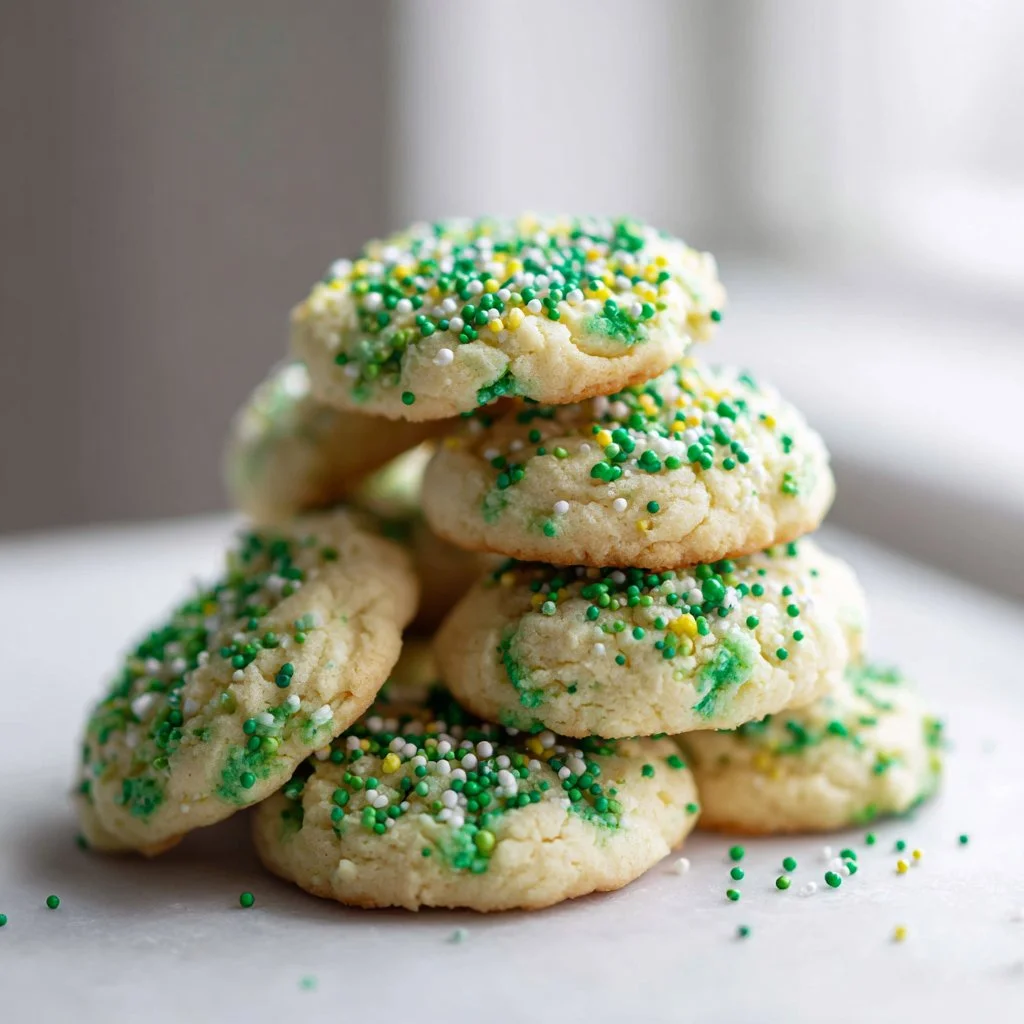
Bright, festive, and impossibly simple — these St. Patrick’s Day Sprinkle Cookies are the kind of treat that brightens a celebration with minimal effort.
They bake up soft at the center with just-set edges and a tender crumb from instant pudding mix.
Kids love the colorful crunch of sprinkles while adults appreciate the subtle vanilla depth and buttery chew.
Try them with a glass of milk or package a few in a clear bag for a last-minute party favor.
Why You’ll Love This St. Patrick’s Day Sprinkle Cookies
– Fast, one-bowl dough with minimal chilling required.
– Soft centers and slightly crisp edges every batch.
– Vanilla pudding creates tender, moist texture without extra eggs.
– Easy to scale up for parties or school events.
– Kid-friendly method and fun presentation with sprinkles.
– Uses pantry staples you likely already own.
These cookies taste like a classic soft sugar cookie but with extra tenderness and a hint of custardy vanilla from the instant pudding mix. The texture is pillowy in the center with a delicate outer edge that gives just enough bite before melting in your mouth.
"These were a hit at our classroom party — perfectly soft and those sprinkles made everyone smile. Five stars!" — A delighted reader
Key Ingredients for St. Patrick’s Day Sprinkle Cookies
Butter — 1/2 cup, softened.
Butter provides flavor, richness, and structure. Choose unsalted for better control over seasoning, and bring it to room temperature so it creams smoothly with sugar. If you substitute margarine or a spreadable butter, expect slightly flatter cookies and a less rich flavor.
Instant vanilla pudding mix — 3.4 oz.
This adds moisture, stabilizes the crumb, and gives the cookies a custard-like softness that resists drying out. Buy a reputable brand for consistent results. If you omit it, cookies will be drier and firmer; you can try replacing with 2 tablespoons cornstarch plus extra milk, but the texture will change.
All-purpose flour — 2 cups.
Flour sets the cookie structure and controls spread. Choose a standard all-purpose flour (10–11% protein) for predictable chew. Swapping to cake flour will make them extremely tender and delicate; bread flour will make them dense and chewy.
St. Patrick’s Day sprinkles — 1/2 cup.
Sprinkles are mostly decorative, adding color and a tiny bit of crunch. Use jimmies or nonpareils rated for baking so they hold shape. If you skip sprinkles, roll cookies in sanding sugar or colored sugar for a similar sparkle without the crisp bits.
Full Ingredient List for St. Patrick’s Day Sprinkle Cookies
– 1 cup sugar
– 1/2 cup butter, softened
– 1 egg
– 1/3 cup milk
– 1/2 tsp salt
– 1/2 tsp baking soda
– 2 cups all-purpose flour
– 3.4 oz instant vanilla pudding mix
– 1/2 cup St. Patrick’s Day sprinkles
Step-by-Step Instructions for St. Patrick’s Day Sprinkle Cookies
Step 1: Preheat and prepare baking sheet
Preheat your oven to 375°F and line a baking sheet with parchment paper or a silicone mat. This ensures even browning and easy removal without extra greasing.
Pro Tip: The oven should be fully preheated so the first tray starts baking immediately; the surface should look dry and the thermometer read a steady 375°F.
Step 2: Cream the sugar and butter
In a large bowl, cream together the sugar and softened butter until the mixture is light and fluffy. Use a hand mixer or stand mixer on medium speed for 2–3 minutes, scraping the bowl sides once.
Pro Tip: The mixture should appear pale and slightly aerated; you’ll see tiny air pockets and the texture will feel lighter when you drag a spatula through it.
Step 3: Add egg and milk
Add the egg and milk to the creamed butter and sugar, stirring until well combined. Mix until fully incorporated but avoid overbeating to keep the cookies tender.
Pro Tip: The batter should look glossy and cohesive, not separated; there should be no visible streaks of egg white or pockets of unmixed milk.
Step 4: Mix dry pudding, salt, and baking soda
Mix in the salt, dry instant vanilla pudding mix, and baking soda. Beat until the mixture is smooth and uniform, so the pudding is fully dissolved into the wet mixture.
Pro Tip: You should not see powdery pockets of pudding; the mixture will smell distinctly vanilla and feel slightly thicker than before.
Step 5: Gradually add flour
Gradually add the flour, mixing until the dough comes together and no white streaks remain. Add the flour in two or three additions to avoid overworking the dough.
Pro Tip: The dough should be soft, slightly tacky, and hold together when pressed; it should not be dry or crumbly.
Step 6: Scoop and roll in sprinkles
Scoop about 1 tablespoon of dough and roll into a ball. Fill a shallow bowl with the sprinkles and roll each dough ball until fully coated, pressing gently so the sprinkles adhere.
Pro Tip: The balls should be smooth and round; after rolling in sprinkles they’ll look evenly speckled and not falling apart when handled.
Step 7: Arrange and bake
Place the sprinkle-coated balls 2 inches apart on the prepared baking sheet. Bake for 8–10 minutes until the edges are just set but the centers still look soft. Rotate the pan halfway through if your oven has hot spots.
Pro Tip: The cookies will look slightly underbaked in the center when done; edges will be set and lightly golden while centers remain puffed and soft.
Step 8: Cool before transferring
Cool the cookies on the pan for 10 minutes before transferring them to a wire rack to finish cooling. This rest lets them firm up without becoming hard.
Pro Tip: After 10 minutes, the cookies should hold their shape when nudged and release cleanly from the parchment without sticking.
Expert Tips for St. Patrick’s Day Sprinkle Cookies
– Temperature tip: Use room-temperature butter (about 65–68°F) for proper creaming and structure; too warm butter makes the dough greasy and flat.
– Baking time: Watch the edges, not just the clock; 8 minutes can be perfect for some ovens while others need 10.
– Texture troubleshooting: If cookies spread too much, chill the dough for 15–20 minutes and reduce oven temperature by 15°F.
– Equipment tip: A medium cookie scoop yields uniform cookies that bake evenly; upgrade to a silicone mat for consistent bottoms.
– Common mistake: Overmixing after adding flour activates gluten and leads to tougher cookies — mix only until no white streaks remain.
– Sprinkle advice: Use jimmies or large confetti sprinkles for visible color; delicate nonpareils can bleed color if overbaked.
– Scaling tip: For larger batches, scoop onto multiple sheets and rotate racks mid-bake to ensure even heat.
– Visual cue tip: Cookies should be pale golden at the edges and still shiny in the center when you pull them; they’ll finish as they cool.
Storage & Freezing for St. Patrick’s Day Sprinkle Cookies
Room temperature storage: Cool completely then store in an airtight container for up to 4 days. Place a sheet of wax paper between layers to keep sprinkles from rubbing off.
Fridge storage: Store in an airtight container for up to 2 weeks; refrigeration will firm the texture slightly but maintain freshness.
Freezer storage: Freeze baked cookies in a single layer on a tray for 1 hour, then transfer to a freezer-safe container or bag for up to 3 months. For dough, flash-freeze dough balls on a tray then bag for up to 2 months.
Thawing: Thaw frozen baked cookies at room temperature for 30–60 minutes. For frozen dough, place on the baking sheet and add 1–2 minutes to baking time if still chilled.
Reheating: Warm cookies in a 300°F oven for 3–5 minutes to revive softness, or microwave one cookie for 8–10 seconds for a fresh-baked feel.
Variations & Substitutions for St. Patrick’s Day Sprinkle Cookies
Mint-chocolate variation: Fold 1/2 cup mini chocolate chips and 1/2 tsp peppermint extract into the dough, and use green-and-white sprinkles. Expect a cool mint lift and a chewier, more chocolate-forward cookie.
Gluten-reduced option: Replace 1 cup of all-purpose flour with a 1:1 gluten-free flour blend and add 1/4 tsp xanthan gum if the blend lacks it. The texture will be slightly crumblier but still tender.
Lemon-vanilla twist: Add 1 tbsp lemon zest and swap the vanilla pudding for lemon-flavored instant pudding to brighten the flavor. The result is zippier and more aromatic, ideal for spring gatherings.
Sanding sugar finish: Skip sprinkles and roll dough balls in colored sanding sugar before baking for a uniform sparkle and less crunch. This yields a smoother top and a refined look for gift boxes.
Frequently Asked Questions About St. Patrick’s Day Sprinkle Cookies
Q: Can I make this dough ahead of time?
A: Yes. You can refrigerate shaped dough balls for up to 48 hours before baking. Chilled dough often yields slightly taller cookies with less spread. Let chilled dough sit at room temperature 5–10 minutes if too firm to scoop.
Q: Will the sprinkles bleed color during baking?
A: Some sprinkles will soften and lose a bit of vibrancy; jimmies and larger nonpareils hold color better than delicate painted sprinkles. If color bleeding is a major concern, add sprinkles after a short bake, gently pressing them into the hot tops.
Q: Can I use pudding mix other than vanilla?
A: Yes, different pudding flavors (lemon, butterscotch, chocolate) will alter the cookie flavor and moisture slightly. Vanilla is the most neutral and reliable, but creative flavors can be fun — test a small batch first.
Q: Why do my cookies come out cakey instead of chewy?
A: Over-measuring flour, overmixing, or using too much liquid can create a cakier cookie. Check your measuring technique: spoon flour into the cup and level with a knife. Mix just until combined and avoid adding extra milk beyond the recipe.
Q: How do I prevent cookies from sticking to the pan?
A: Use parchment paper or a silicone baking mat and allow cookies to cool on the pan for 10 minutes before transferring. If you use a dark, nonstick sheet, reduce baking time slightly to prevent bottom over-browning.

Final Thoughts on St. Patrick’s Day Sprinkle Cookies
These cookies are an easy, cheerful way to celebrate with bright color and reliable soft texture. Leave a star rating in the recipe card below and pin this recipe to Pinterest for later.
In case you’re looking for inspiration, here are a few favorites to explore: check a nostalgic mint-filled cookie idea at Mint Cookies – One Hot Oven®, see a similar festive sprinkle version at St. Patrick’s Day Sprinkle Cookies – Down Redbud Drive, or compare a classic sugar cookie approach at St Patrick’s Day Sugar Cookies – Deliciously Seasoned.
Additional recipes and techniques referenced in this guide: try these related cookie recipes for more ideas — Biscoff Cookie Butter Cheesecake Cookies, Brown Butter Pecan Toffee Cookies, Buttery Shortbread Sprinkle Bites, Cadbury Egg Cookies, and Chewy Pumpkin Streusel Cookies.
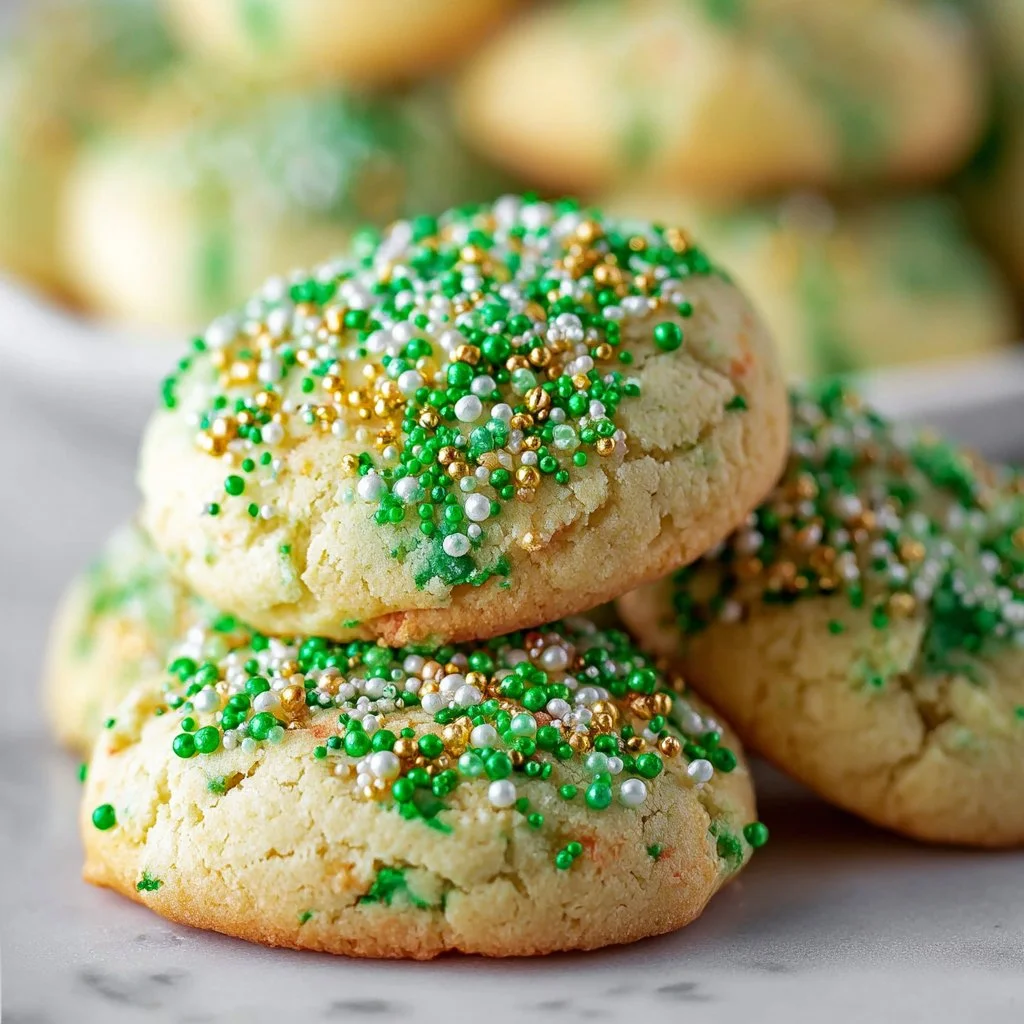
St. Patrick's Day Sprinkle Cookies
Ingredients
Method
- Preheat your oven to 375°F (190°C) and line a baking sheet with parchment paper.
- In a large bowl, cream together the sugar and softened butter until light and fluffy.
- Add the egg and milk to the creamed mixture, stirring until well combined.
- Mix in the salt, dry instant vanilla pudding mix, and baking soda until smooth.
- Gradually add the flour, mixing until the dough comes together.
- Scoop about 1 tablespoon of dough, roll into a ball, and coat with the sprinkles.
- Arrange the sprinkles-coated dough balls on the prepared baking sheet, spaced 2 inches apart.
- Bake for 8-10 minutes, until the edges are set and centers look soft.
- Cool on the pan for 10 minutes before transferring to a wire rack.