
A soft, spiced cookie that tastes like a mug of holiday eggnog — but in your hands.
These cookies are pillowy, subtly boozy, and perfect for gifting or dunking.
They come together with pantry staples and a tiny splash of store-bought eggnog for authenticity.
Make the dough ahead, chill, and bake the day of your party for best texture.
Why You’ll Love This Soft Eggnog Cookies Recipe
- Buttery, tender crumb with a melt-in-your-mouth center.
- Warm nutmeg and rum notes without actual alcohol risk.
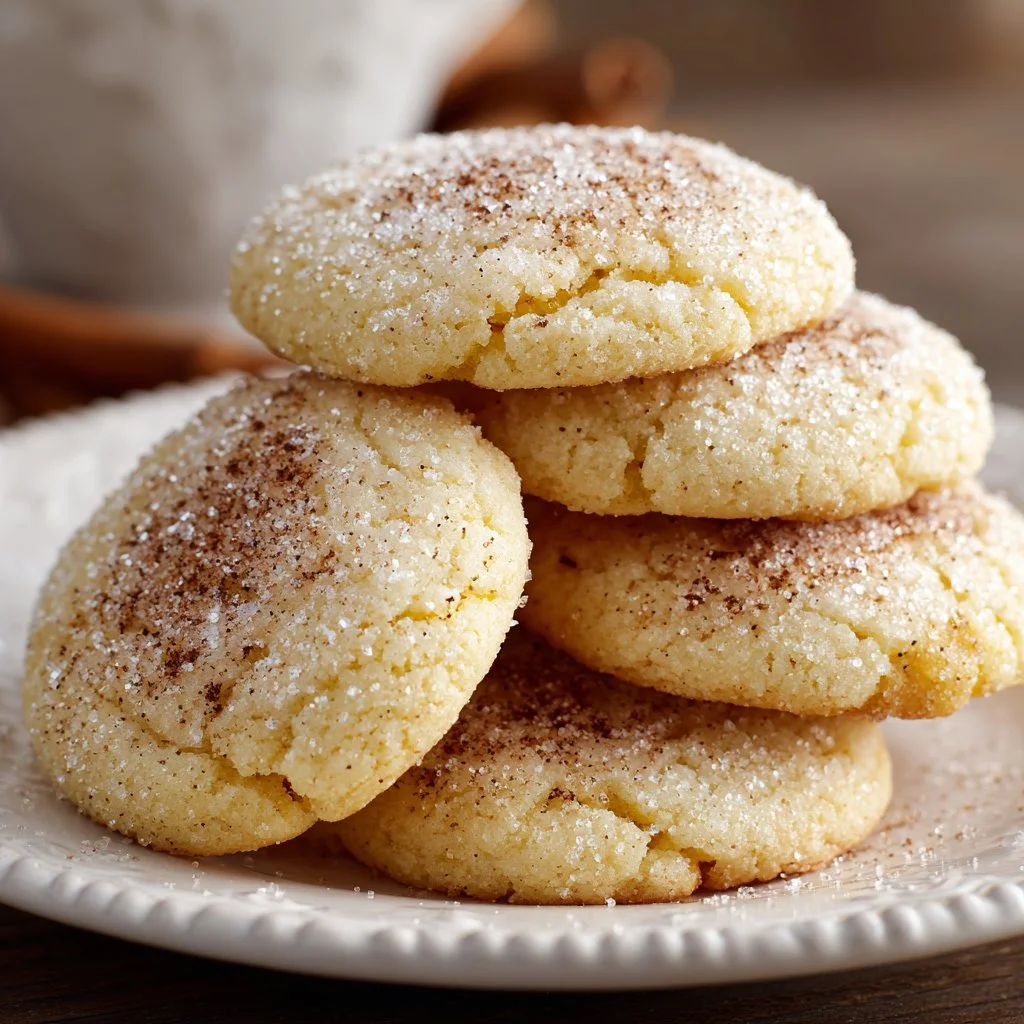
- Soft edges and slightly cracked tops for a classic cookie look.
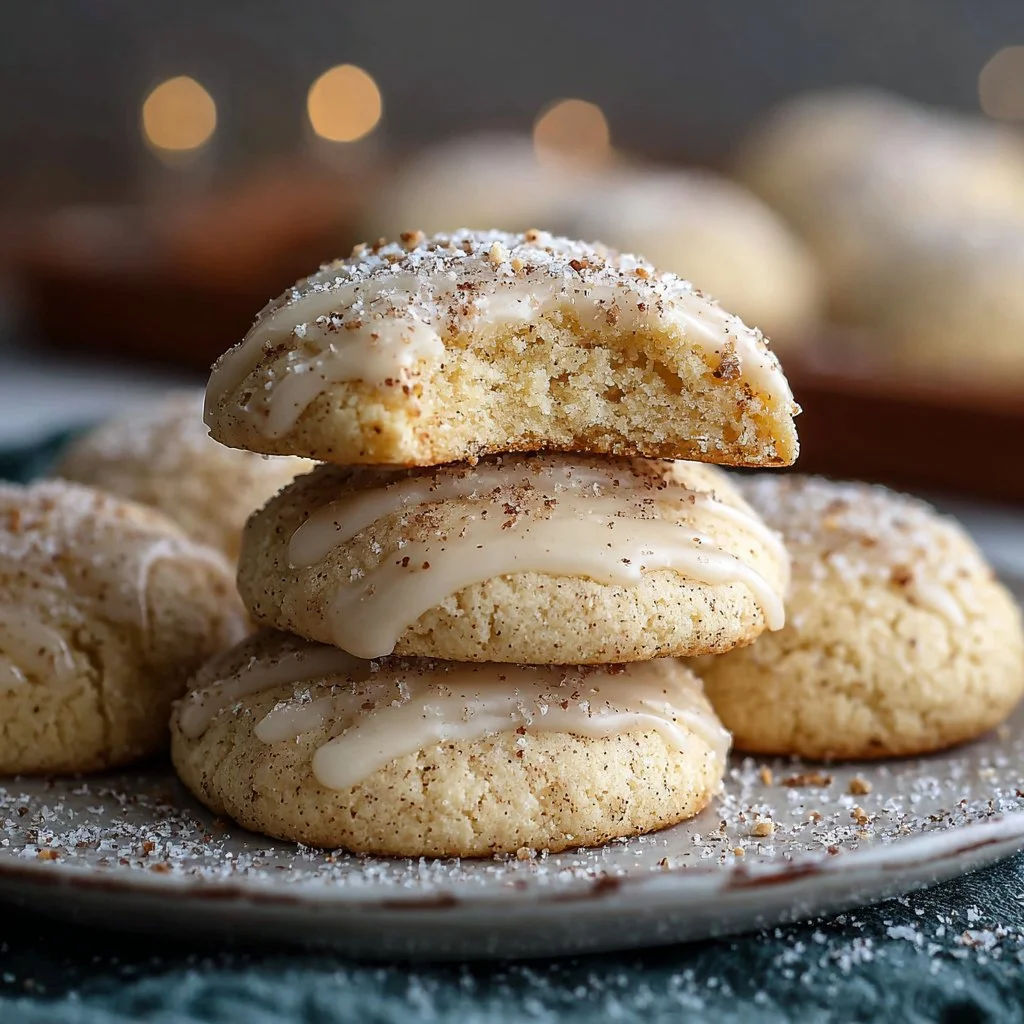
- Quick glaze adds holiday sheen and extra eggnog flavor.
- Perfect for cookie swaps, gifts, and freezer prep.
- Uses cake flour and cornstarch for bakery-like softness.
- Easy to scale and adapt for dietary needs.
These cookies deliver a delicate balance of sweet and spiced flavors with a plush, almost cake-like interior and gently crisped edges. The glaze adds a shiny, eggnog-forward finish that sets quickly and keeps the tops soft rather than hardening like a royal icing.
"I made these for a holiday cookie exchange and they’re officially my family’s favorite — soft, full of nutmeg, and that glaze is unreal." — 5-star reader
Key Ingredients for Soft Eggnog Cookies Recipe
Unsalted Butter — 2 sticks
Unsalted butter provides the tender structure and rich flavor essential to these cookies. Buy high-quality European-style butter if you want a slightly higher fat content and creamier mouthfeel. If you substitute with margarine or low-fat butter, the cookies will spread differently and lose some richness.
Granulated Sugar + Brown Sugar — 1 cup granulated, 1/2 cup brown
The mix of granulated and brown sugars controls spread and moisture: granulated sugar helps crisp the edges while brown sugar adds chew and caramelized depth. Use light brown sugar for a milder molasses hint; dark brown will push the flavor toward molasses. Replacing brown sugar with all granulated will produce drier, less tender cookies.
Cake Flour — 1 cup (plus 1.75 cups all-purpose flour total)
Cake flour is lower in protein and produces a softer, finer crumb, which is the secret to these cookies’ pillowy interior. If you can’t find cake flour, substitute all-purpose flour minus 2 tablespoons per cup and add 2 tablespoons cornstarch to mimic the tenderizing effect. Using only all-purpose without adjustment will yield denser cookies.
Store-bought Eggnog — 2 tbsp (plus more for glaze)
Real eggnog contributes authentic flavor and a touch of extra fat and sugar that intensify the holiday profile. Choose a full-fat store-bought eggnog for the best flavor; skim or almond-based versions will alter texture and sweetness. If you must substitute, heavy cream + a tiny pinch of ground nutmeg approximates the richness, but the flavor won’t be identical.
Full Ingredient List for Soft Eggnog Cookies Recipe
- Unsalted Butter – 2 sticks
- Granulated Sugar – 1 cup
- Brown Sugar – 1/2 cup
- Large Eggs – 2
- Store-bought Eggnog – 2 tbsp
- Vanilla Extract – 1 tsp
- Rum Extract – 1.5 tsp
- Ground Nutmeg – 1 tsp
- Cream of Tartar – 1.5 tsp
- Baking Soda – 1/2 tsp
- Cornstarch – 1 tbsp
- Salt – 1/2 tsp
- Cake Flour – 1 cup
- All-Purpose Flour – 1.75 cups
- Granulated Sugar (for coating) – 1/3 cup
- Ground Nutmeg (for coating) – 1 tsp
- Powdered Sugar (for glaze) – 2 cups
- Eggnog (for glaze) – 5-6 tbsp
- Rum Extract (for glaze) – 1/2 tsp
- Sanding Sugar/Nutmeg – for garnish
Step-by-Step Instructions for Soft Eggnog Cookies Recipe
Step 1: Cream the butter and sugars
In a stand mixer fitted with the paddle attachment, beat the softened unsalted butter with the granulated sugar and brown sugar on medium-high for about 5 minutes until very light and fluffy. This aeration is what helps the cookies rise slightly and keeps them tender.
Pro Tip: The mixture should look paler and feel airy; when you lift the paddle, the batter will fall back slowly.
Step 2: Add eggs and flavorings
Add the eggs one at a time, then pour in the 2 tablespoons of store-bought eggnog, vanilla extract, and rum extract. Beat on medium-high for 2–3 minutes until the batter is glossy and homogenous.
Pro Tip: The batter should smell fragrant with vanilla and rum extract and feel slightly loosened but not runny.
Step 3: Sift dry ingredients and mix
Sift together cake flour, all-purpose flour, ground nutmeg, cream of tartar, baking soda, cornstarch, and salt. Add the dry mix to the wet ingredients and mix on low until the dough just comes together; do not overmix.
Pro Tip: The dough should look uniformly speckled with nutmeg and be soft but scoopable, not sticky-runny.
Step 4: Prepare the coating
In a small bowl, combine the 1/3 cup granulated sugar and 1 teaspoon ground nutmeg for the coating. This gives the cookies a spiced, sugary shell when baked.
Pro Tip: The coating should smell warmly spiced and the sugar should dissolve slightly from the nutmeg oils when rubbed between fingers.
Step 5: Scoop and roll the dough balls
Scoop 2-ounce portions of dough (about golf-ball size) and roll each in the sugar-nutmeg coating until completely covered. Place the coated dough balls on a tray, spaced to allow them to chill.
Pro Tip: Balls should be smooth, well-coated, and uniform in size so they bake evenly.
Step 6: Chill the dough
Refrigerate the dough balls for at least 30 minutes. Chilling firms the fat and prevents excessive spread in the oven, preserving a soft, thick center.
Pro Tip: The dough should feel cool and slightly firm to the touch after chilling, not rock-hard.
Step 7: Bake the cookies
Preheat the oven to 375°F (190°C). Bake the chilled dough balls for about 12 minutes until the edges are golden and the tops show slight cracks. Avoid overbaking to keep them soft.
Pro Tip: The edges should be just golden while centers remain pale and slightly puffed — they will set as they cool.
Step 8: Cool on a rack
Remove the cookies and transfer to a wire rack to cool for 30 minutes. Cooling stabilizes the crumb and prepares the tops for glazing.
Pro Tip: Cookies should feel tender and spring back gently when pressed at the edge.
Step 9: Make and apply the eggnog glaze
Whisk powdered sugar with 5–6 tablespoons of eggnog and 1/2 teaspoon rum extract until the glaze is pourable and honey-like. Dip the tops of the cooled cookies into the glaze, sprinkle with sanding sugar or a tiny dusting of nutmeg, and let set for about 45 minutes.
Pro Tip: The glaze should coat the top smoothly and set to a satiny finish; it should not run off the cookie completely.
Expert Tips for Soft Eggnog Cookies Recipe
- Chill the dough: Always refrigerate for at least 30 minutes to control spread and improve texture.
- Watch oven temperature: Use an oven thermometer; 375°F can vary between ovens and a consistent temp prevents overbrowning.
- Don’t overbeat after adding flour: Overmixing develops gluten and will make cookies tough instead of tender.
- Use room-temperature eggs: They incorporate better and create a smoother emulsion for even rise.
- Weigh flour if possible: Spoon-and-level can still work, but weighing prevents dense cookies from too much flour.
- Substitute carefully: If swapping eggnog for heavy cream, reduce added sugar slightly to avoid overly sweet dough.
- Equipment note: A paddle attachment is ideal; a whisk makes the creaming too aerated and can change texture.
- Common mistake — overbaking: Remove when edges are just golden; carryover heat finishes the center without drying it out.
Storage & Freezing for Soft Eggnog Cookies Recipe
Fridge storage: Store glazed or unglazed cookies in an airtight container in the refrigerator for up to 5 days. Layer with parchment to prevent sticking and keep the glaze from smearing.
Freezer storage: Freeze unglazed dough balls on a baking sheet until solid, then transfer to a labeled freezer bag for up to 3 months. You can also freeze fully baked unglazed cookies between parchment sheets for up to 2 months.
Thawing: Thaw frozen dough balls in the fridge overnight before baking. For baked cookies, thaw at room temperature for 30–60 minutes; glazing after thaw preserves appearance.
Reheating: Warm cookies for 6–10 seconds in the microwave to soften slightly for serving, or 3–5 minutes at 300°F (150°C) in the oven to revive a fresh-baked texture. Avoid high heat which will harden the glaze.
Variations & Substitutions for Soft Eggnog Cookies Recipe
Vanilla Bean Eggnog Cookies: Use vanilla bean paste instead of vanilla extract and add 1/4 teaspoon cinnamon. The paste gives flecks and a richer vanilla aroma, resulting in a more luxurious, bakery-style cookie.
Boozy Rum Eggnog Cookies: Replace the rum extract with 2 tablespoons dark rum in the dough and 1 teaspoon in the glaze. The real rum deepens the flavor and adds warmth but skip for kid-friendly batches.
Maple-Nutmeg Twist: Swap half the granulated sugar for pure maple syrup (reduce other liquid by 1 tablespoon) and add chopped toasted pecans. The maple brings a nuanced sweetness and a toasty finish that pairs with nutmeg.
Gluten-Free Soft Eggnog Cookies: Use a 1:1 gluten-free flour blend and omit cake flour; add 1 extra tablespoon of cornstarch. The texture will be slightly denser but still tender with the cornstarch boost.
Frequently Asked Questions About Soft Eggnog Cookies Recipe
Q: Can I make the dough ahead and bake later?
A: Yes. You can refrigerate shaped and coated dough balls for up to 48 hours before baking. For longer storage, freeze shaped dough for up to 3 months; bake from frozen, adding 1–2 minutes to the bake time. Chilling improves texture by solidifying the fat and slowing spread in the oven.
Q: Why are my cookies cakey instead of soft and chewy?
A: Cakey texture often comes from too much flour, overmixing, or excess leavening. Weigh flour to avoid excess, mix only until just combined, and stick to the cream of tartar + baking soda amounts in the recipe. Also ensure you don’t overbake; slightly underbaked centers finish while cooling.
Q: Can I skip the glaze or replace it?
A: The glaze adds shine and extra eggnog flavor but is not required. For a simpler finish, dust the cooled cookies with powdered sugar or press a pecan half into the top. If skipping glaze, store the cookies in an airtight container to avoid drying.
Q: How do I prevent the glaze from running off the cookie?
A: Make the glaze honey-like in consistency (thick but pourable). Cool cookies completely before dipping. If glaze is too thin, add more powdered sugar; if too thick, thin with a few drops of eggnog.
Q: Is it safe to use store-bought eggnog in baking for kids?
A: Yes. Store-bought eggnog is pasteurized and safe to bake with and for children. Be mindful of alcohol content in spiked varieties; use non-alcoholic eggnog to keep the recipe kid-friendly.
{image_template}
Final Thoughts on Soft Eggnog Cookies Recipe
These Soft Eggnog Cookies Recipe deliver holiday flavor with tender, bakery-quality texture in every bite. If you tried them, please leave a star rating in the recipe card below and pin this recipe to your holiday boards.
For more holiday cookie inspiration check this Eggnog Cookies {Melt-in-Your-Mouth} – Cooking Classy, a chewy take on eggnog cookies that complements this recipe.
If you’re looking for a quick soft and chewy version, see Eggnog Cookies | Soft & Chewy 20 Minute Cookie Recipe for timing tricks.
For another reliable soft and chewy technique, compare notes with Soft & Chewy Eggnog Cookie Recipe – Rose Bakes.
Soft Eggnog Cookies
Ingredients
Method
- Cream the butter and sugars in a stand mixer fitted with a paddle attachment for 5 minutes until light and fluffy.
- Add eggs, eggnog, vanilla extract, and rum extract, beating for 2-3 minutes until glossy.
- Sift together cake flour, all-purpose flour, nutmeg, cream of tartar, baking soda, cornstarch, and salt, then mix into the wet ingredients until just combined.
- Combine granulated sugar and nutmeg for coating in a small bowl and mix.
- Scoop dough into 2-ounce portions, roll in sugar-nutmeg coating, and place on a tray.
- Chill the dough for at least 30 minutes.
- Preheat oven to 375°F (190°C) and bake the dough balls for about 12 minutes.
- Transfer cookies to a wire rack to cool for 30 minutes before glazing.
- Make the glaze by whisking powdered sugar, eggnog, and rum extract until pourable.
- Dip the tops of the cooled cookies into the glaze and allow to set for about 45 minutes.