
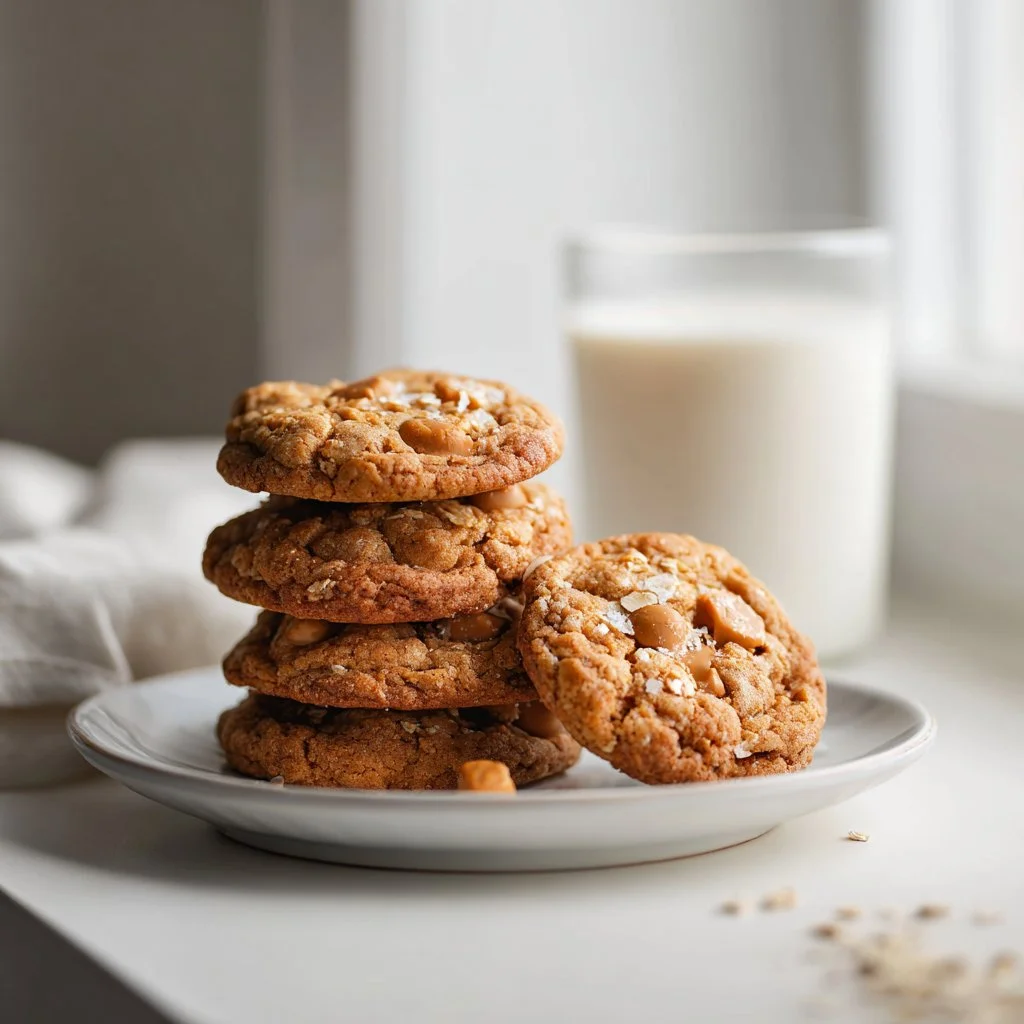
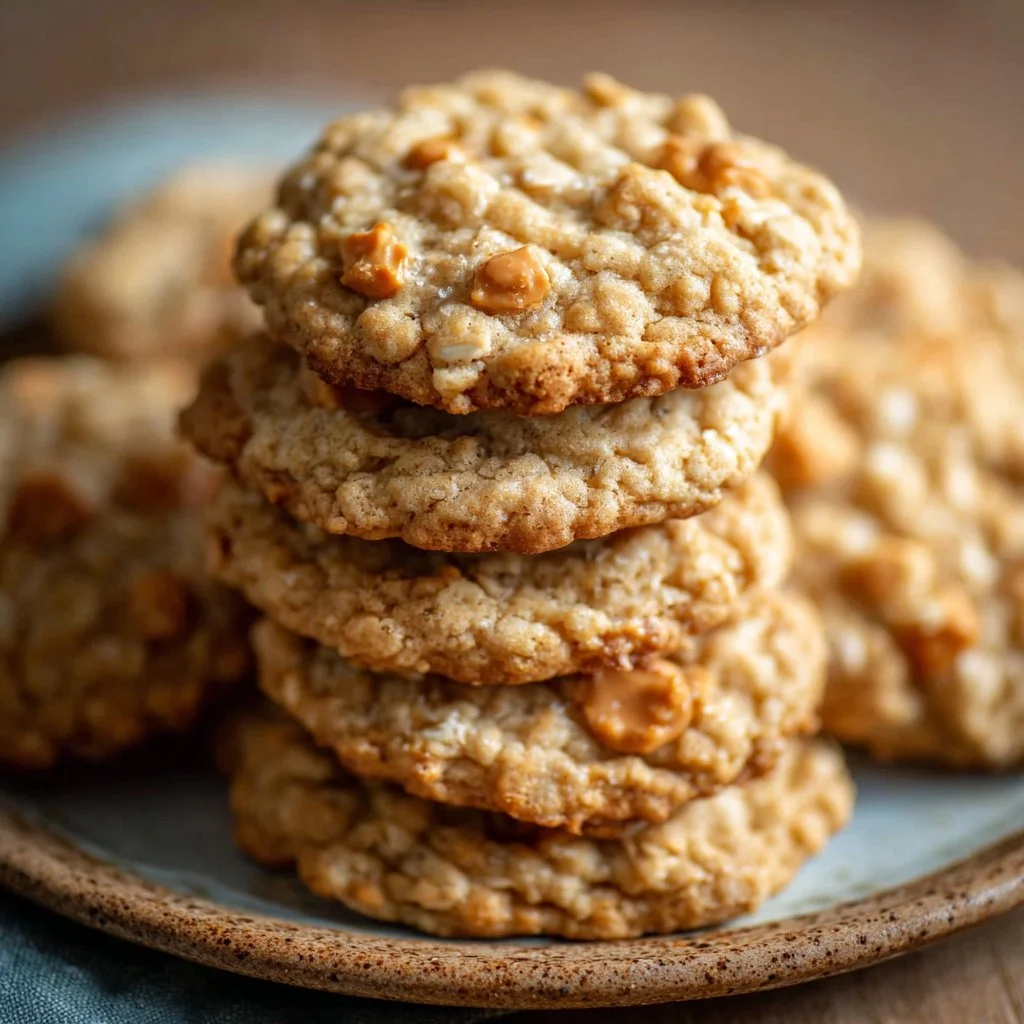
Start with warm, buttery nostalgia: these cookies bake up soft centers, lightly crisped edges, and pockets of caramel-like butterscotch in every bite. They’re quick to mix and forgiving in the oven, perfect for weeknight baking or a last-minute dessert.
Short chilling firms the dough for thicker cookies, while oats keep the texture tender and wholesome. Try them when you want comfort baking that looks like effort but tastes like love.
If you enjoy mix-and-bake treats, you might also like my take on soft chewy brookie cookies for more chocolatey comfort.
Why You’ll Love This Soft and Chewy Butterscotch Oatmeal Cookies
- Soft, tender centers with chewy oats and caramel pockets.
- Quick hands-on time — dough comes together in minutes.
- Butterscotch chips add a warm, buttery sweetness different from chocolate.
- Oats add texture without making the cookie dry or heavy.
- Easy to scale for parties or small batches.
- Forgiving dough: slight underbake = extra chew.
Taste-wise, these cookies balance warm brown sugar and cinnamon with a buttery, caramel hit from the butterscotch chips; the oats give a satisfying chew without graininess, creating a cookie that’s both cozy and indulgent.
"Absolutely perfect — soft edges, chewy middle, and those butterscotch chips are everything. My new favorite cookie!" — 5-star reader review
Key Ingredients for Soft and Chewy Butterscotch Oatmeal Cookies
Unsalted butter (1/2 cup / 115g): Butter is the backbone of flavor and spread. Use high-quality unsalted butter for a clean, creamy taste and control over salt. If you substitute with margarine or a low-fat spread, expect less flavor and diminished chew; clarified butter changes texture and spread.
Light brown sugar (1/2 cup / 100g), packed: Brown sugar brings moisture and a deep molasses note that keeps cookies soft. Pack it firmly for consistent sweetness and chew. Swapping with dark brown sugar intensifies molasses flavor; using only granulated sugar will produce a crisper, less tender cookie.
Old-fashioned rolled oats (1 1/2 cups / 150g): Rolled oats provide chew and structure without turning gummy. Buy certified old-fashioned oats, not quick oats, for ideal chew and visual texture. Replacing with quick oats yields a finer, denser crumb; steel-cut oats will not hydrate properly and should not be used.
Butterscotch chips (1 cup / 180g): These create molten, buttery pockets and are the signature flavor. Look for good-quality chips that hold shape in the oven but soften at room temperature. White chocolate or butterscotch baking chunks can work, but expect different melting behavior and sweetness.
Full Ingredient List for Soft and Chewy Butterscotch Oatmeal Cookies
- 1/2 cup (115g) unsalted butter, softened
- 1/2 cup (100g) light brown sugar, packed
- 1/4 cup (50g) granulated sugar
- 1 large egg, room temperature
- 1 teaspoon pure vanilla extract
- 1 cup (125g) all-purpose flour, spooned & leveled
- 1/2 teaspoon baking soda
- 1/2 teaspoon ground cinnamon
- 1/4 teaspoon salt
- 1 1/2 cups (150g) old-fashioned rolled oats
- 1 cup (180g) butterscotch chips
Step-by-Step Instructions for Soft and Chewy Butterscotch Oatmeal Cookies
Step 1: Cream the butter and sugars
In a large bowl, beat the softened butter with the light brown sugar and granulated sugar until well combined, about 1–2 minutes. The mixture should be uniform and slightly fluffy.
Pro Tip: Look for a pale, glossy dough that holds soft peaks and smells sweet and caramel-like.
Step 2: Add egg and vanilla
Add the room-temperature egg and vanilla extract, mixing until fully incorporated and the batter looks smooth and glossy.
Pro Tip: The batter should feel silky and slightly thick — no streaks of egg visible.
Step 3: Whisk dry ingredients
In a separate bowl, whisk together the all-purpose flour, baking soda, ground cinnamon, and salt until evenly distributed.
Pro Tip: The dry mix should look uniformly tan with no lumps or unblended baking soda.
Step 4: Combine oats with dry mix
Stir the rolled oats into the dry ingredients so they’re evenly coated; this prevents clumping and ensures even distribution in the dough.
Pro Tip: The oats should be scattered evenly through the flour mixture, not clumped in one area.
Step 5: Add dry ingredients to wet
Add the dry oat-flour mix to the butter-sugar-egg mixture and mix until just combined; avoid overmixing to keep the cookies tender.
Pro Tip: The dough should be thick and slightly shaggy; stop when no dry streaks remain.
Step 6: Fold in butterscotch chips
Fold in the butterscotch chips gently so they’re evenly distributed without breaking them up.
Pro Tip: You should see distinct chips throughout the dough, not melted swirls.
Step 7: Chill the dough
Cover the dough and refrigerate for at least 30 minutes to firm it; chilled dough yields thicker, chewier cookies.
Pro Tip: The chilled dough will be firmer and easier to scoop — it should hold its shape when rolled.
Step 8: Preheat oven and prepare sheets
Preheat the oven to 350°F (177°C) and line baking sheets with parchment paper for even baking.
Pro Tip: The oven should be fully up to temperature and the parchment flat with no wrinkled edges.
Step 9: Scoop and shape
Scoop 1.5-tablespoon balls of dough, slightly flatten them with your palm, and arrange on the prepared sheets allowing 2 inches between cookies.
Pro Tip: Dough balls should be compact and slightly domed; a slight flatten keeps a lower profile and even bake.
Step 10: Bake and cool
Bake for 10–13 minutes until the edges are lightly browned but centers still look soft. Cool cookies on the baking sheets for 5–10 minutes before transferring to a wire rack to finish cooling.
Pro Tip: Cookies should smell buttery and look set at the edges with soft centers that firm on the rack.
Expert Tips for Soft and Chewy Butterscotch Oatmeal Cookies
- Temperature tip: Use room-temperature eggs and softened butter for smooth emulsification and even baking.
- Chill time: Don’t skip the 30-minute chill; it prevents excessive spread and concentrates flavor.
- Texture troubleshooting: If cookies are too flat, increase chill time or reduce oven temp by 10°F; if too cakey, slightly underbake next time by 1–2 minutes.
- Equipment tip: Use an oven thermometer and a medium cookie scoop for consistent size and yield.
- Mixing tip: Avoid overmixing after adding flour — overworked gluten gives a tough cookie.
- Spreading fix: If cookies spread too much, add 1–2 tablespoons more flour or use a higher-protein flour sparingly.
- Add-in tip: Press a few extra butterscotch chips onto cookie tops right after baking for a glossy finish.
- Common mistakes: Don’t substitute quick oats without adjusting moisture and don’t use melted butter unless you want a thinner cookie. Also compare baking sheets — dark pans brown faster.
If you like experimenting with seasonal flavors, check technique notes in my chewy pumpkin streusel cookies post for chilling tricks and texture adjustments.
Storage & Freezing for Soft and Chewy Butterscotch Oatmeal Cookies
Fridge storage: Store cooled cookies in an airtight container in the refrigerator for up to 7 days. Layer with parchment to prevent sticking and maintain chew.
Freezer storage: For longer storage, arrange cookies in a single layer on a baking sheet to flash-freeze, then transfer to a freezer bag or rigid container for up to 3 months. Dough can also be portioned and frozen for up to 3 months; bake from frozen, adding 2–3 minutes to the bake time.
Thawing: Thaw cookies at room temperature for 30–60 minutes. For dough, thaw in the fridge overnight before baking if you want even rise.
Reheating: Refresh cookies in a 300°F oven for 4–6 minutes or microwave for 8–12 seconds wrapped in a slightly damp paper towel to soften centers.
Variations & Substitutions for Soft and Chewy Butterscotch Oatmeal Cookies
Butterscotch + chocolate swirl: Swap half the butterscotch chips for semi-sweet chocolate chips. The result is a richer, more complex cookie with melty chocolate pockets alongside caramel notes.
Maple-pecan twist: Replace granulated sugar with an equal amount of maple syrup (reduce butter by 1 tablespoon) and fold in chopped toasted pecans. Expect deeper, toasty sweetness and a crunchier finish.
Raisin and spice: Substitute butterscotch chips with plump raisins and add 1/4 teaspoon nutmeg. You’ll get a classic oatmeal-raisin profile with the same chewy texture and warm spice.
Gluten-free version: Use a 1:1 gluten-free flour blend and ensure oats are labeled gluten-free; you may need a tablespoon more liquid. Cookies will be slightly crumblier but still soft and flavorful.
Frequently Asked Questions About Soft and Chewy Butterscotch Oatmeal Cookies
Q: Why are my oatmeal cookies dry and crumbly?
A: Dry cookies often come from overbaking, too much flour, or using quick oats instead of rolled oats. Weigh flour or spoon-and-level it to avoid packing. Bake until edges are set but centers still look slightly underdone; they’ll finish as they cool.
Q: Can I use quick oats instead of old-fashioned oats?
A: Quick oats absorb more liquid and break down, yielding a denser, less chewy cookie. If you must use quick oats, reduce chilling time slightly and expect a finer texture rather than the characteristic chew of rolled oats.
Q: How do I get perfectly round cookies that don’t spread?
A: Chill the dough, use consistent scoops, and slightly flatten only once before baking. Use room-temp butter (not melted) and an oven set to the correct temperature; a slightly cooler oven reduces over-spread.
Q: Can I make the dough ahead of time?
A: Yes — refrigerated dough stores up to 48 hours and improves flavor as the ingredients meld. For longer storage, freeze portioned dough balls for up to 3 months and bake from frozen, adding a couple of minutes to the bake time.
Q: What’s the best way to reheat cookies for a freshly-baked texture?
A: Warm them in a 300°F oven for 4–6 minutes or microwave briefly (8–12 seconds) with a damp paper towel to steam the center back to a soft chew. Be careful not to overheat or they’ll dry out.

Final Thoughts on Soft and Chewy Butterscotch Oatmeal Cookies
These cookies are an easy, rewarding bake that combines nostalgic butterscotch with wholesome oats for a soft, chewy finish. If you baked and loved them, please leave a star rating in the recipe card below and pin this recipe to Pinterest.
For more inspiration on classic scotchie recipes and technique comparisons, see this version at Soft & Chewy Oatmeal Scotchies – Sally’s Baking Addiction.
If you want another take with warm spice variations, check out Soft Oatmeal Scotchies Cookies – Comfortably Domestic.
For a spiced oatmeal butterscotch approach that highlights texture tweaks, read Oatmeal Butterscotch Cookies (a.k.a. "Scotchies").
Soft and Chewy Butterscotch Oatmeal Cookies
Ingredients
Method
- In a large bowl, beat the softened butter with the light brown sugar and granulated sugar until well combined, about 1–2 minutes.
- Add the room-temperature egg and vanilla extract, mixing until fully incorporated.
- In a separate bowl, whisk together the all-purpose flour, baking soda, ground cinnamon, and salt.
- Stir the rolled oats into the dry ingredients.
- Add the dry mix to the butter-sugar-egg mixture and mix until just combined.
- Fold in the butterscotch chips gently.
- Cover the dough and refrigerate for at least 30 minutes.
- Preheat the oven to 350°F (177°C) and line baking sheets with parchment paper.
- Scoop 1.5-tablespoon balls of dough, slightly flatten them, and arrange on prepared sheets.
- Bake for 10–13 minutes until edges are lightly browned but centers still look soft.
- Cool cookies on the baking sheets for 5–10 minutes before transferring to a wire rack.