
Start with a warm, fragrant loaf that looks like it took a bakery day but asks for almost no effort from you.
This no-knead method gives big oven-spring and a crackly crust with minimal hands-on time.
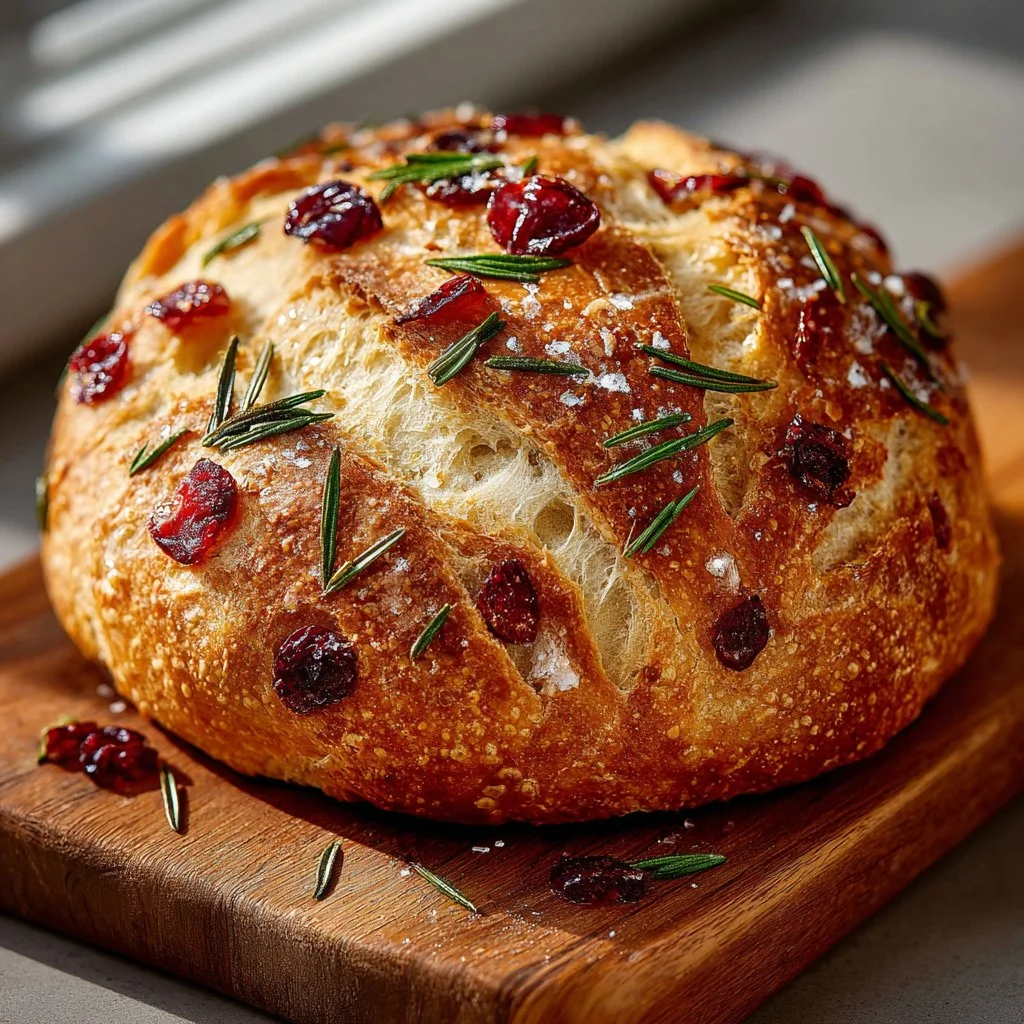
You’ll get bright pops of cranberry and piney rosemary balanced by silky olive oil and flaked sea salt.
Make it tonight and let the long rise do the work while you relax.
Why You’ll Love This No-Knead Rosemary Cranberry Bread with Olive Oil & Sea Salt
- Effortless: mix, wait, and bake — no kneading required.
- Complex flavor: tart cranberries and aromatic rosemary complement savory sea salt.
- Rustic crust: Dutch oven yields a deep, crackly exterior.
- Tender crumb: high hydration gives an open, moist interior.
- Versatile: great with cheeses, soups, or simply olive oil.
- Make-ahead: dough rests overnight for convenience.
The taste is bright and savory, with bursts of cranberry sweetness and the herbal lift of rosemary. Texture is a contrast: a crackly, olive-oil-sheened crust gives way to a moist, slightly open crumb that holds olive oil and toppings well.
★★★★★ “I made this for holiday guests and everyone asked for the recipe. The crust was perfect and the rosemary-cranberry combo felt festive without being cloying.” — A happy reader
Key Ingredients for No-Knead Rosemary Cranberry Bread with Olive Oil & Sea Salt
Fresh cranberries matter. They add bright acidity and a burst of color. Buy firm, plump berries and chop them roughly; frozen are okay but thaw and drain to avoid extra water. Substituting dried cranberries will concentrate sweetness and require cutting back on any added sugar in other recipes.
All-purpose flour provides structure and the right balance for an open crumb without heavy gluten development. Use a trusted brand and measure by weight if possible. Bread flour will create more chew and larger holes; cake flour will make a fragile loaf.
Warm water hydrates the dough and activates the instant yeast. Aim for water that feels slightly warmer than room temperature (about 95–105°F or 35–40°C) to encourage a long, cold-proof-like rise at room temp. Too-hot water can kill the yeast and prevent rising; too-cold will make the fermentation sluggish.
Olive oil enriches the dough and promotes a softer crumb and glossy crust. Use a good-quality extra virgin olive oil for flavor, and reserve a bit for drizzling before baking. Substituting neutral oil will still work but you’ll lose that fruity olive note.
Full Ingredient List for No-Knead Rosemary Cranberry Bread with Olive Oil & Sea Salt
- 3 cups all-purpose flour
- 1 1/2 teaspoons salt
- 1/2 teaspoon instant yeast
- 1 1/2 cups warm water
- 1/2 cup fresh cranberries, roughly chopped
- 2 tablespoons fresh rosemary, chopped
- 2 tablespoons olive oil, plus more for drizzling
- Sea salt, for sprinkling
Step-by-Step Instructions for No-Knead Rosemary Cranberry Bread with Olive Oil & Sea Salt
Step 1: Combine dry ingredients
In a large mixing bowl, whisk together the flour, salt, and instant yeast until evenly distributed. This ensures the small amount of yeast disperses across the flour and the salt doesn’t directly contact concentrated yeast pockets.
Pro Tip: Look for a uniformly pale, powdery mix with no streaks of salt or clumps; it should smell neutral with a faint wheaty scent.
Step 2: Stir in warm water to form a shaggy dough
Pour the warm water over the dry mix and stir with a spatula until a rough, sticky, shaggy dough forms. Stop stirring once the flour is hydrated; this is not a smooth ball but a loose mass.
Pro Tip: The dough should look wet and sticky, not dry; when you pull the spatula away, the dough should stretch slightly and break in ragged edges.
Step 3: Fold in cranberries and rosemary
Gently fold the roughly chopped cranberries and chopped rosemary into the dough, distributing them evenly without overworking. A few streaks of flour are fine; aim for an even scatter of fruit and herb.
Pro Tip: Visually the dough will have red flecks and tiny green specks throughout; cranberries may tint the surrounding dough slightly.
Step 4: Cover and let rise 12–18 hours
Cover the bowl tightly with plastic wrap and leave it at room temperature for 12 to 18 hours. The long, slow rise develops flavor and gluten without kneading. The dough should become bubbly and about doubled in volume.
Pro Tip: The surface will be dotted with bubbles and feel so soft that it jiggles slightly when nudged.
Step 5: Preheat oven and Dutch oven
Place a Dutch oven with its lid in the oven and preheat to 450°F (230°C). Heating the pot before baking traps steam and creates a superior crust. Heat for at least 30 minutes so the vessel is fully hot.
Pro Tip: Carefully touch the lid with an oven mitt — it should feel radiantly hot; you may see faint heat shimmer when you open the oven.
Step 6: Oil the Dutch oven and shape the dough
Once preheated, remove the Dutch oven with oven mitts and drizzle a bit of olive oil inside to prevent sticking. Transfer the dough onto a well-floured surface, quickly shape it into a loose ball by folding edges inward, and place the seam side down into the pre-oiled pot.
Pro Tip: The shaped dough should hold a domed form; the surface will be tacky but not soupy.
Step 7: Top, cover, and bake
Drizzle the top of the dough with olive oil and sprinkle generously with sea salt. Cover with the lid and bake for 30 minutes to trap steam. After 30 minutes, remove the lid and bake uncovered for an additional 15 minutes, or until deep golden brown.
Pro Tip: When you lift the lid, steam will gust out and the crust should immediately begin darkening; the loaf should sound hollow when tapped.
Step 8: Cool before slicing
Carefully remove the loaf and transfer it to a wire rack. Let the bread cool completely, or at least 30–60 minutes, to finish its interior set and to make slicing cleaner.
Pro Tip: The interior should feel set and a probe inserted into the center will read about 200–210°F (93–99°C) if you want a precise cue.
Expert Tips for No-Knead Rosemary Cranberry Bread with Olive Oil & Sea Salt
- Use a scale: weighing 3 cups of flour gives consistent results across batches and climates.
- Hydration handling: if dough feels extremely slack in humid climates, reduce water by 1–2 tablespoons.
- Temperature tip: aim for dough temperature around 75–78°F (24–26°C) during the long rise for predictable fermentation.
- Texture troubleshooting: dense crumb usually means underproofing or too little water; allow longer rise next time.
- Equipment tip: a preheated cast-iron or enameled Dutch oven yields the best oven spring and crust.
- Common mistake: adding too much flour at shaping; lightly flour your hands and surface to avoid a dry loaf.
- Olive oil use: brushing the top just before baking enhances crust color and flavor without making it greasy.
- Sea salt finishing: apply flaked sea salt after oiling to create crunchy bursts; regular table salt will dissolve and be less visible.
Storage & Freezing for No-Knead Rosemary Cranberry Bread with Olive Oil & Sea Salt
Fridge storage: Wrap cooled bread tightly in beeswax wrap or plastic and store in the fridge for up to 4 days. Chilling slightly firms the crumb and concentrates flavors, but keep it sealed to avoid drying.
Freezer storage: Slice the cooled loaf and place sheets of parchment between slices, then freeze in an airtight bag or container for up to 3 months. Sliced freezing allows single-serve thawing.
Thawing: To thaw, leave slices at room temperature for 30–60 minutes or toast directly from frozen for immediate use. Whole loaves thaw in 4–6 hours at room temp.
Reheating: Warm slices in a 350°F (175°C) oven for 8–10 minutes, or toast until edges crisp. A quick spritz of water on the crust before heating revives surface crispness. For maximum freshness, finish with a drizzle of olive oil.
Variations & Substitutions for No-Knead Rosemary Cranberry Bread with Olive Oil & Sea Salt
Walnut & cranberry: Fold 1/3 cup toasted, chopped walnuts into the dough with the cranberries for added crunch and toasty flavor. Expect a nuttier aroma and more structure from the nuts.
Orange zest & thyme: Add the zest of one orange and swap rosemary for thyme to brighten the flavor. The citrus will amplify the cranberries and the thyme gives a subtler herbal note.
Honey-olive oil: Stir 1–2 tablespoons of honey into the warm water before combining for a touch of sweetness and deeper crust caramelization. The crumb will be slightly sweeter and softer.
Seeded crust: Sprinkle a mix of sesame, poppy, and sunflower seeds on the oiled top before baking for a crunchy, savory finish. This adds texture and a toasty flavor without changing the dough hydration.
Frequently Asked Questions About No-Knead Rosemary Cranberry Bread with Olive Oil & Sea Salt
How long should I proof the dough for the best flavor?
Aim for 12–18 hours at room temperature. The long, slow fermentation builds complex flavor and a more open crumb. Shorter rises yield less developed taste; warmer rooms shorten the required time.
Can I use dried cranberries instead of fresh?
Yes, but dried cranberries are sweeter and chewier. Soak them briefly in warm water for 10 minutes and drain, or reduce any added sweeteners elsewhere. Expect a slightly denser texture where the dried fruit concentrates moisture differently.
What if my bread comes out gummy in the center?
Gummy interiors usually mean underbaking or underproofing. Ensure the oven and Dutch oven are fully preheated and bake until the crust is deeply browned. Use an instant-read thermometer — internal temp should be 200–210°F (93–99°C).
Is it okay to use active dry yeast instead of instant yeast?
You can substitute active dry yeast at a 1:1.25 ratio (use about 5/8 teaspoon for 1/2 tsp instant) and bloom it in warm water for 5–10 minutes before mixing. The long rise still applies but watch for slackness when yeast was not fully activated.
Can I make this in a stand mixer or bread machine?
This recipe is designed for hands-off fermentation without kneading, but you can mix in a stand mixer on low just to combine ingredients. Avoid extended kneading to maintain the tender crumb. A bread machine isn’t ideal because the loaf benefits from oven-steam and high heat baking.

Final Thoughts on No-Knead Rosemary Cranberry Bread with Olive Oil & Sea Salt
This loaf is a simple way to impress with minimal effort and maximum flavor. Leave a star rating in the recipe card below and pin it to Pinterest to save for later.
For extra inspiration and similar crusty loaves, check this recipe roundup: No Knead Rosemary Cranberry Bread with Olive Oil and Sea Salt ….
If you want a healthy twist on a similar loaf, try this related page: No-Knead Rosemary Cranberry Bread with Olive Oil & Sea Salt.
For a different cranberry no-knead loaf with nuts and detailed baking photos, see: Crusty Cranberry Nut No-Knead Bread – Sally’s Baking Addiction.
fudgy dark chocolate sea salt cookies,
Irish soda bread with currants,
buttery shortbread sprinkle bites,
carrot zucchini bars with lemon frosting,
chocolate-dipped Oreos with sprinkles
In the kitchen warm-up, try pairing a slice of this bread with something sweet like fudgy dark chocolate sea salt cookies for a dessert board twist.
If you love rustic bakes, our readers often compare this loaf to Irish soda bread with currants for holiday tables.
When planning your baking day, a tray of buttery shortbread sprinkle bites makes a great companion for guests.
For make-ahead sides, consider carrot-zucchini bars with lemon frosting as a sweet counterpoint.
Storing slices with a treat like chocolate-dipped Oreos with sprinkles creates a fun picnic pairing.
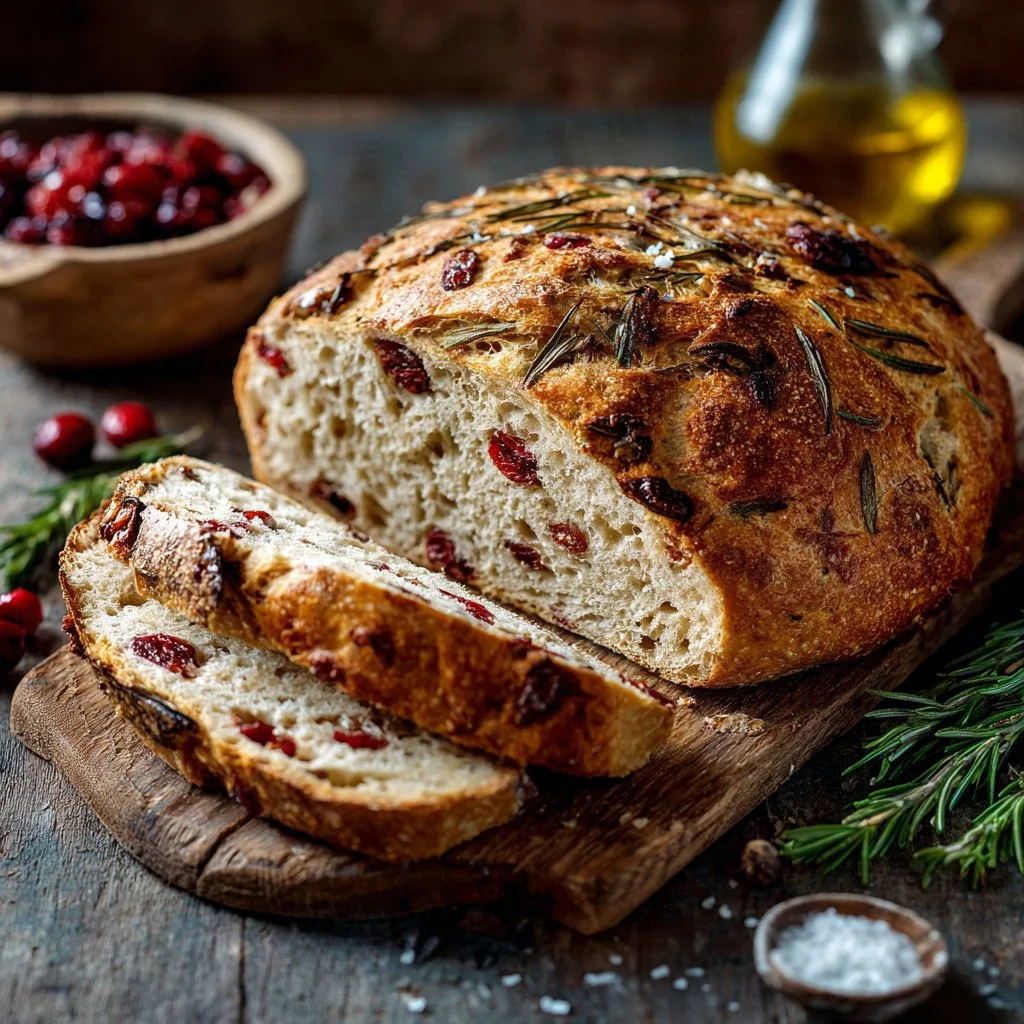
No-Knead Rosemary Cranberry Bread
Ingredients
Method
- In a large mixing bowl, whisk together the flour, salt, and instant yeast until evenly distributed.
- Pour the warm water over the dry mix and stir with a spatula until a rough, sticky, shaggy dough forms.
- Gently fold the chopped cranberries and rosemary into the dough.
- Cover the bowl tightly with plastic wrap and let it rise at room temperature for 12 to 18 hours.
- Place a Dutch oven in the oven and preheat to 450°F.
- Remove the Dutch oven, drizzle olive oil inside, and shape the dough into a ball before placing it seam side down in the pot.
- Drizzle the top with olive oil and sprinkle with sea salt, cover with the lid, and bake for 30 minutes. Then uncover and bake for an additional 15 minutes.
- Remove the loaf from the oven and let it cool on a wire rack for at least 30-60 minutes before slicing.