
A show-stopping Marble Bundt Cake that looks like a bakery loaf but tastes like home is easier than you think. This recipe gives a tender crumb, clear chocolate swirl, and a buttery vanilla finish. It’s perfect for brunch, holiday dessert tables, or an everyday treat.
Want more cake ideas while this bakes? Try a few creative recipes from the same kitchen for inspiration like the rich cake collection and a decadent cheesecake-studded cookie. If you love chocolate pairings, check the chocolate carrot patch cupcakes for another twist.
This Marble Bundt Cake is approachable for new bakers but worth the attention of pros. Save the recipe card and consider pinning to your boards before you start.
Why You’ll Love This Marble Bundt Cake
– Classic marbled look with a deep chocolate swirl and golden vanilla crumb.
– Tender, buttery texture that holds moisture for days.
– Easy-to-follow method uses common pantry ingredients.
– No special pans beyond a 10-inch Bundt — impressive results.
– Adaptable: add nuts, glaze, or extracts for seasonal twists.
– Reliable baking time range for home ovens.
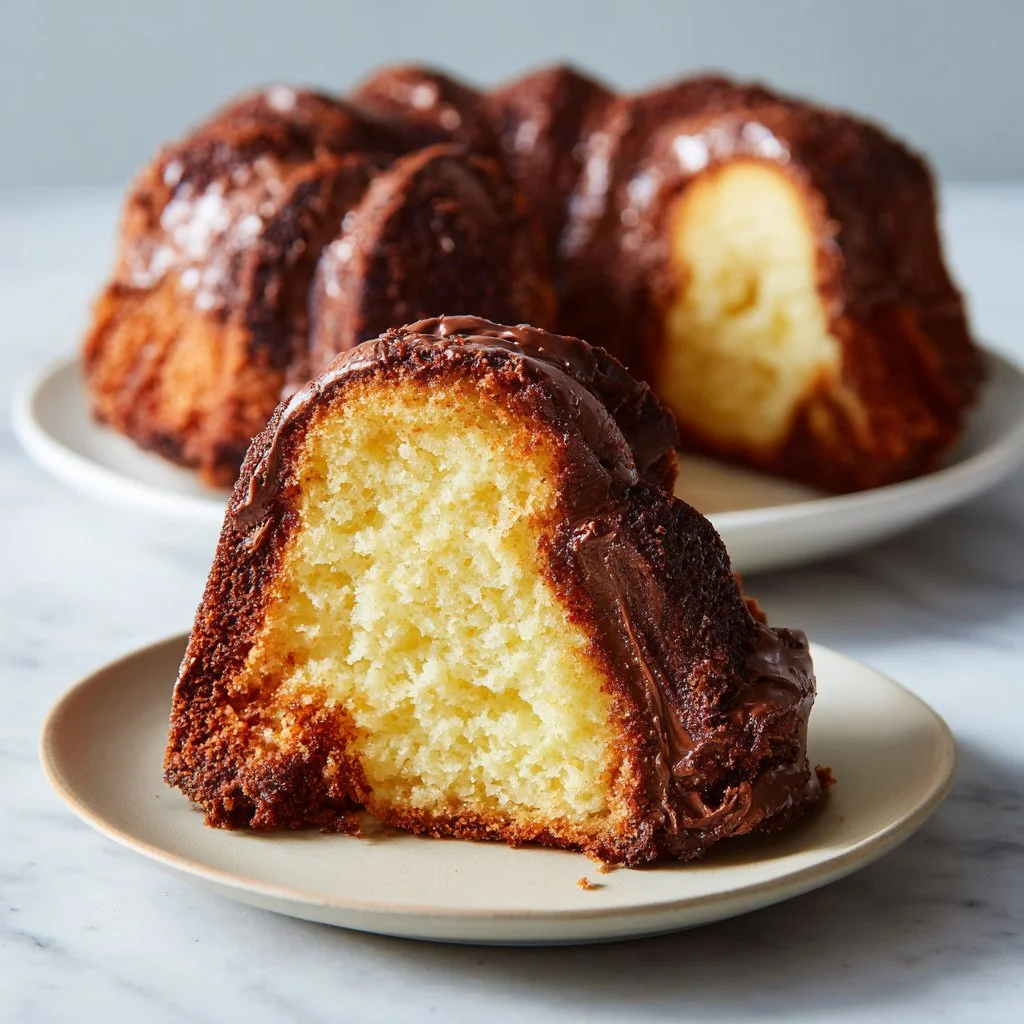
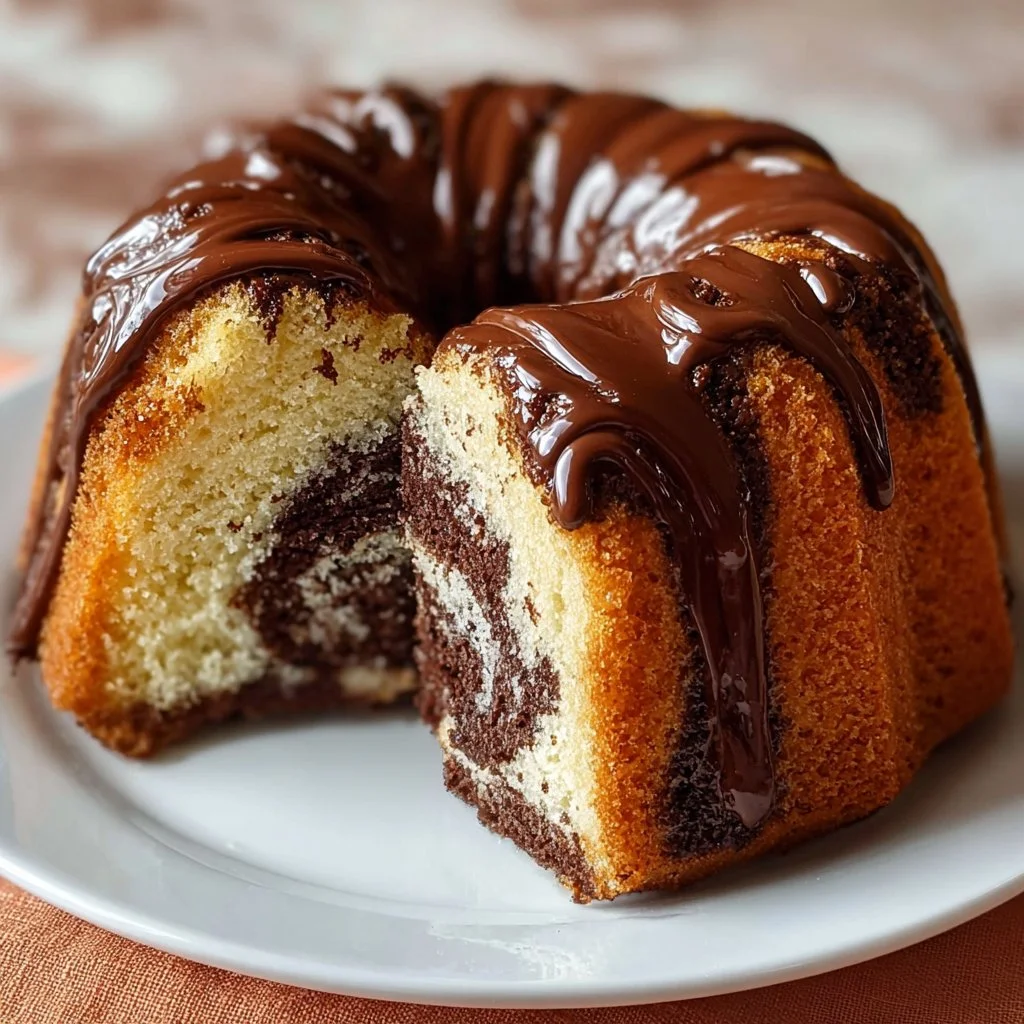
The taste is a balanced duet of bittersweet chocolate and browned-butter-like vanilla richness. The crumb is fine but tender, with a slightly crisp top from the Bundt pan’s exposed ridges that contrast the soft interior.
“5 stars — This Marble Bundt Cake was the hit of our family brunch. The swirls were perfect and it stayed moist for days. Will make again!”
Key Ingredients for Marble Bundt Cake
Butter
Butter provides flavor, tenderness, and structure by coating flour proteins and helping to trap air when creamed with sugar. Use unsalted butter at room temperature for the best balance; if only salted is available, reduce added salt slightly. Substituting a solid fat like margarine will change flavor and can produce a looser crumb.
All-Purpose Flour
All-purpose flour gives the cake enough protein to develop a stable yet tender crumb. Use a spoon-and-level measurement or a digital scale for accuracy; scooping directly from the bag packs too much flour and leads to dry cake. Swapping cake flour will make an even softer crumb but may reduce structure, so reduce liquid slightly if using cake flour.
Bittersweet Chocolate
Bittersweet chocolate brings depth and a clean chocolate flavor that contrasts the vanilla batter. Choose a high-quality bar you enjoy eating; melted chocolate integrates more smoothly than cocoa powder alone. If you substitute cocoa powder, increase fat slightly and add a touch more sugar to preserve balance.
Baking Powder (plus baking soda in the chocolate portion)
Baking powder creates the lift that makes the cake light, while a small pinch of baking soda in the chocolate batter offsets acidity and helps the chocolate lift and meld. Use fresh baking powder (check expiration) for reliable rise; omitting or using stale leavening yields a dense, uneven cake.
Full Ingredient List for Marble Bundt Cake
– 2–3/4 cups all-purpose flour
– 2–1/4 teaspoons baking powder
– 1 teaspoon table salt
– 1 cup (2 sticks) unsalted butter, at room temperature
– 1–3/4 cups granulated sugar
– 1 teaspoon vanilla extract
– 4 extra-large eggs
– 3/4 cup milk
– 4 ounces bittersweet chocolate, melted
– 1/4 teaspoon baking soda
Step-by-Step Instructions for Marble Bundt Cake
Step 1: Preheat and prepare the pan
Preheat the oven to 350°F and grease a 10-inch Bundt or tube pan thoroughly, using butter and a light dusting of flour or a nonstick spray designed for baking. Whisk together the flour, baking powder, and salt in a bowl and set aside so the leavening is evenly distributed before it hits the wet ingredients.
Pro Tip: The pan should look evenly greased with no pooled butter; the flour dusting will show a faint, even coating.
Step 2: Cream butter and sugar
In the bowl of a standing mixer fitted with the paddle attachment, cream the room-temperature butter and granulated sugar on medium speed until light and fluffy, about 3 to 4 minutes. This aeration creates the initial lift and contributes to a tender, open crumb.
Pro Tip: The butter-sugar mixture should look pale and noticeably fluffier; if it’s glossy and dense, keep creaming.
Step 3: Add vanilla and eggs
Add the vanilla and mix briefly, then add the extra-large eggs one at a time, mixing well after each addition. Scrape down the bowl between additions so the batter remains uniform and emulsified.
Pro Tip: After each egg, the batter should look smooth and slightly thickened; no lumps of unincorporated egg should remain.
Step 4: Alternate dry ingredients and milk
Add one-third of the dry ingredients, then stir in half the milk. Repeat with another third of the dry ingredients, the remaining milk, and finish with the last third of dry ingredients, mixing until just combined. Scrape the bowl periodically to keep everything even without overmixing.
Pro Tip: The batter should be thick but stirrable—if it looks gluey you may be overmixing.
Step 5: Make the chocolate batter
Divide the batter into two bowls. To one bowl, add the melted bittersweet chocolate and the 1/4 teaspoon baking soda, stirring until evenly combined. The soda reacts slightly with the chocolate’s acidity for lift and darker color.
Pro Tip: The chocolate batter should be visibly darker and pour/slightly droop when lifted; it shouldn’t be runny.
Step 6: Layer and swirl for a marble effect
Drop the batters into the prepared pan by heaping tablespoons, alternating chocolate and vanilla batters to build up layers. Once all the batter is in the pan, bang it several times on the counter to level. Use a thin knife or skewer to swirl through the mixture several times to create veining without overmixing.
Pro Tip: The swirl should show contrasting ribbons; if the batters look completely blended, you’ve over-swirlished.
Step 7: Bake and unmold
Bake until a cake tester inserted into the center comes out clean, about 60 to 75 minutes depending on oven variance. Let the cake cool in the pan for 10–15 minutes, then invert onto a wire rack and let cool completely before glazing or slicing.
Pro Tip: The cake top should be golden with a slightly firm spring; if the tester has wet crumbs, add 5–10 more minutes.
Expert Tips for Marble Bundt Cake
– Temperature tip: Use room-temperature eggs and butter so the batter emulsifies quickly and traps air for lift.
– Oven calibration: Test your oven with an oven thermometer; a 10–20°F difference will alter baking time and texture.
– Texture troubleshooting: If the crumb is gummy, you likely underbaked or measured too much liquid/flour.
– Equipment tip: A light-colored Bundt pan prevents over-browning; dark pans can cause the exterior to brown too fast.
– Batter handling: Do not overmix after adding flour; overworked gluten makes the cake dense.
– Swirl technique: For defined marbling, alternate small spoonfuls and swirl only a few times with a thin knife.
– Cooling advice: Cool 10–15 minutes in the pan, then invert; unmolding too soon can break the shape.
– Common mistakes: Skimping on greasing the pan or rushing the swirl stage leads to sticking and messy patterns.
Storage & Freezing for Marble Bundt Cake
For short-term storage, wrap the cooled Marble Bundt Cake tightly in plastic wrap and store at room temperature for up to 3 days. Use an airtight cake container if you plan to display it; this helps retain the crust texture while preserving moisture.
For refrigerator storage, place the wrapped cake in an airtight container and refrigerate up to 7 days. Bring to room temperature before serving to restore tenderness and flavor.
To freeze, wrap the fully cooled cake tightly in plastic wrap, then in a layer of foil, or place in a freezer-safe airtight container. Freeze up to 3 months. Thaw overnight in the refrigerator or at room temperature for several hours wrapped to prevent condensation.
For reheating slices, warm individual pieces in a 300°F oven for 5–8 minutes or microwave for 10–15 seconds; avoid over-heating which dries the cake.
Variations & Substitutions for Marble Bundt Cake
– Chocolate-Orange Marble: Add 1 tablespoon of finely grated orange zest and 1/2 teaspoon orange extract to the vanilla batter. The citrus brightness lifts the bittersweet chocolate for a brighter, festive cake.
– Nutty Marble: Fold 1/2 cup toasted chopped walnuts or pecans into the batter prior to layering. Nuts add crunch and a toasty counterpoint to the soft crumb.
– Cocoa-Intense Version: Replace the melted chocolate with 3/4 cup Dutch-process cocoa mixed with 3 tablespoons additional melted butter. This deepens chocolate flavor and darkens the swirl.
– Glazed Marble: Mix 1 cup powdered sugar with 1–2 tablespoons milk and 1/2 teaspoon vanilla and drizzle over the cooled cake. A thin glaze highlights the ridges and adds sweetness without masking the marble pattern.
Frequently Asked Questions About Marble Bundt Cake
Q: Can I use a different pan size for Marble Bundt Cake?
A: You can adapt the batter to a 9×5 loaf pan but baking times will change; expect 50–70 minutes. For smaller Bundt pans, reduce bake time and check at 40–50 minutes. Always check doneness with a tester and remember the cake batter should fill roughly two-thirds of the pan.
Q: Why did my marble pattern disappear during baking?
A: Over-swirlishing and thin batters blend too much during baking. Use contrasting spoonfuls, swirl just a few times, and keep the chocolate batter thicker than the vanilla. Also avoid tapping the pan excessively after swirling — light taps to settle are enough.
Q: How do I prevent the cake from sticking to the Bundt pan?
A: Grease thoroughly with butter, then dust lightly with flour, or use a nonstick baking spray that contains flour. Allow the cake to cool 10–15 minutes before inverting and tap the pan gently to release any stuck edges.
Q: Can I make this Marble Bundt Cake ahead for a party?
A: Yes. Bake the cake a day or two ahead and store it wrapped at room temperature; the flavors meld and moisture evens out. For longer prep, freeze the cake and thaw 24 hours before serving, then bring to room temperature.
Q: Is there a gluten-free version of this Marble Bundt Cake?
A: Substitute a 1:1 gluten-free flour blend that contains xanthan gum and measure by weight. Expect slight differences in crumb and rise; add an extra egg white or 1–2 tablespoons more milk if the batter feels too stiff to maintain moisture.
Final Thoughts on Marble Bundt Cake
If this Marble Bundt Cake becomes a regular in your rotation, please leave a star rating in the recipe card below and pin it to Pinterest for later. For similar marbled inspiration, check out this bakery’s new twist with the New Fashioned Marble at Nothing Bundt Cakes, a home-baker’s take on a chocolate swirl at Fresh Bean Bakery’s Chocolate Marbled Bundt Cake, and a denser, tangier option in the Marbled Sour Cream Pound Cake by Buttermilk by Sam.
Marble Bundt Cake
Ingredients
Method
- Preheat the oven to 350°F and grease a 10-inch Bundt or tube pan thoroughly with butter and a light dusting of flour.
- Whisk together the flour, baking powder, and salt in a bowl and set aside.
- In a standing mixer, cream the butter and sugar on medium speed until light and fluffy, about 3 to 4 minutes.
- Add the vanilla and mix briefly, then add the eggs one at a time, mixing well after each addition.
- Add one-third of the dry ingredients, then stir in half the milk. Repeat with the remaining ingredients until just combined.
- Divide the batter into two bowls. To one, add the melted chocolate and baking soda, stirring until evenly combined.
- Drop the batters into the prepared pan alternately and use a knife or skewer to swirl through the mixture without overmixing.
- Bake for 60 to 75 minutes until a cake tester comes out clean. Cool in the pan for 10–15 minutes before inverting onto a wire rack.