
Lilac season is fleeting, and these tiny floral Bundt cakes make the most of that perfume-forward moment.
They’re small, elegant, and bright enough for a spring brunch or gift box.
If you love delicate floral desserts, this recipe is an easy way to bake with petals at home.
I test recipes for texture and share tips for small molds and syrups. For other small-batch ideas, try these chocolate carrot patch cupcakes for seasonal flavor inspiration.
Why You’ll Love This Lilac Bundt Cakes
– Petite, elegant presentation perfect for gifting or tea.
– True floral aroma without overpowering the cake.
– Simple pantry ingredients with a show-stopping syrup.
– Mini Bundt shape gives crisp ridges and tight crumb.
– Quick bake time for small batches.
– Versatile glaze that can be tinted or left pale.
The taste is soft lemon-sweet cake with a floral lilac lift. Texture is fine and tender with a lightly springy crumb and a buttery finish that soaks up the syrup without becoming soggy.
“5 stars — These tiny lilac cakes were ethereal. The flavor was floral but balanced, and the mini Bundts looked picture-perfect on my brunch table.” — Reader M.K.
Key Ingredients for Lilac Bundt Cakes
Butter: Butter supplies flavor, richness, and structure; use unsalted so you can control salt. Buy European-style butter for higher fat if you want a silkier mouthfeel. If you substitute oil, the cakes will be moister but lose that classic buttery snap on the ridges.
Fresh lilac blossoms: Fresh petals deliver the delicate floral aroma; pick only fully open flowers and avoid green bits. Buy organic or harvest from a pesticide-free source to be safe. If you substitute dried lavender, use far less because dried flowers pack more concentrated oils and can taste medicinal in excess.
All-purpose flour: Flour gives the cake its crumb and holds the rise from leavener. Choose a reputable brand and lightly spoon-and-level when measuring to avoid dense cakes. Substituting cake flour will yield a softer crumb; if you do, reduce liquid by a tablespoon to maintain batter consistency.
Sugar (for cake and syrup): Sugar sweetens, stabilizes, and helps with browning in the tiny Bundt crevices. Use granulated sugar and pulse with petals for the infused sugar step. Reducing sugar will change texture and browning; for sugar swaps like erythritol expect different moisture and browning behavior.
Full Ingredient List for Lilac Bundt Cakes
– 1 cup sugar
– ½ cup packed fresh lilac blossoms (*see note for lavender option)
– 1 ½ cups all-purpose flour
– 1 tsp baking powder
– ¼ tsp baking soda
– ¼ tsp salt
– ½ cup milk
– 1 tsp lemon juice
– 1 stick butter (softened)
– 2 eggs
– ½ cup water
– ½ cup sugar
– ½ cup packed fresh lilac blossoms (**see note for lavender option)
– 1 ½ cups icing sugar (plus more as needed)
– 2 tbsp reserved lilac simple syrup
– 1 tbsp milk (plus more as needed)
– few drops violet food colouring
Step-by-Step Instructions for Lilac Bundt Cakes
Step 1: Prep oven and flowers
Preheat the oven to 350°F. Pick the lilac blossoms from the stem and discard the leaves and stems which can impart a bitter flavour. Combine the sugar and lilac blossoms in a food processor and pulse until the petals are mostly broken down but don’t over blend. Set aside.
Pro Tip: The infused sugar should look speckled and fragrant, not paste-like; you should smell the lilac when you open the bowl.
Step 2: Mix dry and soured milk
In a small mixing bowl combine the flour, baking powder, baking soda, and salt. Whisk together to combine. In a small measuring cup combine the milk and lemon juice. Whisk together and set aside.
Pro Tip: The soured milk will look slightly curdled and thicker; that tiny reaction helps tenderize the crumb.
Step 3: Cream butter and lilac sugar
In the bowl of a stand mixer combine the softened butter and lilac sugar. Beat using a paddle attachment until the butter and sugar are fully incorporated and creamy. Scrape down the sides as needed and beat until combined.
Pro Tip: Creamed butter should be pale and fluffy and leave a faint trail when you lift the paddle.
Step 4: Add eggs
Add the eggs one at a time to the mixer, beating in between to ensure the egg is fully incorporated before adding the next egg. Scrape down the sides as needed.
Pro Tip: Batter will gain volume and feel glossy when eggs are fully incorporated; no streaks of egg should remain.
Step 5: Alternate flour and milk
Add one third of the flour mixture to the mixer and beat on low just until the flour is mostly incorporated. Add half of the soured milk and beat just until it is mostly incorporated. Repeat with another third of the flour and the rest of the milk. Add the last of the flour mixture and beat on low just until the batter is fully combined.
Pro Tip: The batter should look homogeneous, slightly thick but pourable; avoid overmixing or the crumb will tighten.
Step 6: Prepare the pan
Spray a mini bundt cake mold generously with non-stick or bakers’ spray. Drop the cake batter into the mini bundt cake pan, making sure to fill in all the crevasses. Spread the batter evenly and tap the cake pan a few times on the counter to remove any air pockets.
Pro Tip: Each cavity should be about two-thirds full and the batter should sit level with no giant bubbles on top.
Step 7: Bake the cakes
Bake the cakes for 20 to 25 minutes until a toothpick comes out clean and the top springs back once touched. Transfer to a rack.
Pro Tip: The tops will be lightly golden and spring back; a wet crumb on a tester means add 2–3 more minutes.
Step 8: Make lilac-infused syrup
While the cake is baking, make the lilac infused syrup. In a small saucepan, combine the sugar and water. Place over medium high heat and bring to a simmer, stirring until the sugar is completely dissolved.
Pro Tip: The syrup should be clear and glossy before you remove it from heat; tiny steam lines indicate simmering.
Step 9: Steep blossoms
Once the syrup comes to a simmer, remove from the heat and add the lilac blossoms. Cover and let steep until the cakes have finished baking. Strain and discard the blossoms. Set aside two tablespoons of the syrup to use in the glaze.
Pro Tip: The strained syrup will smell floral and look slightly tinted; set aside a small clear dish to compare color.
Step 10: Make glaze
In a small bowl, whisk together the icing sugar, reserved lilac syrup, and milk. Whisk until smooth. Add a little violet food colouring. Add more milk or icing sugar as needed to create a pourable glaze that isn’t too runny.
Pro Tip: The glaze should flow slowly off the whisk and thin out slightly on the surface before setting.
Step 11: Brush and unmold
As soon as the cakes are finished baking, transfer the pan to a wire rack. Generously brush the tops (what will be the bottoms) of the cake with some syrup. Let cool for no more than 5 minutes. Turn the cakes out of the pan onto parchment paper.
Pro Tip: The tops will be glossy where brushed and the cakes should release cleanly; if they stick, cool another minute and tap the pan.
Step 12: Finish and serve
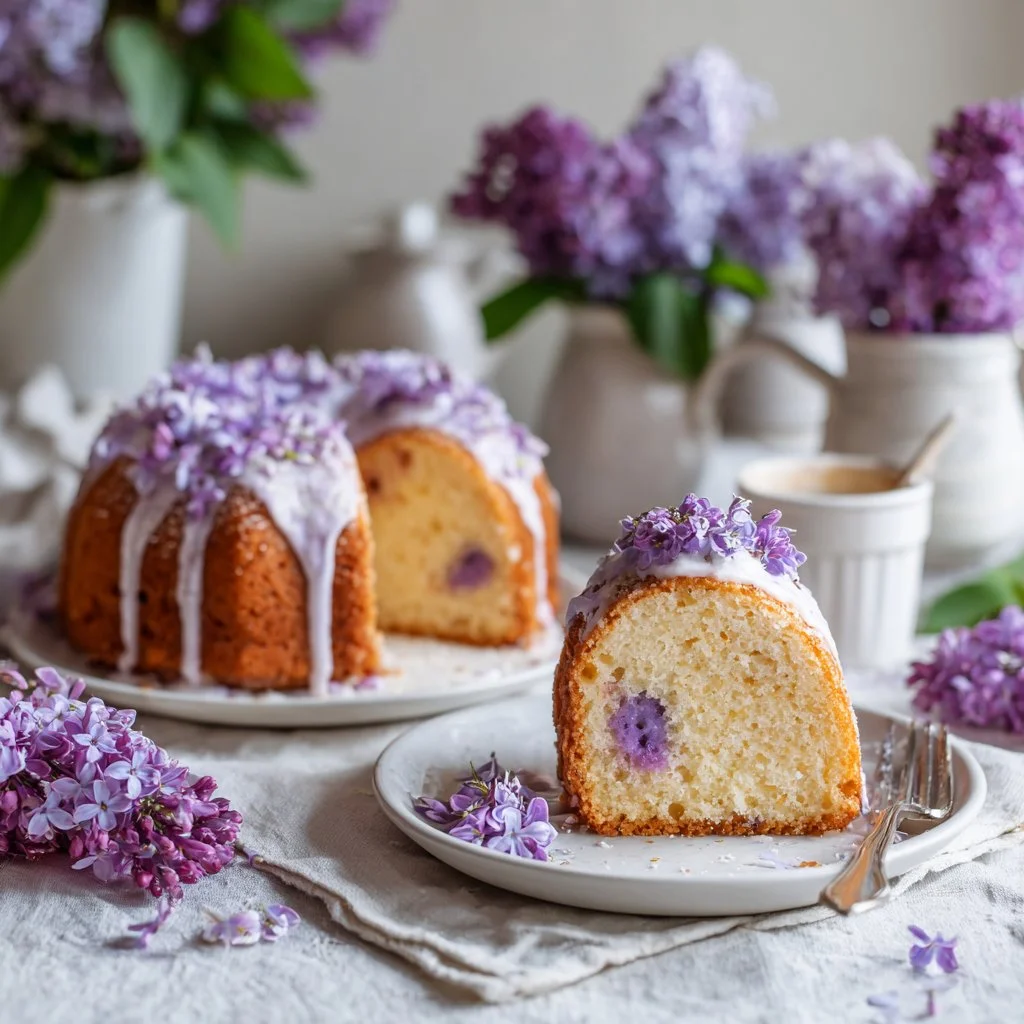
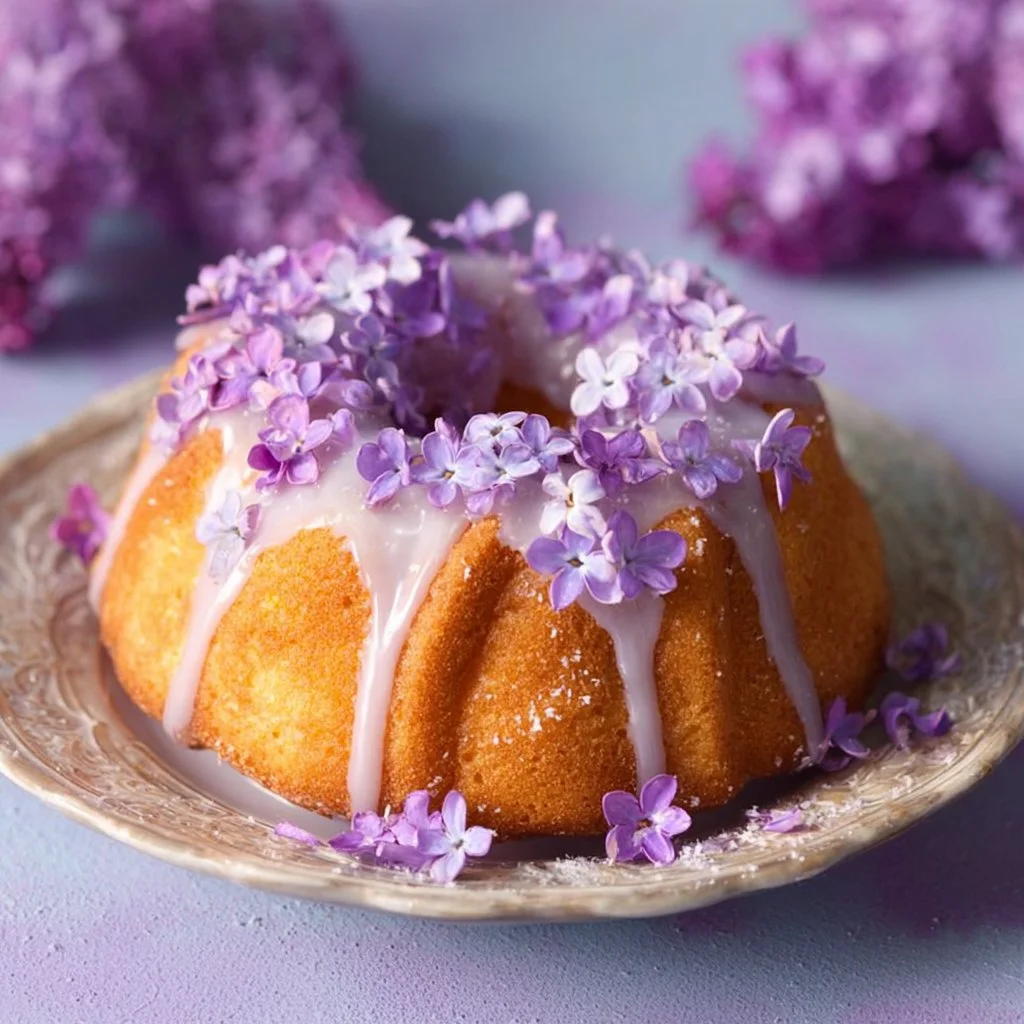
Brush the tops of the mini cakes with more syrup and let cool. Once the cakes are cool, drizzle with the glaze and allow to set. Enjoy!
Pro Tip: Finished cakes will have a gentle sheen, a pale violet glaze, and a faint floral scent that holds but does not overwhelm.
Expert Tips for Lilac Bundt Cakes
– Temperature tip: Preheat to 350°F and maintain steady oven heat; small pans respond quickly to temperature swings.
– Texture troubleshooting: Dense cakes usually mean overpacking flour or overmixing; sift and measure flour correctly and mix until just combined.
– Syrup balance: Don’t over-steep blossoms in hot syrup; steeping off heat extracts fragrance without bitterness.
– Equipment tip: Use a non-stick mini Bundt pan or silicon molds for easier unmolding; metal pans give sharper ridges but need better release.
– Common mistake: Leaving cakes in the pan to cool fully will trap steam and soften the crust; unmold while slightly warm for crisp edges.
– Visual cue: Look for a pale golden color, not deep brown, to keep the delicate floral impression intact.
– Glaze consistency: Aim for a thick pourable glaze — too thin and it runs off, too thick and it won’t coat the ridges.
– Cooling and glazing order: Brush syrup before unmolding and again after for layers of flavor; glaze after full cooling to avoid sliding.
In the tips above you can compare small-batch methods with other tiny treats like mini chocolate cheesecakes for portion control techniques.
Storage & Freezing for Lilac Bundt Cakes
Fridge storage: Store glazed cakes in an airtight container in the fridge for up to 4 days. Use a single layer or place parchment between layers to avoid smudging the glaze.
Freezer storage: Freeze unglazed cakes individually wrapped in plastic and then in a sealed bag for up to 3 months. For best texture, freeze before brushing syrup or glazing so the syrup doesn’t change ice crystals.
Thawing: Thaw overnight in the fridge or at room temperature for 1–2 hours. If frozen glazed cakes are thawed in the fridge, bring to room temperature 20 minutes before serving to revive aroma.
Reheating: Warm gently in a 300°F oven for 5–8 minutes to refresh crumb and aroma; do not microwave glazed cakes — glaze can melt unevenly and become overly glossy.
Variations & Substitutions for Lilac Bundt Cakes
Lemon-lilac: Add 1 tbsp lemon zest to the batter and increase lemon juice in the milk to 2 tsp for a brighter citrus lift. Result is tangier, with the citrus lifting the floral notes for a classic pairing.
Lavender swap: Substitute fresh lilac with 1–2 tsp culinary lavender (dried) across sugar and syrup steps, but steep briefly off heat to avoid bitterness. Expect a stronger perfume and slightly more herbaceous flavor reminiscent of traditional lavender cakes.
Pistachio crunch: Fold ¼ cup finely chopped pistachios into the batter and sprinkle chopped nuts on the glaze before it sets. This adds a buttery, nutty contrast and pleasing texture against the soft crumb; see similar nut pairings in pistachio and white chocolate cupcakes.
Gluten-free: Replace flour with a 1:1 gluten-free baking flour blend and add 1/4 tsp xanthan gum if not included. Cakes will be slightly crumblier but still aromatic; reduce mixing to prevent drying out.
Frequently Asked Questions About Lilac Bundt Cakes
Q: Can I eat lilac blossoms and are they safe?
A: Yes, lilac petals are edible when harvested from pesticide-free plants. Remove any green stems or leaves which can taste bitter. Wash gently and use only open flowers; avoid petals from treated or unknown sources.
Q: Can I use dried lavender instead of fresh lilacs?
A: You can, but dried lavender is more concentrated. Use about one-third the volume of dried lavender compared to fresh lilac petals and steep off heat to avoid a soapy or medicinal note. Taste the syrup early and remove blossoms once fragrant.
Q: How do I prevent the mini Bundt cakes from sticking?
A: Generously grease and flour metal pans or use a reliable baking spray designed for bundts. Unmold when slightly warm, not completely cool, and tap the pan to release; silicon molds will release more easily but yield softer ridges.
Q: My glaze is too runny; how do I fix it?
A: Gradually add more icing sugar to thicken the glaze, one tablespoon at a time. Conversely, thin with a few drops of milk if too thick. Aim for a ribbon that slowly disappears back into the bowl but still pours.
Q: Can I make a larger Bundt instead of minis?
A: Yes, scale baking time up for a standard 9–10 inch Bundt to roughly 35–45 minutes, but test frequently. A larger pan will change the crumb slightly — consider a light loaf pan trial if you want to perfect a single large cake.
Final Thoughts on Lilac Bundt Cakes
These Lilac Bundt Cakes are a small, fragrant way to showcase seasonal flowers with reliable technique. If you loved this recipe, please leave a star rating in the recipe card below and pin it to Pinterest for later.
Conclusion: Lilac Bundt Cakes
For extra inspiration on floral cake pairings, check this classic Lemon & Lilac Cake at RetroLillies.
If you want a darker, tea-infused version try the technique used in the Black Lavender Bundt Cakes at Smith Teamaker.
For a simpler lavender-only approach, this Lavender Bundt Cake at Homespun Seasonal Living walks through substitutions.
And for a lemon-lavender twist with step-by-step photos see the Lemon Lavender Bundt Cake at I Bake He Shoots.
Lilac Bundt Cakes
Ingredients
Method
- Preheat the oven to 350°F.
- Pick the lilac blossoms from the stem and discard the leaves and stems. Combine the sugar and lilac blossoms in a food processor and pulse until the petals are mostly broken down.
- In a bowl, combine flour, baking powder, baking soda, and salt and whisk together.
- In a small measuring cup, combine milk and lemon juice, whisking together.
- In a stand mixer, beat together the softened butter and lilac sugar until creamy. Scrape down the sides as needed.
- Add eggs one at a time, ensuring each is fully incorporated before adding the next.
- Gradually add flour mixture and soured milk alternately, starting with flour and ending with flour. Mix until just combined.
- Spray a mini Bundt cake mold with non-stick spray and fill each cavity with batter, ensuring it's level.
- Bake for 20 to 25 minutes or until a toothpick comes out clean.
- While cakes are baking, combine sugar and water in a saucepan and bring to a simmer to dissolve.
- Remove from heat, add lilac blossoms, cover, and steep until cakes are done baking. Strain and set aside syrup.
- In a bowl, whisk together reserved syrup, icing sugar, and milk for the glaze, adjusting consistency as needed.
- When cakes are baked, brush tops with syrup, cool briefly, and unmold onto parchment.
- Once cool, brush again with syrup and drizzle with glaze.
- Allow the glaze to set before serving.