
Bright, citrusy, and featherlight, this Lemon Chantilly Cake is the kind of dessert that feels celebratory without being heavy. It layers a tender lemon sponge with a delicate, lemon-kissed Chantilly cream for a refined finish.
Whether you’re bringing it to a spring brunch or keeping it for a quiet dessert at home, the cake feels effortless and special. Read on for the science behind each ingredient, exact step-by-step guidance, and troubleshooting tips to get it perfect.
If you want more layered cake ideas while you browse, check out this collection of other cake recipes for inspiration.
Why You’ll Love This Lemon Chantilly Cake – Light, Elegant & Bursting with Citrus Bliss
– Light, airy crumb that soaks up a bright lemon syrup.
– Fresh lemon flavor — both bright and aromatic.
– Chantilly cream is pillowy and not-too-sweet.
– Simple ingredients, showstopping result.
– Easy to scale up for entertaining.
– Balanced sweetness — tangy without being cloying.
This cake layers a tender, fine-crumb sponge with a syruped interior that keeps slices moist. The Chantilly cream adds silkiness and a floral vanilla note while lemon zest and juice lift the whole bite.
“Five stars — tender, bright, and the cream made it feel like a bakery cake at home. Served this at a shower and everyone asked for the recipe!” — A happy reader
Key Ingredients for Lemon Chantilly Cake – Light, Elegant & Bursting with Citrus Bliss
Flour: All-purpose flour gives the right protein level for a tender but stable crumb. Buy fresh, sift or whisk before measuring, and avoid high-protein bread flours which make a denser cake. If you substitute with cake flour, reduce by 2 tablespoons per cup to avoid an overly fragile crumb.
Lemon (juice + zest): Freshly squeezed lemon juice and bright lemon zest are crucial for authentic citrus aromatics. Bottled juice lacks volatile oils from the peel; always zest before juicing to capture that fragrant oil. If lemons are unavailable, use high-quality preserved lemon or a mix of lemon and a touch of orange for complexity.
Heavy cream (for Chantilly): Heavy whipping cream (36% fat) whips into stable, silky Chantilly cream and carries the delicate lemon flavor without breaking. Use cold cream and a chilled bowl for faster, more stable peaks. If you substitute with lower-fat cream, the whip will be soft and may collapse quickly; consider adding 1–2 tablespoons mascarpone for stability.
Eggs: Eggs provide structure, leavening, and moisture; they also emulsify the batter for a fine crumb. Use large eggs at room temperature for even incorporation and maximum volume when beaten with sugar. If omitting eggs, expect a significantly different texture — consider a tested eggless sponge recipe instead.
Full Ingredient List for Lemon Chantilly Cake – Light, Elegant & Bursting with Citrus Bliss
– 2 1/4 cups all-purpose flour
– 2 tsp baking powder
– 1/2 tsp baking soda
– 1/4 tsp salt
– 1/2 cup unsalted butter (room temperature)
– 1/4 cup neutral oil (like canola or vegetable)
– 1 1/2 cups granulated sugar
– 4 large eggs
– 1/2 cup sour cream or Greek yogurt
– 1/2 cup whole milk
– 1/4 cup freshly squeezed lemon juice (in batter)
– 2 tbsp lemon zest (in batter)
– 1 tsp vanilla extract
– 1/4 cup lemon juice (for syrup)
– 1/4 cup water (for syrup)
– 1/4 cup sugar (for syrup)
– 2 cups heavy whipping cream
– 1/2 cup powdered sugar
– 1 tsp vanilla extract (for Chantilly)
– 1 tbsp lemon zest (for Chantilly)
– Optional: 1/4 cup mascarpone or cream cheese for extra stability
Step-by-Step Instructions for Lemon Chantilly Cake – Light, Elegant & Bursting with Citrus Bliss
Step 1: Preheat and Prepare
Preheat the oven to 350°F (175°C). Grease two 8-inch round pans, line bottoms with parchment, and lightly flour the sides to ensure easy release. Arrange a rack in the center of the oven for even heat.
Pro Tip: The pans should feel warm to the touch before adding batter, and the parchment circle will sit flat without bubbling.
Step 2: Mix Dry Ingredients
Whisk together 2 1/4 cups all-purpose flour, 2 teaspoons baking powder, 1/2 teaspoon baking soda, and 1/4 teaspoon salt in a large bowl. Sifting or vigorous whisking aerates the flour and keeps the batter light.
Pro Tip: The dry mix should look homogenous and pale; no lumps or streaks of leavening visible.
Step 3: Cream Butter & Sugar
In a stand mixer or with a hand mixer, cream 1/2 cup room-temperature unsalted butter with 1 1/2 cups granulated sugar until pale and fluffy, about 3–5 minutes. This step incorporates air that helps the cake rise and gives a fine crumb.
Pro Tip: The mixture should ribbon when the beater is lifted — glossy and noticeably lighter in color.
Step 4: Add Wet Ingredients
Add 4 large eggs one at a time, mixing briefly after each. Stir in 1/4 cup neutral oil, 1/2 cup sour cream or Greek yogurt, 1/2 cup whole milk, 1/4 cup freshly squeezed lemon juice, 2 tablespoons lemon zest, and 1 teaspoon vanilla extract until combined.
Pro Tip: The batter will smell bright and citrusy and should be smooth, with no streaks of butter or curdled texture.
Step 5: Combine Wet & Dry
Fold the dry ingredients into the wet mixture in two additions, mixing gently until just combined. Overmixing develops gluten and yields a tougher cake, so stop when the flour streaks disappear.
Pro Tip: The finished batter should be thick but pourable and hold a smooth surface without lumps.
Step 6: Bake
Divide batter evenly between the prepared pans and smooth the tops. Bake for 22–28 minutes, or until a toothpick inserted into the center comes out with a few moist crumbs. Let layers cool in pans for 10 minutes, then invert onto racks.
Pro Tip: Tops should spring back gently and edges will pull away slightly from the pan; color should be golden, not browned.
Step 7: Make Lemon Syrup
Combine 1/4 cup lemon juice, 1/4 cup water, and 1/4 cup sugar in a small saucepan. Warm until the sugar dissolves, then cool slightly. Brush the syrup over warm cake layers to lock in moisture and boost lemon flavor.
Pro Tip: The syrup should be clear and glossy; applied to the warm cake it will soak in evenly without pooling.
Step 8: Whip Chantilly Cream
Chill a mixing bowl and whisk, then whip 2 cups heavy whipping cream with 1/2 cup powdered sugar, 1 teaspoon vanilla extract, and 1 tablespoon lemon zest to soft-medium peaks. For extra stability, fold in an optional 1/4 cup mascarpone or cream cheese.
Pro Tip: The cream should form soft peaks that hold shape but still look glossy and silky.
Step 9: Assemble the Cake
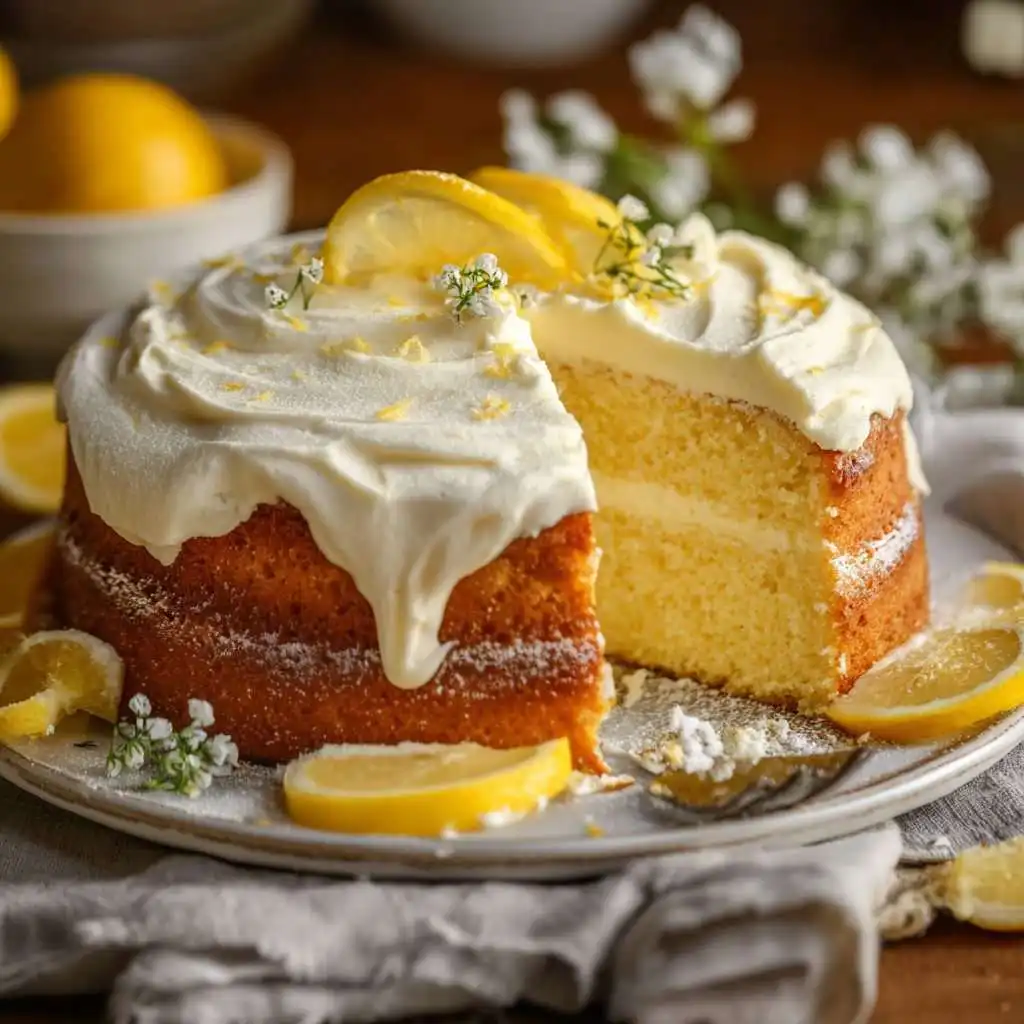
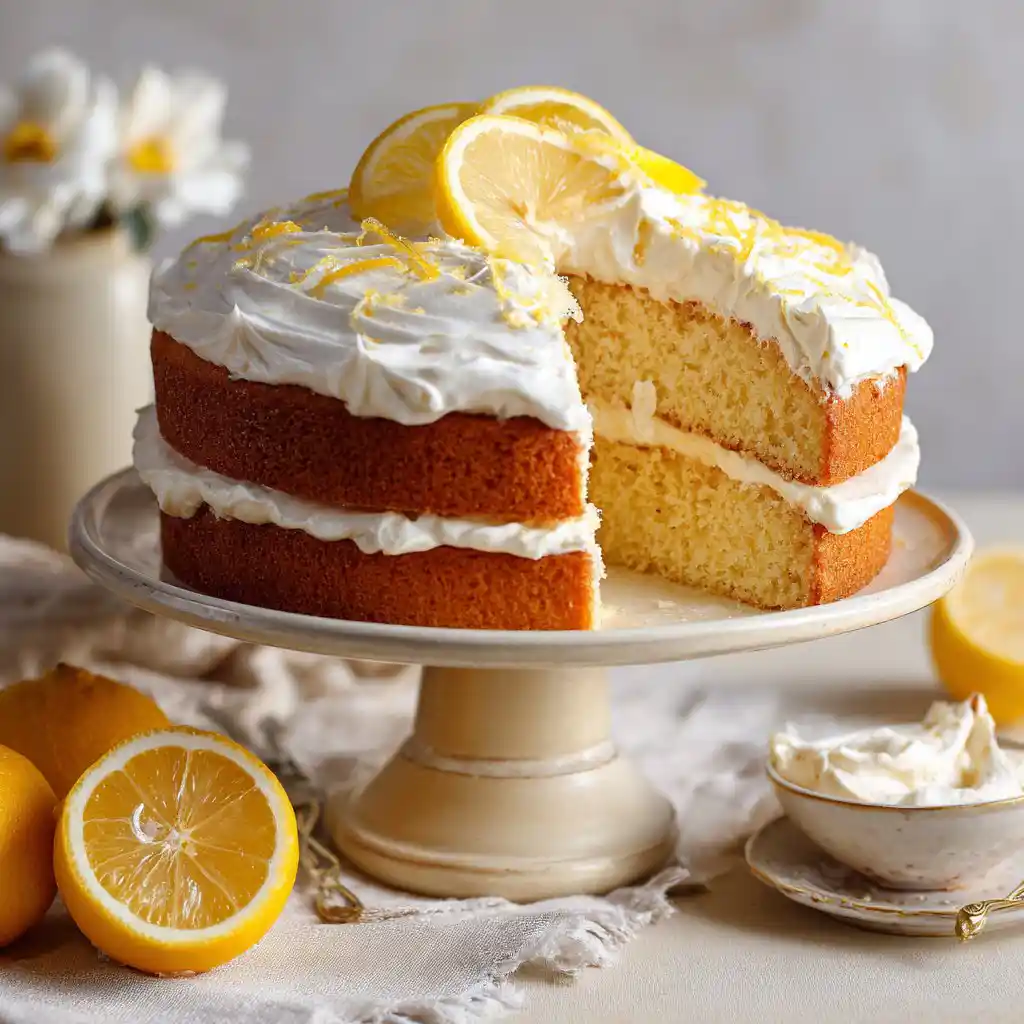
Place one layer on a cake plate, brush with syrup, then spread a thick, even layer of Chantilly cream. Top with the second layer, repeat syrup, and crumb-coat lightly. Chill briefly, then finish with a final smooth or textured coat of Chantilly.
Pro Tip: The assembled cake should sit level; if one layer tilts, trim the top slightly for a flat stacking surface.
Step 10: Decorate & Chill
Decorate with extra lemon zest, candied lemon slices, or thin lemon rounds. Chill the cake at least 1 hour to set the Chantilly before slicing. For sharper slices, chill 2–3 hours or overnight.
Pro Tip: The chilled cake will hold clean slices and the cream should look satiny rather than weeping.
Expert Tips for Lemon Chantilly Cake – Light, Elegant & Bursting with Citrus Bliss
– Temperature tips: Use room-temperature eggs and dairy for an even batter and better volume. Cold ingredients inhibit proper aeration.
– Whipping cream tips: Start with a chilled bowl and chill the cream itself; this yields faster, more stable peaks.
– Texture troubleshooting: If the crumb is gummy, bake slightly longer next time and check your leavening freshness.
– Syrup absorption: Brush syrup onto warm cake to improve penetration; too-cold cake repels the syrup.
– Equipment tips: Use an offset spatula for smooth frosting and an instant-read thermometer to check doneness (center should reach ~205°F for moist crumb).
– Stabilizing Chantilly: Fold in 1/4 cup mascarpone or 1 tablespoon cornstarch slurry before whipping if you need the cream to hold for several hours.
– Common mistakes: Overbeating the batter creates tunnels; underbaking creates dense centers. Aim for moist, springy cakes with a few crumbs on a toothpick.
– Visual cues: When assembling, the cream layer should be thick enough to compress slightly when the top layer is added — this ensures even slices.
For a different chilling method that works well for creamy desserts, see how we handle cold-setting cakes in this chilled cheesecake guide.
Storage & Freezing for Lemon Chantilly Cake – Light, Elegant & Bursting with Citrus Bliss
Fridge storage: Store the finished cake in an airtight cake keeper or a cake box in the refrigerator for up to 3 days. Cover loosely with plastic wrap to prevent fridge odors from transferring and to keep the cream’s texture.
Freezer storage: For longer storage, freeze individual slices wrapped tightly in plastic wrap and then foil for up to 2 months. Whole frosted cakes can be flash-frozen on a tray, then wrapped and stored; thaw in the fridge overnight.
Thawing & reheating: Thaw frozen slices in the refrigerator for 8–12 hours. Avoid microwaving whipped cream-topped slices; instead, bring to eating temperature by leaving at room temperature for 20–30 minutes.
Use a rigid container or cake box for fridge storage to avoid smudging the Chantilly. If you’d like storage inspiration for cream-forward desserts, check this storage and make-ahead approach.
Variations & Substitutions for Lemon Chantilly Cake – Light, Elegant & Bursting with Citrus Bliss
Lemon-Blueberry Layer: Fold 1 cup fresh or frozen blueberries into the batter and sprinkle a few between layers. The berries add juicy pockets and color, balancing lemon brightness with sweet berry notes.
Lemon-Cardamom Twist: Add 1/2 teaspoon ground cardamom to the dry ingredients and swap 1 tablespoon of lemon zest for orange zest. The cardamom gives a warm, aromatic complexity that elevates simple lemon.
Mascarpone-Stabilized Chantilly: Fold 1/4 cup mascarpone into the whipped cream for a richer, more stable frosting. This version holds shape longer for warm receptions and piping details.
Lemon Ricotta Sponge: Replace half the sour cream with 1/2 cup ricotta for a denser, silkier crumb that tastes almost custardy. The cake will be more tender and carry the lemon notes with a pleasant tang.
For a variation that focuses on lemon textures similar to ricotta-based cakes, you might enjoy this lemon ricotta recipe example at related cake variations.
Frequently Asked Questions About Lemon Chantilly Cake – Light, Elegant & Bursting with Citrus Bliss
Q: How do I prevent the Chantilly cream from weeping?
A: Use cold cream and chill your bowl and whisk before whipping. Stabilize with a small amount of mascarpone (1/4 cup) or a teaspoon of powdered gelatin bloomed in cold water and whisked into the whipped cream. Don’t over-sweeten — excess sugar can cause watery separation over time.
Q: Can I make the cake layers ahead of time?
A: Yes. Bake the layers up to 48 hours ahead, wrap tightly in plastic wrap, and store at room temperature if the kitchen is cool. For longer hold, refrigerate up to 3 days; bring to room temperature before assembling to allow syrup absorption.
Q: Why is my cake dense even though I used baking powder and soda?
A: Common causes are overmixing (develops gluten), expired leavening agents, or eggs too cold (less volume when beaten). Ensure leavening is fresh and fold the dry mix in gently until just combined.
Q: How long will the cake hold its texture once frosted?
A: Properly refrigerated, the cake keeps a good texture for 2–3 days. Chantilly is best within the first 24–48 hours; beyond that, the cream may soften and the crumb can continue to absorb moisture from the cream.
Q: Can I use bottled lemon juice or lemon extract?
A: Bottled lemon juice lacks volatile peel oils, so flavor will be flatter. Lemon extract is very concentrated — use sparingly (1/2 teaspoon) and pair with zest for brightness. For best aroma and depth, prioritize fresh lemon juice and zest.
{image_template}
Final Thoughts on Lemon Chantilly Cake – Light, Elegant & Bursting with Citrus Bliss
This Lemon Chantilly Cake is a bright, airy dessert that highlights fresh lemon and a silky Chantilly finish. If you tried it, please leave a star rating in the recipe card below and pin it to Pinterest for later.
Discover more baking inspiration in this feature on seasonal treats from edible Vancouver Island at Baking with Love: seasonal treats, try a smaller, tea-time lemon option in the glazed mini lemon poppyseed tea cakes, or explore a ricotta-forward lemon cake for a different texture in this lemon ricotta cake recipe.
Lemon Chantilly Cake
Ingredients
Method
- Preheat the oven to 350°F (175°C). Grease two 8-inch round pans, line bottoms with parchment, and lightly flour the sides.
- Whisk together flour, baking powder, baking soda, and salt in a large bowl.
- In a stand mixer, cream butter and sugar until pale and fluffy, about 3–5 minutes.
- Add eggs one at a time, mixing briefly after each. Stir in oil, sour cream, milk, lemon juice, lemon zest, and vanilla extract until combined.
- Fold in dry ingredients gently until just combined.
- Divide batter between prepared pans and smooth the tops.
- Bake for 22–28 minutes, or until a toothpick inserted comes out with a few moist crumbs.
- Let layers cool in pans for 10 minutes, then invert onto racks.
- Combine lemon juice, water, and sugar in a small saucepan. Warm until sugar dissolves, then cool slightly.
- Brush syrup over warm cake layers.
- Chill a mixing bowl and whisk, then whip cream with powdered sugar, vanilla extract, and lemon zest to soft-medium peaks.
- Fold in mascarpone if using.
- Place one layer on a cake plate, brush with syrup, then spread a layer of Chantilly cream.
- Top with second layer, repeat syrup, and crumb-coat lightly. Chill briefly, then finish with a smooth or textured coat of Chantilly.
- Decorate with extra lemon zest or candied lemon slices.
- Chill for at least 1 hour before slicing.