
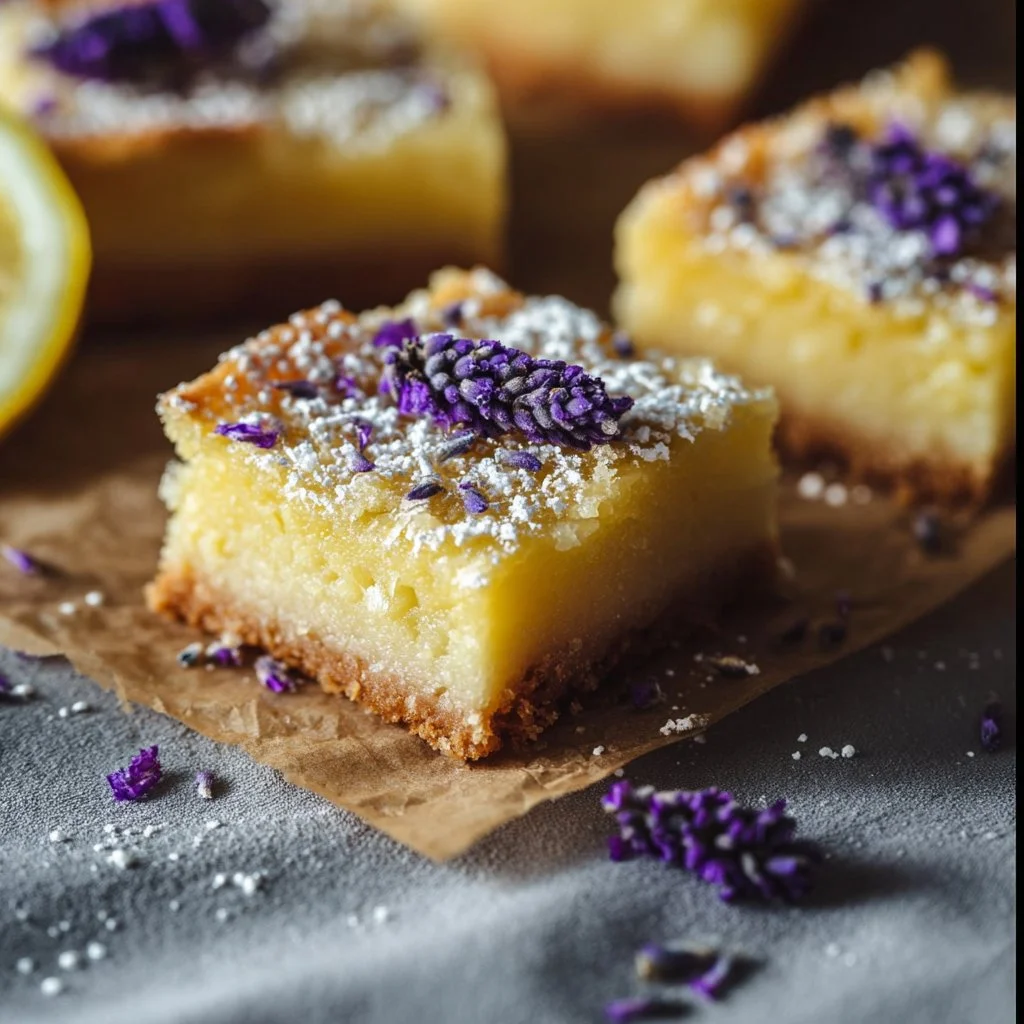
Bright, floral, and perfectly tart, these lavender lemon bars marry sunny citrus with a whisper of lavender for a dessert that feels both rustic and elegant.
They come together quickly and are ideal for afternoon tea, picnic bakes, or a light spring dessert.
This recipe is designed to be approachable for home bakers, with clear steps and visual cues to guide you through each stage.
Learn more about the blog and our approach on the about us page.
Why You’ll Love This Lavender Lemon Bars [65 Minutes] – Chasety
– Bright lemon curd with a floral lavender lift.
– Buttery shortbread crust that stays crisp.
– Fast to make: ready in about 65 minutes.
– Uses pantry-friendly ingredients and simple tools.
– Elegant enough for guests yet easy enough for weeknight baking.
– Versatile: swap citrus or fruit to adapt the flavor.
The flavor is a clear lemon-forward curd with a gentle, aromatic finish from culinary lavender. The texture balances a tender, crumbly shortbread base with a silky, slightly tangy lemon layer that holds its shape when sliced but yields under a fork.
★★★★★ "I made these for a garden party and everyone asked for the recipe. The lavender is subtle and perfect — not perfumy." — Reader M.
Key Ingredients for Lavender Lemon Bars [65 Minutes] – Chasety
All-purpose flour: This is the backbone of the shortbread crust and a thickener for the filling if you use flour instead of cornstarch. Buy unbleached AP flour for better flavor; if you substitute with cake flour the crust will be too tender and could collapse under the curd.
Unsalted butter: Butter controls flavor and mouthfeel in the crust. Use high-quality unsalted butter for a cleaner taste and consistent salt control; if you must use salted butter, reduce or omit added salt and expect a slightly saltier crust.
Fresh lemons (juice + zest): Fresh juice brightens the curd in a way bottled juice cannot. Always zest before juicing; bottled juice lacks volatile oils in the zest and yields a flatter flavor. If lemons are out of season, use Meyer lemons for sweeter notes, but reduce sugar slightly.
Culinary lavender: Use culinary-grade lavender buds only — do not use craft or fragranced lavender. The buds are potent; start with 1 teaspoon for a subtle hint or up to 1 tablespoon for a stronger floral note. Substituting lavender with dried herbs (like rosemary) will change the profile entirely.
Full Ingredient List for Lavender Lemon Bars [65 Minutes] – Chasety
– For the crust: 1 cup (226 g) unsalted butter, softened
– For the crust: 1/2 cup (60 g) powdered sugar
– For the crust: 2 cups (240 g) all-purpose flour
– For the crust: 1/4 teaspoon fine sea salt
– For the filling: 1 1/2 cups (300 g) granulated sugar
– For the filling: 3 large eggs, at room temperature
– For the filling: 1/2 cup (120 ml) fresh lemon juice (about 2–3 lemons)
– For the filling: 2 tablespoons lemon zest (from 2 lemons)
– For the filling: 1/4 cup (30 g) all-purpose flour (or 2 tablespoons cornstarch)
– For the filling: 1 tablespoon culinary lavender buds, lightly crushed (adjust to taste)
– For finishing: 1/4 cup powdered sugar for dusting (optional)
Step-by-Step Instructions for Lavender Lemon Bars [65 Minutes] – Chasety
Step 1: Prepare and preheat
Preheat your oven to 350°F (175°C) and line a 9×9-inch baking pan with parchment, leaving an overhang for easy removal. This ensures an even bake and a neat lift from the pan.
Pro Tip: The oven should be fully preheated; place your rack in the center and look for a gentle, even glow — not hot spots or excessive browning on a quick test sheet.
Step 2: Make the shortbread crust
Cream the softened butter and powdered sugar until light and smooth using a stand mixer or hand mixer. Add flour and salt, mixing until just combined; press the dough evenly into the prepared pan and smooth the top with a flat-bottomed measuring cup.
Pro Tip: The crust should look uniformly pressed with no dough cracks; when poked it will feel firm but not oily.
Step 3: Blind-bake the crust
Bake the crust for 18–20 minutes until the edges turn just golden and the surface appears set. Remove from the oven and reduce the oven temperature to 325°F (160°C) for a gentler finish on the curd.
Pro Tip: The crust’s color is your cue — aim for a warm, pale gold; deep brown means it’s overbaked and will be too hard.
Step 4: Infuse the lemon with lavender
In a small saucepan, gently warm the lemon juice with the crushed lavender and 1/4 cup of the granulated sugar. Warm just to a simmer, then remove from heat and steep for 5–8 minutes to extract floral oils; strain through a fine mesh and discard the solids.
Pro Tip: The infused liquid will smell perfumed but not soapy; a faint floral aroma indicates correct steep time.
Step 5: Whisk the filling
In a medium bowl whisk the remaining sugar with eggs, lemon zest, and the flour (or cornstarch). Slowly temper the whisked eggs by adding the warm, strained lemon-lavender liquid a little at a time, whisking constantly until fully incorporated.
Pro Tip: After tempering, the mixture should be smooth, glossy, and free of lumps; if curdled, whisk vigorously and add a tablespoon of warm liquid to smooth it.
Step 6: Bake the bars
Pour the filling over the hot crust and bake at 325°F (160°C) for 18–22 minutes until the center is set but still slightly jiggly — it will firm up as it cools. Remove from oven and let cool on a wire rack.
Pro Tip: The center has a slow wobble like firm jelly; a fully liquid center means more bake time is needed, while a dry surface means overbaked.
Step 7: Chill, slice, and finish
Cool the bars for about 10–15 minutes at room temperature, then chill in the refrigerator for another 10–15 minutes to firm the curd for clean slicing. Dust with powdered sugar before cutting into bars using a sharp knife wiped between cuts.
Pro Tip: The cut edges should be clean and slightly glossy; if they crumble, chill longer and re-slice with a warmed knife.
![Lavender Lemon Bars [65 Minutes] - Chasety](https://aminakitchen.com/wp-content/uploads/2026/03/lavender-lemon-bars-65-minutes-chasety-2026-03-21-203129.webp)
Expert Tips for Lavender Lemon Bars [65 Minutes] – Chasety
– Temperature tip: Use room-temperature eggs and butter so they incorporate smoothly and bake evenly.
– Texture troubleshooting: If the curd is too runny, return it to the oven for a few more minutes; if it’s rubbery, you likely overcooked it.
– Infusion control: Steep the lavender in warm lemon juice — too hot and the lavender tastes bitter; too cool and extraction is weak.
– Equipment tip: A tart pan or rimmed baking sheet with parchment prevents leaks and makes removal simple.
– Knife method: Chill briefly and use a sharp chef’s knife warmed under hot water for the cleanest slices.
– Common mistake: Over-crushing lavender into powder — a coarse crush releases flavor without bitterness.
– Substitution warning: Replacing flour in the filling with cornstarch will make a glossier, more gel-like set; use less cornstarch if you prefer a tender curd.
– Baking consistency: Rotate the pan halfway through baking if your oven has hot spots to keep edges and center uniform.
Storage & Freezing for Lavender Lemon Bars [65 Minutes] – Chasety
Fridge storage: Store bars in an airtight container in the refrigerator for up to 5 days. Stack with parchment between layers to prevent sticking.
Freezer storage: Wrap individual bars tightly in plastic wrap and place in a freezer-safe container for up to 3 months. For best texture, flash-freeze on a tray first, then transfer to the container to keep edges intact.
Thawing: Thaw frozen bars overnight in the refrigerator for best texture. Avoid leaving at room temperature more than an hour to keep the curd stable.
Reheating: These are best served chilled or at room temperature; if you prefer warm, briefly warm a single bar in a 300°F oven for 4–6 minutes, then cool slightly before eating.
Variations & Substitutions for Lavender Lemon Bars [65 Minutes] – Chasety
Blueberry-Lavender Lemon Bars: Fold 1/2 cup crushed fresh or thawed blueberries into the strained lemon mixture before baking. The berries add a sweet-tart fruit note and pretty lavender-blue speckles.
Honey-Lavender Lemon Bars: Replace up to 1/4 cup of the granulated sugar with honey and reduce liquid by 1 tablespoon. Honey softens the sharpness of lemon and deepens the floral character for a more rustic bar.
Almond Shortbread Crust: Replace 1/2 cup of the all-purpose flour with finely ground almond flour and bake as directed. The crust will be nuttier and slightly more tender, adding complexity and reducing gluten.
Vegan Lavender Lemon Bars: Use vegan butter for the crust and make a filling with aquafaba (chickpea brine) whipped with sugar, blended with lemon and a thickener like agar or cornstarch. The texture will be lighter and slightly more custard-like; expect subtle differences in set.
Frequently Asked Questions About Lavender Lemon Bars [65 Minutes] – Chasety
Q: Can I use fresh lavender from my garden?
A: Only use culinary-grade lavender or buds specifically labeled for cooking. Garden lavender may be treated with pesticides or be a variety not intended for eating, and non-culinary lavender can taste harsh or perfumy.
Q: How do I prevent the filling from cracking?
A: Avoid overbaking and let the bars cool gently. Remove when the center still jiggles slightly; a rapid temperature change can cause cracking, so cool at room temperature first, then chill briefly.
Q: Can I make these gluten-free?
A: Yes — substitute a 1:1 gluten-free flour blend for the crust and use cornstarch or a gluten-free flour in the filling. Note that texture will vary; gluten-free crusts tend to be crumblier.
Q: Why does my lavender taste so strong or soapy?
A: Over-steeping lavender or using lavender varieties not meant for cooking can cause a soapy taste. Use a light hand with culinary lavender and steep briefly in warm (not boiling) liquid.
Q: Can I prepare these a day ahead?
A: Yes. You can bake and refrigerate the bars up to 48 hours ahead; this actually helps flavor meld. Store in an airtight container with parchment between layers to prevent sticking.
![Lavender Lemon Bars [65 Minutes] - Chasety](https://aminakitchen.com/wp-content/uploads/2026/03/lavender-lemon-bars-65-minutes-chasety-2026-03-21-203132-2.webp)
Final Thoughts on Lavender Lemon Bars [65 Minutes] – Chasety (Conclusion)
For the full printable recipe and inspiration, visit the original Lavender Lemon Bars recipe on Chasety, and for related local guidance see the Pennsylvania Bulletin notices that discuss labeling and food guidance. If you’re using this recipe in a classroom or curriculum setting, you might also reference the Louisiana Grade 7 answer key as an example of integrating practical skills.
Please leave a star rating in the recipe card below and pin this to Pinterest if you loved it.
Lavender Lemon Bars
Ingredients
Method
- Preheat your oven to 350°F (175°C) and line a 9×9-inch baking pan with parchment, leaving an overhang for easy removal.
- Cream the softened butter and powdered sugar until light and smooth using a stand mixer or hand mixer.
- Add flour and salt, mixing until just combined; press the dough evenly into the prepared pan and smooth the top with a flat-bottomed measuring cup.
- Bake the crust for 18–20 minutes until the edges turn just golden and the surface appears set.
- In a small saucepan, gently warm the lemon juice with the crushed lavender and 1/4 cup of the granulated sugar. Warm just to a simmer, then remove from heat and steep for 5–8 minutes.
- Strain through a fine mesh and discard the solids.
- In a medium bowl, whisk the remaining sugar with eggs, lemon zest, and the flour (or cornstarch).
- Slowly temper the whisked eggs by adding the warm, strained lemon-lavender liquid a little at a time, whisking constantly until fully incorporated.
- Pour the filling over the hot crust and bake at 325°F (160°C) for 18–22 minutes until the center is set but still slightly jiggly.
- Cool the bars for about 10–15 minutes at room temperature, then chill in the refrigerator for another 10–15 minutes to firm the curd for clean slicing.
- Dust with powdered sugar before cutting into bars using a sharp knife wiped between cuts.