
Spring means pastel icing and tiny sprinkles, and these Italian Easter Cookies deliver both.
They’re buttery, soft, and dressed in glossy pastel icing — a classic from family tables to church potlucks.
Read on for science-backed tips, troubleshooting visuals, and clever variations to make them yours.
I love how these cookies are forgiving, festive, and fast to decorate.
They’re a great weekend bake for kids or a last-minute hostess gift.
Try them after my other festive recipes for Easter cookie variety.
Why You’ll Love This Italian Easter Cookies
- Buttery, tender crumb that melts in your mouth.
- Simple dough with pantry-friendly ingredients.
- Quick bake time for large batch production.
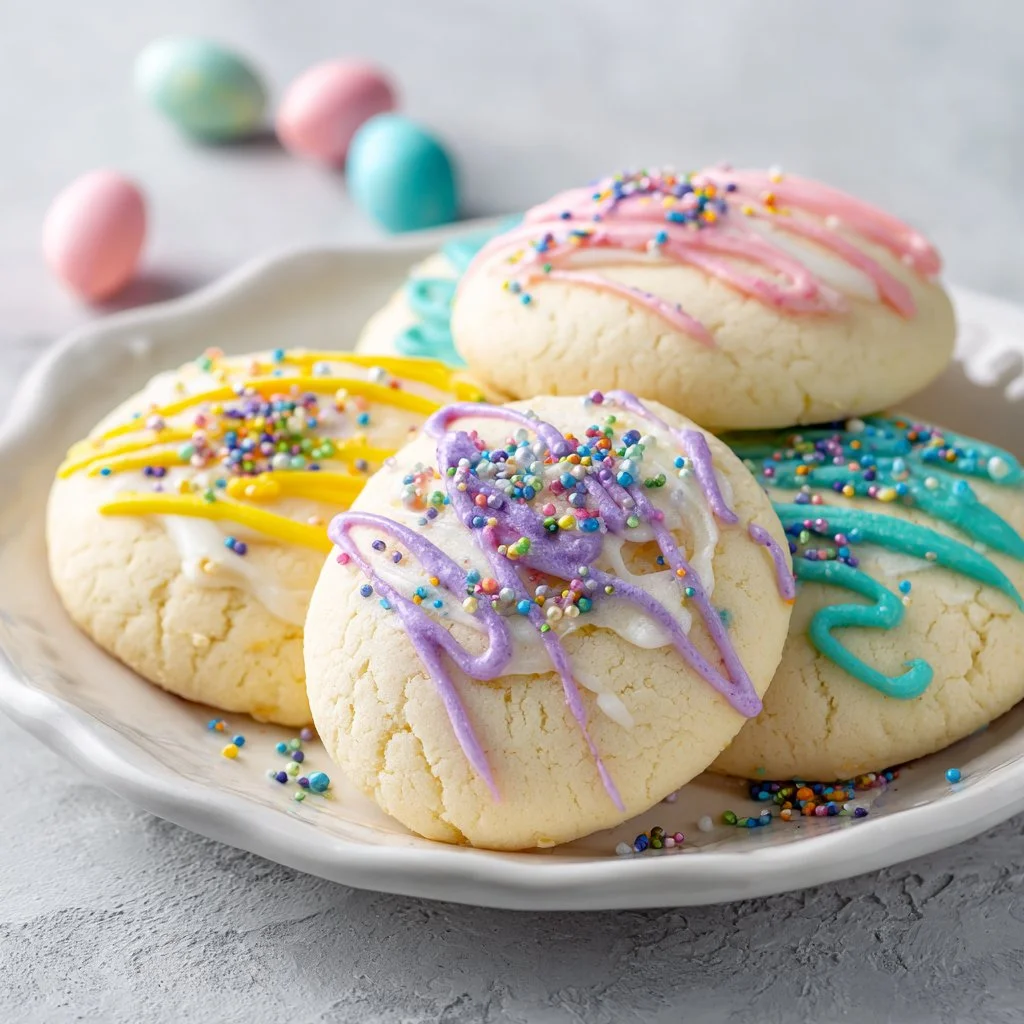
- Bright, glossy icing that holds sprinkles without sogginess.
- Easily shaped into knots or donuts for a classic look.
- Kid-friendly decorating with endless color options.
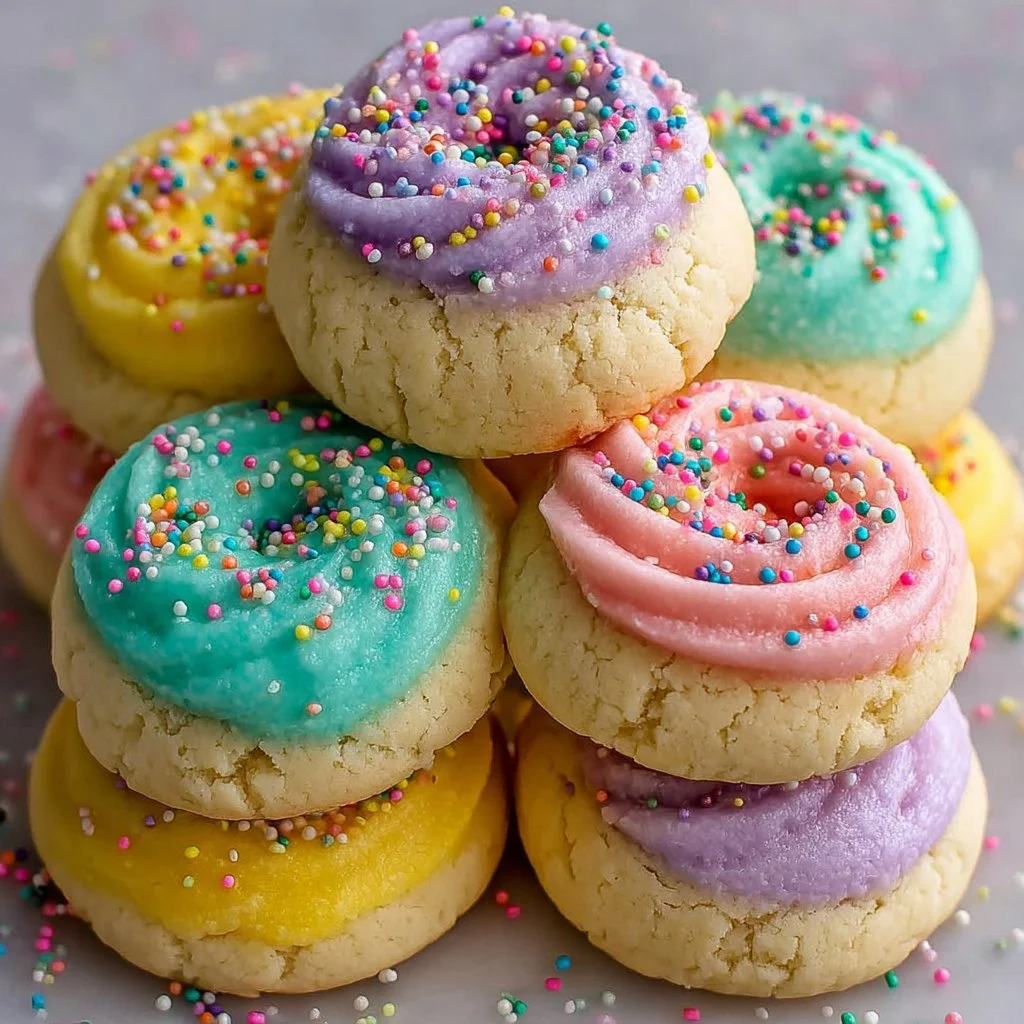
These Italian Easter Cookies are softly tender with a delicate crumb and a glossy, slightly chewy icing. The interior is buttery and light thanks to the balance of eggs, butter, and baking powder, while the icing adds that bakery-style sheen and a snap of sweetness on the outside.
★★★★★ “These tasted like something my grandmother would make — light, buttery, and perfect for Easter brunch. The icing stayed glossy and the kids loved the sprinkles!” — Reader M.
If you enjoy playful Easter cookies, this recipe pairs well on a holiday spread.
Key Ingredients for Italian Easter Cookies
Butter — Unsalted butter at room temperature gives the cookies their rich flavor and soft structure. Buy a high-quality European-style butter if you want a slightly tangier, more pronounced butter note. If you substitute margarine or a soft spread, expect a flatter flavor and a different melt profile that can make the cookie denser.
All-purpose flour — This provides structure via gluten while keeping the cookies tender. Use fresh flour stored in a cool, dry place; older flour can taste stale. Substituting cake flour will make them even softer but may require slightly less liquid; bread flour will make them chewier and tougher.
Granulated sugar and eggs — Sugar helps with browning and tenderization while eggs provide emulsification and lift. Use room-temperature eggs so they blend smoothly and yield a consistent texture. Reducing sugar will give you a drier, less golden cookie; swapping eggs for an egg replacer will change texture and rise.
Powdered sugar (for icing) and light corn syrup (icing) — Powdered sugar makes a smooth, lump-free glaze and the corn syrup adds shine and keeps the glaze from crystallizing. Use sifted powdered sugar for the glossiest finish. If you skip corn syrup, the icing will still set but may be matte and more prone to graininess.
For another classic Italian cookie, try pine nut cookies as a contrasting nutty bite.
Full Ingredient List for Italian Easter Cookies
- 6 tablespoons unsalted butter, room temperature
- 1/2 cup granulated sugar
- 2 large eggs, room temperature
- 2 teaspoons vanilla extract
- 1 teaspoon almond extract
- 2 tablespoons whole milk
- 2 cups all-purpose flour
- 2 teaspoons baking powder
- 1 teaspoon salt
- 3 cups powdered sugar (icing)
- 2-4 tablespoons whole milk (icing)
- 2 tablespoons light corn syrup (icing)
- 1 teaspoon almond extract (icing)
- Gel food coloring (purple, pink, blue, yellow)
- Rainbow sprinkles
Step-by-Step Instructions for Italian Easter Cookies
Step 1: Preheat and prepare
Preheat your oven to 350°F and line baking sheets with parchment. Lining lets cookies bake evenly and makes cleanup effortless.
Pro Tip: The oven should feel warm immediately when you open it; if it’s cool, the cookies will spread more.
Step 2: Cream butter and sugar
Beat butter and granulated sugar together until light and creamy using a stand mixer or handheld beaters. This step incorporates air for lift and gives a softer crumb.
Pro Tip: The mixture should look pale and slightly fluffy, not greasy.
Step 3: Add eggs and extracts
Add the eggs one at a time, mixing well after each addition, then beat in vanilla and almond extracts. Proper emulsification ensures a uniform dough and even baking.
Pro Tip: The batter should smooth out and look glossy after eggs are fully incorporated.
Step 4: Combine dry ingredients
Sift the flour, baking powder, and salt together to remove lumps and distribute leavening. Sifting yields a lighter, more consistent dough.
Pro Tip: The dry mix should appear airy and homogenous, with no visible clumps.
Step 5: Alternate adding milk and flour
Add the sifted flour and milk to the butter mixture in alternating additions, beginning and ending with flour. Mix just until combined to avoid overworking gluten.
Pro Tip: The dough should pull away from the bowl sides and feel soft but not sticky.
Step 6: Shape the cookies
Form 1.5-tablespoon portions of dough into 6–7 inch logs, then shape into knots or donut shapes as desired. Rolling with light pressure gives an even thickness for baking.
Pro Tip: The logs should be smooth and even in thickness; rough or cracked logs will bake unevenly.
Step 7: Bake and cool
Bake on prepared sheets for 9 minutes, until the bottoms are just golden. Remove and cool completely on a wire rack before icing. Slight underbake slightly for a softer center.
Pro Tip: The bottom should show a faint golden rim but the top will remain pale and slightly springy.
Step 8: Make icing and decorate
Whisk the icing ingredients — powdered sugar, 2–4 tablespoons milk, corn syrup, and almond extract — until smooth. Divide and color with gel food coloring, dip cookies, and immediately add rainbow sprinkles.
Pro Tip: The glaze should be glossy and fluid enough to coat but thick enough to cling; it should hold sprinkles without them sinking in.
If you like soft, buttery cookies, my Soft Italian Christmas Cookies use many of the same techniques and textures.
Expert Tips for Italian Easter Cookies
- Rest ingredients at room temperature: cold butter or eggs resist emulsification and can make the dough lumpy.
- Watch oven hot spots: rotate pans halfway through baking for even color and doneness.
- Don’t overmix the dough: stop when flour disappears to avoid tough cookies.
- Use gel food coloring: gels give vibrant pastels without thinning the icing.
- Temperature tip: if your kitchen is warm, chill shaped logs for 10 minutes before baking to control spread.
- Texture troubleshooting: if cookies spread too thin, add a tablespoon more flour next time or chill dough briefly.
- Equipment tip: a small offset spatula makes glazing and transferring easier and cleaner.
- Common mistake: dunking warm cookies in icing; always cool completely to prevent soggy tops.
For an indulgent twist, try sandwiching a flavored spread between two cookies for a filled treat.
Storage & Freezing for Italian Easter Cookies
Store cooled cookies in an airtight container at room temperature for up to 3 days. Layer with parchment to prevent sticking and keep the icing intact.
Refrigerator storage is possible in a single layer in a shallow airtight container for up to 1 week but bring to room temperature before serving to soften the sugar crust.
For longer storage, freeze undecorated shaped logs or fully baked plain cookies in a freezer-safe bag for up to 3 months. Freeze flat on a tray first, then transfer to a bag to maintain shape.
To thaw, move to the refrigerator for an hour, then bring to room temperature; reheat briefly at 300°F for 4–6 minutes if you want the fresh-baked sensation.
Variations & Substitutions for Italian Easter Cookies
Almond-forward cookies: Increase the almond extract in the dough to 1 1/2 teaspoons and add a tablespoon of finely chopped almonds to the dough. The result is a pronounced almond aroma and pleasant nutty texture.
Lemon glaze variation: Replace almond extract in icing with 1 teaspoon lemon zest and 1 tablespoon lemon juice, reducing the milk slightly. The glaze becomes bright and tangy, cutting the sweetness for a fresher bite.
Chocolate-dipped twist: Dip half of each cooled cookie in tempered dark chocolate instead of colored icing. You’ll get a rich contrast and a crisper finish that holds up well for gifting.
Filled center variation: After baking, slice cookies horizontally and sandwich a thin layer of jam or pastry cream. This turns a simple cookie into a small, elegant petit four with extra moisture and flavor.
Try a toffee or brown-butter riff for deeper caramel notes that pair beautifully with the classic icing.
Frequently Asked Questions About Italian Easter Cookies
Q: Why did my cookies spread too much?
A: Overly warm dough, too much butter, or too little flour can cause excess spread. Chill the shaped logs for 10–15 minutes before baking and measure flour accurately by spooning into the cup and leveling. Also confirm your baking powder is fresh; old leavening can alter oven spring and spread.
Q: How do I get a smooth, glossy icing?
A: Sift the powdered sugar to remove lumps and add liquid incrementally until the glaze reaches a pourable yet thick consistency. Stir in light corn syrup for shine, and avoid over-thinning with too much milk. If the glaze sits too long, whisk briefly before dipping to restore gloss.
Q: Can I make these cookies ahead of time?
A: Yes — dough logs can be shaped and frozen raw up to 3 months. Freeze them on a tray, then bag. Bake from frozen, adding 1–2 minutes to the bake time. Fully baked cookies store up to 3 days at room temperature in an airtight container.
Q: My icing ran off the cookies — how do I fix that?
A: Your icing was too thin. Add more powdered sugar until it thickens and coats the back of a spoon. Chill the cookies before dipping so the glaze sets on contact, and avoid dipping warm cookies.
Q: Can I make these gluten-free?
A: Yes, use a 1:1 gluten-free flour blend that contains xanthan gum. Expect a slightly different texture — often softer and crumblier — and consider chilling the shaped dough briefly to help maintain structure in the oven.

For another flavor direction, experiment with brown butter and toffee mix-ins noted earlier in the tips.
Final Thoughts on Italian Easter Cookies
If you loved this recipe, please leave a star rating in the recipe card below and pin it to Pinterest for easy reference. For historical context and variations, check out Italian Easter Egg Cookies – Cooking with Nonna, a modern take at Italian Easter Cookies (Authentic Buttery Soft Recipe), and a home-baker friendly version at Italian Easter Cookies – Mom On Timeout.
Italian Easter Cookies
Ingredients
Method
- Preheat your oven to 350°F (175°C) and line baking sheets with parchment paper.
- Cream the butter and granulated sugar together until light and fluffy.
- Add the eggs one at a time, mixing well after each addition, then beat in the vanilla and almond extracts.
- In a separate bowl, sift together the flour, baking powder, and salt.
- Add the sifted dry ingredients and milk to the butter mixture alternately, beginning and ending with flour.
- Shape the dough into logs and twist into knots or donut shapes.
- Bake for 9 minutes or until the bottoms are just golden. Cool completely.
- Prepare the icing by whisking the powdered sugar, milk, corn syrup, and almond extract until smooth.
- Color the icing as desired and decorate with sprinkles.