
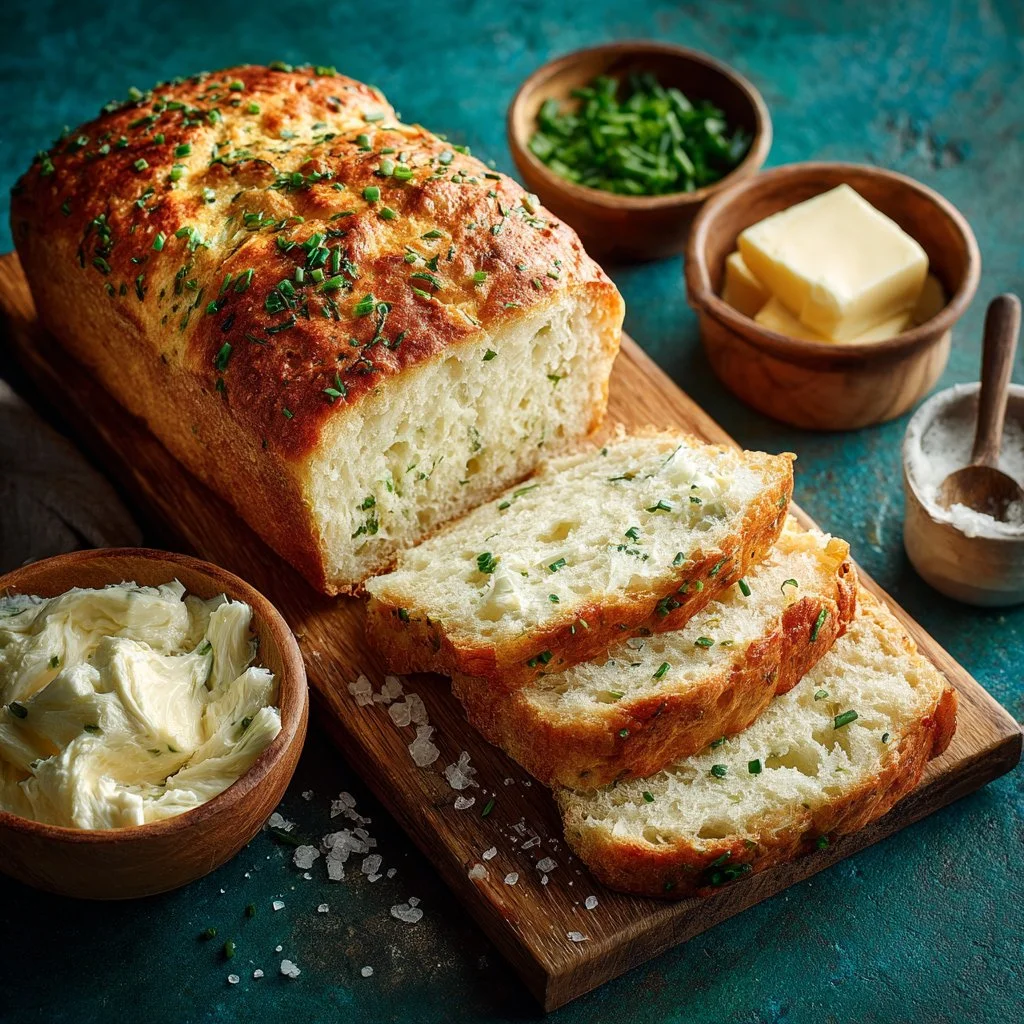
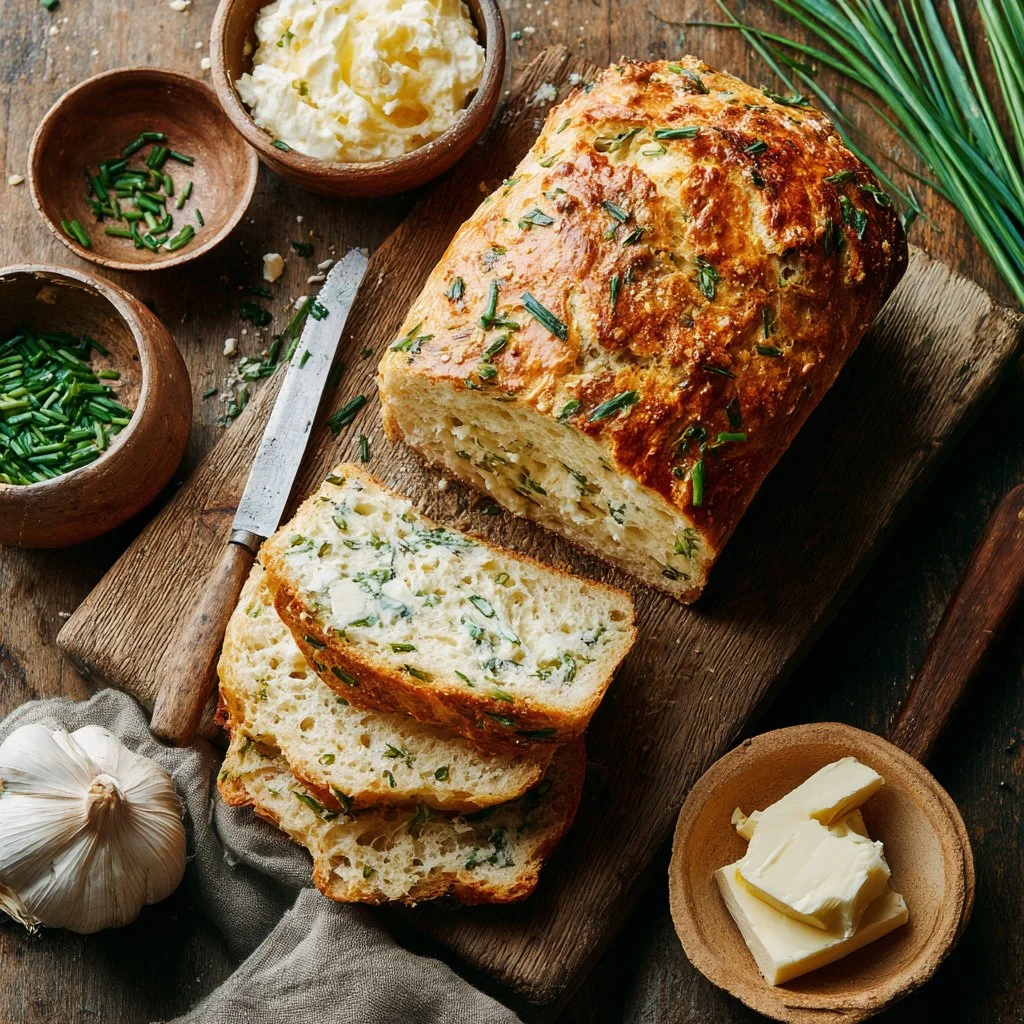
A warm, golden loaf studded with bright green chives is comfort in bread form.
This quick, tangy sour cream bread is perfect beside soups, salads, or a cozy dinner.
It bakes up tender, slightly tangy, and richly buttery.
You’ll want to slice it while it’s still warm.
Why You’ll Love This Heavenly Sour Cream Chive Bread for Cozy Meal Pairings
– Tender, moist crumb that stays soft for days.
– Bright chive flavor that complements savory meals.
– Slight tang from sour cream for depth without overpowering.
– Crispy golden crust that contrasts the pillowy inside.
– Easy-to-follow method for reliable results every time.
– Versatile with soups, stews, and weekend brunch spreads.
This bread tastes tangy and buttery with an open, slightly chewy crumb. The chives add a fresh onion note, and the crust browns to a satisfying crunch that pairs beautifully with creamy soups and roasted vegetables.
“Five stars — This loaf disappeared at dinnertime. Tangy, soft, and full of chive flavor. I served it with potato soup and everyone asked for the recipe!”
In the second paragraph above, try my buttery shortbread sprinkle bites if you want a match for after-dinner sweets.
Key Ingredients for Heavenly Sour Cream Chive Bread for Cozy Meal Pairings
Bread Flour
Bread flour gives the structure and chewiness this loaf needs. Choose a high-protein bread flour for better gluten development and a springy crumb. If you swap for all-purpose flour the loaf will still work but the texture will be slightly denser and less chewy.
Sour Cream
Sour cream adds tang, moisture, and richness that keep the loaf tender. Look for full-fat sour cream for best flavor; Greek yogurt can substitute but use slightly less to avoid a dryer dough. The acidity also reacts with baking soda to give a small lift and nuanced flavor.
Active Dry Yeast
Yeast is the lift and flavor engine here; fresh, active dry yeast ensures a reliable rise. Proof it briefly in warm liquid if you doubt freshness, and avoid water that’s too hot to prevent killing the yeast. Instant yeast can be used but may change timing slightly.
Minced Chives
Chives provide the gentle onion brightness that defines this loaf. Use fresh chives for a vibrant color and clean flavor; scallions work in a pinch but will taste more assertive. Dried herbs won’t give the same fresh pop, so reduce if using dried.
In the Key Ingredients section I also link a lighter dessert to keep flavor ideas balanced: try this creamy lime jello mousse for a bright finish after a savory meal.
Full Ingredient List for Heavenly Sour Cream Chive Bread for Cozy Meal Pairings
– 2/3 cup 2% milk (Adds moisture and tenderness; use whole milk for a richer loaf.)
– 1/4 cup water (Hydration for dough development; can substitute with additional milk.)
– 1/4 cup sour cream (Contributes tanginess and moisture; Greek yogurt can be a substitute.)
– 2 tablespoons butter (Enriches flavor and moisture, essential for a tender crumb.)
– 1-1/2 teaspoons sugar (Aids in browning and balancing flavors; can omit for less sweetness.)
– 1-1/2 teaspoons salt (Enhances flavor; essential for bread-making, do not reduce significantly.)
– 3 cups bread flour (Provides structure and chewiness; all-purpose flour can be used but may yield a denser loaf.)
– 1/8 teaspoon baking soda (Assists in leavening; essential when reacting with acidic ingredients like sour cream.)
– 1/4 cup minced chives (Adds a fresh, mild onion flavor; substitute with green onions if needed.)
– 2-1/4 teaspoons active dry yeast (Ferments and leavens the bread; ensure yeast is fresh for best results.)
Step-by-Step Instructions for Heavenly Sour Cream Chive Bread for Cozy Meal Pairings
Step 1: Warm the liquids and soften the butter
Warm the milk and water together until just warm to the touch, about 95°F to 110°F. Add the butter and stir until melted, then whisk in the sugar and salt so they dissolve evenly. This creates a uniform warm environment for the yeast and helps distribute fat for a tender crumb.
Pro Tip: The liquid should feel gently warm, not hot; too hot will smell sharp and can kill the yeast.
Step 2: Activate the yeast
Sprinkle the active dry yeast over the warm liquid and let it sit 5–10 minutes until foamy. If the mixture doesn’t foam, the yeast may be inactive; start over with fresh yeast to ensure proper rise. A lively foam signals healthy fermentation and good oven spring.
Pro Tip: Look for a bubbly, frothy surface that smells faintly yeasty and sweet.
Step 3: Combine sour cream and baking soda
In a small bowl, whisk the sour cream with the baking soda until evenly mixed. The soda will foam slightly as it reacts with the sour cream’s acid; this helps brighten the loaf and adds lift. Fold this mixture into the warm liquid and yeast to spread the tang and leavening.
Pro Tip: The sour cream mix should bubble a little and thin slightly when stirred into the warm milk.
Step 4: Mix in flour and chives
Add most of the bread flour and the minced chives to the wet mixture, stirring until a shaggy dough forms. Reserve a little flour to adjust during kneading; you want a soft, slightly tacky dough. If substituting all-purpose flour, expect to use a bit less and to knead longer for structure.
Pro Tip: The dough should hold together and be slightly sticky but not wet and sloshy.
Step 5: Knead the dough
Turn the dough onto a lightly floured surface and knead for 8–10 minutes until smooth and elastic. Alternatively, knead with a stand mixer fitted with a dough hook on medium-low for 6–8 minutes. Proper kneading develops gluten which traps gases and gives the bread its chew.
Pro Tip: The dough should pass the windowpane test — stretch a small piece thin without tearing to see light through it.
Step 6: First rise
Place the dough in a lightly oiled bowl, cover with plastic wrap or a damp towel, and let it rise in a warm draft-free spot until doubled, about 1 to 1¼ hours. Rising time varies with room temperature; cooler kitchens will need more time. A full rise builds flavor and structure.
Pro Tip: A doubled dough will look puffed and feel airy when gently pressed; an indent should slowly fill back in.
Step 7: Shape and second rise
Gently deflate the dough, shape it into a loaf, and place it in a greased loaf pan. Cover and let rise again until just above the rim, about 30–45 minutes. This second rise refines the crumb and controls oven spring for an even loaf.
Pro Tip: The shaped loaf should be noticeably puffy and spring back a little when poked.
Step 8: Bake
Preheat the oven to 375°F (190°C). Bake the loaf for 30–35 minutes until golden brown and an instant-read thermometer reads 190°F in the center. Tent with foil if the crust browns too quickly. Proper baking sets the crumb and produces that irresistible crust.
Pro Tip: The finished loaf should sound hollow when tapped at the bottom and smell toasty and buttery.
Step 9: Cool and slice
Let the bread rest in the pan for 10 minutes, then transfer to a rack to cool for at least 30 minutes before slicing. Cooling completes the cooking process and keeps the crumb from becoming gummy when cut. Slice warm for soft pieces, or wait for a cleaner cut and slightly firmer texture.
Pro Tip: When cooled, the crumb should be springy and hold its shape, with visible chive flecks throughout.
For a twist on serving alongside this loaf, consider pairing with a rich dip like my creamy no-bake pistachio pie for a contrasting sweet finish.
Expert Tips for Heavenly Sour Cream Chive Bread for Cozy Meal Pairings
– Keep liquids between 95°F–110°F to properly activate yeast without killing it.
– Use bread flour for structure; if using all-purpose, reduce flour slightly and knead longer.
– For a softer crust, brush melted butter on the top as soon as the loaf comes out of the oven.
– If the dough is too sticky, add flour one tablespoon at a time; if too dry, mist with water.
– Use a digital thermometer to confirm doneness (190°F center) rather than relying on time alone.
– Fresh chives mean better color and flavor; fold them in late to prevent bruising.
– Avoid overproofing; a collapsed dome means the yeast exhausted itself.
– Equipment tip: a stand mixer speeds kneading and yields a more consistent crumb than hand-kneading for beginners.
I also reference a dessert method that balances rich meals—see this creamy Nutella cheesecake to plan a full menu.
Storage & Freezing for Heavenly Sour Cream Chive Bread for Cozy Meal Pairings
Room temperature storage: Wrap cooled bread in plastic wrap or a reusable bag and keep at room temp for up to 3 days. Avoid the refrigerator for daily eating; it dries bread faster.
Fridge storage: If you need to store longer, wrap tightly and refrigerate up to 5 days. Reheat slices briefly to restore softness.
Freezer storage: Slice and place parchment between slices, then freeze in an airtight bag for up to 3 months. For whole loaves, wrap tightly in plastic and foil and freeze.
Thawing: Thaw overnight in the refrigerator or on the counter for a few hours. Reheat slices in a toaster or oven at 300°F for 8–10 minutes to refresh texture.
Best containers: Use airtight freezer bags or rigid bread boxes for short-term storage to protect crust and crumb.
Variations & Substitutions for Heavenly Sour Cream Chive Bread for Cozy Meal Pairings
– Cheddar Chive Twist: Add 1 cup grated sharp cheddar to the dough and increase chives to 1/3 cup. The cheese melts into pockets and lends savory richness that’s great with tomato soup.
– Garlic Herb: Fold in 1–2 teaspoons roasted garlic paste and 1 tablespoon mixed dried herbs. Expect a more aromatic loaf that pairs well with roasted meats.
– Whole Wheat Swap: Replace 1 cup bread flour with whole wheat flour and add 2 tablespoons extra water; knead longer. You’ll get a nuttier flavor and denser crumb but still tender from the sour cream.
– Seeded Top: Brush the loaf with egg wash and sprinkle with sesame or poppy seeds before baking. This adds a nutty crunch and makes the loaf visually striking for entertaining.
Frequently Asked Questions About Heavenly Sour Cream Chive Bread for Cozy Meal Pairings
Q: Can I use instant yeast instead of active dry yeast?
A: Yes. Use slightly less instant yeast (about 2 teaspoons) and add it directly to the dry ingredients. The dough will typically rise faster, so watch the proofing times and don’t let it overproof.
Q: Why did my loaf turn out dense or gummy?
A: Dense or gummy crumb often results from underbaking, too much liquid, or under-kneading. Check oven temperature accuracy, ensure the internal temp hits ~190°F, and knead until the dough is elastic. Also, allow proper cooling before slicing.
Q: Can I omit the sour cream?
A: You can substitute full-fat Greek yogurt for sour cream in nearly equal measure. If you omit both, the loaf will lose tang and tenderness; you may need to add a tablespoon of lemon juice to simulate acidity for the baking soda reaction.
Q: How do I keep the chive color bright?
A: Add chives fresh and fold them in at the end of mixing to minimize bruising. Avoid cooking the chives beforehand; fresh chives retain their color and flavor best.
Q: Can I make this bread in a stand mixer?
A: Absolutely. Use the dough hook on low to medium speed, mixing until the dough clears the sides and is smooth, typically 6–8 minutes. This saves effort and gives a consistent gluten development for a reliable crumb.

Final Thoughts on Heavenly Sour Cream Chive Bread for Cozy Meal Pairings
This loaf is an easy, flavorful way to elevate weeknight dinners and weekend gatherings. Please leave a star rating in the recipe card below and pin this loaf to Pinterest to save it for later.
Conclusion on Heavenly Sour Cream Chive Bread for Cozy Meal Pairings
For menu inspiration this season, check out this roundup of 16 fall dishes to make this November that pair beautifully with savory breads. If you want a hearty pairing idea, this loaded baked potato soup in a garlic bread bowl makes an indulgent companion. For more guidance on choosing breads to match soups and stews, read The Best Bread for Soup: A Cozy Pairing for Every Bowl.
Sour Cream Chive Bread
Ingredients
Method
- Warm the milk and water together until just warm to the touch, about 95°F to 110°F. Add the butter and stir until melted, then whisk in the sugar and salt.
- Sprinkle the active dry yeast over the warm liquid and let it sit 5–10 minutes until foamy.
- Whisk the sour cream with the baking soda and fold into the warm liquid and yeast.
- Add most of the bread flour and the minced chives to the wet mixture, stirring until a shaggy dough forms.
- Turn the dough onto a lightly floured surface and knead for 8–10 minutes until smooth and elastic.
- Place the dough in a lightly oiled bowl, cover, and let it rise in a warm spot until doubled, about 1 to 1¼ hours.
- Gently deflate the dough, shape it into a loaf, and place it in a greased loaf pan. Cover and let rise again until just above the rim, about 30–45 minutes.
- Preheat the oven to 375°F (190°C). Bake the loaf for 30–35 minutes until golden brown and an instant-read thermometer reads 190°F in the center.
- Let the bread rest in the pan for 10 minutes, then transfer to a rack to cool for at least 30 minutes before slicing.