
Warm, pillowy rolls brushed with bright garlic butter are the quickest way to upgrade any meal.
They take basic pantry staples and turn them into a restaurant-style side in under two hours.
These Garlic Bread Rolls are soft inside, golden on top, and gasp-worthy when torn open warm.
If you love buttery bakes, you might also enjoy my buttery shortbread sprinkle bites.
Keep reading for ingredient science, troubleshooting photos in your mind, and pro tips that make every batch perfect.
Why You’ll Love This Garlic Bread Rolls
– Soft, pillowy interior that pulls apart easily.
– Golden, shiny crust with a savory garlic finish.
– Quick enough for weeknights, impressive for guests.
– Simple pantry ingredients, minimal fuss.
– Flexible: stuff, top, or flavor however you like.
– Freezable for breakfasts or dinner sides on demand.
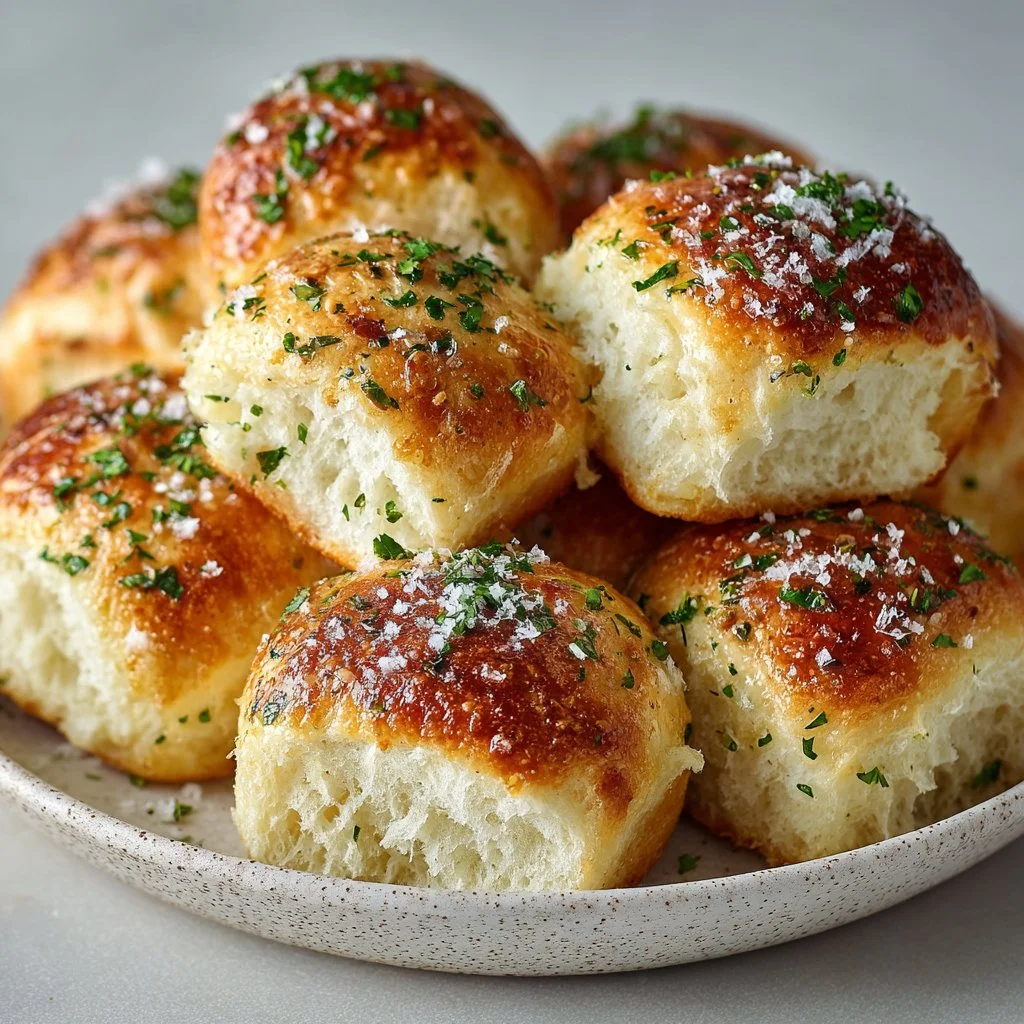
These Garlic Bread Rolls taste like classic garlic bread but elevated: rich butter and fragrant garlic kissed with fresh parsley, a tender crumb from milk and egg, and a shiny golden top from an egg wash. Each roll is soft and airy, with a slight chew on the surface and a buttery hit the moment you bite in.
"5 stars — These rolls stole the show at family dinner. Soft, garlicky, and they disappeared fast. A new weeknight staple!" — Reader M.
Key Ingredients for Garlic Bread Rolls
Flour
All-purpose flour gives structure and the right chew for soft dinner rolls. Use a reliable brand and spoon-and-level your cups or weigh for accuracy. Substituting whole wheat will make them denser and more rustic; start with 25% whole wheat and increase only if you like a heavier crumb.
Garlic
Fresh minced garlic provides bright, sharp flavor that cooks quickly and becomes sweet when sautéed in butter. Use fresh cloves, not jarred, for the best aroma and texture. If you must substitute, use 1/2 teaspoon garlic powder per clove, but the flavor will be less vibrant.
Unsalted Butter
Butter contributes fat, flavor, and tenderness to the dough and the finishing glaze. Buy European-style butter for a slightly higher fat content and richer taste. If you use salted butter, reduce added salt by about 1/4 teaspoon so the rolls don’t become overly salty.
Instant Yeast
Instant yeast reliably leavens dough quickly and can be mixed directly with dry ingredients. Use fresh yeast — check the expiration — for predictable rise times. If you substitute active dry yeast, proof it first in warm milk (110°F) and use about 25% more by weight.
Full Ingredient List for Garlic Bread Rolls
– 4 1/2 tablespoons unsalted butter
– 2 tablespoons minced garlic
– 3 1/2 cups + 1 tablespoon all-purpose flour (*See notes below for measuring*)
– 3 tablespoons chopped fresh parsley
– 1 tablespoon granulated sugar
– 2 1/4 teaspoons instant yeast
– 1 teaspoon fine sea salt
– 1 cup whole or 2% milk (warmed to 110°F)
– 1 large egg (room temperature)
– 1 beaten egg, for brushing the tops
– 2 tablespoons unsalted butter (for finishing)
– 1 tablespoon minced garlic (for finishing)
– 1 tablespoon chopped fresh parsley (for finishing)
– Flaky sea salt (for finishing)
Step-by-Step Instructions for Garlic Bread Rolls
Step 1: Prepare the pan and garlic butter
Lightly butter the bottom and sides of a 9×13 pan and set it aside.
In a small pot, melt 4 1/2 tablespoons unsalted butter over low heat, then add 2 tablespoons minced garlic. Cook for 1–2 minutes until the garlic is fragrant, then remove from heat and cool while you measure the other ingredients.
Pro Tip: The garlic should smell strong and not browned; the butter should be fully melted and warm to the touch.
Step 2: Mix the dry ingredients
In a stand mixing bowl, combine 3 1/2 cups + 1 tablespoon all-purpose flour, 3 tablespoons chopped parsley, 1 tablespoon granulated sugar, 2 1/4 teaspoons instant yeast, and 1 teaspoon fine sea salt. Whisk briefly to distribute the yeast and salt evenly.
Pro Tip: Dry ingredients should look uniformly speckled with parsley and there should be no lumps of yeast or salt.
Step 3: Add liquids and knead
Add 1 cup warmed milk (110°F), 1 large room-temperature egg, and the cooled garlic butter to the dry mix. Knead on low speed with a dough hook until the dough looks smooth and feels soft and tacky, about 10–12 minutes. If the dough is too sticky, add one tablespoon of flour at a time until workable.
Pro Tip: Proper dough will pull away from the bowl slightly and feel soft, tacky, but not gluey.
Step 4: Divide and shape
Cut the kneaded dough into 12 equal portions (use a scale for accuracy — 67 grams each). Shape each piece into a smooth ball by cupping your hand and rolling. Pinch the bottom seam closed to keep the surface smooth, then place the rolls seam-side down into the prepared pan.
Pro Tip: Each roll should look smooth and taut on top with a tight seam underneath.
Step 5: First rise
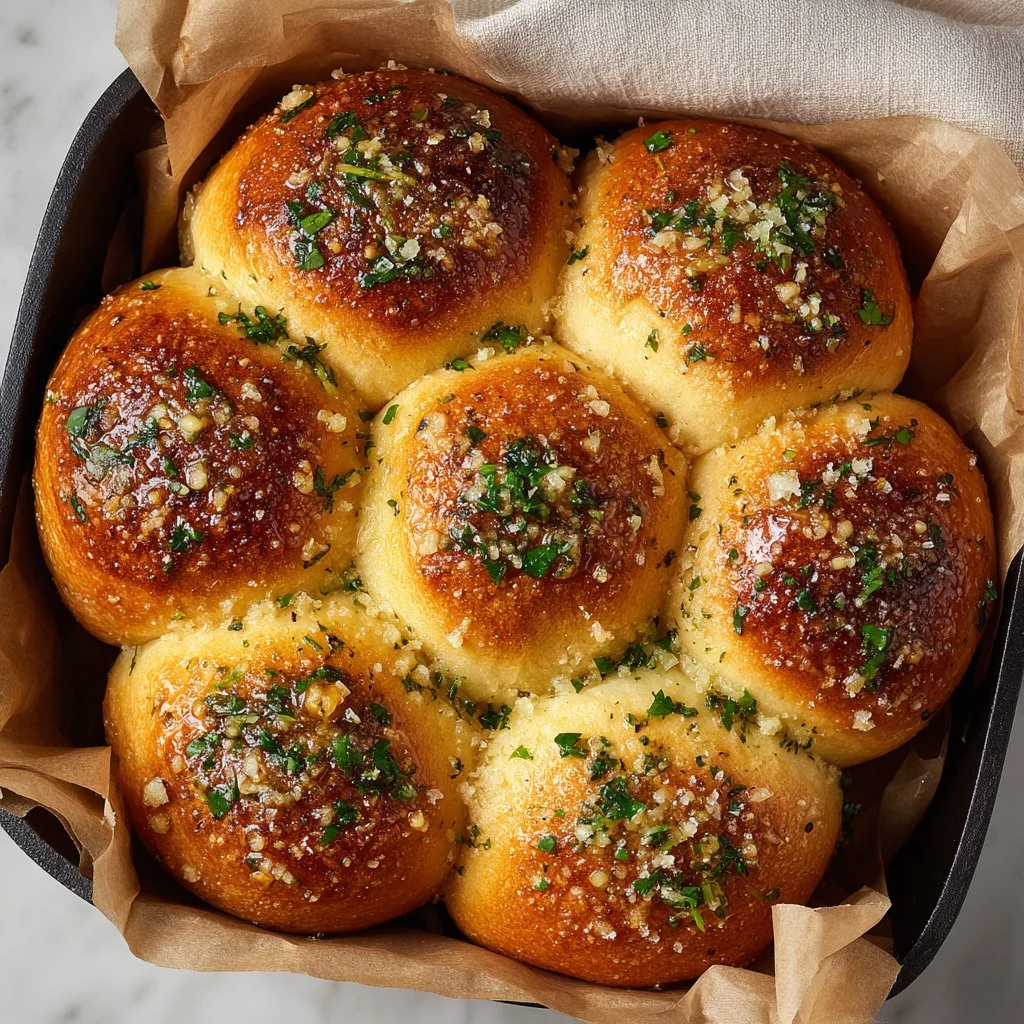
Cover the pan with plastic wrap or a kitchen towel and set it in a warm place to rise until doubled in size, about 1–2 hours. Watch the rolls grow — they should touch each other when risen fully.
Pro Tip: The tops should look puffy and the dough springs back slowly when poked.
Step 6: Egg wash and bake
Preheat the oven to 350°F (180°C). Brush the tops with the beaten egg and bake the rolls for 20–30 minutes, until the tops are golden brown. Rotate the pan halfway if your oven heats unevenly.
Pro Tip: Golden brown tops and a hollow sound when tapped indicate doneness.
Step 7: Make the finishing garlic butter
While the rolls bake, melt 2 tablespoons unsalted butter in a small pot. Add 1 tablespoon minced garlic and cook for 1–2 minutes until fragrant. Remove from heat and stir in 1 tablespoon chopped fresh parsley.
Pro Tip: The garlic in the finishing butter should be fragrant and soft, not bitter or darkened.
Step 8: Finish and serve
When the rolls come out of the oven, immediately brush them with the garlic butter. Sprinkle with flaky sea salt if desired and serve warm.
Pro Tip: The butter should glisten on the warm rolls; the aroma should be intensely garlicky and buttery.
Expert Tips for Garlic Bread Rolls
– Temperature tip: Milk should be 105–115°F when added. Too hot kills yeast; too cold slows the rise.
– Rise cue: Dough should double and look puffy; a gentle poke should hold an indentation.
– Texture troubleshooting: If crumb is too dense, knead a bit longer or ensure yeast is fresh.
– Sticky dough fix: Add flour one tablespoon at a time — avoid adding too much to keep softness.
– Equipment tip: A stand mixer with dough hook saves time; hand-kneading takes 12–15 minutes.
– Baking tip: Use an oven thermometer to confirm 350°F; many ovens run 25–50°F off.
– Common mistake: Brushing the egg wash too thickly can create an uneven finish; use a light, even coat.
– Flavor balance: Add flaky sea salt after baking to avoid overly salty baked tops and to preserve texture.
Storage & Freezing for Garlic Bread Rolls
Fridge storage: Place cooled rolls in an airtight container or zip-top bag. Store up to 3 days. Reheat in a 325°F oven for 8–10 minutes or microwave briefly in 15-second bursts.
Freezer storage: Freeze cooled rolls on a tray until firm, then transfer to a freezer bag or airtight container for up to 3 months. Press out as much air as possible.
Thawing: Thaw overnight in the refrigerator or at room temperature for 1–2 hours. To refresh, reheat in a 325°F oven until warm, about 10–12 minutes.
Best containers: Use freezer-safe bags or rigid airtight containers to prevent freezer burn and preserve texture.
Variations & Substitutions for Garlic Bread Rolls
Cheesy Garlic Bread Rolls
Fold 1/2 cup shredded mozzarella into the dough pieces before shaping or press a teaspoon into the center of each ball. The rolls will be gooey and cheesy inside with the same tender crumb.
Herby Parmesan Rolls
Add 1/2 cup grated Parmesan and swap half the parsley for 1 tablespoon chopped rosemary or thyme. This creates a nutty, savory flavor that pairs beautifully with roasted mains.
Whole Wheat Garlic Rolls
Substitute up to 50% of the all-purpose flour with whole wheat and increase hydration by a tablespoon or two. Expect a denser texture and nuttier taste; allow a slightly longer rise.
Sweet-Honey Garlic Twist
Brush a small amount of honey into the finishing butter for a subtle sweet-savoury contrast. The rolls will caramelize slightly on the edges and offer an irresistible sweet note with savory garlic.
Frequently Asked Questions About Garlic Bread Rolls
Q: Can I make the dough the night before?
A: Yes. After kneading, place the dough in a greased bowl, cover tightly, and refrigerate overnight. The cold retardation develops flavor. In the morning, divide, shape, and allow a shorter second rise (45–60 minutes) before baking.
Q: What if my rolls are gummy in the middle after baking?
A: Gummy centers usually mean underbaked or insufficient rise. Check oven temp with a thermometer, bake a few minutes longer, or ensure the dough doubled before baking. A probe thermometer reading of 190–200°F in the center indicates done bread.
Q: Can I use active dry yeast instead of instant yeast?
A: Yes. Bloom active dry yeast in the warm milk (110°F) with a pinch of sugar for 5–10 minutes until foamy. Use about 25% more active dry yeast by weight; then proceed with the recipe.
Q: How do I keep the rolls soft the next day?
A: Store in an airtight container and reheat gently to refresh the crumb. You can lightly steam them by wrapping in a damp paper towel and microwaving 10–15 seconds, then crisp slightly in the oven for texture.
Q: Can I make these rolls dairy-free?
A: Substitute dairy milk with an unsweetened plant milk and use a plant-based butter. The texture will be slightly different — a touch less richness — but the rolls will still be soft and flavorful.
Final Thoughts on Garlic Bread Rolls
These Garlic Bread Rolls are an easy, high-impact side that works for weeknight dinners and special occasions.
If you try them, please leave a star rating in the recipe card below and pin this to Pinterest for later.
Conclusion: Garlic Bread Rolls
For a comparable take and visual cues on shaping, see this Garlic Bread Dinner Rolls – Sugar Spun Run recipe which offers helpful photos.
If you want a swirl-style version with a different shaping technique, this Garlic-Swirl Rolls Recipe – The Kitchn is a great reference.
For another tested roll variation and finishing ideas, check Garlic Bread Rolls – Cambrea Bakes for inspiration.
Garlic Bread Rolls
Ingredients
Method
- Lightly butter the bottom and sides of a 9x13 pan and set it aside.
- In a small pot, melt 4 1/2 tablespoons unsalted butter over low heat, then add 2 tablespoons minced garlic. Cook for 1–2 minutes until the garlic is fragrant.
- In a stand mixing bowl, combine 3 1/2 cups + 1 tablespoon all-purpose flour, 3 tablespoons chopped parsley, 1 tablespoon granulated sugar, 2 1/4 teaspoons instant yeast, and 1 teaspoon fine sea salt. Whisk briefly to distribute evenly.
- Add 1 cup warmed milk, 1 large egg, and the cooled garlic butter to the dry mix. Knead on low speed until the dough looks smooth and feels soft and tacky, about 10–12 minutes.
- Cut the kneaded dough into 12 equal portions. Shape each piece into a smooth ball and place in the prepared pan.
- Cover the pan with plastic wrap and set it in a warm place to rise until doubled in size, about 1–2 hours.
- Preheat the oven to 350°F. Brush the tops with the beaten egg and bake for 20–30 minutes, until golden brown.
- While the rolls bake, melt 2 tablespoons unsalted butter in a small pot, add 1 tablespoon minced garlic, and cook for 1–2 minutes until fragrant.
- Immediately brush the rolls with the garlic butter when they come out of the oven. Sprinkle with flaky sea salt if desired.