
Bright, floral, and wonderfully simple — this cake is made for gatherings, brunches, and sunny afternoons. It comes together with pantry staples and finishes with a dusting of powdered sugar and fresh blooms for spring flair.
Light, tender layers hold a soft crumb and a delicate vanilla flavor. The texture is moist from milk and eggs, yet structured enough to layer and decorate.
If you’re short on time but want something beautiful, this recipe is built for easy success. For more layered cake ideas, see my guide to layer cakes for inspiration.
Why You’ll Love This Easter Spring Cake
- Bright spring presentation with minimal effort.
- Uses pantry-friendly, familiar ingredients.
- Light vanilla flavor that pairs with fruit.
- Easy to layer, dust, or decorate with flowers.
- Reliable bake time for weeknight entertaining.
- Great canvas for creative frostings and finishes.
The taste is a clean, buttery vanilla with a tender crumb. The milk and butter combine to yield moistness without heaviness, while the eggs give structure so the cake layers slice cleanly.
"★★★★★ I doubled this recipe for Easter and everyone asked for seconds — tender, simple, and so pretty with edible flowers." — reader review
Key Ingredients for Easter Spring Cake
All-purpose flour
All-purpose flour provides the structure for the cake through gluten formation. Choose a standard, unbleached flour for consistent results and avoid high-protein bread flours. Substituting with cake flour will give a finer, more tender crumb but may require slightly less flour or more careful handling.
Unsalted butter, softened
Butter is your primary fat and flavor source; it traps air when creamed with sugar to help leaven the cake. Buy European-style butter for a richer flavor, but room-temperature unsalted butter is essential so it creams properly. If you use margarine or oil, expect a different mouthfeel and less buttery flavor.
Large eggs
Eggs provide structure, moisture, and emulsification which keep the crumb tender yet stable. Use large eggs at room temperature for the best incorporation; cold eggs can curdle the batter. Replacing eggs with applesauce or flax will change texture and reduce lift.
Baking powder
Baking powder is the chemical leavener that creates the cake’s rise and lightness. Check the expiration date — old powder gives weak rise and dense cake. If you only have baking soda, you need an acid to activate it and the ratio will change, so baking powder is the safer choice here.
Full Ingredient List for Easter Spring Cake
- 2 cups all-purpose flour
- 1 ½ cups granulated sugar
- ½ cup unsalted butter, softened
- 1 cup milk
- 3 large eggs
- 2 tsp baking powder
- 1 tsp vanilla extract
- ½ tsp salt
- Powdered sugar for dusting
- Fresh fruit and edible flowers for decoration (optional)
Step-by-Step Instructions for Easter Spring Cake
Step 1: Preheat and prepare pans
Preheat your oven to 350°F (175°C). Grease and flour two 9-inch round cake pans, or line with parchment for easy release.
Pro Tip: The pans should feel warm to the touch and lightly glossy with butter; parchment rounds should sit flat without curling.
Step 2: Cream butter and sugar
In a large bowl, cream together the softened butter and granulated sugar until light and fluffy. This aeration is the start of your cake’s lift.
Pro Tip: The mixture should look paler and hold soft peaks when the paddle lifts; if it looks grainy, keep creaming for another minute.
Step 3: Add eggs and vanilla
Add the eggs one at a time, beating well after each addition. Stir in the vanilla extract to distribute flavor evenly.
Pro Tip: The batter should smooth out and become glossy; you should not see streaks of egg white.
Step 4: Combine dry ingredients
In another bowl, whisk together the flour, baking powder, and salt to ensure even leavening. This step prevents pockets of powder in the finished cake.
Pro Tip: The dry mix should look uniform and clump-free when sifted or whisked.
Step 5: Alternate dry ingredients and milk
Gradually add the dry ingredients to the creamed mixture, alternating with the milk, beginning and ending with the dry ingredients. Mix until just combined to avoid overworking the gluten.
Pro Tip: The batter should be smooth and ribbon-like when lifted, not thick and resistant.
Step 6: Divide batter into pans
Divide the batter evenly between the prepared pans and smooth the tops with a spatula for even rising. Tapping the pans lightly levels the batter further.
Pro Tip: Each pan should be about two-thirds full; the surface should be glossy and free of large air pockets.
Step 7: Bake the cakes
Bake for 25–30 minutes, or until a toothpick inserted into the center comes out clean. Rotate pans halfway if your oven has hot spots.
Pro Tip: The tops should be pale golden and spring back slightly when touched; a clean toothpick indicates doneness.
Step 8: Cool the layers
Allow the cakes to cool in the pans for 10 minutes before transferring to wire racks to cool completely. Cooling slightly prevents the layers from breaking when removed.
Pro Tip: The edges will pull away from the pan and the surface will flatten as they cool; handle gently.
Step 9: Finish and decorate
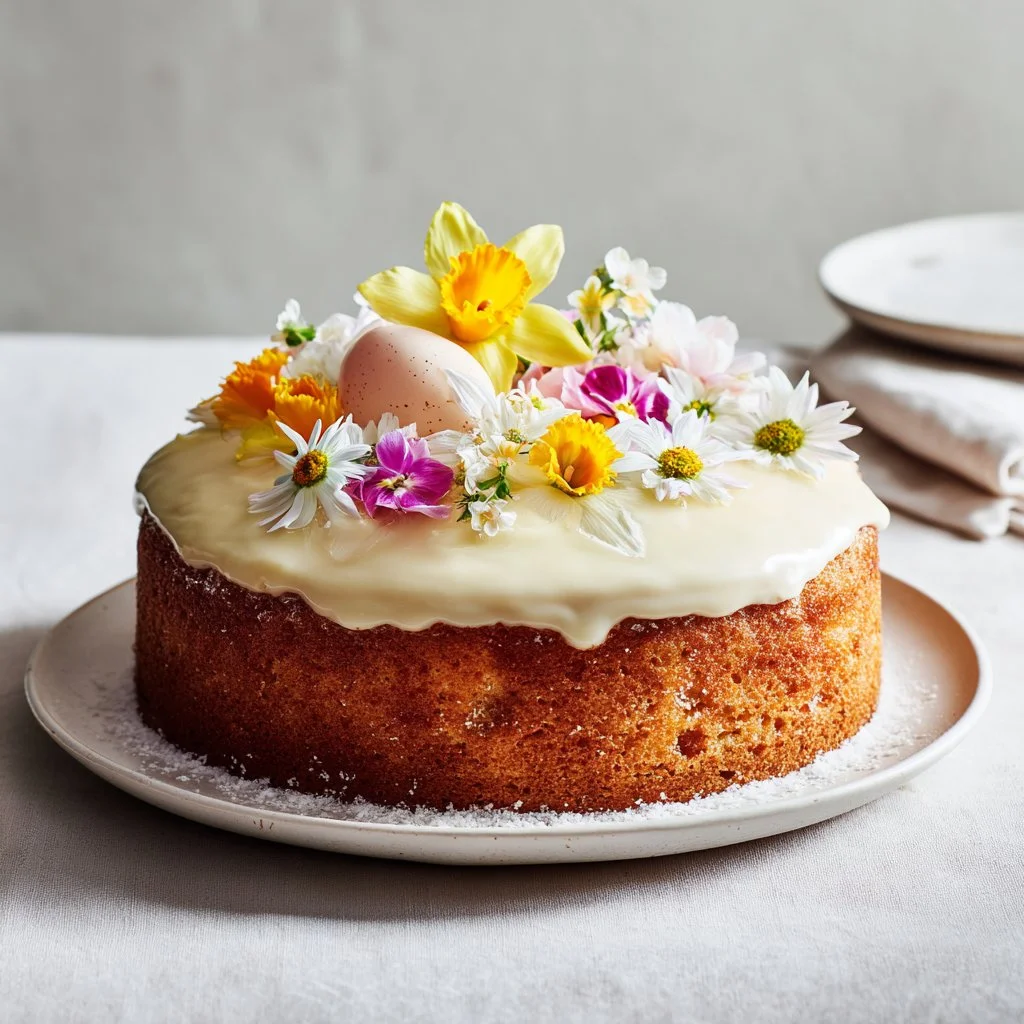
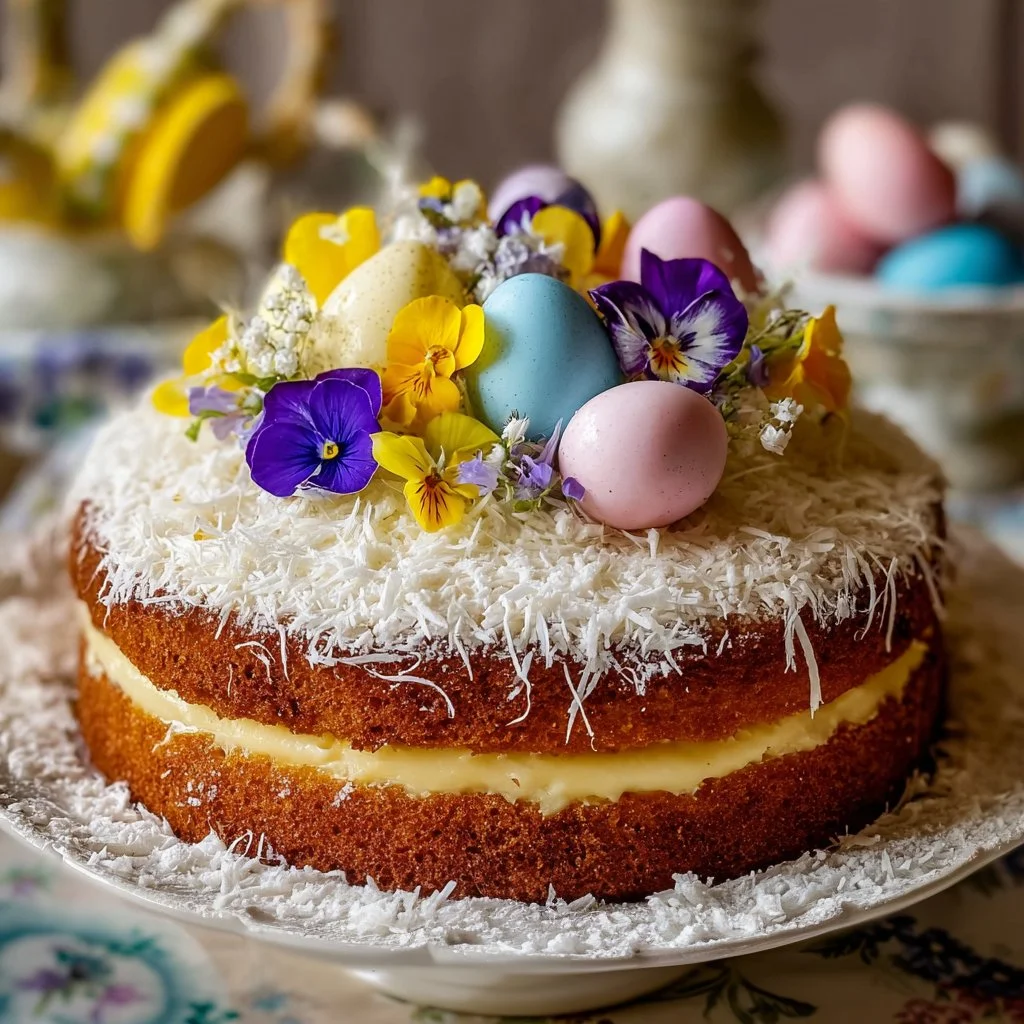
Once cooled, layer and frost the cakes as desired, dust with powdered sugar, and decorate with fresh fruit and edible flowers for a springtime look. For simple elegance, keep frosting thin and let the decorations shine.
Pro Tip: The final cake should hold its shape under a light fork pressure and look evenly frosted with a soft sheen.
For plating inspiration and seasonal decorating hints, see my tips on chocolate cookie cake tips and presentation.
Expert Tips for Easter Spring Cake
- Keep ingredients at room temperature to ensure even mixing and a smooth batter.
- If the crumb is gummy, the cake may be underbaked or the oven temperature too low; use an oven thermometer.
- To avoid dense layers, measure flour by spooning into a cup and leveling — don’t pack it.
- Use an electric mixer for creaming butter and sugar for at least 3–5 minutes; it makes a real difference.
- For even layers, weigh the batter between pans instead of eyeballing it.
- Avoid overmixing after adding flour; stop when streaks disappear to prevent toughness.
- Use a cooling rack and cool in the pan briefly to prevent the bottom from steaming and becoming soggy.
- Common mistake: opening the oven too early. Wait until the minimum bake time before checking to prevent collapse.
For a playful Easter finish, review decorated cupcake ideas that translate to cake decorating at speckled egg cupcakes.
Storage & Freezing for Easter Spring Cake
Room temperature short-term storage: Store unfrosted layers in an airtight container at room temperature for up to 24 hours. If frosted, keep the cake in a cake carrier away from direct sunlight.
Refrigerator storage: Store frosted cake in a covered cake container or tightly wrapped with plastic wrap in the fridge for up to 4 days. Use an airtight container to prevent the cake from absorbing fridge odors.
Freezer storage: To freeze layers, wrap each cooled layer tightly in plastic wrap, then in aluminum foil, and place in a freezer-safe container. Freeze for up to 3 months. For best texture, flash-freeze on a tray first to prevent layers from sticking together.
Thawing and reheating: Thaw wrapped layers in the refrigerator overnight. For quick serving, bring to room temperature for 1–2 hours before frosting. Reheat individual slices briefly in a microwave (8–12 seconds) if you prefer warm cake.
For storing unconventional cake elements like cookie butter fillings and alternative frostings, see my notes on keeping desserts fresh at cookie butter storage tips.
Variations & Substitutions for Easter Spring Cake
Lemon-vanilla spring cake: Add 1 tbsp lemon zest and 2 tbsp lemon juice to the batter, reduce milk by 2 tbsp. The cake will have a bright citrus note and pair beautifully with berries.
Buttermilk swap for extra tang: Replace the 1 cup milk with 1 cup buttermilk and reduce baking powder to 1 ½ tsp. The crumb becomes tangier and more tender due to acid reacting with the leavener.
Layer with fruit curd: Spread a thin layer of raspberry or lemon curd between layers before frosting. The curd adds acidity and fruit brightness without overwhelming the vanilla base.
Almond variation: Replace 1 tsp vanilla with 1 tsp almond extract and sprinkle sliced almonds between layers. Expect a nutty, aromatic profile that complements light frostings.
Frequently Asked Questions About Easter Spring Cake
What is the best way to ensure my Easter Spring Cake is moist?
Use room-temperature ingredients, don’t overmix after adding flour, and measure flour correctly. Folding milk in slowly and avoiding overbaking will preserve moisture. If you want extra moistness, brush layers with a simple sugar syrup (equal parts sugar and water) before frosting.
Can I make the cake a day ahead?
Yes. Bake layers a day ahead, cool completely, wrap in plastic, and store at room temperature for 24 hours. If fully assembled and frosted, keep refrigerated and bring to room temperature before serving for best texture.
How do I level cake layers for stacking?
Use a serrated knife or a cake leveler to trim the domes off cooled layers. Chill the layers briefly to firm them, then cut slowly and evenly. Weighing batter for each pan helps reduce the need for leveling.
Why is my cake dense or heavy?
Common causes are overpacking flour, expired baking powder, undercreaming butter and sugar, or overmixing once flour is added. Check your leavener freshness and your measuring technique to fix density issues.
Can I substitute milk with a non-dairy alternative?
Yes, unsweetened almond, oat, or soy milk can be used cup-for-cup. The flavor and crumb may shift slightly; oat milk tends to give a richer mouthfeel, while almond milk is lighter.
Final Thoughts on Easter Spring Cake
This Easter Spring Cake is a simple, reliable centerpiece that balances vanilla flavor with a tender crumb and beautiful seasonal decoration. Please leave a star rating in the recipe card below and pin this cake to Pinterest to save it for your next spring gathering.
For more global spring cake ideas check out Family Spice’s spring cake for Nowruz and Easter, explore a wide roundup of seasonal designs at Broma Bakery’s spring cake collection, and get creative plating inspiration from this Spring Easter Egg Nest cake.
Easter Spring Cake
Ingredients
Method
- Preheat your oven to 350°F (175°C). Grease and flour two 9-inch round cake pans or line with parchment.
- In a large bowl, cream together the softened butter and granulated sugar until light and fluffy.
- Add eggs one at a time, beating well after each addition, then stir in the vanilla extract.
- In another bowl, whisk together flour, baking powder, and salt.
- Gradually add dry ingredients to creamed mixture, alternating with milk, beginning and ending with dry ingredients.
- Divide the batter evenly between the prepared pans.
- Bake for 25–30 minutes, or until a toothpick inserted into the center comes out clean.
- Allow the cakes to cool in the pans for 10 minutes before transferring to wire racks.
- Once cooled, layer and frost the cakes as desired, dust with powdered sugar, and decorate with fresh fruit and edible flowers.