
Spring arrives with chocolate and candy eggs, and this Easter Chocolate Egg Cake is the easiest way to celebrate.
Moist, deeply chocolatey, and crowned with colorful eggs, it’s a crowd-pleaser for every age.
You’ll find tips, troubleshooting photos cues, and expert notes below to make the bake foolproof.
If you love holiday bakes, try a related twist on a cookie-cake for the season at this Easter chocolate cookie cake for more party ideas.
Why You’ll Love This Easter Chocolate Egg Cake
- Simple pantry ingredients you likely already have.
- Fast assembly — batter comes together in one bowl.
- Moist crumb that stays tender for days.
- Versatile for any frosting and decorations.
- Spectacular when topped with festive candy eggs.
- Kid-friendly decorating and assembly.
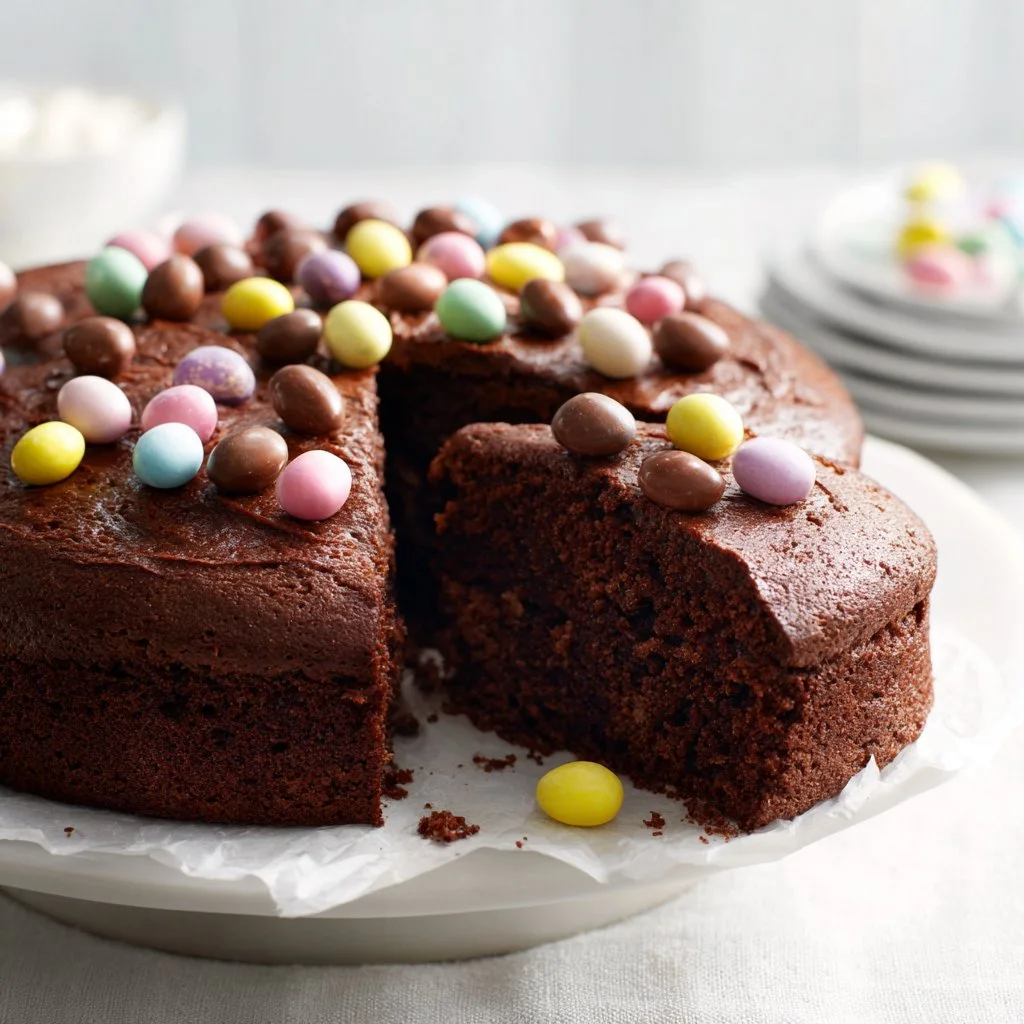
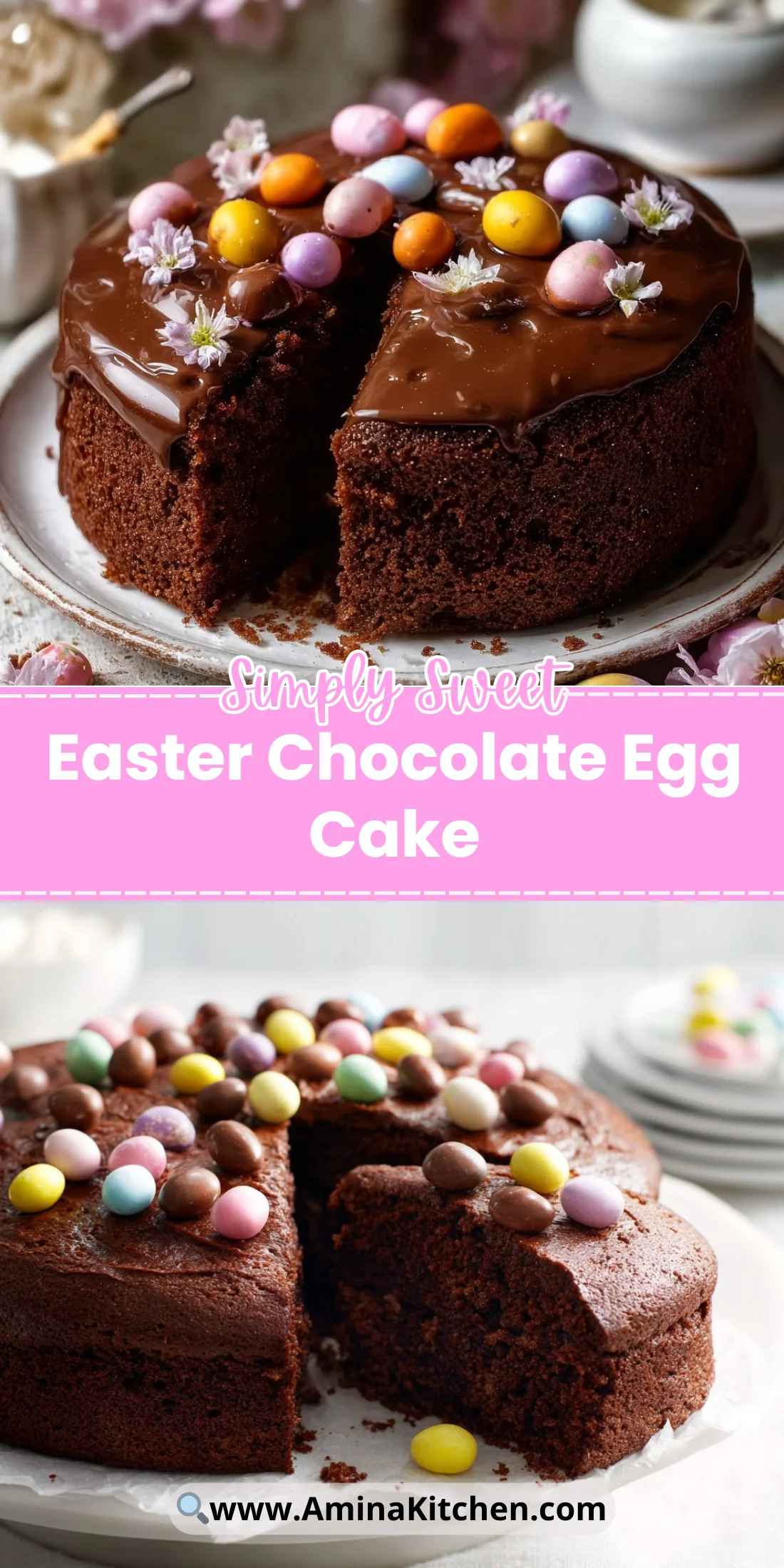
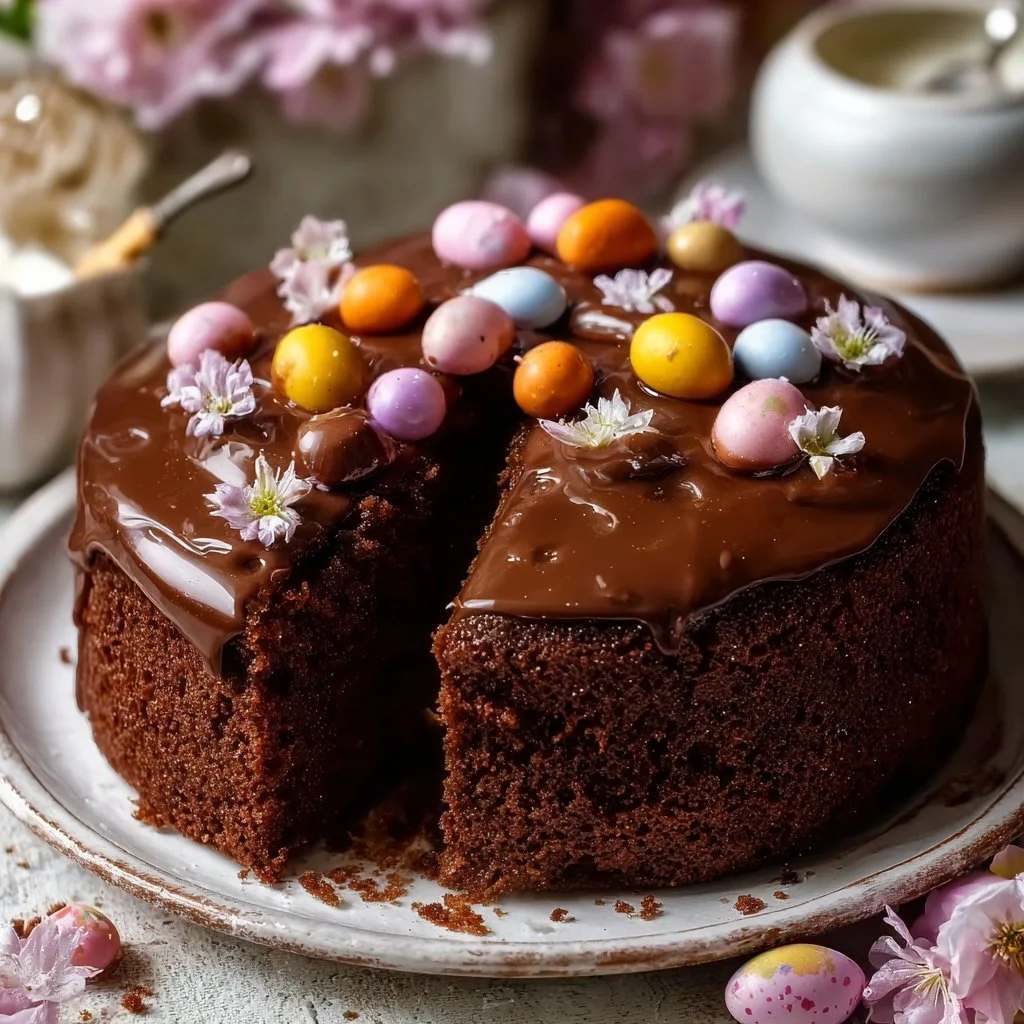
The cake is rich but not heavy; cocoa-forward flavor with a tender, fine crumb thanks to the oil and boiling water. The texture is soft and springy, with a glossy ganache or buttercream sealing in moisture while candy eggs add a playful crunch.
"Five stars — baked this for Easter and everyone asked for seconds. The cake was unbelievably moist and the candy eggs made it party-ready!" — Rachel, home baker
Key Ingredients for Easter Chocolate Egg Cake
Cocoa powder — Cocoa provides the primary chocolate flavor and color. Use natural unsweetened cocoa for a bright, tangy chocolate note; Dutch-process yields a darker, smoother taste. If you substitute with melted chocolate, reduce the liquid and adjust sugar since chocolate contains fat and sugar.
All-purpose flour — Flour gives the cake structure and sets the crumb. Choose a fresh, labeled all-purpose flour and spoon-and-level when measuring to avoid a dense cake. Swapping to cake flour will lighten the crumb but can yield a more fragile layer that needs gentler handling.
Vegetable oil — Oil keeps the crumb extra moist and stays liquid when cool, which prevents dryness the next day. Use a neutral oil like canola or sunflower; olive oil will add flavor that competes with cocoa. Replacing oil with butter yields a firmer, richer crumb and requires creaming for best lift.
Boiling water — Boiling water blooms the cocoa, deepening flavor and creating a thin batter that bakes into a tender cake. Don’t skip this step; cooler water won’t extract cocoa flavor the same way. If you replace it with hot coffee, you’ll subtly enhance the chocolate notes.
Full Ingredient List for Easter Chocolate Egg Cake
- 1 3/4 cups all-purpose flour
- 3/4 cup cocoa powder
- 2 cups sugar
- 1 1/2 teaspoons baking powder
- 1 1/2 teaspoons baking soda
- 1 teaspoon salt
- 2 large eggs
- 1 cup whole milk
- 1/2 cup vegetable oil
- 2 teaspoons vanilla extract
- 1 cup boiling water
- Festive candy eggs for topping
Step-by-Step Instructions for Easter Chocolate Egg Cake
Step 1: Preheat and prepare pans
Preheat your oven to 350°F (175°C). Grease and flour two 9-inch round cake pans, or line bases with parchment to ensure clean releases.
Pro Tip: The pans should feel warm to the touch when placed in the oven; the surface of greased pans will look slightly glossy.
Step 2: Combine dry ingredients
In a large bowl, whisk together the flour, cocoa powder, sugar, baking powder, baking soda, and salt until evenly distributed and no clumps remain.
Pro Tip: The dry mix should look uniform in color with no streaks of flour or lumps of cocoa.
Step 3: Add wet ingredients and beat
Add the eggs, milk, oil, and vanilla to the dry ingredients. Beat on medium speed for 2 minutes until the mixture is smooth and slightly aerated.
Pro Tip: The batter will look velvety and thick before adding boiling water; small air bubbles indicate proper mixing.
Step 4: Stir in boiling water
Stir in the boiling water carefully — the batter will become thin and pourable. Divide the batter evenly between the two prepared pans.
Pro Tip: The batter should be runny, almost like heavy cream, and pour smoothly when you tilt the bowl.
Step 5: Bake
Bake for 30–35 minutes, or until a toothpick inserted in the center comes out clean or with a few moist crumbs. Rotate pans halfway if your oven has hot spots.
Pro Tip: The top will spring back lightly when touched and the edges will begin to pull away from the pan.
Step 6: Cool
Cool the cakes for 10 minutes in the pans, then invert onto wire racks to cool completely before frosting.
Pro Tip: When the cakes release cleanly from the pans, the undersides will be evenly browned and the crumb will hold together.
Step 7: Frost and decorate
Once cooled, frost with your favorite chocolate frosting and top with festive candy eggs arranged as desired.
Pro Tip: The frosting should spread smoothly without tearing; a thin crumb coat helps for a cleaner final finish.
Pro bakers often pair recipes; if you want a different Easter centerpiece try a cheesecake-cookie mashup idea for inspiration at this cheesecake chocolate chip cookie page.
Expert Tips for Easter Chocolate Egg Cake
- Temperature tip: Use room-temperature eggs and milk so the batter emulsifies properly. Cold eggs can result in an uneven crumb.
- Oven calibration: Use an oven thermometer; many ovens run 10–25°F off, which affects rise and bake time.
- Texture troubleshooting: If the cake is dry, reduce bake time or check pan sizes; if gummy, underbaking or too much liquid may be the cause.
- Mixing technique: Avoid overmixing after adding flour; overworked batter develops gluten and becomes dense.
- Equipment tip: Use an electric mixer for even aeration, but finish with a spatula to scrape bowls and ensure even batter.
- Pans and lining: Parchment circles prevent sticking and promote even bottoms; dark pans bake faster, so reduce time by a few minutes.
- Common mistakes: Don’t skip the boiling water step — it intensifies cocoa and thins batter correctly. Also measure flour correctly to avoid heavy cakes.
- Decoration tip: Press candy eggs lightly into the frosting so they stay put; for shiny presentation, use a ganache that sets firm.
Storage & Freezing for Easter Chocolate Egg Cake
Fridge storage: Store frosted cake in an airtight cake container or cover with a cake dome in the refrigerator for up to 5 days. Keep candies on top; if they weep color, move them to a separate container and add fresh before serving.
Freezer storage: Wrap cooled, unfrosted layers tightly in plastic wrap and then foil; freeze up to 3 months. For frosted cake, freeze on a tray until solid, then wrap and place in a rigid container to prevent crushing.
Thawing: Thaw frozen layers overnight in the refrigerator, still wrapped, to avoid condensation on the crumb. Thaw frosted cakes in the fridge for 12–24 hours before bringing to room temperature to serve.
Reheating: For single slices, warm for 10–12 seconds in the microwave for a just-baked feel. Use an airtight container or resealable bag to keep slices moist when reheating.
For more themed cupcake and party ideas related to Easter decorations, see this chocolate carrot patch cupcakes guide at chocolate carrot patch cupcakes.
Variations & Substitutions for Easter Chocolate Egg Cake
Chocolate mocha version — Replace the boiling water with hot brewed strong coffee to amplify chocolate depth. The coffee enhances chocolate without tasting like coffee and yields a richer, more complex cake.
Gluten-light option — Use 3/4 cup cake flour and 1 cup all-purpose flour or a blend of AP and a gluten-free 1:1 mix. Expect a slightly different crumb; handle gently and reduce mixing to keep it tender.
Oil-to-butter swap — Use 1/2 cup melted butter instead of vegetable oil and allow batter to cool slightly before adding boiling water. The cake will have a richer, buttery flavor and a slightly firmer texture.
Vegan Easter twist — Swap eggs with flax eggs (2 tbsp flax + 6 tbsp water), use plant-based milk, and replace whole milk with unsweetened almond. For a fully vegan inspiration, check a vegan Easter egg cake example at this recipe collection for ideas on festive presentation.
Frequently Asked Questions About Easter Chocolate Egg Cake
What causes a cake to sink in the middle and how do I fix it?
A sunken center usually means the cake was underbaked, the oven temperature was too low, or the batter had too much leavening. Check oven calibration, ensure bake time reaches a toothpick test, and measure baking powder/soda accurately. If batter is overmixed, it can also collapse; mix until combined only.
Can I make this recipe in one 9×13 pan instead of two 9-inch rounds?
Yes. Pour the full batter into a greased 9×13 pan and bake at 350°F (175°C) for approximately 30–38 minutes. Begin checking at 28 minutes; the thicker layer will need slightly more time. Use a toothpick to test doneness.
How do I prevent my frosting from sliding off this chocolate cake?
Cool cake layers completely before frosting; slightly warm crumbs cause melting. Apply a thin crumb coat first and chill briefly to set. Use a frosting with a bit more structure — Swiss meringue buttercream or a ganache set will cling better than a very soft buttercream.
Is there a way to make the cake more chocolatey without changing texture?
Yes — add 1–2 tablespoons of instant espresso powder to the boiling water or increase cocoa by 1–2 tablespoons while slightly reducing flour by the same weight. This boosts chocolate notes without altering the batter’s hydration if balanced carefully.
How many servings does two 9-inch round layers yield, and can I freeze slices?
Two 9-inch rounds typically yield 12–16 standard slices, depending on serving size. Yes — freeze individual slices wrapped tightly in plastic and placed in a freezer-safe container for up to 2 months. Thaw overnight in the fridge.
Final Thoughts on Easter Chocolate Egg Cake
Love this Easter Chocolate Egg Cake? Please leave a star rating in the recipe card below and pin it to Pinterest for later inspiration.
For more Easter cake ideas, see this chocolate Easter cake roundup at Chocolate Easter Cake Recipe – Baked By An Introvert, a creative nest-style version at Easter Nest Cake – SugarHero, and a vegan take with coconut notes at Chocolate Coconut Easter Egg Cake (Vegan!) | The Banana Diaries.
Easter Chocolate Egg Cake
Ingredients
Method
- Preheat your oven to 350°F (175°C). Grease and flour two 9-inch round cake pans, or line bases with parchment.
- In a large bowl, whisk together the flour, cocoa powder, sugar, baking powder, baking soda, and salt until evenly distributed.
- Add the eggs, milk, oil, and vanilla to the dry ingredients. Beat on medium speed for 2 minutes.
- Stir in the boiling water carefully and divide the batter evenly between the two prepared pans.
- Bake for 30–35 minutes, or until a toothpick comes out clean.
- Cool the cakes for 10 minutes in the pans, then invert onto wire racks to cool completely.
- Once cooled, frost with your favorite chocolate frosting and top with festive candy eggs.