
Bright, chocolate-studded cookies make Easter feel indulgent and playful.
These cookies are quick to mix, forgiving in the oven, and perfect for gifting or a weekend bake.
They pair melty chocolate with a slightly chewy center and crisp edge for a classic cookie contrast.
If you like stuffed holiday cookies, try a related stuffed option for springtime treats at peep-stuffed Easter cookies.
Why You’ll Love This Easter Chocolate Cookies
- Melty pockets of chocolate in every bite.
- Chewy centers with lightly crisp edges.
- Simple pantry ingredients, little fuss.
- Easy to scale for crowds or small batches.
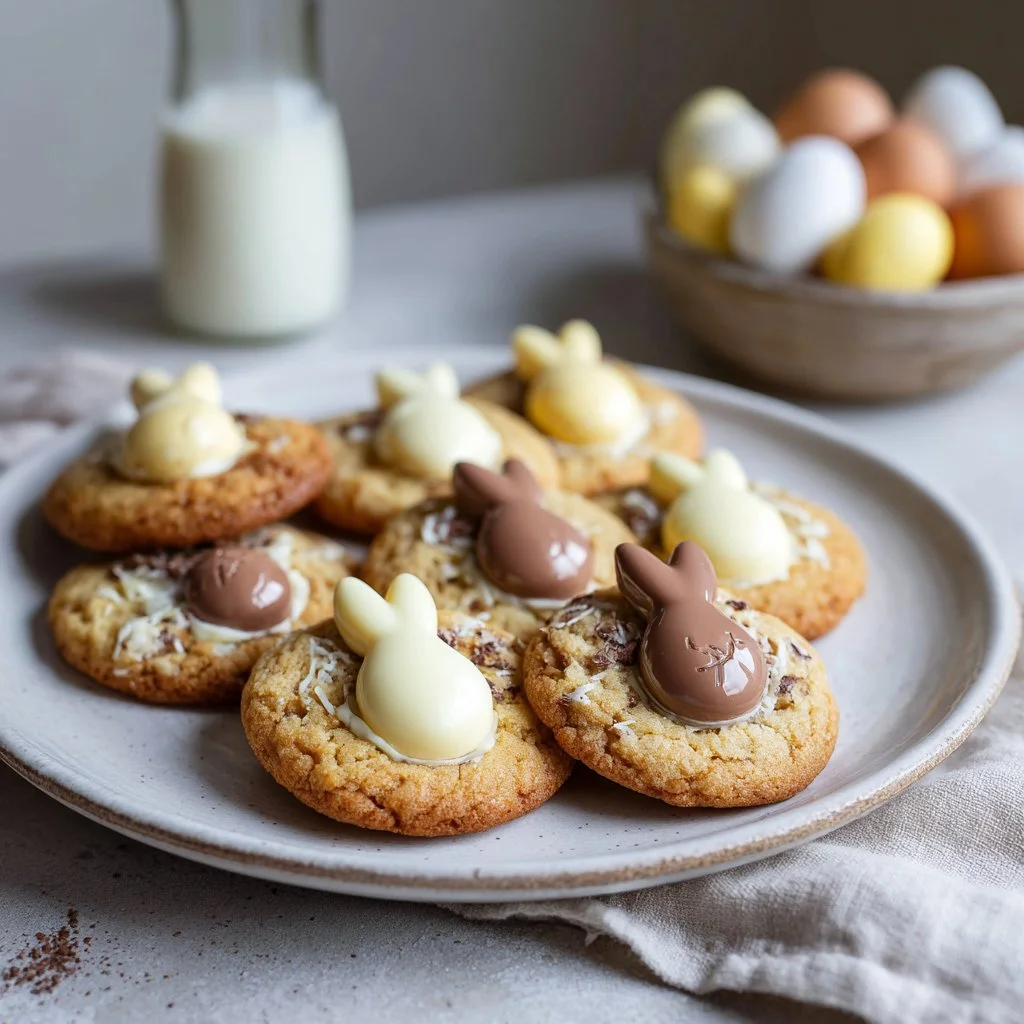
- Festive with miniature eggs and bunnies.
- Great for Easter baskets or cookie plates.
The flavor is rich but not overpowering: brown sugar adds caramel depth while the dual chocolate (milk, white, or a mix) gives creamy sweetness and pockets of texture. The crumb is tender, slightly chewy in the center, with edges that crack just enough to show you nailed the bake.
“Absolutely delicious — the bunnies and mini eggs made them a hit at our family brunch. Crispy edges and gooey centers every time!” — 5 stars
Key Ingredients for Easter Chocolate Cookies
Unsalted butter (160 g): Butter is the backbone of these cookies. Use real unsalted butter for predictable fat and flavor; if you buy salted, reduce added salt slightly. Substituting with margarine changes flavor and melting point and can make cookies flatter and greasier.
Light brown sugar (150 g) and white caster sugar (100 g): The brown sugar brings moisture and a caramelized flavor, which makes the centers chewy. White caster sugar helps spread and crisp the edges. Swapping all brown sugar creates a denser, more caramel cookie, while all caster sugar yields a crisper, less chewy result.
Self-raising flour (280 g): This provides the lift and soft crumb without measuring baking powder separately. If you must use plain flour, add 2 tsp baking powder and 1/4 tsp salt per 280 g to mimic self-raising flour. Using cake flour makes cookies cakier; bread flour makes them chewier due to higher protein.
Chocolate (200 g): Use milk, white, or a mix for different flavor profiles. Choose good-quality chocolate bars and chop into irregular chunks for melting pockets. Substituting chips is fine but chips often hold shape and won’t create the same molten pockets as chopped chocolate.
Full Ingredient List for Easter Chocolate Cookies
- 160 g Unsalted butter
- 100 g White caster sugar
- 150 g Light brown sugar
- 1 medium Egg (at room temperature)
- 1 medium Egg yolk (at room temperature)
- 1 tsp Vanilla extract
- 280 g Self-raising flour
- 0.5 tsp Salt
- 200 g Chocolate (either milk, white or a mix of both)
- 12 Mini Malteser Bunnies (either milk, white or a mix of both)
- 12 Mini Eggs (roughly one sharing bag)
Step-by-Step Instructions for Easter Chocolate Cookies
Step 1: Make the cookie dough
Cream the unsalted butter with the white caster sugar and light brown sugar until light and fluffy. Beat in the whole egg, the extra yolk, and the vanilla until fully combined and glossy. Fold in the self-raising flour and salt until just mixed; avoid overworking the dough. Stir through the chopped chocolate, reserving a few extra chunks for topping.
Pro Tip: The dough should be soft, slightly sticky, and hold together when pressed; you’ll see glossy streaks from butter and sugar, and chocolate pieces should be visible.
Step 2: Portion, top, and chill (optional)
Scoop or roll dough into 30–40 g balls depending on cookie size you want. Place on a lined baking tray at least 5 cm apart. Press a couple of chocolate chunks and mini eggs or a Malteser bunny into the top of each ball. If you prefer thicker cookies, chill 20–30 minutes before baking.
Pro Tip: Dough balls should hold their shape and feel cool to the touch; chilled dough will have dents when pressed lightly and not spread immediately.
Step 3: Roll and bake the cookies
Bake in a preheated 180°C (350°F) oven for 10–12 minutes, watching for golden edges and slightly pale centers. Rotate trays halfway through for even color. Remove from oven when edges are set and centers still look a touch underdone — they’ll firm as they cool.
Pro Tip: Baked cookies should be golden at the edges, slightly soft in the center, and smell of warm chocolate and caramelized sugar.
Expert Tips for Easter Chocolate Cookies
- Chill the dough briefly to control spread and get thicker, chewier centers.
- Use room-temperature eggs for even emulsification; cold eggs can cause curdled batter.
- For chewier cookies, increase brown sugar by 10–20 g and reduce caster sugar slightly.
- Use a mix of chopped chocolate and chunks for pockets that melt and pieces that remain.
- Invest in an oven thermometer to avoid overbrowning; many ovens run hot or cool.
- Avoid overmixing after adding flour; overworked dough yields dense, tough cookies.
- For perfectly round cookies, roll dough gently between palms and press once before baking.
- Common mistake: overcrowding the tray — leave ample space to let edges crisp.
Storage & Freezing for Easter Chocolate Cookies
Fridge storage: Store baked cookies in an airtight container at room temperature for up to 4 days. If your kitchen is warm, keep the container in the fridge to prevent chocolate bloom; allow cookies to return to room temperature before serving for best texture.
Freezer storage: Freeze raw dough balls on a tray until solid, then transfer to a labeled freezer bag for up to 3 months. Bake from frozen with an extra 1–2 minutes in the oven. You can also freeze baked cookies in a single layer wrapped in plastic then packed in an airtight container for up to 2 months.
Thawing and reheating: Thaw frozen baked cookies at room temperature for 30–60 minutes. Reheat briefly in a 160°C (325°F) oven for 3–5 minutes to refresh the edges and soften chocolate. Microwave reheating is quick (10–15 seconds) but can make cookies too soft if overdone.
Variations & Substitutions for Easter Chocolate Cookies
Double chocolate Easter: Replace 40–50 g of flour with unsweetened cocoa powder and use dark chocolate for chunks. Result: richer, fudgier cookies with deeper chocolate flavor.
Nutty crunch Easter: Fold in 80 g chopped toasted hazelnuts or almonds and reduce chocolate by 50 g. Result: added crunch and toasty flavor that pairs beautifully with milk chocolate and Malteser bunnies.
White chocolate and zested orange: Use only white chocolate and add 1 tsp finely grated orange zest. Result: a bright, creamy cookie with citrus lift that’s especially springlike.
Gluten-free swap: Replace self-raising flour with a 1:1 gluten-free flour blend that contains xanthan gum, and add 1 tsp baking powder if the blend isn’t self-raising. Result: similar texture if you choose a quality blend; expect slightly different crumb and faster crumbling when warm.
Frequently Asked Questions About Easter Chocolate Cookies
Q: Can I use chocolate chips instead of chopped chocolate?
A: Yes. Chips hold their shape better and create consistent pockets, but chopped chocolate usually melts more attractively into gooey pockets. If using chips, choose a higher-quality chip to avoid waxy texture.
Q: How do I stop my cookies from spreading too much?
A: Chill the dough for 20–30 minutes before baking and ensure your butter isn’t too soft. Use a higher proportion of brown sugar or add an extra 10–15 g flour for firmer structure. Also space trays properly and avoid placing trays on a hot oven rack.
Q: Can I make the dough ahead for Easter morning baking?
A: Yes. Make dough, portion into balls, and refrigerate for up to 48 hours or freeze for up to 3 months. Bring chilled dough to room temperature for 10–15 minutes before baking, or bake from frozen with a slight time increase.
Q: What’s the best way to add the mini Malteser bunnies and eggs?
A: Press them gently into the top of each cookie ball before baking so they nestle into the dough but still show. For best presentation, reserve a few to press on warm cookies right after they come out of the oven.
Q: Can I scale this recipe up for a bake sale?
A: Absolutely. Multiply ingredients proportionally and bake on multiple trays, rotating positions and watching baking time closely. If baking many trays at once, monitor oven hot spots and possibly reduce bake time per batch to keep centers soft and edges golden. For more themed cookie ideas and pairings, see this link to oreo white chocolate chip cookies.

Final Thoughts on Easter Chocolate Cookies
These Easter Chocolate Cookies are a simple, crowd-pleasing treat with flexible mix-in options and straightforward technique. Please leave a star rating in the recipe card below and pin this to Pinterest for easy reference.
For additional inspiration and similar seasonal recipes, check out The BEST Easter Chocolate Chip Cookies – Mom On Timeout, explore a different take at Easter Chocolate Chip Cookies – Bakes by Brown Sugar, try a chewy Cadbury egg version at Chocolate Cadbury Egg Cookies for Easter – A Cozy Kitchen, or see a very approachable recipe at Easy Easter Chocolate Chip Cookies – Practically Homemade.
- Additional internal references used in the article: Dubai chocolate kataifi cookies, Easter chocolate cookie cake, and fudgy dark chocolate sea salt cookies.