
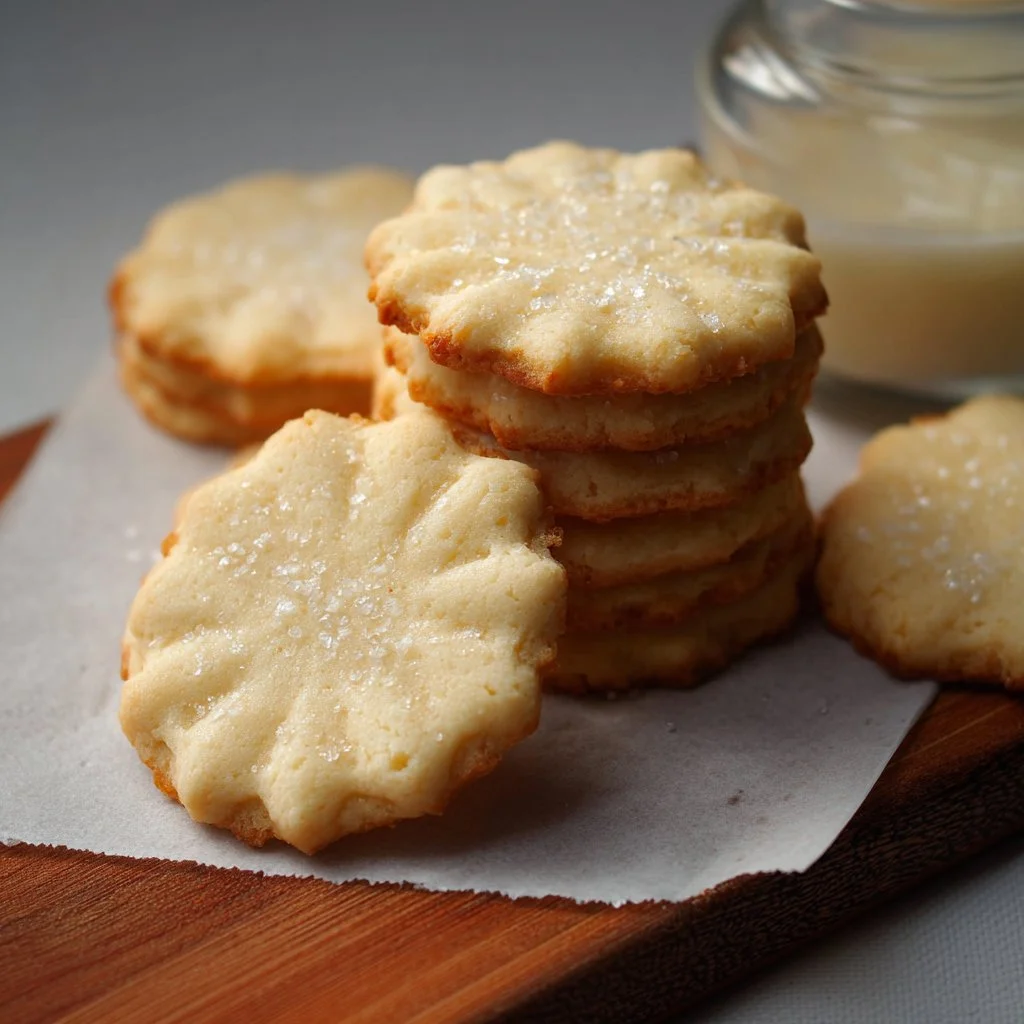
A sweet, foolproof cookie that comes together with just a few pantry staples and one can of condensed milk. These cookies are unexpectedly tender, lightly sweet, and perfect for tea time or lunchbox treats.
They take minutes to mix, chill, roll and cut — no creaming, no fuss. The condensed milk binds and sweetens in one go, producing a soft, cakey bite with crisp edges.
Keep the dough chilled and roll thin for delicate, buttery rounds, or cut thicker for a chewier center. If you like recipe riffs, try these with a spiced twist or a chocolate dip.
If you enjoy easy cookie recipes, you might also like the texture experiments in my biscoff cookie butter cheesecake cookies for inspiration.
Why You’ll Love This Condensed Milk Cookies
- Ultra-simple: one-bowl mixing and minimal measuring.
- Rich flavor: condensed milk adds caramel notes without extra sugar steps.
- Buttery texture: tender crumb with crisp edges when baked right.
- Versatile: easy to flavor, sandwich, or dip.
- Kid-friendly: dough is safe and pliable for cutters and shapes.
- Long shelf life: keeps well in an airtight tin for several days.
- Crowd-pleaser: mild sweetness appeals to most palates.
These Condensed Milk Cookies have a tender, almost shortbread-like crumb with a subtle caramel sweetness from the condensed milk. The edges brown lightly for contrast, while the inside stays soft if you do not overbake.
"Five stars — delicate, buttery, and dangerously simple. My kids devoured them and asked for more the next day." — a happy reader
Key Ingredients for Condensed Milk Cookies
-
Plain flour (250 gms — 2 cups): Plain (all-purpose) flour gives structure without making the cookie cakey. Use unbleached if possible for a cleaner flavor. Substituting with cake flour will yield a softer, more fragile cookie; bread flour will make them tough.
-
Butter, softened (150 gms — 2/3 cup): Butter supplies flavor, richness, and the cookie’s tender mouthfeel. Buy high-fat European-style butter if you want more depth; avoid margarine, which changes texture and flavor. If you substitute with oil, you’ll lose the crisp edge and the dough will be harder to roll.
-
Sweetened condensed milk (170 gms — ½ cup): This is the binding and sweetening agent. It adds moisture and caramelized notes that plain sugar wouldn’t. Using evaporated milk or regular milk is not a swap — they lack sugar and body; you’d need to add granulated sugar and rethink the liquid ratio.
-
Vanilla extract (1 tsp) and baking powder (1 tsp) with a pinch of salt: Vanilla brightens the condensed milk’s sweetness while baking powder gives the cookie a gentle lift. Use pure vanilla for the best aroma; imitation vanilla will work in a pinch but be flatter. Skipping the baking powder causes denser cookies.
Full Ingredient List for Condensed Milk Cookies
- 250 gms – 2 cups plain flour
- 1 tsp baking powder
- 1 pinch salt
- 1 tsp vanilla extract
- 150 gms – 2/3 cup butter (softened)
- 170 gms – ½ cup condensed milk
- Milk to brush
Step-by-Step Instructions for Condensed Milk Cookies
Step 1: Mix the dry ingredients and aromatics
Sift or whisk together the plain flour, baking powder and the pinch of salt into a roomy bowl. Add the vanilla extract into the flour mixture so the aroma is evenly distributed when you combine wet ingredients.
Pro Tip: The mixture should look uniform with no visible pockets of baking powder or salt; it should smell faintly of vanilla.
Step 2: Cut in butter and combine with condensed milk
Add the softened butter to the dry mix and use a pastry cutter, fork or your fingertips to work the butter through until the mixture resembles coarse crumbs. Pour in the condensed milk and fold gently until a soft, cohesive dough forms — don’t overwork it.
Pro Tip: The dough should come together into a slightly tacky ball; it will feel smooth and hold shape when pressed.
Step 3: Chill the dough
Shape the dough into a ball and wrap it well in cling film. Refrigerate for 30 minutes to firm up the butter and make rolling easier. Chilling also prevents spreading in the oven and helps the cookies retain their shape.
Pro Tip: After chilling, the dough should be firm but pliable; it won’t crack when you roll it. If it looks shiny or greasy, it’s too warm.
Step 4: Roll, cut and brush
On a lightly floured surface, roll the dough to about 3 mm thickness. Use your favorite cutter to stamp shapes, then transfer each cut cookie to a baking tray lined with baking paper. Brush the tops lightly with milk for a glistening finish.
Pro Tip: The cookies should be neatly cut with clean edges; if the cutter drags, chill the sheet briefly. For shaping tips and creative cutters, see my take on foil-wrapped treats like in Cadbury egg cookies.
Step 5: Bake and cool
Bake the tray in a pre-heated oven at 200°C – 390°F for about 10 minutes. Watch the edges; they should turn only lightly golden. Remove and let the cookies cool completely on a wire rack before handling.
Pro Tip: The tops will be set and the edges faintly brown; they may seem soft when hot but will firm as they cool.

Expert Tips for Condensed Milk Cookies
-
Chill the dough: Always refrigerate the dough for at least 30 minutes; it prevents spreading and sharpens cut edges. For a crisper cookie, chill up to 2 hours.
-
Oven temperature: Calibrate your oven: if it runs hot, reduce temperature by 10–20°C and extend baking by a minute. High heat gives quick set and browning; lower heat gives more even bake.
-
Texture troubleshooting: If your cookies are crumbly, you underworked the butter into the flour or the dough is too dry; knead gently with a bit more condensed milk. If they spread too much, the butter was too soft or the dough wasn’t chilled enough.
-
Equipment tips: Use a light metal or silicone baking sheet with parchment paper for even browning. A bench scraper is handy for lifting cut shapes without distortion.
-
Rolling tips: Use a lightly floured rolling pin and roll from the center out in one direction to avoid overworking the dough. If the dough sticks, return it to the fridge for 10 minutes.
-
Common mistakes: Don’t overbake — condensed milk cookies dry out fast. Also avoid substituting condensed milk with equal parts milk + sugar unless you adjust the recipe.
-
Flavor balance: Add a pinch more salt if you use European butter, which tastes richer and can take more contrast.
-
Batch scaling: To double the recipe, mix in a large bowl and chill in two portions for easier rolling and even chilling.
Storage & Freezing for Condensed Milk Cookies
Room storage: Store cooled cookies in an airtight container at room temperature for up to 5 days. Layer with parchment paper to prevent sticking.
Fridge storage: In the refrigerator, cookies keep well for up to 10 days in a sealed container. The cold helps maintain crispness for filled or sandwiched versions.
Freezer storage: Freeze unbaked dough balls or cut, unbaked cookies on a tray until solid, then transfer to a freezer bag for up to 3 months. You can also freeze baked cookies in a heavy-duty freezer container for up to 3 months.
Thawing and reheating: Thaw frozen baked cookies at room temperature for 30–45 minutes. Warm briefly in a 160°C (320°F) oven for 3–5 minutes to refresh crispness. For unbaked frozen shapes, bake from frozen with an extra 1–2 minutes.
Best containers: Use airtight tins or resealable bags with as little air as possible. For long storage, double-wrap with plastic and foil to avoid freezer burn.
Variations & Substitutions for Condensed Milk Cookies
-
Chocolate-dipped Condensed Milk Cookies: Add 30–50 g cocoa powder to the flour and bake as directed. Once cooled, dip half in tempered dark chocolate for a bittersweet contrast.
-
Citrus-scented Condensed Milk Cookies: Add 1 tsp finely grated lemon or orange zest to the dough and a pinch of cardamom. The citrus oils cut the sweetness and brighten the flavor.
-
Nut-studded Condensed Milk Cookies: Fold 50–75 g chopped toasted almonds or pecans into the dough before chilling. They add crunch and a toasted backbone to the buttery base. For similar nut-forward cookies, see my chocolate chip peep stuffed Easter cookies for mix-in ideas.
-
Spiced condensed milk sandwich: Add 1 tsp cinnamon and ¼ tsp nutmeg to dough and sandwich two cookies with dulce de leche or a lightly whipped mascarpone. The spices make these feel seasonal and complex.
Frequently Asked Questions About Condensed Milk Cookies
Q1: Can I make these cookies without baking powder?
A1: You can, but expect a denser, flatter cookie. Baking powder provides a gentle lift and tender crumb. If you omit it, reduce rolling thickness slightly and watch baking time closely to avoid a too-dense texture.
Q2: What brand of condensed milk is best for these cookies?
A2: Any sweetened condensed milk works; full-fat varieties yield better texture and mouthfeel. Avoid low-fat condensed milks if possible because they alter texture. For a caramel-rich note, try a canned brand you trust — the flavor varies slightly between manufacturers.
Q3: Can I make the dough ahead and freeze it?
A3: Yes. Shape into a disk or roll and wrap tightly, then freeze for up to 3 months. Thaw overnight in the fridge before rolling, or slice-and-bake if you’ve frozen logs of dough.
Q4: Why are my cookies spreading too much?
A4: Spreading usually means butter was too soft, dough wasn’t chilled, or the oven temperature is too low. Next time, chill the dough longer, confirm your butter is softened but not greasy, and bake on a preheated sheet to set edges quickly.
Q5: How can I make the cookies crisper?
A5: Roll the dough thinner (3 mm is recommended) and bake until edges are golden. Increase bake time by a minute or two and cool completely on a rack. Storing with a moisture absorber or in a single layer helps retain crispness.

Final Thoughts on Condensed Milk Cookies
These Condensed Milk Cookies are a minimalist’s dream: simple technique, big reward. They’re perfect for weekday baking, decorative holidays, or gifting in a tidy tin.
If you enjoyed this recipe, please leave a star rating in the recipe card below and pin it to Pinterest.
Conclusion for Condensed Milk Cookies
For recipe variations and comparisons, check out this classic take on condensed milk biscuits from Condensed Milk Biscuits (Cookies) – Salty Ginger.
If you want another simple condensed milk cookie method with step photos, I recommend Sweetened Condensed Milk Cookies – Cooking With Carlee for an alternative technique.
For assorted shapes and flavor ideas, see the collection at Assorted Condensed Milk Cookies – raspberri cupcakes.
Condensed Milk Cookies
Ingredients
Method
- Sift or whisk together the plain flour, baking powder, and salt into a bowl. Add the vanilla extract.
- Cut in the softened butter until the mixture resembles coarse crumbs.
- Pour in the condensed milk and fold gently until a soft, cohesive dough forms.
- Shape the dough into a ball, wrap it in cling film, and refrigerate for 30 minutes.
- On a lightly floured surface, roll the dough to about 3 mm thickness and cut out shapes.
- Transfer cut cookies to a baking tray lined with baking paper and brush the tops with milk.
- Bake in a preheated oven at 200°C (390°F) for about 10 minutes, until edges are lightly golden.
- Let the cookies cool completely on a wire rack before handling.