
Bright, chocolatey, and coconut-studded—these mini cakes are the kind of Easter treat that disappears fast at any gathering.
They pair glossy frosting and festive sprinkles with a tender crumb and a hint of tropical chew.
Simple to make, crowd-pleasing, and perfect for decorating with chocolate eggs or candy, they work for bakers of all levels.
If you love seasonal cupcakes, try these after making a showstopping batch like Speckled Egg Easter Cupcakes for another colorful option.
Why You’ll Love This Coconut Chocolate Easter Cupcakes
– Classic chocolate meets real shredded coconut for contrast in flavor and texture.
– Easy, pantry-friendly recipe that uses common baking staples.
– Quick bake time—ready in under an hour from start to finish.
– Versatile: pairs with chocolate or vanilla frosting and many decorations.
– Kid-friendly decorating that makes them holiday crowd magnets.
– Reliable crumb thanks to balanced leavening and fat.
– Great make-ahead option for holiday entertaining.
These cupcakes deliver a moist, tender crumb with a deep cocoa flavor brightened by toasted coconut chew. The shredded coconut adds texture without overpowering the chocolate, while the simple batter keeps baking approachable. They frost beautifully, creating a canvas for chocolate eggs, sprinkles, or piped decorations.
★★★★★ “I made these for Easter and they were gone within an hour—moist, chocolaty, and the coconut is the perfect surprise. Will bake again!” — Megan
Key Ingredients for Coconut Chocolate Easter Cupcakes
Unsweetened cocoa powder
Cocoa powder gives the cupcakes their deep chocolate color and concentrated chocolate flavor without extra liquid. Choose natural or Dutch-processed based on your pantry; natural cocoa reacts with baking soda, while Dutch-processed is milder and pairs best with baking powder. If you substitute cocoa with instant chocolate drink mix, expect added sugar and a lighter chocolate intensity.
All-purpose flour
All-purpose flour provides structure while still allowing a tender crumb when used in the right ratio. For the lightest cupcakes, measure flour by spooning it into the cup and leveling with a knife or weighing it if possible. Substituting with cake flour will yield a softer crumb but may require slightly less flour; using whole wheat flour will add density and nuttiness.
Unsalted butter (softened)
Butter brings rich flavor and helps create a tender, moist crumb through fat incorporation. Use room-temperature butter (soft but not oily) for even mixing; if you only have salted butter, reduce added salt slightly. Replacing with oil will increase moistness but remove butter flavor and change the batter’s aeration and texture.
Shredded coconut
Shredded coconut adds chew and a tropical aroma that balances chocolate richness. For the best texture, use unsweetened medium-flake shredded coconut; sweetened varieties increase overall sweetness and can make the crumb heavier. Desiccated coconut or coconut flakes can substitute, but expect differences in chew and moisture absorption.
Full Ingredient List for Coconut Chocolate Easter Cupcakes
– 1 cup all-purpose flour
– 1 cup sugar
– 1/2 cup unsweetened cocoa powder
– 1 teaspoon baking powder
– 1/2 teaspoon baking soda
– 1/4 teaspoon salt
– 1/2 cup unsalted butter, softened
– 2 large eggs
– 1/2 cup milk
– 1 teaspoon vanilla extract
– 1 cup shredded coconut
– Frosting of choice (e.g., chocolate or vanilla)
– Festive decorations (e.g., chocolate eggs, sprinkles)
Step-by-Step Instructions for Coconut Chocolate Easter Cupcakes
Step 1: Preheat and prepare your pan
Preheat your oven to 350°F (175°C) and line a cupcake pan with paper liners so they’re ready when the batter is mixed. This saves time and ensures even baking from the outset.
Pro Tip: The liners should sit flat and look smooth with no air pockets; they’ll help the cupcakes maintain straight sides.
Step 2: Combine dry ingredients
In a large bowl, whisk together the flour, sugar, cocoa powder, baking powder, baking soda, and salt until fully blended and free of lumps. Properly sifting or whisking distributes leaveners and prevents pockets of baking soda that can cause uneven rise.
Pro Tip: The dry mix should be uniform in color with no streaks of cocoa or flour.
Step 3: Add wet ingredients and mix
Add the softened butter, eggs, milk, and vanilla extract to the dry ingredients. Mix at medium speed or with a sturdy spatula until the batter is smooth and homogenous; avoid overmixing.
Pro Tip: Batter should be glossy and pourable but not runny—thick enough to mound slightly on the spoon.
Step 4: Fold in the shredded coconut
Gently fold the shredded coconut into the batter using a rubber spatula, ensuring even distribution without deflating the mix. The coconut adds texture and moisture so incorporate it evenly.
Pro Tip: You should see flecks of coconut throughout the batter; it will look slightly thicker after folding.
Step 5: Fill the cupcake liners
Divide the batter evenly among the cupcake liners, filling each about two-thirds full to allow room for rise. An ice cream scoop or measuring cup helps yield uniform portions for even baking.
Pro Tip: The tops of the filled liners should be flat with the batter level and not overflowing.
Step 6: Bake until done
Bake for 18–20 minutes or until a toothpick inserted into the center comes out clean or with a few moist crumbs. Rotate the pan halfway through baking if your oven has hot spots.
Pro Tip: The cupcakes should spring back slightly when touched and not look wet in the center.
Step 7: Cool completely
Allow the cupcakes to cool in the pan for 5–10 minutes, then transfer to a wire rack to cool completely before frosting. Cooling prevents the frosting from melting into the cake and preserves texture.
Pro Tip: The surface should be set and slightly domed—no steam should rise when you touch them.
Step 8: Frost and decorate
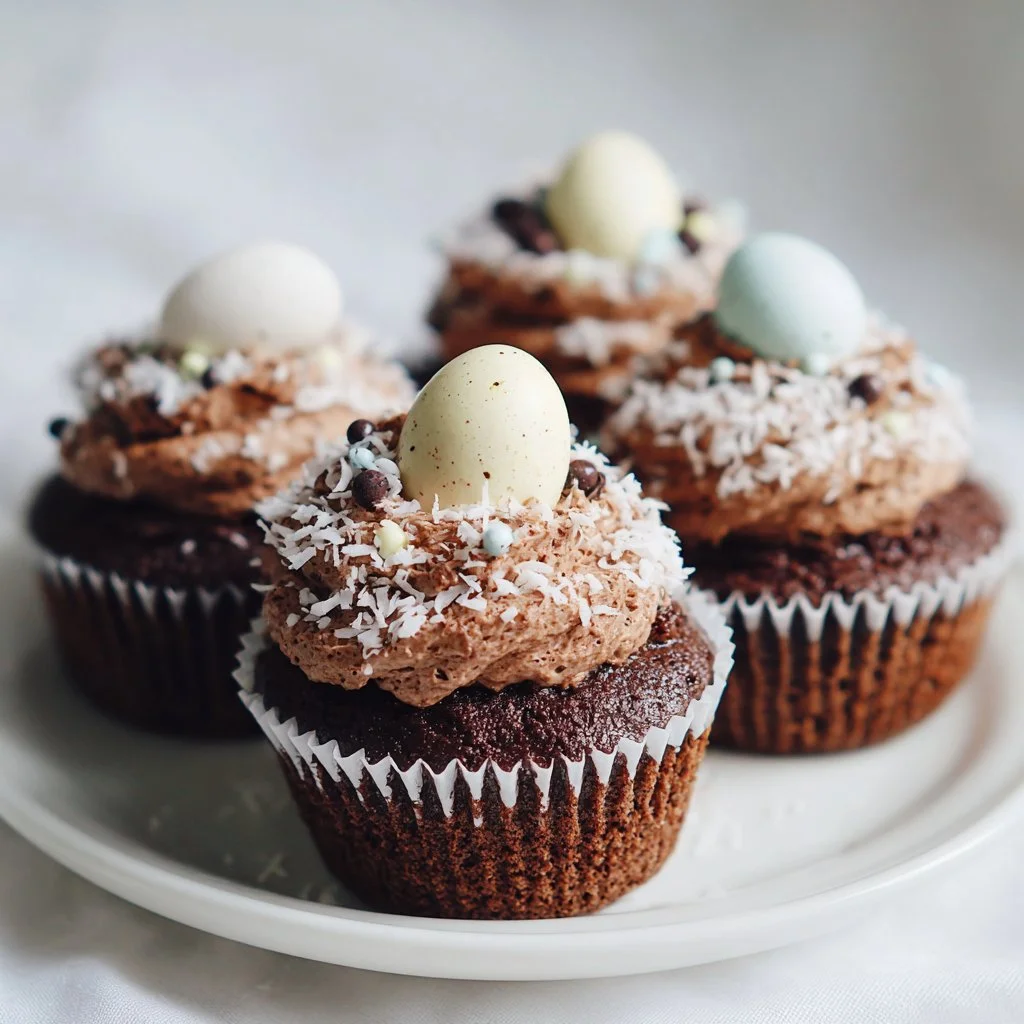
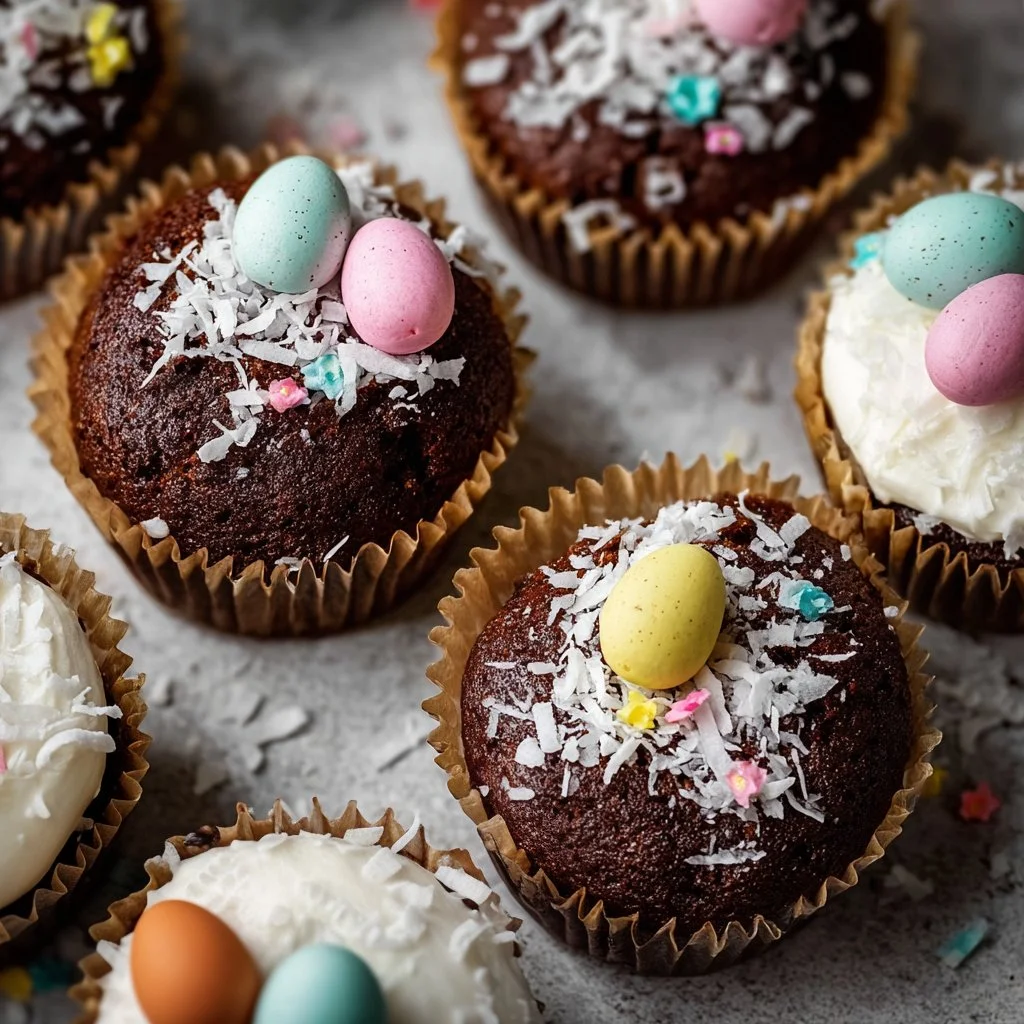
Frost the cooled cupcakes with your chosen frosting and top with festive decorations like chocolate eggs or sprinkles. Chill briefly if using delicate piped decorations to set the frosting.
Pro Tip: Creamy frosting should hold its shape but look smooth, with decorations sitting on the surface without sinking.
Pro Tip: If you want a chocolate-coconut piping theme, use a star tip and sprinkle toasted coconut around the base for contrast.
Expert Tips for Coconut Chocolate Easter Cupcakes
– Temperature tips: Use room-temperature eggs and butter for proper emulsion; cold ingredients lead to lumps and uneven rise.
– Oven calibration: Check your oven with an oven thermometer; a 25°F mismatch changes baking time and texture.
– Measurement accuracy: Weigh ingredients when possible—cups can vary widely, affecting texture.
– Texture troubleshooting: If cupcakes are dry, reduce flour slightly or add 1–2 tablespoons of milk next time; if gummy, underbaked or too much liquid was added.
– Equipment tips: Use a standard 12-cup muffin tin, a medium-sized cookie scoop for even batter distribution, and a cooling rack for full airflow.
– Common mistakes: Overmixing causes tunnels and a tough crumb; overfilling causes domed, cracked tops.
– Coconut handling: Toast coconut lightly in a dry skillet for 2–3 minutes to amplify flavor; watch closely to avoid burning.
– Frosting tips: For stable swirls, chill buttercream 10–15 minutes before piping and use a large star tip for dramatic effect.
Storage & Freezing for Coconut Chocolate Easter Cupcakes
For short-term fridge storage, place frosted cupcakes in an airtight container and refrigerate for up to 3-4 days. Pack them in a single layer or use parchment sheets between layers to protect decorations.
To freeze unfrosted cupcakes, let them cool completely, then flash-freeze on a tray for an hour before transferring to a freezer-safe container or bag; they’ll keep well for 2-3 months. For frosted cupcakes, freeze individually on a tray, then wrap each in plastic wrap and aluminum foil; use within 1-2 months for best texture.
Thaw frozen cupcakes overnight in the refrigerator or for a few hours at room temperature in their wrapping to prevent condensation on the frosting. Reheat gently in the microwave for 6–10 seconds if you want them slightly warm—be careful not to melt the frosting.
Variations & Substitutions for Coconut Chocolate Easter Cupcakes
Coconut-Lime: Add 1 teaspoon of lime zest to the batter and swap half the milk for coconut milk for brighter citrus notes and a more tropical finish. The lime lightens the palate and pairs beautifully with a vanilla or cream cheese frosting.
Double Chocolate Coconut: Fold in 1/3 cup mini chocolate chips and replace half the cocoa with melted bittersweet chocolate for an ultrarich interior. Expect a denser crumb and intense chocolate flavor that stands up to ganache frosting.
Gluten-Free Coconut Chocolate: Use a 1:1 gluten-free baking flour blend and add 1/4 teaspoon xanthan gum if your blend lacks it, to improve structure. Baking time may be slightly longer; check with a toothpick and adjust as needed.
Coconut Cream-Filled: Scoop a small hole from the center after baking and pipe in sweetened coconut cream or coconut pudding before frosting. This creates a delightful surprise and adds moisture and creamy texture to each bite.
Frequently Asked Questions About Coconut Chocolate Easter Cupcakes
Q: Can I make the batter ahead of time?
A: You can mix the dry and wet ingredients separately and combine just before baking for best rise; assembled batter can sit in the fridge for up to 24 hours if covered tightly, but expect a slightly reduced rise. Bring chilled batter to room temperature for 20–30 minutes before scooping for even baking.
Q: How do I prevent the shredded coconut from sinking?
A: Lightly toss the coconut with a teaspoon of flour before folding it into the batter; this helps suspension. Also fold gently and avoid overmixing, which can change the batter’s viscosity and cause add-ins to drop.
Q: Can I use sweetened shredded coconut instead of unsweetened?
A: Yes, but reduce the added sugar by 2–4 tablespoons to avoid an overly sweet cupcake. Sweetened coconut also retains more moisture and can slightly darken the crumb, so watch baking time for doneness.
Q: Why are my cupcakes domed and cracked on top?
A: Doming and cracking usually indicate the oven temperature is too high or the pan was placed too close to the top heat source. Use an oven thermometer and position the rack in the center for even heat distribution.
Q: How can I make these cupcakes visually impressive for an Easter table?
A: Pipe a tall swirl of frosting using a large star tip, then press toasted coconut into the sides and top with a few candy eggs. For contrast, add a small chocolate ganache drip before frosting or use edible gold dust for a festive shimmer.
Final Thoughts on Coconut Chocolate Easter Cupcakes
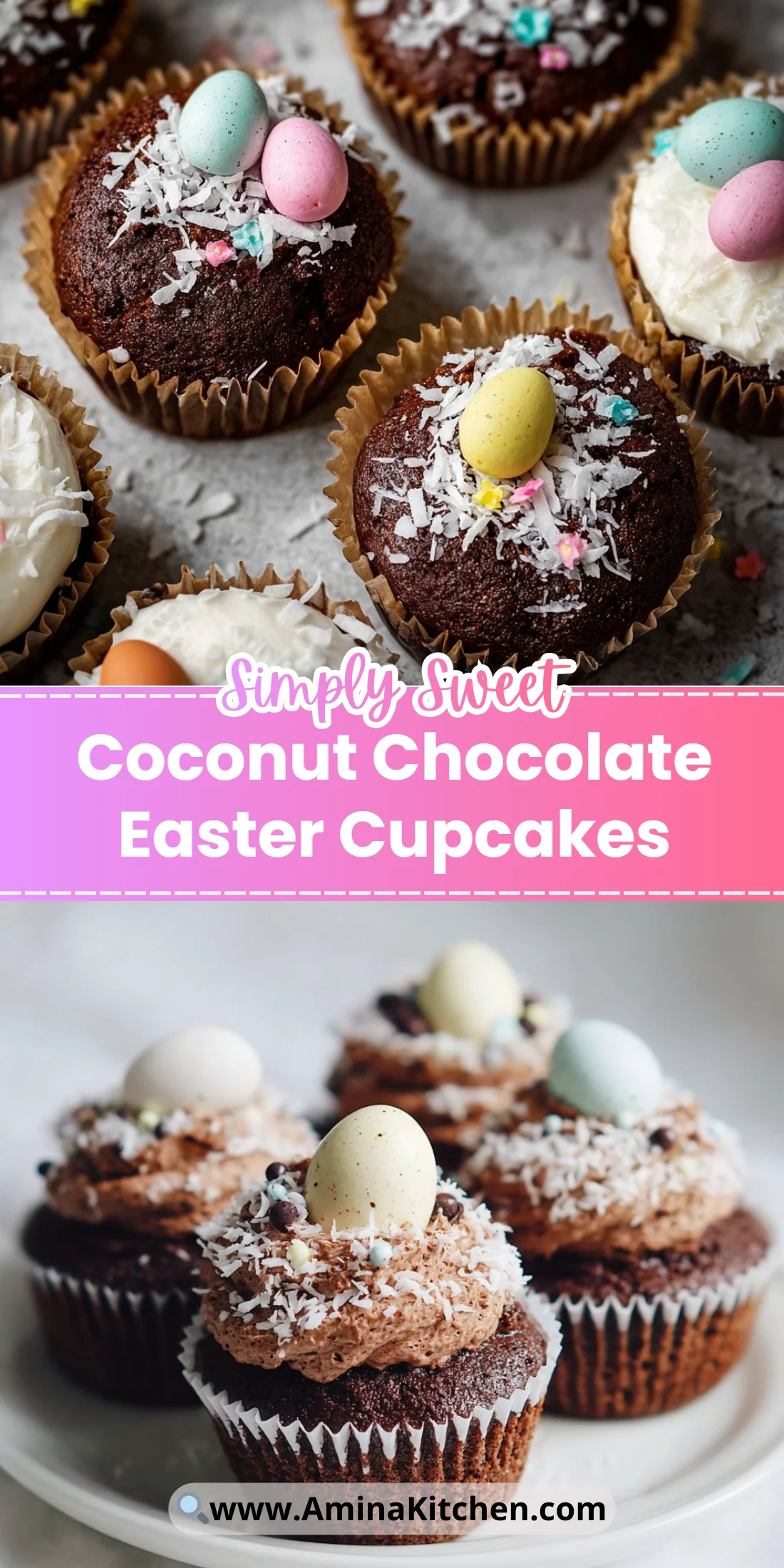
These Coconut Chocolate Easter Cupcakes strike a lovely balance between moist chocolate cake and the chewy brightness of coconut, making them perfect for holiday celebrations. If you enjoyed this recipe, please leave a star rating in the recipe card below and pin the photo to Pinterest to save it for later.
Find additional inspiration and variations from trusted sources like Sally’s Baking Addiction Coconut & Chocolate Easter Cupcakes, explore a similar riff at Handle the Heat Chocolate Coconut Cupcakes, or compare textures with Bakes by Brown Sugar Moist & Fluffy Coconut Easter Cupcakes.
Coconut Chocolate Easter Cupcakes
Ingredients
Method
- Preheat your oven to 350°F (175°C) and line a cupcake pan with paper liners.
- In a large bowl, whisk together the flour, sugar, cocoa powder, baking powder, baking soda, and salt until fully blended.
- Add the softened butter, eggs, milk, and vanilla extract to the dry ingredients. Mix until the batter is smooth and homogenous.
- Gently fold the shredded coconut into the batter using a rubber spatula.
- Divide the batter evenly among the cupcake liners, filling each about two-thirds full.
- Bake for 18–20 minutes or until a toothpick inserted into the center comes out clean.
- Allow the cupcakes to cool in the pan for 5–10 minutes, then transfer to a wire rack to cool completely.
- Frost the cooled cupcakes with your chosen frosting and top with festive decorations.