
Start by imagining a warm, shell-shaped cake with a crisp, golden edge and a tender, bouncy center.
These tiny French cakes feel elegant yet simple, perfect with tea or a morning coffee.
They’re a classic for a reason: buttery, lemon-kissed, and impossibly light.
Cold batter, browned butter aroma, and a fluted pan are all part of the charm.
Make them once and you’ll understand the ritual.
Why You’ll Love This Classic French Madeleines
– Elegant, petite cakes that look bakery-made with minimal fuss.
– Browned butter and lemon create a complex, buttery-citrus flavor.
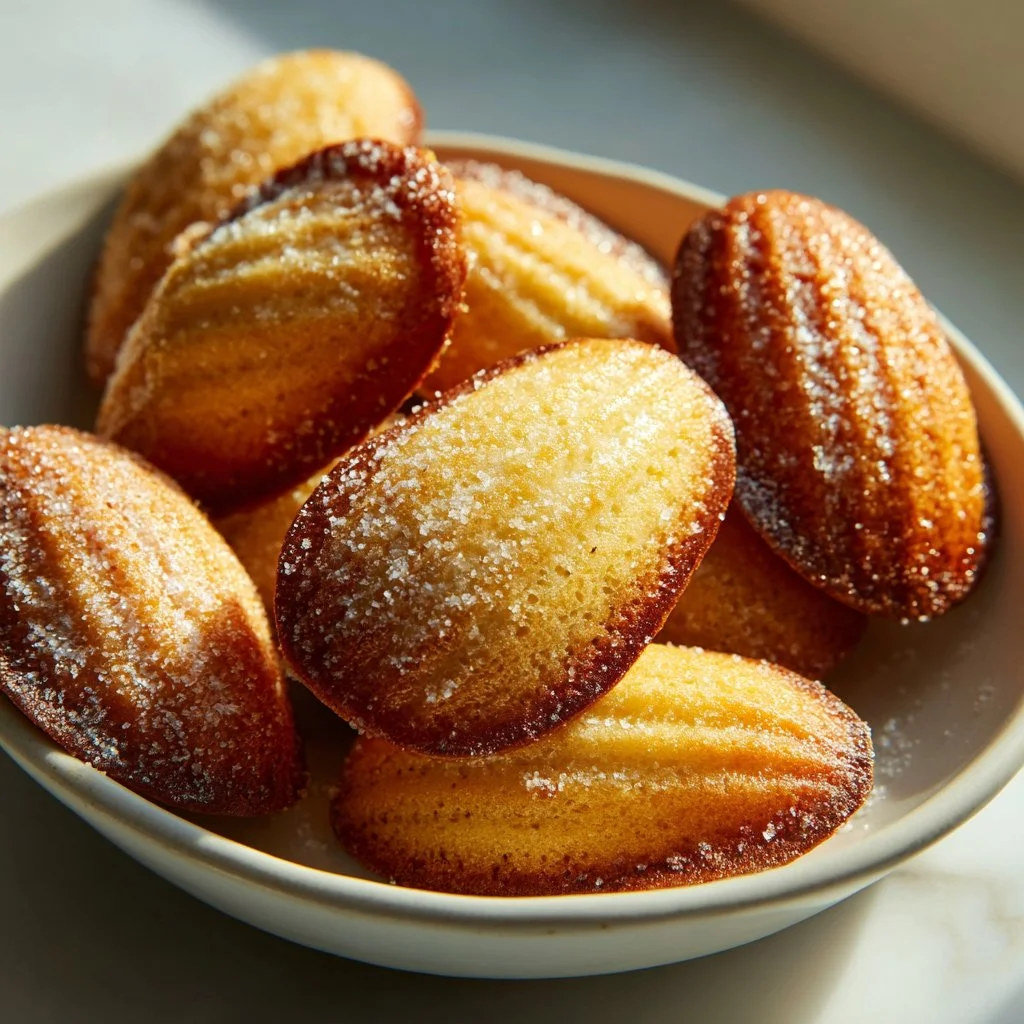
– Light, airy crumb with a crisp, golden edge and a distinctive “belly.”
– Batter keeps well chilled, so you can make ahead and bake fresh.
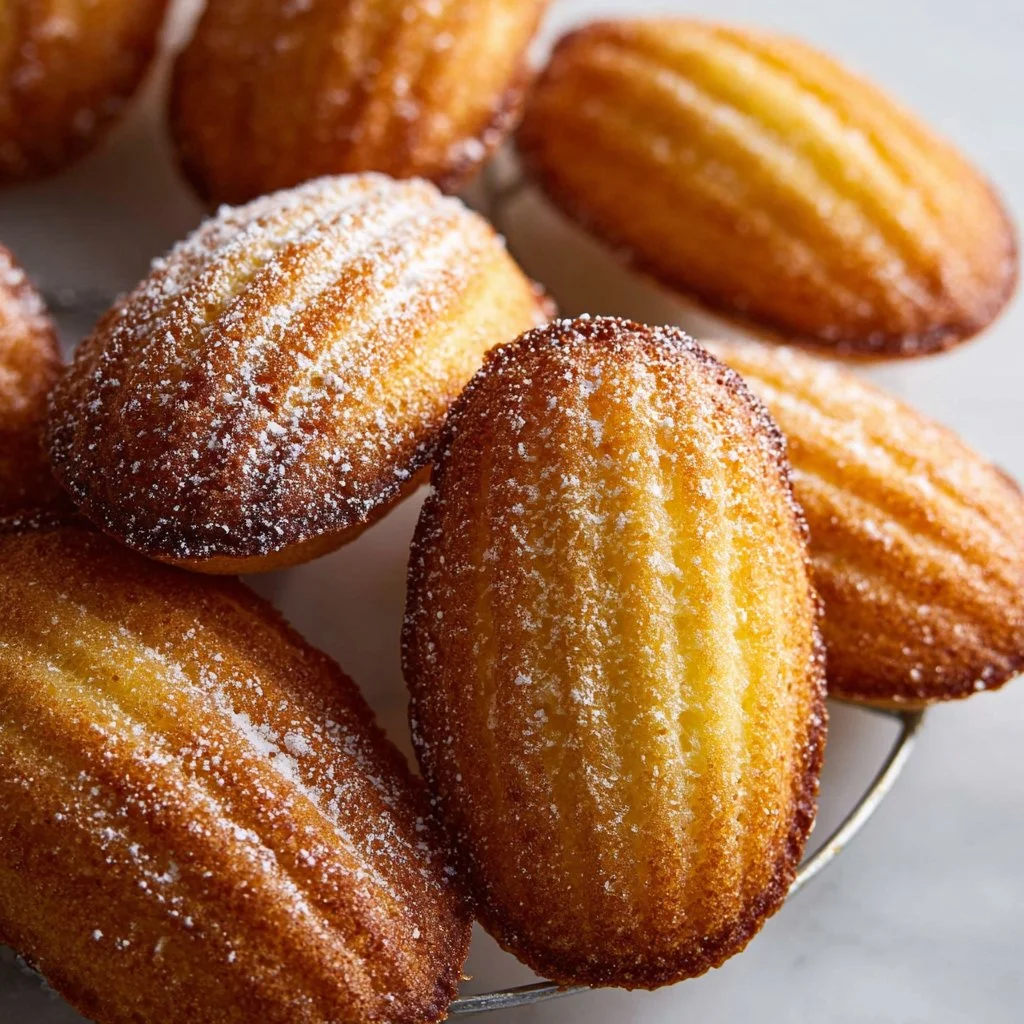
– Versatile: dust with sugar, dip in chocolate, or flavor with tea.
– Great for gifts and entertaining—each shell is individually charming.
The taste is buttery and subtly lemony, with a caramelized edge from browned butter.
Texture is springy and fine—crisp on the outside, soft and spongy inside.
“I made these for a neighborhood brunch and everyone asked for the recipe. The browned butter aroma is addictive and the centers were perfectly tender.” — 5-star reader review
Key Ingredients for Classic French Madeleines
Unsalted butter (1 stick / 4 ounces)
Butter is the flavor backbone. Brown it until the milk solids caramelize for a nutty depth that plain melted butter can’t match. Buy high-quality unsalted butter to control salt; if using salted, reduce added salt by half and expect subtle differences in browning. Substituting margarine or oil will lose the caramel notes and the rich mouthfeel.
Large eggs (3, room temperature)
Eggs provide structure, lift, and the glossy, tender crumb when whipped with sugar. Room-temperature eggs whip more easily and provide volume; cold eggs can yield dense madeleines. If you swap for an egg substitute, expect a flatter, less aerated cake and altered texture.
Granulated sugar (3/4 cup)
Sugar stabilizes the whipped eggs and contributes to browning and slight crispness at the edges. Use fine granulated sugar for faster dissolving during whipping; coarse sugar can prevent proper aeration. Reducing sugar will produce less rise and drier texture; do so carefully.
All-purpose flour (1 cup)
Flour gives the crumb its fine structure without being heavy. Sift or whisk to aerate and avoid overworking the batter, which can make shells tough. Using cake flour will produce a softer crumb; bread flour will produce a chewier, denser madeleine.
Full Ingredient List for Classic French Madeleines
– Unsalted butter – 1 stick (4 ounces)
– Vanilla extract – 2 teaspoons
– Lemon zest – 1 1/2 teaspoons, finely grated
– All-purpose flour – 1 cup
– Baking powder – 1 1/4 teaspoons
– Salt – 1/4 teaspoon
– Large eggs – 3 (at room temperature)
– Granulated sugar – 3/4 cup
– Confectioners sugar – 1/2 cup (optional for dusting)
Step-by-Step Instructions for Classic French Madeleines
Step 1: Brown the butter
Place the butter in a heavy saucepan over medium heat and cook, stirring, until the solids turn golden and a nutty aroma develops.
Remove from heat, swirl in the vanilla and grated lemon zest, and let the butter cool to room temperature so it won’t deflate the whipped eggs.
Pro Tip: The butter should smell toasty and look amber with visible brown specks.
Step 2: Combine dry ingredients
Whisk the flour, baking powder, and salt in a medium bowl until evenly mixed and slightly aerated.
This ensures even leavening and prevents pockets of baking powder in the batter.
Pro Tip: The mixture should look uniform with no clumps and feel light when you lift the whisk.
Step 3: Whip eggs and sugar
Place room-temperature eggs and granulated sugar in a bowl and whip on medium-high for 3–4 minutes until thick, pale, and ribboning when the beater is lifted.
Proper whipping creates volume and a light texture once baked.
Pro Tip: Look for a ribbon that slowly falls back and leaves a faint trail on the surface.
Step 4: Fold in dry ingredients
Gently fold the flour mixture into the egg mixture in three additions, using a spatula and cutting motions to preserve as much air as possible.
Avoid overmixing, which will deflate the batter and make madeleines tough.
Pro Tip: The batter should look smooth and slightly thickened, not rubbery or grainy.
Step 5: Add the browned butter
Fold the cooled browned butter into the batter until just incorporated; stop as soon as you see an even sheen.
Warm or hot butter will melt the whipped eggs and collapse the structure.
Pro Tip: The batter should glisten slightly from the butter and feel silky, not oily.
Step 6: Chill the batter
Cover the bowl and refrigerate the batter for at least 4 hours or up to 2 days. Chilling firms the butter and helps the madeleine’s characteristic hump form during baking.
This rest also deepens flavor and relaxes the gluten for a tender crumb.
Pro Tip: The batter should be cold and thicker—almost like pillowy dough—when you scoop it.
Step 7: Prepare pan and oven
Preheat the oven to 375°F (190°C) and brush a madeleine pan with softened butter, then dust lightly with flour, tapping out excess.
A well-prepared pan ensures crisp edges and easy release.
Pro Tip: The pan should look evenly greased with no dry spots or clumps of flour.
Step 8: Fill molds
Spoon level scoops of batter into the center of each mold, filling about three-quarters full to allow room for the “belly” to rise.
An even mound in each cavity gives the best shape and rise.
Pro Tip: The batter should sit in the middle of the shell like a soft peak, not spread level.
Step 9: Bake until golden and domed
Bake for about 12 minutes until the madeleines have risen with prominent “bellies” and the edges are golden.
Timing may vary by oven—watch for color and rise rather than the clock alone.
Pro Tip: The edges should be lightly caramelized and the center springy to the touch.
Step 10: Cool and finish
Let the madeleines cool in the pan for 2 minutes, then invert onto a wire rack to cool completely. Dust with confectioners sugar just before serving.
Cooling briefly prevents breakage; cooling completely preserves the interior texture.
Pro Tip: When they’re ready, the shells should release cleanly and smell buttery with a hint of lemon.
Expert Tips for Classic French Madeleines
– Temperature tip: Always use room-temperature eggs to maximize volume when whipping.
– Chill tip: Don’t skip the 4-hour chill—cold batter is the secret to the hump and fine crumb.
– Browning tip: Brown butter until it smells nutty and turns amber; stop before it smells burnt.
– Texture troubleshooting: If madeleines are flat, the batter was likely too warm or under-whipped; chill batter longer and ensure eggs are well-aerated.
– Equipment tip: Use a heavy, nonstick madeleine pan for even heat and easy release; a light pan can burn edges.
– Common mistake: Overmixing after adding flour collapses air—fold gently and stop when streaks disappear.
– Timing tip: Oven hot spots affect the dome; rotate the pan halfway if your oven runs unevenly.
– Flavor tip: Freshly grated lemon zest is brighter than bottled and enhances the browned butter’s depth.
Storage & Freezing for Classic French Madeleines
For short-term fridge storage, place cooled madeleines in an airtight container lined with paper towel and refrigerate up to 3 days.
They retain best texture when eaten within 48 hours.
For freezing, arrange cooled madeleines in a single layer on a baking sheet and freeze until solid, about 1 hour.
Transfer to a labeled freezer-safe bag or airtight container and freeze up to 2 months.
To thaw, move frozen madeleines to the refrigerator for a couple of hours, then come to room temperature before serving.
Reheat briefly in a 325°F (160°C) oven for 4–6 minutes to refresh the crisp edges.
Use shallow airtight containers for the fridge and heavy-duty freezer bags or rigid containers for the freezer to prevent crushing.
Avoid condensation: cool fully before packing to prevent sogginess.
Variations & Substitutions for Classic French Madeleines
Lemon-Glazed Madeleines
Add a simple lemon glaze of confectioners sugar and lemon juice and dip the cooled shells.
Result: brighter citrus hit and glossy finish that accentuates the shell ridges.
Chocolate-Dipped Madeleines
Melt good-quality dark chocolate and dip half of each madeleine, letting excess drip off before setting.
Result: bittersweet contrast to the rich butter, perfect for an elegant treat.
Tea-Infused Madeleines
Steep a tablespoon of finely ground Earl Grey or matcha into the batter by whisking it with the dry ingredients.
Result: aromatic tea notes that pair beautifully with the butter and subtle citrus.
Orange-Cardamom Madeleines
Replace lemon zest with finely grated orange zest and add 1/4 teaspoon ground cardamom.
Result: a warm, spiced profile with floral orange brightness—great for afternoon tea.
Frequently Asked Questions About Classic French Madeleines
Q: Why did my madeleines not get a hump?
A: The most common causes are batter that was too warm, insufficiently whipped eggs, or skipping the chill. Refrigerate the batter at least 4 hours, use room-temperature eggs whipped until pale and thick, and ensure the oven is fully preheated to 375°F (190°C) for the immediate rise.
Q: How do I tell when madeleines are done without overbaking?
A: Watch for a golden edge and a pronounced dome. The center should spring back slightly when touched. If the centers feel wet or very soft, bake 1–2 minutes longer, checking frequently to avoid drying.
Q: Can I make the batter ahead of time?
A: Yes. Refrigerate the batter up to 48 hours. Chilled batter actually improves the hump formation and flavor, and gives you flexibility to bake fresh shells when needed.
Q: How do I ensure madeleines release cleanly from the pan?
A: Thoroughly butter and flour the pan, tapping out excess, or use a high-quality nonstick pan. Let the madeleines cool for 1–2 minutes before inverting; immediate flipping can cause tearing.
Q: Can I use a different leavening agent or make them gluten-free?
A: You can replace baking powder with a combination of baking soda and an acid, but measurements and results will vary. For gluten-free, use a 1:1 gluten-free flour blend and expect a slightly different crumb; chilling the batter and gentle folding will help maintain texture.
{image_template}
Final Thoughts on Classic French Madeleines
These Classic French Madeleines are deceptively simple but reward patience with buttery, lemon-kissed shells and a perfect hump.
If you enjoyed this guide, please leave a star rating in the recipe card below and pin this to Pinterest for later.
Conclusion
For more technique variations and visual step guides, see Baker by Nature’s Classic French Madeleines recipe which offers an alternate browning method.
If you want a thorough lesson on whipping eggs and shaping the hump, check out The Kitchn’s step-by-step madeleines guide.
For flavor twists and plating ideas, I also like Emma Duckworth’s madeleine techniques and variations.
Classic French Madeleines
Ingredients
Method
- Step 1: Brown the butter - Place the butter in a heavy saucepan over medium heat and cook, stirring, until the solids turn golden and a nutty aroma develops.
- Remove from heat, swirl in the vanilla and lemon zest, and let cool to room temperature.
- Step 2: Combine dry ingredients - In a medium bowl, whisk together flour, baking powder, and salt until evenly mixed.
- Step 3: Whip eggs and sugar - In a separate bowl, whip the eggs and granulated sugar on medium-high for 3-4 minutes until thick and pale.
- Step 4: Fold in dry ingredients - Gently fold the flour mixture into the egg mixture in three additions.
- Step 5: Add browned butter - Fold the cooled browned butter into the batter until just incorporated.
- Step 6: Chill the batter - Cover the bowl and refrigerate the batter for at least 4 hours, or up to 2 days.
- Step 7: Prepare pan and oven - Preheat the oven to 375°F (190°C) and grease the madeleine pan.
- Step 8: Fill molds - Spoon batter into each mold, about three-quarters full.
- Step 9: Bake until golden and domed - Bake for about 12 minutes until the edges are golden.
- Step 10: Cool and finish - Let cool in the pan for 2 minutes, then invert onto a wire rack. Dust with confectioners sugar if desired.