
A warm, pull-apart loaf flecked with garlic and ribbons of melted cheese is a simple way to transform any meal. This Swirled Garlic Herb And Cheese Bread delivers crunchy crust, soft crumb, and a savory swirl that makes every slice irresistible.
It takes a few straightforward steps but rewards you with baker’s-deep flavor and an aromatic kitchen. Short hands-on time, big payoff.
Perfect for weeknight dinners, lunchboxes, or as a show-stopping side at gatherings. If you want a bright, herb-forward snack alongside this loaf, try a fresh green smoothie for a palate cleanser: 3-Ingredient Green Grape and Kale Smoothie.
Why You’ll Love This Swirled Garlic Herb And Cheese Bread
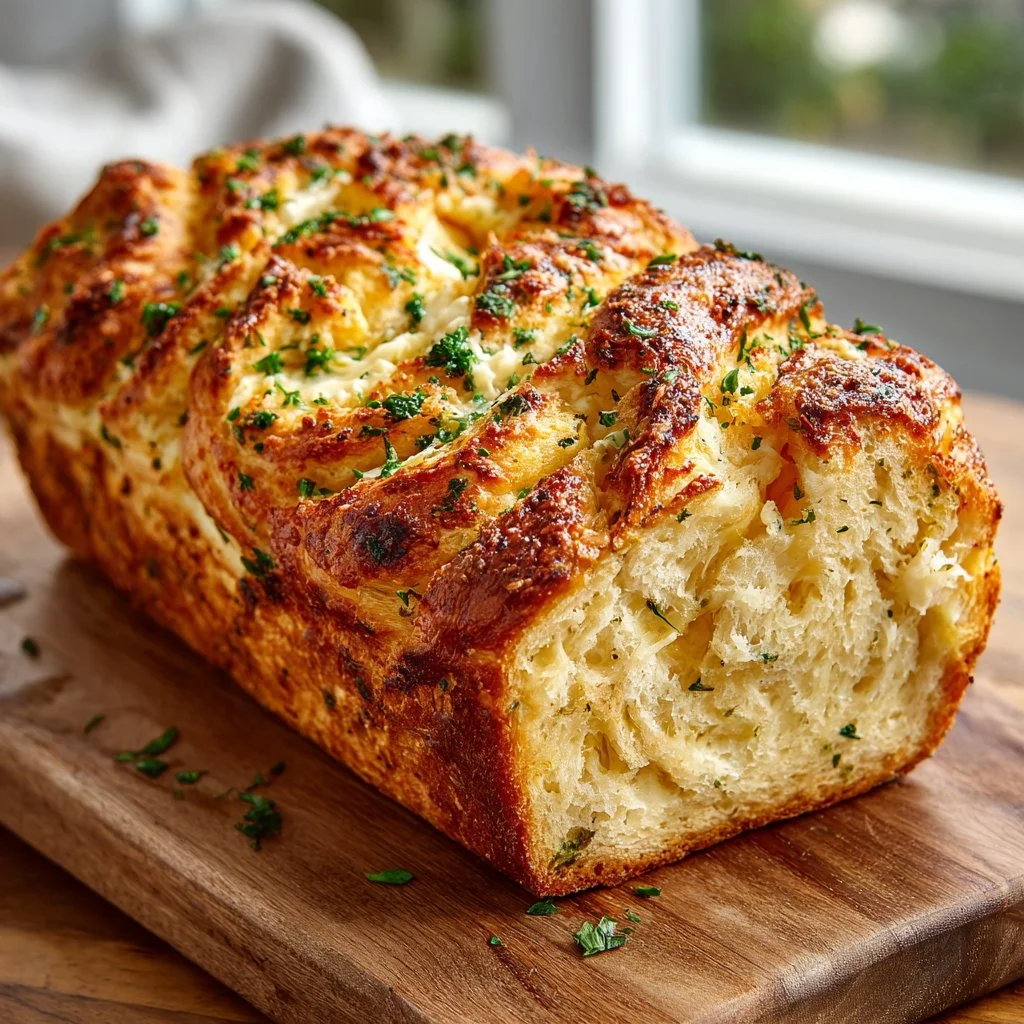
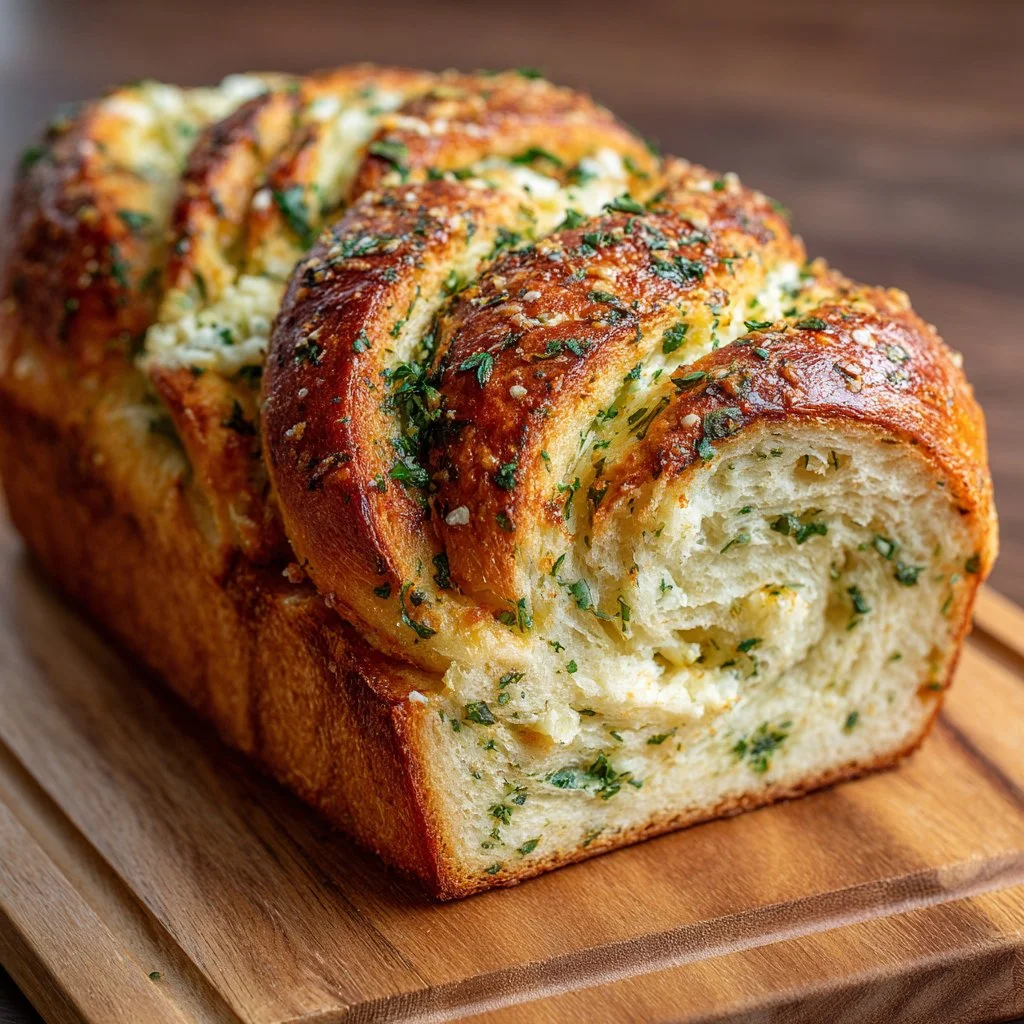
- Crispy golden crust with a pillowy, cheesy interior.
- Bold garlic and thyme aroma that fills the kitchen.
- Melting mozzarella streaks for gooey, pull-apart texture.
- Simple pantry ingredients, big homemade taste.
- Great make-ahead candidate and freezer-friendly.
- Versatile: pairs with soups, salads, or makes a decadent sandwich base.
The taste is savory and buttery with fresh garlic notes and a herbal lift from thyme. Texture-wise, you’ll get a crisp outer shell and an elastic crumb studded with strings of melted mozzarella that give satisfying stretch and chew.
“★★★★★ This loaf disappeared in one sitting — golden, fragrant, and the cheese ribbons were addictive. A new family favorite!” — Reader K.
Key Ingredients for Swirled Garlic Herb And Cheese Bread
All-purpose flour — 3 1/2 cups
Flour builds the structure and chew of the loaf; choose a readily available, unbleached all-purpose for a reliable protein content around 10–12%. Using a low-protein pastry flour will make the dough weak and overly tender, while bread flour will give a slightly firmer, chewier crumb.
Active dry yeast — 2 1/4 teaspoons
Yeast provides the rise and airy crumb. Buy a recent packet, store it in the fridge or freezer after opening, and proof in warm water (not hot) to confirm activity. Instant yeast can substitute at a slightly reduced quantity but may shorten rise times.
Unsalted butter — 4 tablespoons (softened, divided)
Butter enriches the dough, softens crumb, and carries flavor in the herb butter spread. Use unsalted to control sodium; if substituting salted, cut added salt slightly. For dairy-free alternatives, a high-quality plant butter will change flavor and browning but keep richness.
Mozzarella cheese — 2 cups shredded
Mozzarella gives the melt and stretch that defines the swirl. For best results shred a block yourself for better melting and less anti-caking agents. Substituting with a drier cheese (like feta) changes texture and melt—expect less stringiness and a different flavor profile.
Full Ingredient List for Swirled Garlic Herb And Cheese Bread
- 3 1/2 cups all-purpose flour (Builds the bread structure)
- 2 1/4 teaspoons active dry yeast (Creates the airy rise)
- 1 1/4 cups warm water (Activates the yeast)
- 1 tablespoon sugar (Feeds the yeast)
- 1 teaspoon salt (Balances the savory flavors)
- 4 tablespoons unsalted butter (Softened, divided use)
- 3 cloves fresh garlic (Minced)
- 1 tablespoon fresh thyme (Chopped)
- 2 cups mozzarella cheese (Shredded)
- 1 large egg (Beaten, for egg wash)
Step-by-Step Instructions for Swirled Garlic Herb And Cheese Bread
Step 1: Make and knead the dough
Combine the warm water and sugar, sprinkle the active dry yeast over the top and let sit briefly until foamy. Add the flour, salt, and two tablespoons of softened butter, then knead until the dough becomes smooth and elastic; this can take 8–10 minutes by hand or 5–7 minutes in a stand mixer with a dough hook. Place the dough in a lightly oiled bowl, cover, and let it rise until doubled in size in a warm spot.
Pro Tip: The dough should be tacky but not sticky and pass the windowpane test—when stretched thin it forms a translucent membrane.
Step 2: Prepare the garlic herb butter
Melt the remaining two tablespoons of butter in a small pan over medium-low heat, add the minced garlic and cook very briefly until fragrant—do not brown. Stir in the chopped thyme and remove from heat, then let the herb butter cool to room temperature so it won’t melt the cheese when spread.
Pro Tip: The butter should smell bright and herbal with a gentle garlic perfume; if garlic browns it will taste bitter.
Step 3: Roll out and fill the dough
Punch down the risen dough and roll it into a large rectangle on a lightly floured surface. Brush the entire surface with the cooled herb butter, then sprinkle an even layer of shredded mozzarella over the butter, leaving a small margin at the far edge to seal.
Pro Tip: The rectangle should be roughly even thickness so the swirl bakes uniformly; the cheese should sit in a single, even layer without clumps.
Step 4: Shape the swirl
Roll the rectangle tightly into a log, seam-side down. Using a sharp knife, slice the log lengthwise into two equal strands and turn the cut sides up to expose the cheese layers. Twist the two strands together, keeping the cut faces visible, and transfer the twisted loaf into a greased loaf pan. Cover and let it rise again until puffy.
Pro Tip: The twist should look like two rope strands with ribboned cheese visible; a sloppy twist will collapse and bake unevenly.
Step 5: Egg wash and bake
Brush the risen loaf with the beaten egg for a glossy finish. Bake in a preheated oven at 350°F (175°C) for about 30 minutes until the crust is deep golden brown and internal temperature reaches about 190–200°F. Let the loaf cool slightly in the pan before transferring to a rack to rest.
Pro Tip: The crust should be evenly golden and sound hollow when tapped; if the center is very soft, tent with foil and bake a few minutes longer.
Expert Tips for Swirled Garlic Herb And Cheese Bread
- Temperature tip: Keep water between 100–110°F to activate yeast without killing it.
- Rise management: A slow, cool rise in the fridge overnight will develop deeper flavor and make shaping easier.
- Texture troubleshooting: If crumb is gummy, the dough was underbaked or over-hydrated; check oven temp with an oven thermometer and bake until internal temp hits 190–200°F.
- Cheese distribution: Grate mozzarella from a block to avoid anti-caking agents; spread evenly to prevent pockets that melt out.
- Equipment tip: Use a sharp, serrated knife for clean slices when cutting the log; a dull blade drags the cheese.
- Oven placement: Bake in the center rack for even browning; if the top is browning too fast, lower the rack or tent with foil.
- Common mistake: Adding hot garlic butter to the dough will partially melt cheese and compress layers—cool the butter first.
- Finishing tip: Brush with butter right after baking for extra sheen and a softer crust if desired.
Storage & Freezing for Swirled Garlic Herb And Cheese Bread
Fridge storage: Cool the loaf completely, then store in an airtight container or wrapped tightly in plastic wrap for up to 3 days. For best texture, reheat slices in a 350°F oven for 8–10 minutes rather than microwaving.
Freezer storage: Slice the cooled loaf and flash-freeze individual slices on a tray until solid, then transfer to a freezer bag or airtight container. Properly stored, slices keep well for up to 3 months.
Thawing: Thaw slices overnight in the refrigerator or at room temperature for 30–60 minutes. For whole loaves, thaw in the fridge overnight.
Reheating: Reheat slices in a toaster oven or conventional oven at 350°F for 8–12 minutes until warmed through and cheese is melty. If using a microwave, heat briefly then crisp in a skillet or oven to restore texture.
Variations & Substitutions for Swirled Garlic Herb And Cheese Bread
Sun-dried tomato and basil: Replace the thyme with 1/3 cup chopped sun-dried tomatoes and 2 tablespoons fresh basil. The loaf will become tangy and slightly sweeter; the vibrant tomatoes add chew and color.
Three-cheese swirl: Swap mozzarella for a mixture of 1 cup mozzarella, 1/2 cup fontina, and 1/2 cup Parmesan. This yields a nuttier, more complex melt with a deeper golden color.
Spicy garlic butter: Add 1/2 teaspoon red pepper flakes to the herb butter and use chopped oregano instead of thyme. Expect a warm, piquant finish that pairs well with hearty soups.
No-yeast quick version: Use a quick bread technique (see similar no-yeast recipes) replacing yeast with baking powder and buttermilk; loaf will be denser and cake-like but retains garlic-herb-cheese flavor. For a comparable quick idea, check a tested no-yeast version: Authentic Irish Potato Candy (for inspiration on sweet vs savory quick-bread technique).
Frequently Asked Questions About Swirled Garlic Herb And Cheese Bread
Q: Can I make this bread with instant yeast instead of active dry yeast?
A: Yes. Use about 2 teaspoons of instant yeast in place of 2 1/4 teaspoons active dry. Because instant yeast dissolves faster, you can skip the initial proof and mix it directly into the flour. Expect slightly faster rise times, so monitor the dough rather than timing strictly.
Q: How do I prevent cheese from leaking out during baking?
A: Spread the cheese in a single even layer and leave a small sealing margin at the far edge before rolling the log. Chill the shaped loaf briefly in the fridge for 10–15 minutes before the final rise to set layers. Use firmer, low-moisture mozzarella to reduce excessive melting and runoff.
Q: Why is my crumb too dense or gummy?
A: Dense crumb often results from underproofing, too much flour, or inadequate kneading. Ensure the dough rises until doubled, measure flour by weight or spoon-and-level the cup, and knead until elastic. A gummy interior usually means underbaked — check internal temperature and give it additional bake time.
Q: Can I make this dairy-free or vegan?
A: Yes with adjustments. Use a plant-based butter substitute for the dough and herb butter, and replace mozzarella with a vegan melting cheese. Texture and browning may differ; choose a vegan cheese known for melting qualities for best results.
Q: How do I get a shiny, crack-free top?
A: Brush the loaf with beaten egg before baking for a glossy finish. Also ensure the loaf has risen sufficiently before baking; an underproofed loaf may crack irregularly as it expands in the oven. For a softer sheen, brush melted butter on immediately after baking.
Final Thoughts on Swirled Garlic Herb And Cheese Bread
This Swirled Garlic Herb And Cheese Bread is a reliable, crowd-pleasing loaf that elevates simple meals and freezes beautifully for make-ahead convenience. Please leave a star rating in the recipe card below and pin this loaf to your baking board.
For more recipe inspiration and similar swirled breads, see this version with extra herbs on Swirled Garlic Herb and Cheese Bread – Butternut and Sage. If you want a different twist on the swirl technique, Half Baked Harvest’s take offers creative filling ideas: Swirled Garlic Herb Bread. – Half Baked Harvest. For a quick, no-yeast cheesy loaf method to compare textures, check this tested approach: Cheese, Herb & Garlic Quick Bread (No Yeast) – RecipeTin Eats.
Swirled Garlic Herb And Cheese Bread
Ingredients
Method
- Combine the warm water and sugar, sprinkle the active dry yeast over the top and let sit briefly until foamy. Add the flour, salt, and two tablespoons of softened butter, then knead until the dough becomes smooth and elastic. This can take 8–10 minutes by hand or 5–7 minutes in a stand mixer with a dough hook. Place the dough in a lightly oiled bowl, cover, and let it rise until doubled in size in a warm spot.
- Pro Tip: The dough should be tacky but not sticky and pass the windowpane test.
- Melt the remaining two tablespoons of butter in a small pan over medium-low heat, add the minced garlic and cook very briefly until fragrant—do not brown. Stir in the chopped thyme and remove from heat, then let the herb butter cool to room temperature.
- Pro Tip: The butter should smell bright and herbal with a gentle garlic perfume.
- Punch down the risen dough and roll it into a large rectangle on a lightly floured surface. Brush the entire surface with the cooled herb butter, then sprinkle an even layer of shredded mozzarella over the butter.
- Pro Tip: The rectangle should be roughly even thickness.
- Roll the rectangle tightly into a log, seam-side down. Slice the log lengthwise into two equal strands and twist the two strands together. Transfer to a greased loaf pan and cover.
- Pro Tip: The twist should look like two rope strands.
- Brush the risen loaf with the beaten egg for a glossy finish. Bake in a preheated oven at 350°F for about 30 minutes until the crust is deep golden brown.
- Pro Tip: The crust should be evenly golden and sound hollow when tapped.