
Warm, buttery, and impossibly flaky, this Croissant Bread Loaf feels like a weekend bakery visit at home.
It combines yeasted dough with laminated butter for pull-apart layers that are crisp on the outside and tender inside.
Read on for the why, the how, and fail-safe tips to get bakery results in your own kitchen.
Try a small treat afterward like these buttery shortbread sprinkle bites for a complete brunch spread.
Why You’ll Love This Croissant Bread Loaf
- Buttery, layered crumb that pulls apart like a croissant but slices like bread.
- Comforting aroma that fills your kitchen for hours.
- Versatile: serve plain, sweet, or savory.
- Impressive loaf that’s easier than traditional croissants.
- Make-ahead friendly — freeze before or after baking.
- Great for brunch, sandwiches, or toasted mornings.
The taste is rich and buttery with a slightly sweet, egg-washed crust and a soft, laminared interior. Texture combines crisp, flaky layers with a pillowy interior, giving a satisfying tear-and-chew experience.
“This loaf vanished in hours — flaky like croissants but so much simpler to make. Five stars!” — A happy weekend baker
Key Ingredients for Croissant Bread Loaf
Whole milk
Whole milk adds fats and sugars that feed the yeast and tenderize the dough, helping the crumb bake golden and soft. Buy fresh whole milk with higher fat for better flavor and structure; ultra-pasteurized milk can be used but may yield slightly weaker rise. If you substitute with skim or plant milk, reduce expectant richness and adjust dough feel—add a tablespoon of butter if using lower-fat liquids.
Instant or active dry yeast
Yeast is what makes the dough rise and creates air pockets for flakiness during lamination. Instant yeast is convenient and mixes straight into liquids; active dry needs proofing in warm milk like this recipe describes. If you swap to fresh yeast, use roughly three times the weight and dissolve it in warm milk; omit or under-measure yeast and the loaf will be dense.
All-purpose flour
All-purpose flour provides enough gluten for structure while keeping the crumb tender. Choose a protein content around 10–12% for best results; higher-protein bread flour will yield a chewier loaf and may resist rolling during lamination. If you use pastry flour, the dough may be too fragile for laminating—add a little bread flour to strengthen it.
Lamination butter (3/4 cup salted butter)
The block of butter folded into the dough is the secret to the croissant-like layers. Use a good-quality, high-fat butter and keep it pliable but cool for even layers. Substituting margarine or very soft butter can cause greasy, smeared layers and poor lift—stick with real butter for the best flake.
Full Ingredient List for Croissant Bread Loaf
- 1 cup whole milk, warmed to about 110°F
- 2 and 1/4 teaspoons instant or active dry yeast
- 3 tablespoons granulated sugar
- 1 and 1/4 teaspoons salt
- 3 tablespoons unsalted or salted butter, softened
- 3 cups all-purpose flour, plus more as needed
- 3/4 cup salted butter, slightly softened (for lamination)
- 1 large egg
- 1 tablespoon water
Step-by-Step Instructions for Croissant Bread Loaf
Step 1: Prepare the dough
Whisk the warmed milk with the yeast and sugar in a medium bowl until dissolved. Let it sit for about 5 minutes until frothy, which shows the yeast is active. Add the salt, softened butter, and 2 cups of flour, then mix on medium speed for 2 minutes. Gradually add the remaining flour and mix on low until a soft dough forms, then knead on a floured surface for about 5 minutes until smooth.
Pro Tip: Look for a soft, slightly tacky dough that pulls into a smooth ball and springs back when pressed.
Step 2: Let the dough rise
Place the dough in a greased bowl, cover it with plastic or a clean towel, and let it rise in a warm spot for 1½ to 2 hours until doubled in size. The doubled volume means the yeast has produced enough gas and flavor to support lamination.
Pro Tip: The dough should feel pillowy and warm with visible bubbles under the surface when gently pressed.
Step 3: Prepare for lamination
Flatten the risen dough and shape it into a rectangle roughly 10×14 inches. Chill it in the refrigerator for 20 minutes to firm the gluten. Slice the softened 3/4 cup butter into 1/4-inch slices and arrange them on the chilled dough rectangle, leaving a small border.
Pro Tip: The dough should be cool and slightly stiff; if butter starts to melt, chill for a few more minutes.
Step 4: First lamination
Fold the dough over the butter to encase it, then rotate the package 90 degrees. Roll the dough out to approximately a 9×12 inch rectangle and perform a letter fold (fold one third over the center, then the other third over that). Wrap and refrigerate for 20 minutes.
Pro Tip: When you roll, keep even pressure; layers should look uniform and the dough should not ooze butter.
Step 5: Repeat laminations
Repeat the roll-and-fold process two more times for a total of three laminations, chilling 20 minutes between each fold. Each set of folds builds more distinct, thin butter layers that create flakiness during baking.
Pro Tip: After each fold the dough should feel firmer; you should see faint layers if you look at the edge.
Step 6: Shape the loaf
Roll the dough out one final time to about 9×12 inches. Roll it tightly like a jelly roll from the long side and slice into five even rolls. Arrange them seam-side down in a greased 9×5 inch loaf pan, leaving a bit of space to expand.
Pro Tip: The roll should be snug and even; visible layering at the cut ends is a good sign.
Step 7: Second rise
Cover the pan and let the rolls rise for 45 to 60 minutes until they fill the pan and look puffy. This second proof gives the loaf its final lift and airy crumb.
Pro Tip: The rolls should be soft to the touch and about 75–100% larger than when placed in the pan.
Step 8: Bake and cool
Preheat the oven to 350°F. Whisk the egg with 1 tablespoon water for an egg wash and brush the tops lightly. Bake for 1 hour, tenting with foil after 25 minutes to prevent excessive browning. Allow the loaf to cool in the pan for 30 minutes, then remove and cool on a wire rack for another 15 minutes before slicing.
Pro Tip: The crust should be deep golden and the loaf sound hollow when tapped lightly on top; interior temperature around 190–200°F indicates done.
Pro Tip: If you enjoy pull-apart breads, you might also like a different twist on sticky, shareable pastries like this monkey bread recipe.

Expert Tips for Croissant Bread Loaf
- Temperature control is everything: keep dough and butter cool but pliable. Aim for dough that’s slightly chilled before each roll to prevent butter leakage.
- If the butter breaks through during lamination, stop and chill the dough for 15–30 minutes before continuing to avoid oily layers.
- Use a ruler when rolling to keep rectangles consistent; uneven thickness gives inconsistent layers and baking.
- For best oven spring, proof until nearly doubled but not overproofed; an overproofed loaf will collapse when baked.
- Brush with egg wash right before baking for a glossy, golden crust; avoid multiple washes which can weigh down layers.
- Equipment tip: use a bench scraper to lift dough cleanly and a rolling pin with light pressure to preserve layers.
- Common mistake: too-soft butter—if butter is smeared while laminating, chill it and resume. The visual cue is streaky, greasy dough edges.
- Flavor lift: chill the shaped loaf for 15 minutes before baking to help preserve the roll shape and highlight layers.
For an alternative loaf experience, compare lamination tips with a lighter quick bread technique like Irish soda bread to sharpen your expectations for texture and crumb.
Storage & Freezing for Croissant Bread Loaf
Store at room temperature wrapped loosely in foil or an airtight container for up to 2 days to preserve crust. Refrigeration dries laminated butter breads quickly, so avoid the fridge for short-term storage.
For longer storage, freeze the baked loaf whole or sliced. Wrap tightly in plastic and then foil, or use a vacuum bag, for up to 3 months. To freeze before baking, shape and freeze the pan-wrapped loaf; thaw overnight in the fridge, then proof and bake as directed.
Thawing: thaw slices at room temperature for 1–2 hours or overnight in the fridge. Reheat: toast slices or reheat whole loaf in a 325°F oven for 10–15 minutes until warmed through and crisp on top.
Best containers: airtight containers for short-term and double-layer wrap (plastic + foil) for freezer storage to prevent freezer burn.
Variations & Substitutions for Croissant Bread Loaf
Add cinnamon sugar swirl: Roll a mixture of 3 tablespoons granulated sugar and 2 teaspoons cinnamon over the dough before the final roll. The result is a sweet, pull-apart cinnamon loaf with caramelized layer edges.
Savory herb and cheese loaf: Sprinkle grated Gruyère and chopped fresh herbs (thyme, chives) across the dough before rolling. This creates pockets of melted cheese and aromatic herb layers perfect for sandwiches.
Chocolate chip version: Scatter dark chocolate chips across the dough during the final roll for a morning pastry-style loaf. Expect pockets of melted chocolate and a slightly heavier crumb where chips cluster.
Sourdough twist: Use an active sourdough starter in place of commercial yeast and extend fermentation times; this will create tangy flavor and a chewier texture. For technique ideas, see how others tackle naturally leavened laminated breads like the guide at a rustic variation for inspiration on hydration and flavor balance.
Frequently Asked Questions About Croissant Bread Loaf
Can I make Croissant Bread Loaf without a stand mixer?
Yes. Mix the initial ingredients by hand and knead on a floured surface for 6–8 minutes until smooth. Lamination is traditionally done by hand with a rolling pin; it’s slightly more labor-intensive but yields the same flaky layers if you keep dough and butter cool.
Why did my layers blend instead of flake?
Blending usually means the butter and dough were at similar temperatures, causing the butter to smear. Chill the dough and butter between folds and look for distinct, thin sheets of butter at the edges before the next roll.
How long should I proof the dough for the best texture?
First proof: 1½–2 hours at a warm room (75–80°F) until doubled. Second proof: 45–60 minutes in the pan until puffy. Adjust times for cooler kitchens—proofs take longer at lower temps.
Can I freeze the unbaked shaped loaf and bake later?
Yes. Wrap the pan tightly and freeze. Thaw overnight in the refrigerator, then allow to proof at room temperature until puffy before baking. This method gives you bakery-fresh bread with less same-day work.
How do I get an even golden crust without overbrowning?
Brush with egg wash and bake at 350°F. Tent foil loosely over the loaf after 25 minutes to prevent darkening while allowing internal temperature to rise. Check the loaf after 45 minutes for color and internal doneness.

Final Thoughts on Croissant Bread Loaf
If you loved this recipe, please leave a star rating in the recipe card below and pin it to Pinterest for later. For a step-by-step video tutorial, check Croissant Bread Loaf (Recipe & Video) – Sally’s Baking Addiction, compare a sourdough laminated approach at Sourdough Croissant Bread, or read another pull-apart technique at Croissant Bread (Pull-apart Laminated Loaf) – Karen’s Kitchen Stories.
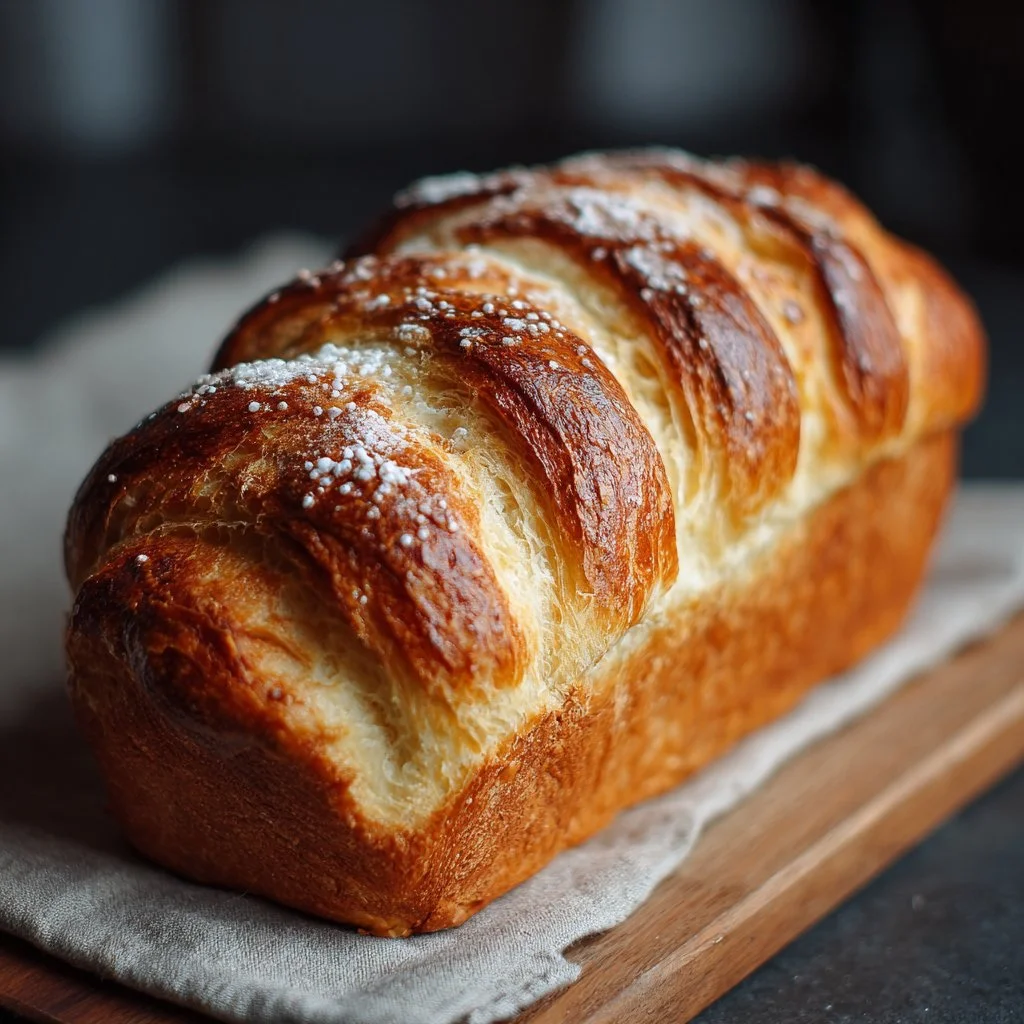
Croissant Bread Loaf
Ingredients
Method
- Whisk the warmed milk with the yeast and sugar in a medium bowl until dissolved. Let it sit for about 5 minutes until frothy.
- Add the salt, softened butter, and 2 cups of flour, then mix on medium speed for 2 minutes.
- Gradually add the remaining flour and mix on low until a soft dough forms.
- Knead on a floured surface for about 5 minutes until smooth.
- Place the dough in a greased bowl, cover it, and let it rise in a warm spot for 1½ to 2 hours until doubled in size.
- Flatten the risen dough and shape it into a rectangle roughly 10×14 inches. Chill it in the refrigerator for 20 minutes.
- Slice the softened 3/4 cup butter into 1/4-inch slices and arrange them on the chilled dough rectangle.
- Fold the dough over the butter to encase it, then rotate the package 90 degrees.
- Roll the dough out to approximately a 9×12 inch rectangle and perform a letter fold.
- Wrap and refrigerate for 20 minutes.
- Repeat the roll-and-fold process two more times for a total of three laminations, chilling 20 minutes between each fold.
- Roll the dough out one final time to about 9×12 inches.
- Roll it tightly like a jelly roll from the long side and slice into five even rolls.
- Arrange them seam-side down in a greased 9×5 inch loaf pan.
- Cover the pan and let the rolls rise for 45 to 60 minutes until they fill the pan and look puffy.
- Preheat the oven to 350°F.
- Whisk the egg with 1 tablespoon water for an egg wash and brush the tops lightly.
- Bake for 1 hour, tenting with foil after 25 minutes.
- Allow the loaf to cool in the pan for 30 minutes, then remove and cool on a wire rack for another 15 minutes.