
I grew up sneaking jam-filled cookies from the cooling rack, and these blueberry cookies with homemade jam bring that same nostalgic payoff — a tender, buttery cookie with pockets of bright, slightly tart blueberry jam made from scratch. They’re perfect for weekend brunches, lunchbox treats, or a simple bake to show off peak-season blueberries. If you like berry-forward bakes, you might also enjoy the texture contrast found in blueberry cake donuts, which share that same sweet-tart blueberry vibe.
Why you’ll love this dish
This recipe combines two things people search for often: a soft, buttery cookie base and a jam that tastes fresher than anything store-bought. Making the blueberry jam yourself concentrates the flavor and controls sweetness. The cookie dough is straightforward — no chilling required — and the yield is forgiving, so it’s a good pick for beginner bakers and busy home cooks alike.
“Bright, jammy pockets in a soft, buttery cookie — exactly the kind of simple, show-stopping treat I want at a weekend coffee.” — a satisfied tester
Besides taste, here’s why this recipe stands out:
- Uses fresh blueberries for the best flavor (but adaptable to frozen — see FAQ).
- Jam cooks down to a thick, spoonable filling that won’t immediately bleed into the dough.
- No complicated decorating — a quick sugar sprinkle is optional and lovely.
If you’re experimenting with other blueberry desserts, these cookies pair nicely with creamy berry ideas like a blueberry cheesecake for a dessert spread.
Step-by-step overview
Before you start, here’s what happens in this recipe so you can plan timing:
- Cook fresh blueberries into a thick, jam-like filling (30–40 minutes) and cool completely.
- Whisk dry ingredients; cream butter and sugar until fluffy.
- Add egg and vanilla, then mix in the dry ingredients just until dough forms.
- Fold the cooled blueberry jam into the dough gently.
- Scoop, sprinkle with optional sugar, and bake 10–13 minutes.
- Cool briefly on the sheet, then finish cooling on a rack.
For a visual reference on texture and shaping, some readers also like how other cookie recipes tuck jam into a soft dough — a technique used in recipes such as Biscoff cookie butter cheesecake cookies.
What you’ll need
- 12 oz (340 g) fresh blueberries
- 1/4 cup (50 g) granulated white sugar (for jam)
- 1 tbsp (15 ml) lemon juice
- 1 tsp vanilla (for jam)
- 1/2 tbsp (4 g) cornstarch
- 2 1/2 cups (313 g) all-purpose flour, spooned and leveled
- 1/2 tsp baking powder
- 1/2 tsp salt
- 1 cup (224 g) unsalted butter, softened
- 1 1/4 cups (250 g) granulated white sugar (for cookies)
- 1 egg, at room temperature
- 1 tbsp vanilla (for cookies)
- 1/4 cup (50 g) granulated sugar for sprinkling over the cookies (optional)
Notes and substitutions:
- You can swap cornstarch for an equal amount of arrowroot if you prefer.
- For a dairy-free version, use a firm vegan butter and adjust baking slightly; the texture may be a touch different.
- If you want a more intensely lemony jam, add an extra 1 tsp lemon zest to the jam while it cooks.
For a comparison on soft, iced cookie techniques (useful if you want to dress these up later), check recipes like soft sugar cookies with professional royal icing.
Directions to follow
- Make the blueberry jam: Add the blueberries, 1/4 cup sugar, lemon juice, 1 tsp vanilla, and cornstarch to a medium pot.
- Cook over medium-low heat, stirring occasionally, for 30–40 minutes. The berries should collapse and the mixture should reduce until very thick. About 15 minutes in, press some berries with the back of a wooden spoon to release juices and speed thickening.
- When thick and spoonable, remove from heat and let the jam cool completely. Measure out 1/2 cup (120 ml) of the finished jam for the cookie dough; discard or reserve any extra for spreading.
- Preheat the oven to 350°F (175°C). Line a baking sheet with parchment paper.
- Whisk dry ingredients: In a large bowl, combine the flour, baking powder, and salt. Set aside.
- Cream butter and sugar: In a large mixing bowl, beat the softened butter and 1 1/4 cups granulated sugar on high speed with an electric mixer until fluffy, about 2 minutes.
- Add egg and vanilla: Beat in the egg and 1 tbsp vanilla on medium speed until the mixture is pale and aerated, 1–2 minutes.
- Combine dough: Reduce mixer to low and slowly add the dry ingredients. Mix just until the dough pulls together. Scrape the bowl as needed.
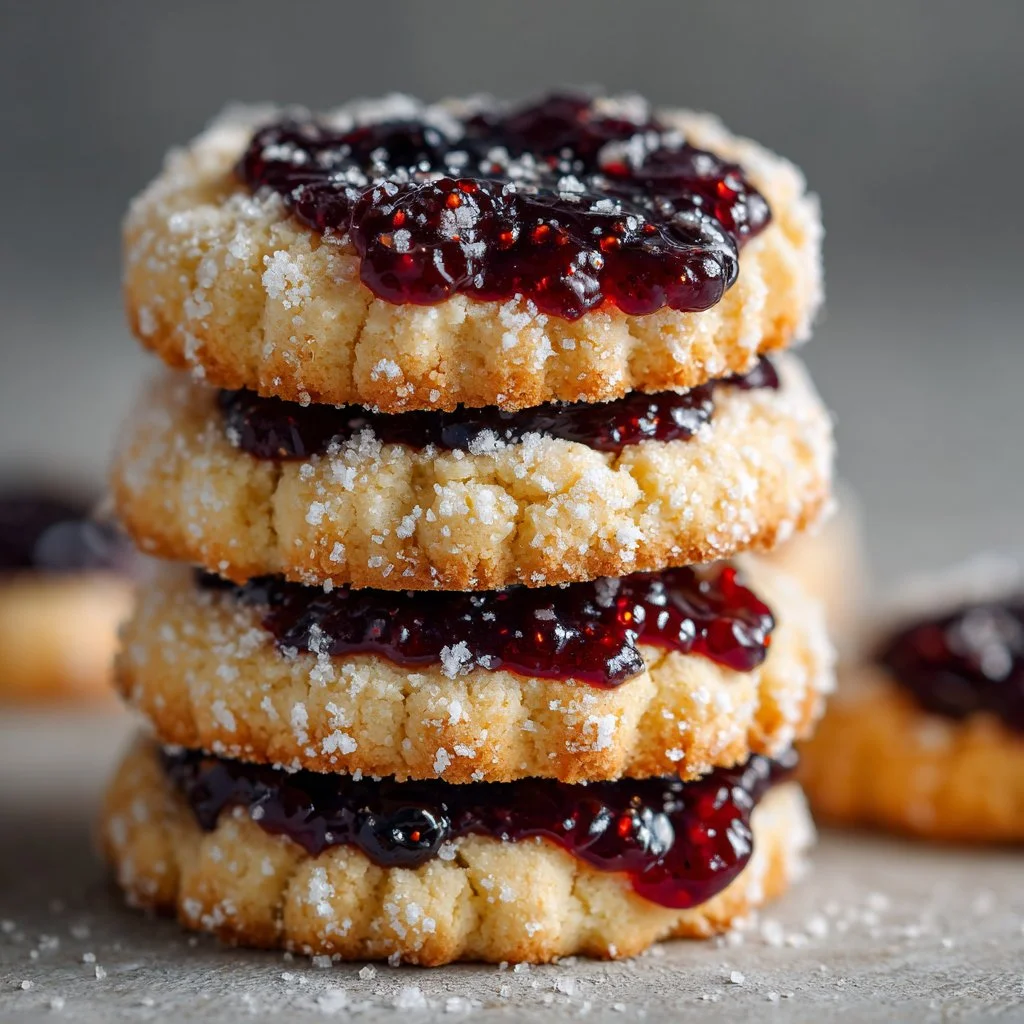
- Fold in jam: Use a rubber spatula to gently fold the cooled blueberry jam into the dough. Aim for streaks and pockets of jam — avoid overmixing to keep the cookies tender.
- Portion: Use a 2-tablespoon cookie scoop to form balls. Place them on the prepared baking sheet, leaving space between each (bake 6 at a time if your sheet is small). Sprinkle tops with the optional 1/4 cup sugar.
- Bake: Bake for 10–13 minutes, until the edges are set and the cookies are lightly golden on the bottom.
- Cool: Let cookies cool on the sheet for 5 minutes, then transfer to a wire rack to finish cooling.
Best ways to enjoy it
- Serve warm with a mug of tea or coffee for a cozy morning treat.
- Plate three cookies with a dollop of whipped mascarpone or vanilla ice cream for a simple dessert.
- Add a few fresh berries and a mint sprig to make them brunch-worthy.
For a spread featuring multiple blueberry treats, these sit nicely alongside richer options like London Fog cookies with lavender cream cheese frosting.
Keeping leftovers fresh
- Room temperature: Store cooled cookies in an airtight container at room temperature for up to 3 days. Place parchment between layers to prevent sticking.
- Refrigerator: If your kitchen is warm or the jam is very moist, store cookies in the fridge for up to 7 days. Bring to room temperature before serving for best texture.
- Freezing: Freeze baked cookies in a single layer on a sheet until firm, then transfer to a freezer bag or container for up to 3 months. Thaw at room temperature.
Food safety note: the jam is cooked to a shelf-stable texture but still contains fresh fruit; refrigerate any unused jam and use within 7–10 days.
Pro chef tips
- Texture trick: For lighter cookies, be sure to cream butter and sugar until the mixture is pale and fluffy — that incorporates air for a softer crumb.
- Jam consistency: If your jam seems thin after cooling, return it to low heat and simmer briefly to reduce further; cool completely before adding to dough.
- Distribution: Fold the jam in gently and leave visible streaks — this gives attractive marbling and prevents the dough from turning uniformly blue.
- Baking evenness: Rotate the baking sheet halfway through the bake if your oven has hot spots.
- Make-ahead: You can make the jam up to 3 days ahead and keep it refrigerated to save time on bake day.
Creative twists
- Lemon blueberry: Add 1 tsp lemon zest to the dough for aroma and a brighter flavor.
- Nuts & crunch: Fold in 1/2 cup chopped toasted almonds or pistachios for texture.
- Streusel top: Sprinkle a cinnamon-sugar streusel before baking for extra crunch (try a variation inspired by jam-streusel cookies).
- Vegan swap: Use a firm plant-based butter and a flax egg (1 tbsp ground flax + 3 tbsp water) but expect slightly different texture.
- Thumbprint style: Press centers and dollop extra jam into the indentation before baking for a classic thumbprint look.
Your questions answered
Q: How long does this recipe take from start to finish?
A: Active hands-on time is about 25–30 minutes, mostly for mixing and scooping. The jam takes 30–40 minutes to thicken, so total time is roughly 1 hour to 1 hour 15 minutes including cooling.
Q: Can I use frozen blueberries?
A: Yes. Use the same weight, but thaw and drain excess liquid before cooking. You may need to simmer a bit longer to reach the same thickness.
Q: What can I use instead of cornstarch?
A: Arrowroot works well as a 1:1 substitute. If you omit it, cook the jam longer to reduce liquid; the filling may remain a touch runnier.
Q: Can I double the recipe?
A: Yes. Double all ingredients and cook the jam in a wider pot for even reduction. Bake on multiple sheets and watch baking times — they should be similar.
Q: Is the jam safe without added pectin?
A: The cornstarch here acts as a thickener rather than pectin. It yields a jam-like, spoonable filling safe to refrigerate and use within 7–10 days.
Conclusion
If you want a cookie that showcases bright, homemade fruit flavor without complicated steps, these blueberry cookies with homemade jam deliver — tender, buttery, and filled with real blueberry brightness. For inspiration on similar thumbprint-style cookies, see blueberry lemon thumbprint cookies – Blue Bowl Recipes. If you’re curious how jam and streusel play together in cookie form, check this riff on jam-streusel cookies at Blueberry Jam Streusel Cookies – Edible Alaska. For another take on lemon-blueberry thumbprints with a slightly different technique, compare this recipe from Lemon Blueberry Thumbprint Cookies – The Forked Spoon.
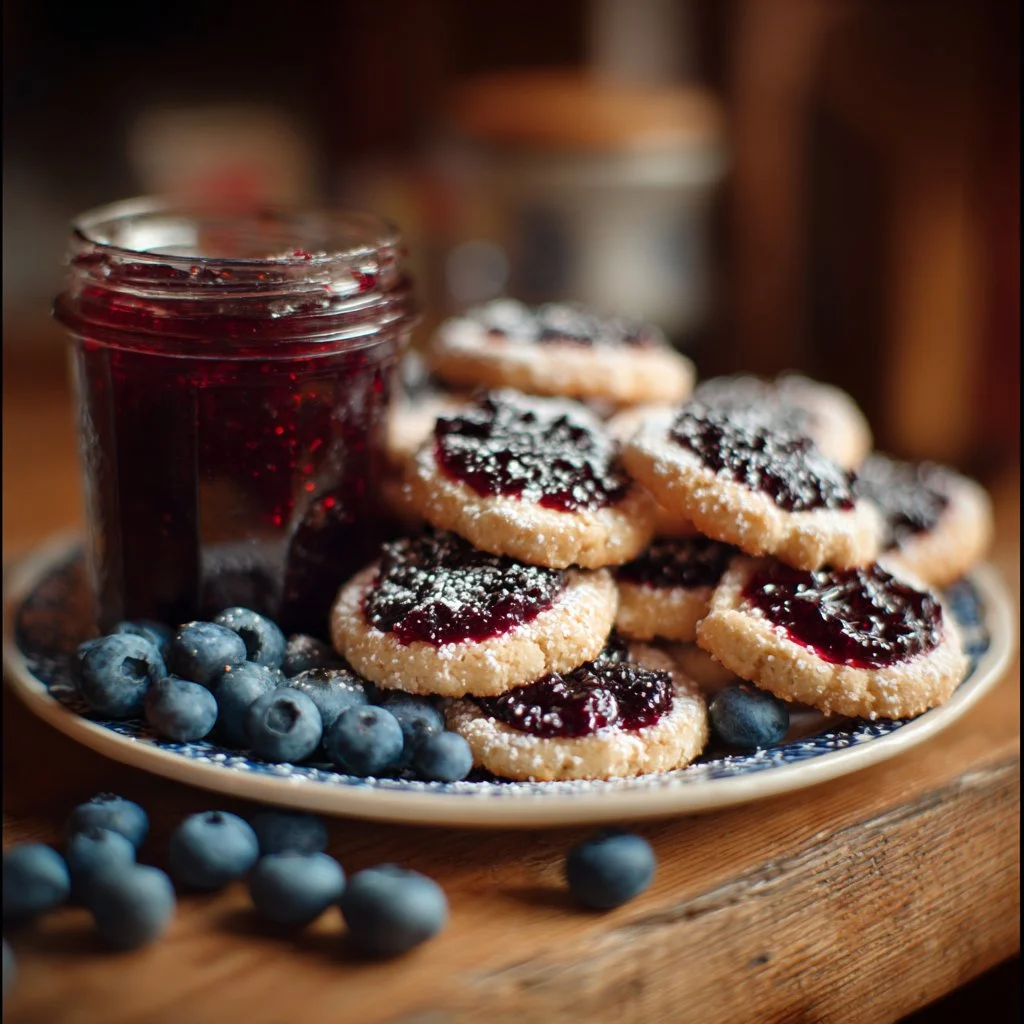
Blueberry Cookies with Homemade Jam
Ingredients
Method
- In a medium pot, add fresh blueberries, 1/4 cup sugar, lemon juice, 1 tsp vanilla, and cornstarch.
- Cook over medium-low heat, stirring occasionally, for 30-40 minutes until thick.
- Let cool completely and measure out 1/2 cup for the cookie dough.
- Preheat the oven to 350°F (175°C) and line a baking sheet with parchment paper.
- In a bowl, whisk together flour, baking powder, and salt.
- In a large mixing bowl, cream the softened butter with 1 1/4 cups sugar until fluffy, about 2 minutes.
- Add egg and 1 tbsp vanilla, mixing until pale and aerated.
- Reduce mixer speed to low, and gradually add dry ingredients, mixing until dough forms.
- Gently fold in the cooled blueberry jam.
- Use a cookie scoop to form balls and place them on the baking sheet with space between.
- Sprinkle tops with optional sugar.
- Bake for 10-13 minutes until edges are set and lightly golden.
- Cool on the sheet for 5 minutes, then transfer to a rack to cool fully.