
Start with a warm, buttery hook that makes you want to bake right now.
These milk cookies are simple, tender, and perfect for dunking.
They come together with everyday pantry ingredients and little fuss.
Try them with a glass of milk or as a base for a sandwich cookie.
Why You’ll Love This Milk Cookies Recipe
– Fast to make with no chilling required.
– Soft, tender centers with lightly golden edges.
– Uses pantry staples you probably already have.
– Easy to customize with mix-ins or toppings.
– Great for lunchboxes or last-minute guests.
– Perfect for dunking because of the soft crumb.
These cookies bake up thin at the edges with a pillowy center that melts on the tongue. The flavor is gently sweet with a clear vanilla note and a rich butter backbone that keeps every bite satisfying.
“5 stars — I baked a batch in under 20 minutes and everyone asked for the recipe. Crisp at the edges, soft inside. A new family favorite!” — Jamie R.
If you like creative cookie ideas, these milk cookies are a calm, classic counterpart to fancier treats.
Key Ingredients for Milk Cookies Recipe
Unsalted butter (1 cup), granulated sugar (1 cup), milk (1/4 cup), all-purpose flour (2 cups) are the backbone of this recipe. Below are the most important picks and why they matter.
Unsalted butter
Butter provides flavor, moisture, and structure; the milk solids help with browning and the fat gives that melt-in-your-mouth texture. Buy European-style or high-fat butter if you prefer extra richness; otherwise, standard unsalted is fine. If you substitute margarine or a lower-fat spread, cookies will spread differently and lose some flavor and crisping.
Granulated sugar
Granulated sugar helps with spread and gives the cookie a light, clean sweetness. Use regular granulated sugar rather than superfine; superfine will dissolve faster and can change the texture. If you swap in brown sugar you’ll get more chew and a molasses note, altering the delicate vanilla-butter balance.
All-purpose flour
AP flour provides the right protein to form enough gluten for structure without making the cookie tough. For lighter cookies, sift the flour before measuring and avoid overmixing. If you use cake flour, expect a more tender, cakey cookie; bread flour will make them chewier and denser.
Milk (1/4 cup)
Milk hydrates the dough and contributes flavor and tenderness thanks to lactose and milk proteins. Whole milk works best for richness; low-fat or non-dairy milks will thin the dough slightly and change browning. Using heavy cream will produce an extra-rich, spread-prone cookie, while non-dairy milk may reduce golden color.
Full Ingredient List for Milk Cookies Recipe
– 1 cup unsalted butter, softened
– 1 cup granulated sugar
– 1/4 cup milk
– 2 teaspoons vanilla extract
– 2 cups all-purpose flour
– 1 teaspoon baking powder
– 1/2 teaspoon salt
Step-by-Step Instructions for Milk Cookies Recipe
Step 1: Preheat oven and prep baking sheet
Preheat your oven to 350°F (175°C) and line a baking sheet with parchment paper.
Pro Tip: The oven should register a steady 350°F; the parchment should lie flat with no hot spots.
Step 2: Cream butter and sugar
Cream together the softened butter and granulated sugar until light and fluffy, about 2–3 minutes with a hand mixer or 4–5 minutes in a stand mixer.
Pro Tip: Look for pale, aerated butter — it should have a ribbon-like texture when the beaters are lifted.
Step 3: Add milk and vanilla
Add the milk and vanilla extract, mixing until combined and smooth, scraping the bowl as needed.
Pro Tip: The mixture should look slightly glossy and fluid, not curdled or separated.
Step 4: Combine dry ingredients
In a separate bowl, whisk together the all-purpose flour, baking powder, and salt until evenly distributed.
Pro Tip: The flour should be clump-free and uniformly pale, indicating the baking powder is evenly mixed.
Step 5: Mix dry into wet
Gradually add the dry ingredients to the wet ingredients, mixing on low until just combined; avoid overworking the dough.
Pro Tip: Stop when you see no streaks of flour — the dough should be soft and slightly tacky but not sticky.
Step 6: Scoop cookies
Scoop tablespoon-sized portions of dough onto the prepared baking sheet, spacing them 2 inches apart to allow for spread.
Pro Tip: Each dough mound should hold its shape with a soft dome and no wet streaks on top.
Step 7: Bake until edges are golden
Bake for 10–12 minutes, rotating the pan halfway through if needed, until the edges are lightly golden and centers are set.
Pro Tip: The cookies should still be pale on top with a faint golden rim; they will continue to set off the heat.
Step 8: Cool before transferring
Let the cookies cool on the baking sheet for 5 minutes before transferring them to a wire rack to finish cooling.
Pro Tip: They should feel slightly firm at the edges but soft in the center when moved.
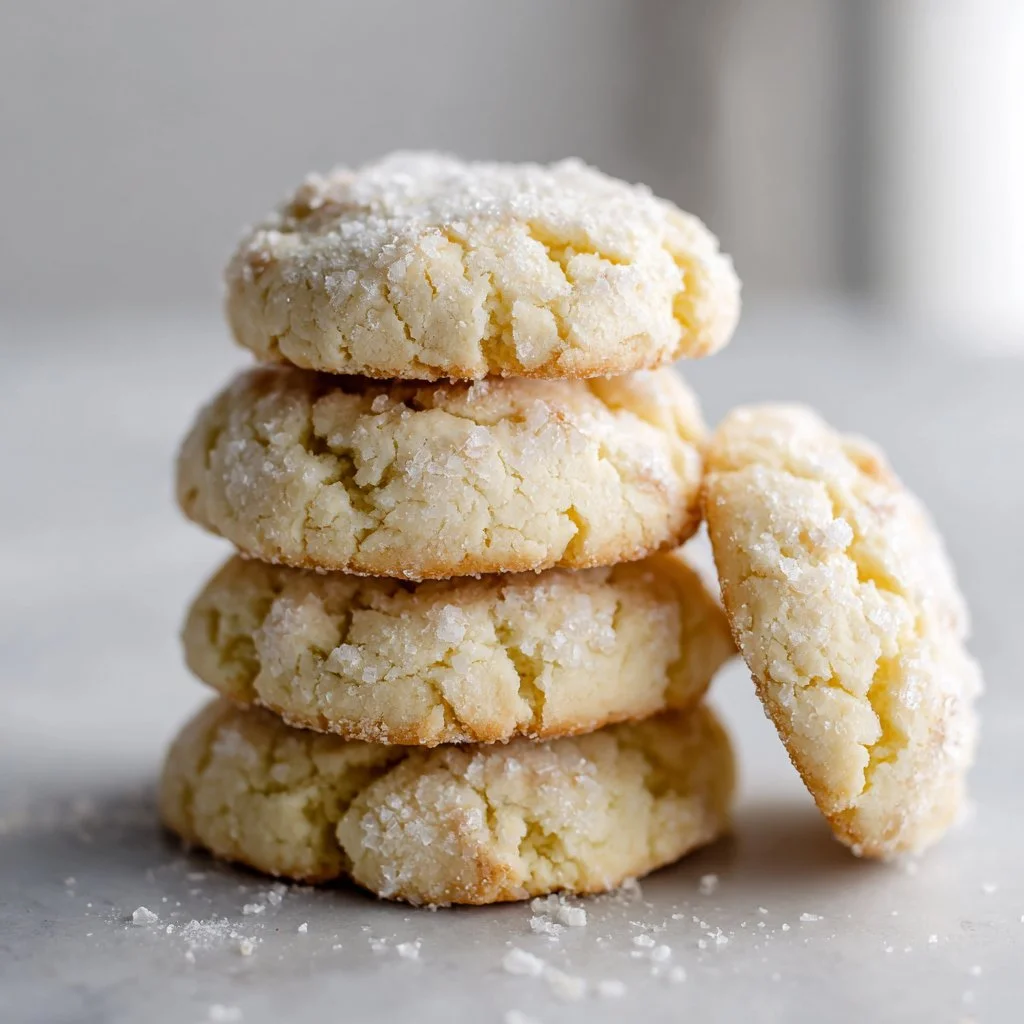
For a different texture inspiration, consider pairing the recipe with a nutty alternative like hazelnut cookies.
Expert Tips for Milk Cookies Recipe
– Use room-temperature butter for proper aeration and even mixing.
– Measure flour by spooning and leveling to avoid dry, crumbly cookies.
– If cookies spread too much, chill scooped dough for 15 minutes or reduce oven temperature by 10°F.
– For chewier centers, bake toward the shorter end of the time range.
– Line your baking sheet with parchment for even browning and easy cleanup.
– Use an oven thermometer to ensure accurate baking temperatures.
– Avoid overmixing once the flour is added; overworking develops gluten and toughens cookies.
– Rotate the baking sheet halfway through to prevent hot-spot browning.
Need technique inspiration? Try comparing how layering ingredients changes texture with a laminated recipe like Dubai chocolate kataifi cookies.
Storage & Freezing for Milk Cookies Recipe
Store baked cookies in an airtight container at room temperature for up to 4 days. Separate layers with parchment to keep surfaces pristine.
For fridge storage, place cookies in an airtight container and refrigerate for up to 1 week. Chilling can firm the texture slightly.
To freeze unbaked dough, scoop dough onto a tray, freeze until solid, then transfer to a freezer bag for up to 3 months. Bake from frozen, adding 1–2 minutes to the bake time.
To freeze baked cookies, flash-freeze on a tray, then move to a freezer-safe container for up to 3 months. Thaw overnight in the fridge or at room temperature for an hour.
Reheat cooled cookies in a 300°F oven for 3–5 minutes for a freshly baked feel. A 10–15 second zap in the microwave softens centers but can make edges chewy.
Variations & Substitutions for Milk Cookies Recipe
– Lemon Zest Milk Cookies: Add 1 teaspoon lemon zest and swap 1/2 teaspoon of vanilla for the bright citrus flavor. The result is a tender, zesty cookie that pairs well with tea.
– Chocolate-Dipped Milk Cookies: After cooling, dip half of each cookie in melted dark chocolate and let set. The chocolate adds richness and a crisp snap to the exterior.
– Almond Milk & Almond Extract: Replace cow’s milk with unsweetened almond milk and use 1/2 teaspoon almond extract with 1 1/2 teaspoons vanilla. Expect a nutty undertone and slightly different browning.
– Sprinkle-Topped Milk Cookies: Press colorful sprinkles onto the tops before baking for a festive look. The sprinkles melt slightly and become embedded without changing texture.
For holiday color swaps and themed add-ins, see how other recipes adapt a basic dough at the Christmas green M&M cookies.
Frequently Asked Questions About Milk Cookies Recipe
1. Can I make these cookies without a mixer?
Yes. Cream the softened butter and sugar vigorously with a wooden spoon until light and slightly fluffy, then stir in milk and vanilla. The process takes longer by hand, about 4–6 minutes, but produces the same result as long as the butter is thoroughly aerated.
2. Why did my cookies spread too much?
Overly warm butter, too little flour, or a very hot oven can cause excessive spread. Chill the dough for 10–15 minutes, check your flour measurement, and verify the oven temperature with a thermometer. Also avoid overly soft butter; it should be softened but not greasy.
3. Can I freeze the cookie dough? How long will it keep?
Yes. Scoop dough balls, freeze on a tray, and transfer to a sealed bag for up to 3 months. Bake from frozen, adding 1–2 minutes to the bake time, and increase spacing on the sheet since frozen dough spreads differently.
4. How do I get crisp edges and soft centers?
Bake at the recommended temperature and remove cookies just as the edges turn golden while the centers remain pale. Let them rest 5 minutes on the sheet; residual heat will finish setting the center without overbaking the edges.
5. Can I use a different type of sugar or flour?
You can substitute some granulated sugar with brown sugar for chewiness, or use cake flour for a sifter, tender crumb. Each swap changes texture: brown sugar adds moisture, cake flour softens, and bread flour adds chew.

Final Thoughts on Milk Cookies Recipe
These Milk Cookies Recipe are a simple, dependable bake that rewards small technique choices with big flavor. If you enjoyed this recipe, please leave a star rating in the recipe card below and pin it to Pinterest for later.
You can compare this classic version to other milk-cookie styles like a biscotti-style milk cookie for a firmer chew. For a nostalgic take, try the family-style variation found in Grammie’s Sweet Milk Cookies Recipe. If you want to experiment with condensed milk versions, see this condensed milk biscuit guide at Condensed Milk Biscuits (Cookies).
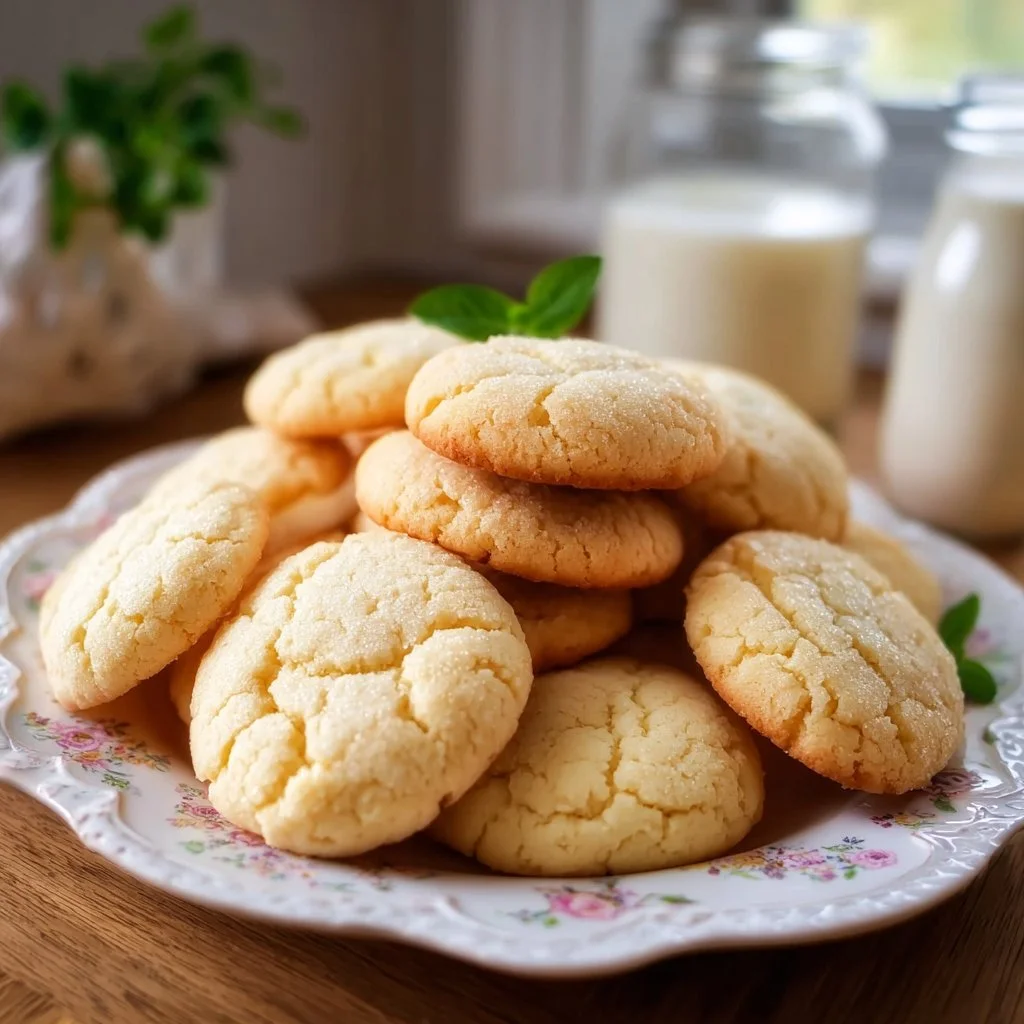
Milk Cookies
Ingredients
Method
- Preheat your oven to 350°F (175°C) and line a baking sheet with parchment paper.
- Cream together the softened butter and granulated sugar until light and fluffy, about 2–3 minutes with a hand mixer or 4–5 minutes in a stand mixer.
- Add the milk and vanilla extract, mixing until combined and smooth, scraping the bowl as needed.
- In a separate bowl, whisk together the all-purpose flour, baking powder, and salt until evenly distributed.
- Gradually add the dry ingredients to the wet ingredients, mixing on low until just combined; avoid overworking the dough.
- Scoop tablespoon-sized portions of dough onto the prepared baking sheet, spacing them 2 inches apart to allow for spread.
- Bake for 10–12 minutes, rotating the pan halfway through if needed, until the edges are lightly golden and centers are set.
- Let the cookies cool on the baking sheet for 5 minutes before transferring them to a wire rack to finish cooling.