
Bright, floral, and just sweet enough, these scones are a weekday treat that feels like a slow weekend.
They come together fast and reward you with flaky layers and a honey-kissed glaze.
Make a batch for morning coffee, afternoon tea, or a gift that keeps on giving.
My London Fog-inspired cookie recipe pairs beautifully with these scones if you want to double the lavender treats in one afternoon: London Fog cookies with lavender cream cheese frosting.
Why You’ll Love This Lavender Honey Scones
– Bright floral aroma from culinary lavender that isn’t perfumey.
– Light, flaky crumb with a slightly crisp exterior.
– Subtle honey sweetness that highlights the lavender.
– Simple pantry ingredients with an elegant result.
– Quick to mix — no chilling required.
– Great for gifting or pairing with tea.
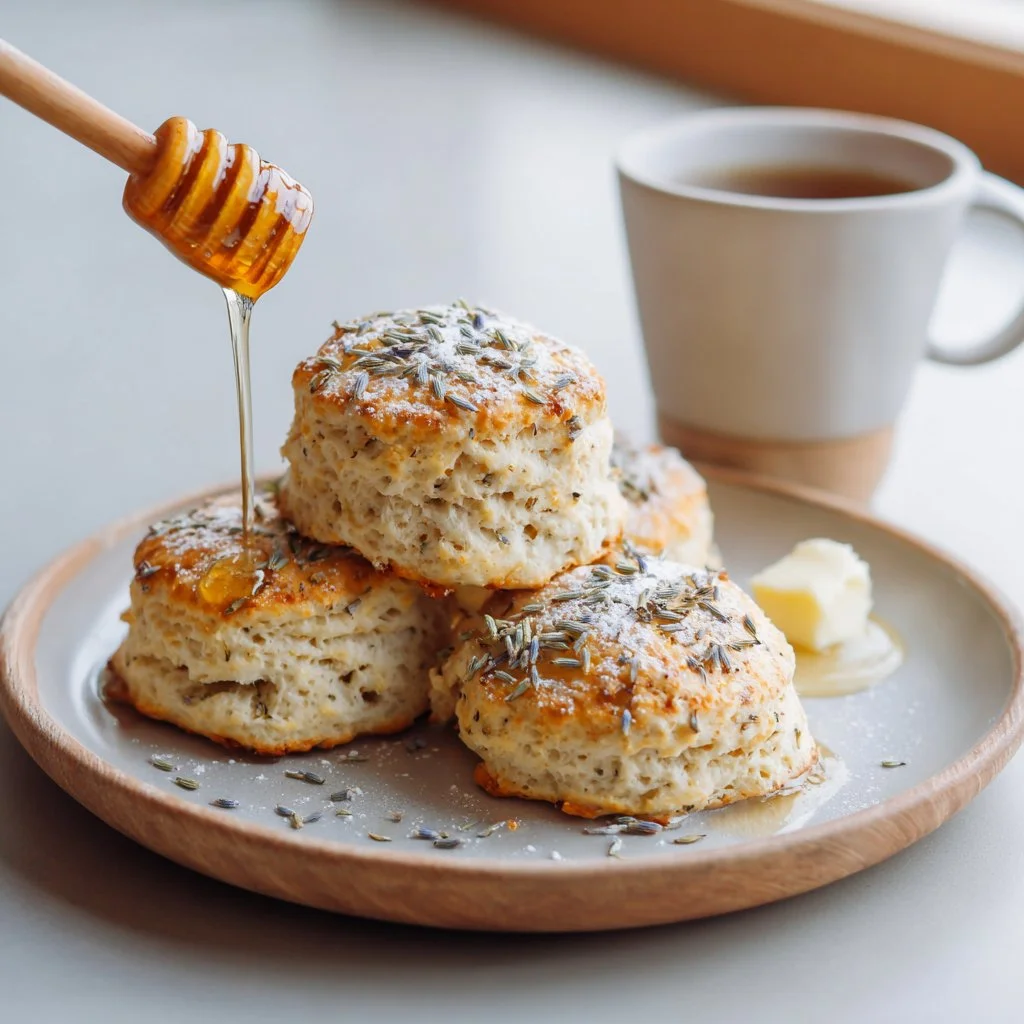
The flavor balances floral lavender and mellow honey over a tender, biscuit-like crumb. The exterior should be lightly golden and slightly crunchy, while the interior remains soft, layered, and moist from the cream and butter.
“Five stars — delicate lavender, perfect honey glaze, and a texture that felt bakery-made. I’ll make these every weekend!”
Key Ingredients for Lavender Honey Scones
Flour is the structure-builder. Use all-purpose flour for the right balance of tenderness and strength; it yields scones that hold their shape but aren’t dense. If you substitute cake flour expect looser structure and a very delicate crumb; bread flour will make them tougher.
Butter (cold and cubed) provides flakiness by creating pockets of steam as it melts. Buy high-quality unsalted butter for a cleaner flavor and control salt levels. If you use margarine or melted butter, you lose the layered texture and the scones will be richer but less flaky.
Heavy cream enriches the dough and adds fat for tenderness and browning. Whole milk will work in a pinch but won’t brown or enrich the crumb as well. For a dairy-free swap, use a full-fat plant cream alternative and accept minor flavor changes.
Culinary lavender is the signature note; use culinary-grade lavender to avoid bitter or soapy compounds. Lightly crush the buds to release oils before measuring. If you omit lavender, the scones become plain honey scones; too much lavender becomes overpowering and soapy.
Full Ingredient List for Lavender Honey Scones
– 2 cups all-purpose flour
– 1/3 cup granulated sugar
– 1 tbsp baking powder
– 1/4 tsp salt
– 2 tsp culinary lavender (lightly crushed)
– 1/2 cup unsalted butter (cold and cubed)
– 1/2 cup heavy cream
– 2 tbsp honey
– 1 large egg
– 1 tsp vanilla extract
– 1/2 cup powdered sugar
– 1–2 tbsp milk
– 1 tbsp honey
Step-by-Step Instructions for Lavender Honey Scones
Step 1: Preheat and prepare your baking sheet
Preheat the oven to 400°F (200°C) and line a baking sheet with parchment to prevent sticking and promote even browning. A hot oven jump-starts oven spring for taller scones.
Pro Tip: The oven should smell neutral and the parchment should lie flat; this ensures even heat distribution and predictable browning.
Step 2: Whisk the dry ingredients
In a large bowl, whisk together the flour, granulated sugar, baking powder, salt, and the lightly crushed lavender until evenly distributed. This ensures the lavender and leavening are evenly mixed into the dough.
Pro Tip: The dry mix should look uniform with no streaks of baking powder; the lavender buds will be visible as tiny flecks.
Step 3: Cut in the cold butter
Use a pastry cutter or two forks to cut the cold, cubed butter into the dry mix until the texture resembles coarse crumbs with some pea-sized butter pieces left. Those butter bits create flaky layers as they melt.
Pro Tip: The mix should feel cool and slightly lumpy; when pinched it should hold together but still show small butter pieces.
Step 4: Whisk the wet ingredients
In a separate bowl, whisk the heavy cream, honey, egg, and vanilla until smooth and slightly glossy. The honey emulsifies and adds flavor; the egg adds structure and color.
Pro Tip: The wet mix should be homogenous and slightly viscous from the honey; no streaks of egg white should remain.
Step 5: Combine wet and dry gently
Pour the wet mixture into the dry ingredients and stir gently with a spatula until just combined; do not overmix. Overmixing develops gluten and yields tough scones.
Pro Tip: The dough should be shaggy and slightly sticky; you should still see small pockets of flour and butter.
Step 6: Shape the dough on a floured surface
Turn the dough onto a lightly floured surface and gently press into a 1-inch thick round, handling it carefully to retain air. Pressing too hard compresses the dough and reduces flakiness.
Pro Tip: The round should be even in thickness and slightly tacky but not wet; it should hold its shape when lifted.
Step 7: Cut into wedges or use a cutter
Slice the round into 8 wedges with a sharp knife or use a biscuit cutter for rounds. Repressing scraps can be done once but expect slightly denser scones from reworked dough.
Pro Tip: Cuts should be clean; jagged edges mean you tore layers and may reduce rise.
Step 8: Bake until lightly golden
Bake the scones for 18–20 minutes or until they are lightly golden on top and a toothpick comes out clean. Let them brown slightly for flavor without overbaking.
Pro Tip: Tops should be pale gold with slightly deeper edges; they will feel firm on top but give slightly when pressed.
Step 9: Cool and glaze
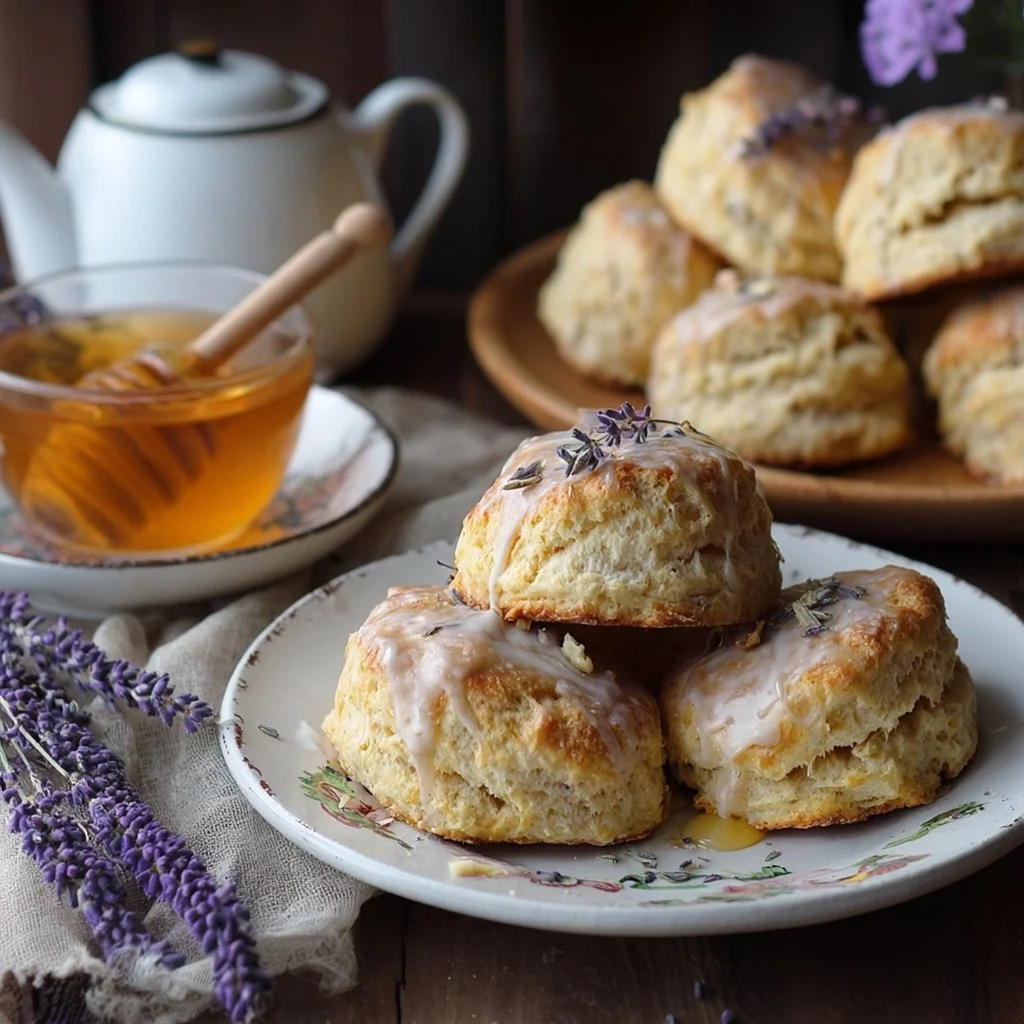
Cool the scones slightly on a wire rack and drizzle with the honey glaze made from powdered sugar, 1–2 tbsp milk, and 1 tbsp honey. The glaze should set to a thin sheen that doesn’t run off.
Pro Tip: The glaze should be pourable but not watery; it should form a thin skin within a few minutes.
For extra lavender pairing ideas and to explore related recipes, try this take on a complementary lavender cookie recipe: London Fog cookies with lavender cream cheese frosting.
Expert Tips for Lavender Honey Scones
– Keep butter cold and work quickly; warm butter will ruin flakiness.
– Use culinary-grade lavender and crush lightly to release oils; too much equals soapy flavor.
– Measure flour by spooning into the cup and leveling; packed flour causes dense scones.
– Bake in a hot oven (400°F/200°C) for rapid oven spring; lower temps yield pale, dense scones.
– Don’t overmix; stop when the dough just comes together to avoid toughness.
– Use a sharp knife for clean cuts so layers stay intact and rise evenly.
– For texture troubleshooting: if scones are crumbly, you likely used too much flour or under-hydrated the dough.
– Equipment tip: a baking stone or heavy baking sheet gives more even browning than a thin tray.
For a visual reference on how dough should look during mixing and before baking, you can compare textures to other lavender-based recipes like this one: London Fog cookies with lavender cream cheese frosting.
Storage & Freezing for Lavender Honey Scones
Fridge storage: Store cooled scones in an airtight container in the refrigerator for up to 3 days. Place parchment between layers to prevent sticking and condensation.
Freezer storage: Wrap scones individually in plastic wrap and place in a freezer-safe zip-top bag or rigid container; freeze for up to 3 months. For best texture, flash-freeze on a tray first, then transfer to the bag.
Thawing: Thaw overnight in the refrigerator or at room temperature for 1–2 hours. For quick use, microwave on low power for 20–30 seconds or place in a 300°F (150°C) oven for 5–8 minutes to refresh.
Reheating: To revive crispness, reheat at 325°F (160°C) for 6–8 minutes until warmed through. Avoid high heat that will dry them; a light mist of water before reheating can add moisture back.
Variations & Substitutions for Lavender Honey Scones
– Lemon-Lavender: Add 1 tbsp lemon zest to the dry mix and swap 1 tbsp of honey for lemon juice in the glaze. This brightens the flavor and adds a citrus lift without changing texture.
– Blueberry-Lavender: Fold 1/2 cup fresh or frozen blueberries into the dough gently before shaping; blueberries add moisture and a sweet-tart pop. Expect slightly moister interior and shorter shelf life.
– Vanilla-Almond: Replace the vanilla with 1/2 tsp almond extract and finish with sliced almonds on top. This gives a nutty aroma that pairs well with honey and reduces the floral intensity.
– Vegan Lavender Honey-Free: Use a plant-based butter and 1/2 cup full-fat coconut cream, replace honey with maple syrup, and omit the egg or use a flax egg. Texture will be slightly different — denser and less golden — but still delicious.
Frequently Asked Questions About Lavender Honey Scones
Q: Can I use dried lavender from the grocery store?
A: Only use culinary-grade dried lavender labeled for cooking. Garden-sourced or craft lavenders may be treated or contain oils unsuitable for eating. Measure lightly: two teaspoons is aromatic enough for two cups of flour.
Q: How can I prevent lavender from tasting soapy?
A: Use small amounts and crush the buds to release oils gently. Overuse or using non-culinary varieties leads to bitterness and soapiness. Pair lavender with honey and lemon to mask any astringency.
Q: Why are my scones dense instead of flaky?
A: Dense scones usually come from overworking the dough, using too much flour, warm butter, or under-activated baking powder. Use cold butter, handle gently, and ensure your baking powder is fresh.
Q: Can I make the dough ahead of time?
A: Yes — press the dough into a disk, wrap tightly, and refrigerate for up to 24 hours. Bring to room temperature briefly before cutting and baking. Chilling can slightly change the rise but improves flavor melding.
Q: How do I know when the scones are done without overbaking?
A: Look for a pale to light golden top, firmer edges, and a clean toothpick in the center. They should feel set on top but still tender inside; residual heat will finish minor cooking during resting.

Final Thoughts on Lavender Honey Scones
These Lavender Honey Scones are an elegant, easy treat that balances floral notes with gentle sweetness and a tender crumb. If you enjoyed the recipe, please leave a star rating in the recipe card below and pin it to Pinterest.
For a different take on lavender scones, see this version by the Corrigan Sisters: Corrigan Sisters Lavender Honey Scones.
If you want a lightly sweetened alternative, this Foodie Affair recipe offers a great comparison: Honey Lavender Scones Lightly Sweetened | The Foodie Affair.
For more natural and wholesome adaptations, check the Art of Natural Living’s lavender scones notes: Honey Lavender Scones – Art of Natural Living.
For a kid-friendly version and serving ideas, Super Healthy Kids has helpful suggestions: Lavender Honey Scones – SHK – Super Healthy Kids.
Lavender Honey Scones
Ingredients
Method
- Preheat the oven to 400°F (200°C) and line a baking sheet with parchment paper.
- In a large bowl, whisk together the flour, sugar, baking powder, salt, and lavender until evenly distributed.
- Cut in the cold butter until the mixture resembles coarse crumbs.
- In another bowl, whisk the cream, honey, egg, and vanilla until smooth.
- Pour the wet ingredients into the dry ingredients and stir gently until just combined.
- Turn the dough onto a floured surface and press into a 1-inch thick round.
- Cut the dough into 8 wedges or use a biscuit cutter for rounds.
- Bake for 18–20 minutes, or until lightly golden and a toothpick comes out clean.
- Cool slightly on a wire rack.
- Drizzle with the honey glaze made from powdered sugar, milk, and honey.