
Bright, floral, and impossibly soft — this cake is the kind of dessert that stops conversation as soon as it arrives at the table.
It’s quick to pull together and rewards small effort with big flavor, perfect for afternoon tea or a spring gathering.
If you love citrus-forward desserts with a fragrant twist, this will become a new favorite.
For more sweet inspiration while you bake, check out a fun cookie twist like the Biscoff cookie butter cheesecake cookies recipe.
Why You’ll Love This Lemon Lavender Dream Cake
- Bright lemon flavor that cuts through the buttery richness.
- Gentle, aromatic lavender that’s floral, not soapy.
- Tender, delicate crumb that stays moist for days.
- Smooth, tangy lemon buttercream that balances sweetness.
- Easy enough for home bakers but special enough for celebrations.
- Fast prep with pantry staples and a small floral star ingredient.
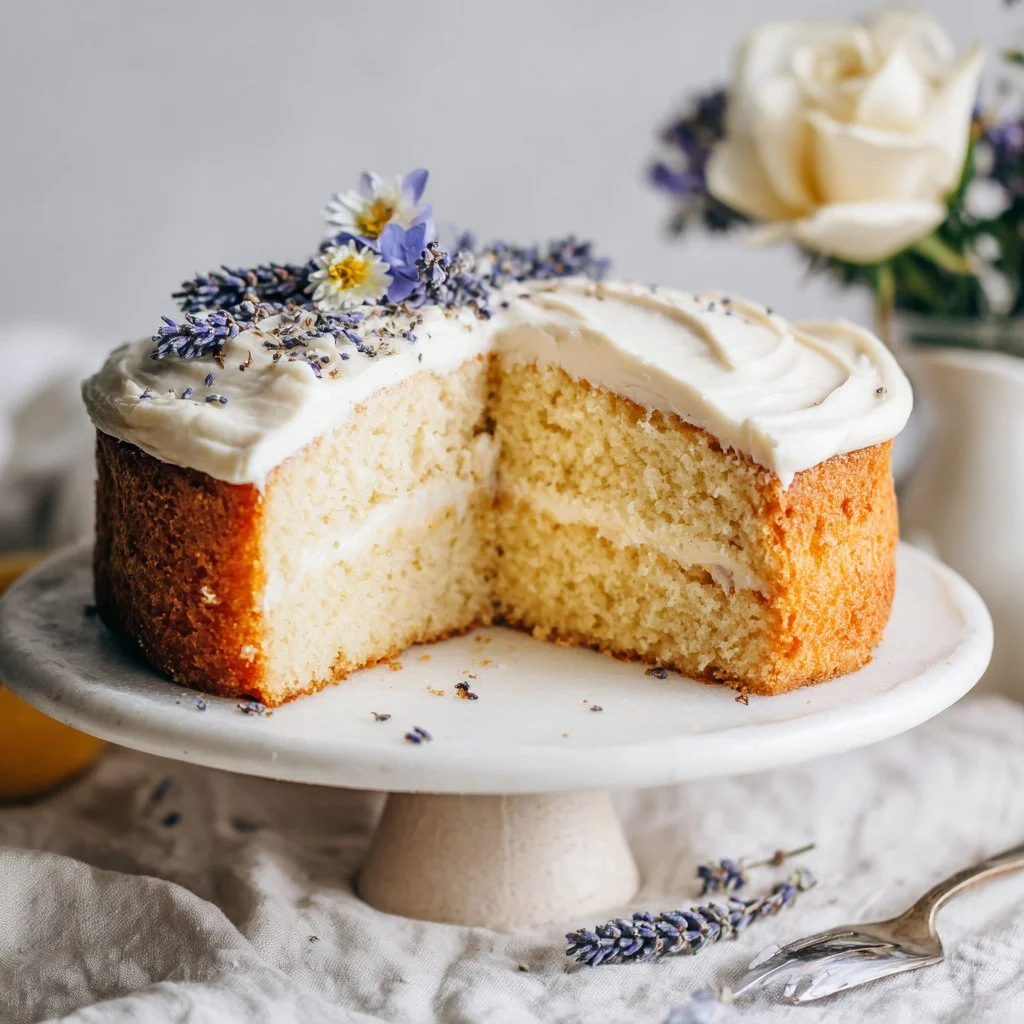
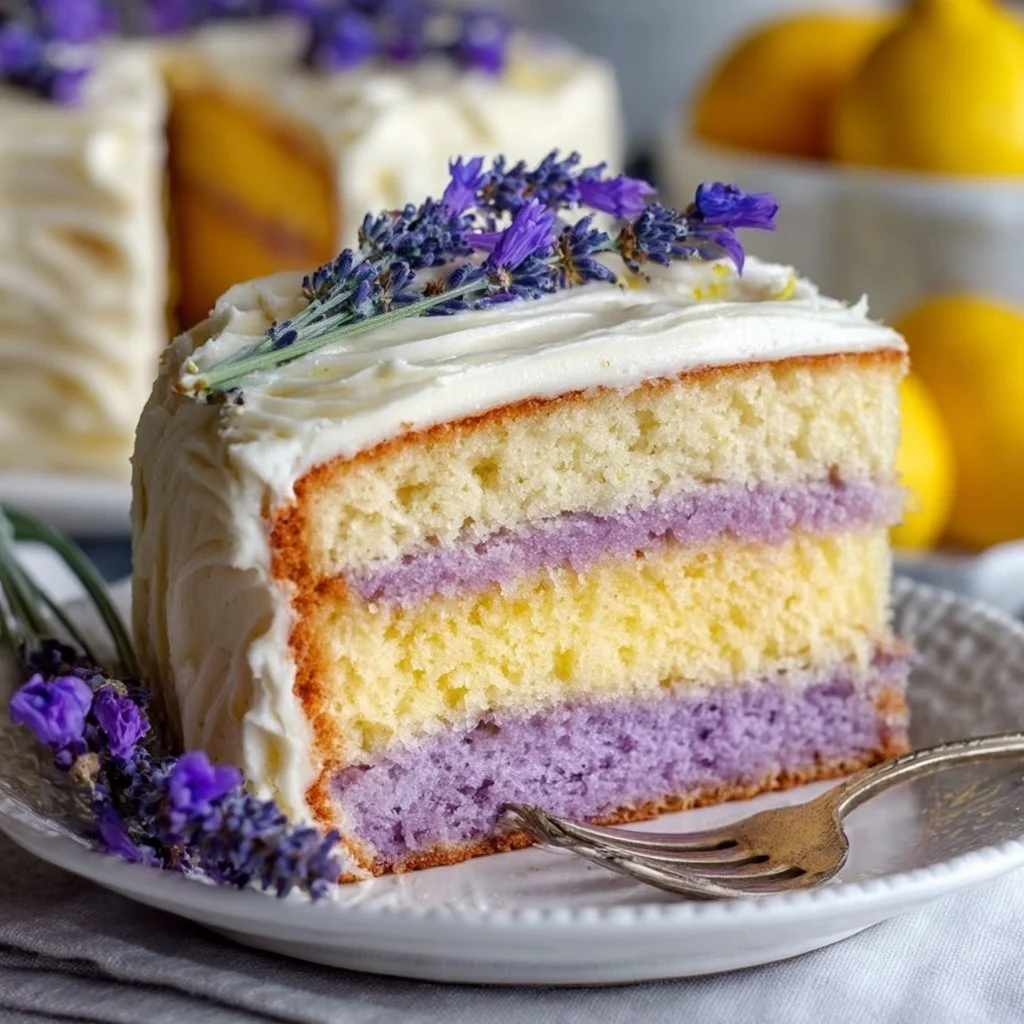
The cake bites are soft and fine-crumbed, with a lively lemon tang and a whisper of dried lavender. The frosting adds creamy sweetness and extra lemon brightness, while the lavender garnish signals the floral note before the first bite. If you like layered cakes that feel both elegant and unfussy, this balances those traits well. For more cake ideas, see our broader cake collection.
"Absolutely lovely — light, moist, and the lavender was perfect. My guests kept asking for the recipe. 5/5!" — Emma R.
Key Ingredients for Lemon Lavender Dream Cake
Flour — All-purpose flour is the backbone of the cake, offering enough protein to form a stable crumb without making it tough. Buy a reputable brand and spoon-and-level your measuring cup for accuracy; scooping directly can lead to dense cakes. If you must substitute, cake flour will yield a finer, more tender crumb but reduce volume by replacing 2 tablespoons of AP flour per cup with cornstarch.
Butter — Unsalted butter delivers flavor and structure while trapping air when creamed with sugar. Use high-quality, fresh butter and ensure it’s softened (but not oily) so it creams properly. Margarine or spreads will change flavor and moisture; if using, expect a less rich result and shorter shelf life.
Lemon — This recipe uses both zest and juice for layered lemon intensity. Fresh lemons provide bright acidity and aromatic oils in the zest; bottled juice lacks zest oil bright notes and will flatten the top flavor. If substituting with bottled juice, increase zest slightly or add a splash of lemon extract for intensity.
Dried culinary lavender — Culinary lavender is the defining floral note and must be food-grade. Buy lavender labeled “culinary” to avoid perfumed or ornamental blends. If you’re cautious, reduce to 1 tablespoon; substituting with lavender extract is risky — it’s very concentrated and can quickly turn soapy.
Full Ingredient List for Lemon Lavender Dream Cake
- 1 ½ cups all-purpose flour
- 1 cup granulated sugar
- ½ cup unsalted butter, softened
- 3 large eggs
- ½ cup buttermilk
- 1 tablespoon lemon zest
- ½ cup lemon juice
- 2 tablespoons dried culinary lavender
- 1 ½ teaspoons baking powder
- ½ teaspoon salt
For the frosting:
- 1 cup unsalted butter, softened
- 4 cups powdered sugar
- 2–3 tablespoons lemon juice
- Additional lavender for garnish
Step-by-Step Instructions for Lemon Lavender Dream Cake
Step 1: Preheat and prepare the pans
Preheat the oven to 350°F (175°C). Grease and flour two 8-inch round cake pans, or line them with parchment rounds for easy release.
Pro Tip: The pans should feel evenly coated with a thin film of butter and show no dry spots; parchment should lie flat without bubbles.
Step 2: Cream butter and sugar
In a large bowl, cream together the softened butter and granulated sugar until light and fluffy. This aeration is what gives the cake lift and a tender crumb.
Pro Tip: When properly creamed, the mixture will look pale and slightly ribbon-like when the beater is lifted.
Step 3: Add eggs
Add the eggs one at a time, mixing well after each addition to maintain an emulsion and avoid curdling. Scrape the bowl between additions so the batter stays uniform.
Pro Tip: The batter should look smooth and slightly glossy; you shouldn’t see streaks of egg or pools of liquid.
Step 4: Add lemon and buttermilk
Stir in the lemon zest, lemon juice, and buttermilk until combined. The acid in the lemon and buttermilk brightens flavor and reacts with leaveners for lift.
Pro Tip: The batter will smell distinctly lemony and feel slightly thinner after the liquid additions — that’s expected.
Step 5: Combine dry ingredients
In another bowl, whisk together the flour, baking powder, salt, and dried culinary lavender. Gradually add the dry ingredients to the wet mixture, mixing until just combined to avoid developing gluten.
Pro Tip: The batter should be smooth but slightly thick; you’ll still see tiny flecks of lavender and zest.
Step 6: Fill pans
Pour the batter evenly into the prepared cake pans and smooth the tops with a spatula. Tap the pans gently on the counter to release air bubbles.
Pro Tip: The batter surface should be level and glossy; there should be no large air pockets or domes before baking.
Step 7: Bake
Bake for 25–30 minutes, or until a toothpick inserted into the center comes out clean or with a few moist crumbs. Rotate pans halfway if your oven has hot spots.
Pro Tip: The cakes should be golden at the edges and spring back lightly when pressed in the center.
Step 8: Cool
Allow the cakes to cool in the pans for 10 minutes, then invert them onto a wire rack to cool completely. Cooling fully prevents the frosting from melting.
Pro Tip: The top should release from the pan cleanly and the cake should feel cool to the touch before frosting.
Step 9: Make the frosting
For the frosting, beat the softened butter until creamy, then gradually add the powdered sugar and lemon juice, mixing until smooth and spreadable. Adjust lemon for acidity and powdered sugar for thickness.
Pro Tip: Frosting should be silky with a pipeable consistency; if too thin, add powdered sugar, if too stiff, add a teaspoon of lemon juice or milk.
Step 10: Assemble and frost
Once the cakes are cool, place one layer on a serving plate and frost the top, then add the second layer and frost the top and sides evenly. Smooth with a spatula or create swirls for a decorative finish.
Pro Tip: The cake should sit level; if one layer domed, trim it slightly so layers meet flush.
Step 11: Garnish and serve
Garnish with additional dried or fresh lavender if desired, then slice and serve at room temperature. Enjoy your Lemon Lavender Dream Cake!
Pro Tip: The top should be slightly glossy and the garnish placed sparingly — a little lavender goes a long way.
While you bake, you might enjoy a cupcake adaptation inspiration like the chocolate carrot patch cupcakes for party variety.
Expert Tips for Lemon Lavender Dream Cake
- Control temperature: Use room-temperature eggs and butter for proper emulsion and even rise.
- Measure flour correctly: Spoon and level to avoid dry, dense cakes.
- Lavender caution: Start with 2 tablespoons dried; taste batter (carefully) and reduce if very floral.
- Buttermilk role: Buttermilk adds tenderness and reacts with baking powder; a yogurt-thinned substitute works in a pinch.
- Oven calibration: Use an oven thermometer — a 10–20°F error changes bake time and texture.
- Texture troubleshooting: If crumb is gummy, you likely underbaked or over-measured wet ingredients; increase bake time slightly and re-check.
- Equipment choice: Use metal pans for crisper edges and even bake; glass pans lengthen bake time by 5–10 minutes.
- Common mistakes: Don’t overmix after adding flour — overworking develops gluten and yields chewy cake.
For a creamy contrast, try pairing slices with a chilled mousse or something decadent like the creamy grasshopper cheesecake on the side.
Storage & Freezing for Lemon Lavender Dream Cake
Fridge storage: Store frosted cake in an airtight cake keeper or cover loosely with plastic wrap in the fridge for up to 4 days. Keep it on the middle shelf away from strong odors.
Freezer storage: Wrap the unfrosted cooled layers tightly in plastic wrap and then foil, or place layers in freezer bags. Freeze for up to 2 months.
Freezing assembled cake: Freeze a fully frosted cake on a flat tray until firm, then wrap in plastic and foil; thaw in the fridge overnight before bringing to room temperature to serve.
Thawing & reheating: Thaw frozen layers in the fridge overnight, then allow to sit at room temperature for 1–2 hours before frosting. Warm individual slices for 10–12 seconds in the microwave to revive softness (tested on medium power).
Best containers: Use rigid cake storage boxes for assembled layers and freezer-safe bags with all air squeezed out for individual layers.
Variations & Substitutions for Lemon Lavender Dream Cake
Lavender honey glaze: Replace the buttercream with a simple lemon-honey glaze (powdered sugar mixed with lemon juice and a tablespoon of honey). The result is a lighter sheen and a floral-honey finish that’s less sweet than buttercream.
Lemon-lavender cupcakes: Bake the batter in a lined muffin tin for 18–22 minutes for portable treats. You’ll get slightly shorter bake time and golden edges, perfect for party favors.
Chocolate-lavender twist: Fold ¼ cup softened cream cheese and 2 tablespoons cocoa into half the batter for a marbled chocolate layer. The chocolate deepens the profile and pairs nicely with a lavender-scented cream cheese frosting.
Gluten-free option: Substitute a 1:1 gluten-free flour blend and add 1 teaspoon xanthan gum if your blend lacks it. The texture will be denser but still aromatic; reduce mixing time to limit gritty or dry results.
Frequently Asked Questions About Lemon Lavender Dream Cake
Q: How much lavender is too much in a cake?
A: For dried culinary lavender, 1–2 tablespoons for this batter is ideal. More than that risks a soapy or medicinal taste. If you want an extra floral note, steep the lavender in warmed milk or lemon juice and strain, which gives aroma without adding plant bits.
Q: Can I use fresh lavender instead of dried?
A: Fresh lavender can be used but it has higher moisture and can be more subtle. Chop the buds finely and reduce quantity by about a third; dry buds concentrate flavor, so adjust to taste.
Q: Why did my cake sink in the middle?
A: Sinking can result from underbaking, opening the oven too early, or overbeating the batter introducing too much air. Test for doneness with a toothpick and avoid peeking until the last 10 minutes.
Q: Can I make this dairy-free?
A: Yes — replace butter with a high-quality dairy-free spread and use a dairy-free milk mixed with 1 tsp vinegar to mimic buttermilk. Flavor will be slightly different and the crumb may be more fragile, so chill layers before frosting for ease.
Q: How do I prevent a soapy lavender taste?
A: Use culinary-grade lavender and measure carefully. If uncertain, infuse a portion of the liquid (buttermilk or lemon juice) with lavender for 10–15 minutes, then strain; this yields a subtler, more integrated flavor.

Final Thoughts on Lemon Lavender Dream Cake
This Lemon Lavender Dream Cake is a simple but refined dessert that brings sunny lemon and gentle floral notes to any table. Please leave a star rating in the recipe card below and pin this cake to Pinterest to save for later.
For a floral citrus cake from a small bakery, see Lemon Lavender Dream Cake – Floral Citrus Bliss – Kyra’s Bake Shop.
If you enjoy chocolate and lavender together, check out a creative take at Chocolate Lavender Dream Cake – The Rose Table.
For a classic lemon lavender reference recipe, compare notes with Lemon Lavender Cake Recipe – Sugar & Sparrow.
For a plant-based dessert inspiration that mirrors the “dream cake” idea, explore the Raw Cashew Dreamcake – My New Roots.
Lemon Lavender Dream Cake
Ingredients
Method
- Preheat the oven to 350°F (175°C) and prepare two 8-inch round cake pans by greasing and flouring them.
- In a large bowl, cream together softened butter and granulated sugar until light and fluffy.
- Add the eggs one at a time, mixing well after each addition.
- Stir in the lemon zest, lemon juice, and buttermilk until combined.
- In another bowl, whisk together the flour, baking powder, salt, and dried lavender. Gradually add to the wet mixture, mixing until just combined.
- Pour the batter evenly into the prepared cake pans and smooth the tops.
- Bake for 25–30 minutes, or until a toothpick inserted into the center comes out clean or with a few moist crumbs.
- Allow cakes to cool in the pans for 10 minutes, then invert onto a wire rack to cool completely.
- For the frosting, beat the softened butter until creamy, gradually add powdered sugar and lemon juice, mixing until smooth.
- Once the cakes are cool, frost one layer, add the second layer, and frost the top and sides.
- Garnish with additional lavender if desired and serve at room temperature.