
Bright, floral, and perfectly tart, these mini lemon tarts crowned with lilac-tinted meringue are made for spring.
They’re elegant enough for a shower, picnic-ready, and tiny enough for a bite of pure happiness.
Read quick tips, ingredient science, and troubleshooting below to bake them confidently.
If you love petite desserts, pair them with other small treats like a few Mini Chocolate Cheesecakes for a party platter.
Why You’ll Love This Mini Lemon Tart with Lilac Meringue: Spring Dessert
- Bright, natural lemon flavor that wakes the palate.
- Silky lemon curd with a crisp, buttery tart shell.
- Airy violet meringue adds a whimsical spring look.
- Small size means perfect portion control and easy serving.
- Quick to bake in batches for gatherings.
- Adaptable—swap citrus or flowers for seasonal flair.
The flavor is assertively lemony but balanced by the sweet cloud of meringue.
The texture contrast—crisp shell, smooth curd, billowy meringue—creates a layered experience in every forkful.
★★★★★ “These tiny tarts stole the show at my garden party. The meringue held up and the lemon curd was silky and not too sweet.” — A satisfied home baker
Key Ingredients for Mini Lemon Tart with Lilac Meringue: Spring Dessert
Unsalted butter — Butter is the backbone of both the crust and the curd.
Buy high-quality, European-style butter if you want a richer flavor and better mouthfeel.
If you substitute margarine or a low-fat spread, the crust and curd will lack structure and a silkier finish.
Fresh lemons (juice + zest) — Fresh juice and zest give bright acidity and fresh aromatics that bottled juice can’t match.
Pick firm lemons with thin skins for the best juice-to-zest ratio.
If you use bottled lemon juice, expect a flatter, less vibrant curd and compensate with a touch more zest.
Eggs (whole eggs for curd; egg whites for meringue) — Eggs set the curd and create stable meringue.
Buy large, fresh eggs and bring them to room temperature for even cooking and maximum volume.
Substituting with egg replacers will change texture dramatically; meringue won’t form stiff peaks with most vegan substitutes.
All-purpose flour (for crust) — Provides the structure for a tender, flaky tart shell.
Use unbleached flour for cleaner flavor and slightly better gluten behavior.
Swapping in cake flour will make the crust fragile; using a high-protein flour (bread flour) can make it tough.
Full Ingredient List for Mini Lemon Tart with Lilac Meringue: Spring Dessert
- 1 1/4 cups all-purpose flour
- 1/4 cup powdered sugar
- 1/2 cup unsalted butter, cold and cubed
- 1 large egg yolk
- 1–2 tbsp cold water
- 1/2 cup fresh lemon juice (about 2 lemons)
- 1 tbsp lemon zest
- 3/4 cup granulated sugar (for curd)
- 3 large eggs (for curd)
- 6 tbsp unsalted butter, cubed (for curd)
- 3 large egg whites (for meringue)
- 3/4 cup granulated sugar (for meringue)
- 1/4 tsp cream of tartar
- 1/2 tsp vanilla extract
- A few drops of violet food coloring or a mix of red and blue
- Optional: edible lilac flowers for garnish
Step-by-Step Instructions for Mini Lemon Tart with Lilac Meringue: Spring Dessert
Step 1: Make the tart dough
In a food processor, pulse the flour and powdered sugar until combined.
Add the cold, cubed butter and pulse until the mixture looks crumbly and pea-sized pieces remain.
Add the egg yolk and 1 tablespoon cold water and pulse just until the dough starts to clump; add the second tablespoon only if it’s too dry.
Gather the dough, shape into a disc, wrap tightly, and chill for 30 minutes.
Pro Tip: The dough should feel cool and slightly firm; when pressed it should hold together without being sticky.
Step 2: Blind-bake the tart shells
Preheat the oven to 350°F (175°C).
Roll the chilled dough on a lightly floured surface and press into mini tart pans, trimming excess.
Prick the bases with a fork, line each shell with parchment, and fill with pie weights or dried beans.
Bake for 10–12 minutes until the edges are golden, then remove weights and bake 1–2 minutes more if needed. Let cool completely.
Pro Tip: Shells will smell buttery and look pale gold; the edges should be firmer and slightly browned while the base remains set.
Step 3: Cook the lemon curd
In a saucepan, whisk together the fresh lemon juice, lemon zest, 3/4 cup sugar, and the 3 whole eggs until smooth.
Cook the mixture over medium heat, stirring constantly with a heatproof spatula, until it thickens enough to coat the back of the spatula (about 8–10 minutes).
Remove from heat and whisk in the 6 tablespoons cubed butter until fully incorporated and glossy.
Let cool slightly, then pour into the cooled tart shells and chill for 1 hour to set.
Pro Tip: The curd should be glossy and thick enough to leave a clear trail on the spatula; it will continue to thicken as it cools.
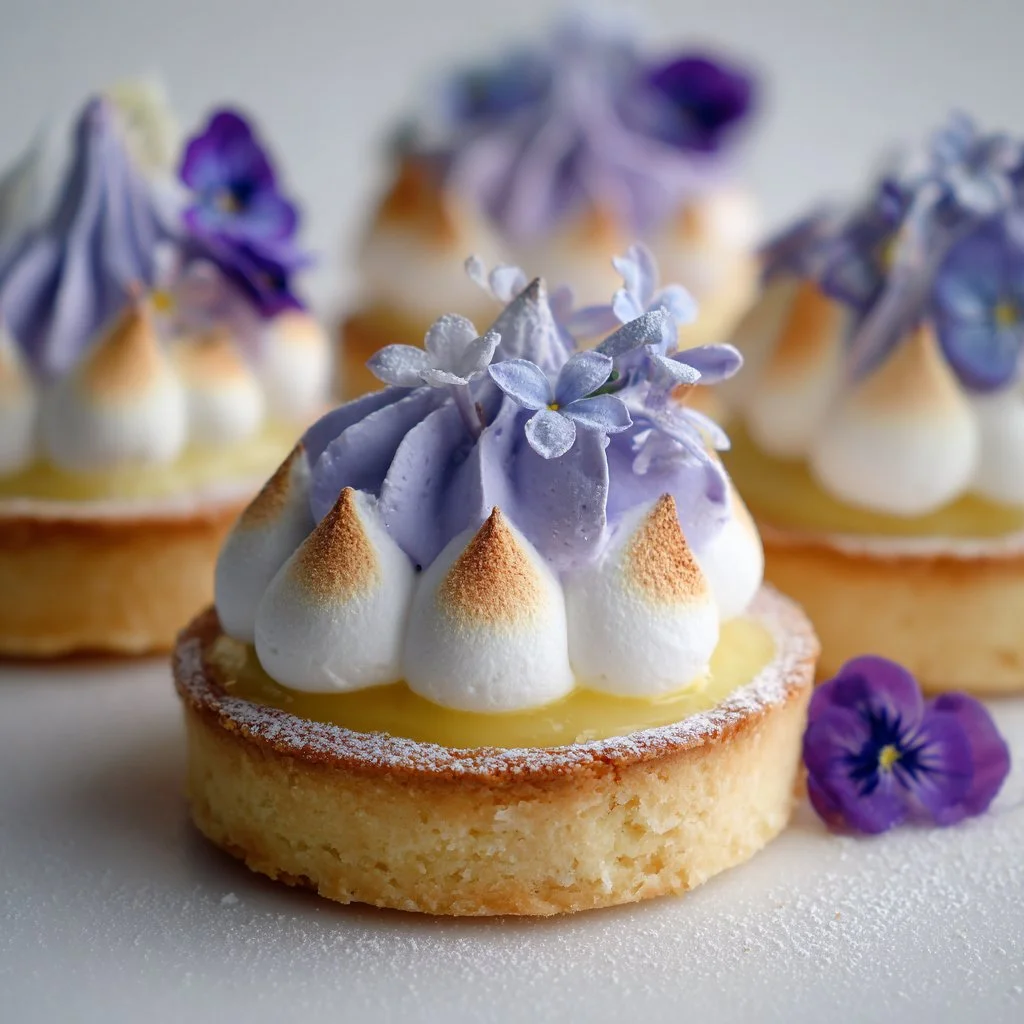
Step 4: Make the lilac meringue and finish
Place a heatproof bowl over a saucepan of simmering water and whisk the 3 egg whites, 3/4 cup sugar, and cream of tartar until warm and the sugar dissolves.
Remove from heat and beat with an electric mixer on high until glossy stiff peaks form, about 5–7 minutes.
Fold in 1/2 teaspoon vanilla and a drop or two of violet food coloring to reach a soft lilac hue.
Pipe the meringue onto the chilled lemon tarts using a star tip and toast the peaks lightly with a kitchen torch.
Garnish with edible lilac petals or dried lavender for a refined finish.
Pro Tip: Meringue should be glossy, hold firm peaks, and feel dry to the touch after piping; it should not weep.
Expert Tips for Mini Lemon Tart with Lilac Meringue: Spring Dessert
- Chill the dough thoroughly; a cold crust prevents shrinking and yields a flakier texture.
- Stabilize your meringue with cream of tartar to reach glossy, stiff peaks more reliably.
- Use a thermometer to keep curd temperature under control; curd thickens best around 170–175°F (77–80°C).
- If curd looks grainy, strain it through a fine mesh sieve to remove any cooked egg bits.
- Toast meringue quickly and evenly with short bursts from the torch to avoid melting the interior.
- For even baking, rotate the tart pans halfway through the blind-bake.
- Use metal or ceramic tart pans for better heat conduction and crisper shells.
- Common mistake: overwhipping meringue until it separates—stop when peaks are glossy and firm.
Include a floral pairing tip: serve with a light tea such as a London Fog and lavender cookie; try the recipe for London Fog Cookies with Lavender Cream Cheese Frosting for a matching flavor note.
Storage & Freezing for Mini Lemon Tart with Lilac Meringue: Spring Dessert
Refrigerator storage: Store assembled tarts in an airtight container for up to 2 days.
Cover gently to avoid pressing on the meringue; use a cake dome if possible.
Freezer storage: Freeze only the baked tart shells (without curd or meringue) wrapped tightly in plastic and stored in a freezer-safe container for up to 1 month.
Thaw shells at room temperature before filling.
Thawing and reheating: If frozen shells are used, fill with chilled curd and pipe meringue fresh before serving.
Do not freeze assembled meringue-topped tarts; meringue texture will degrade.
Best containers: Use rigid plastic or metal containers for shells; use parchment layers to prevent sticking.
Variations & Substitutions for Mini Lemon Tart with Lilac Meringue: Spring Dessert
Lemon-lavender curd — Add 1/2 teaspoon culinary lavender to the curd while cooking, then strain.
Result: subtle floral note that deepens the spring profile and pairs beautifully with the lilac meringue.
Lime or orange twist — Substitute fresh lime or orange juice for lemon and match zest accordingly.
Result: a different citrus brightness—lime gives punchier acidity, orange gives sweeter, more rounded flavor.
Greek yogurt swirl — Fold 2 tablespoons of thick Greek yogurt into the cooled curd before filling.
Result: tangier, creamier curd with a slightly denser texture and reduced sweetness.
Swiss meringue alternative — Make an Italian or Swiss meringue for increased stability in humid climates.
Result: more stable, silkier meringue that will hold up longer at room temperature.
Include a nod to small plates: serve alongside small cookies like these seasonal mini cookies such as Mini Egg NYC Cookies for an Easter table feature.
Frequently Asked Questions About Mini Lemon Tart with Lilac Meringue: Spring Dessert
What causes lemon curd to be grainy and how do I fix it?
Graininess comes from overcooked eggs or curd that reached too high a temperature.
To fix: strain the curd through a fine-mesh sieve to remove cooked egg bits and whisk in a little extra butter off-heat to smooth it.
Prevent by cooking gently and stirring constantly; aim for 170–175°F (77–80°C).
How long will the meringue stay firm on the tart at room temperature?
A properly made meringue should look good for several hours at cool room temperature.
Swiss or Italian meringues last longer in humid environments; French meringue is best eaten within 2–3 hours.
Can I make the tarts ahead for a party?
Yes: bake shells up to 1 month ahead and freeze, or make curd up to 3 days ahead refrigerated.
Pipe meringue and torch just before serving for best texture and visual impact.
Why did my tart shell shrink during baking?
Shrinking is usually from overworking the dough or not chilling it enough.
Chill the formed shells for 20 minutes before blind-baking and avoid stretching dough into pans.
What can I use instead of a kitchen torch to brown the meringue?
You can place tarts under a very hot broiler for 30–60 seconds while watching closely.
Be careful: broilers brown quickly and can melt the meringue if left too long.
Final Thoughts on Mini Lemon Tart with Lilac Meringue: Spring Dessert
These mini lemon tarts are a spring showpiece—bright, balanced, and visually charming.
If you try them, please leave a star rating in the recipe card below and pin this recipe to Pinterest for later.
Conclusion: Mini Lemon Tart with Lilac Meringue: Spring Dessert
For more lemon-forward inspiration, check the round-up of bright lemon recipes at 14 Bright and Tangy Lemon Desserts – ZoëBakes – Zoe Bakes.
If you’d like a different lemon-and-berry combo, this Lemon Blueberry Meringue Pie shows a larger-format take.
For a deep dive on how different meringues behave with lemon and lavender, read Lemon-Lavender Meringue Tarts – ZoëBakes – Zoe Bakes.
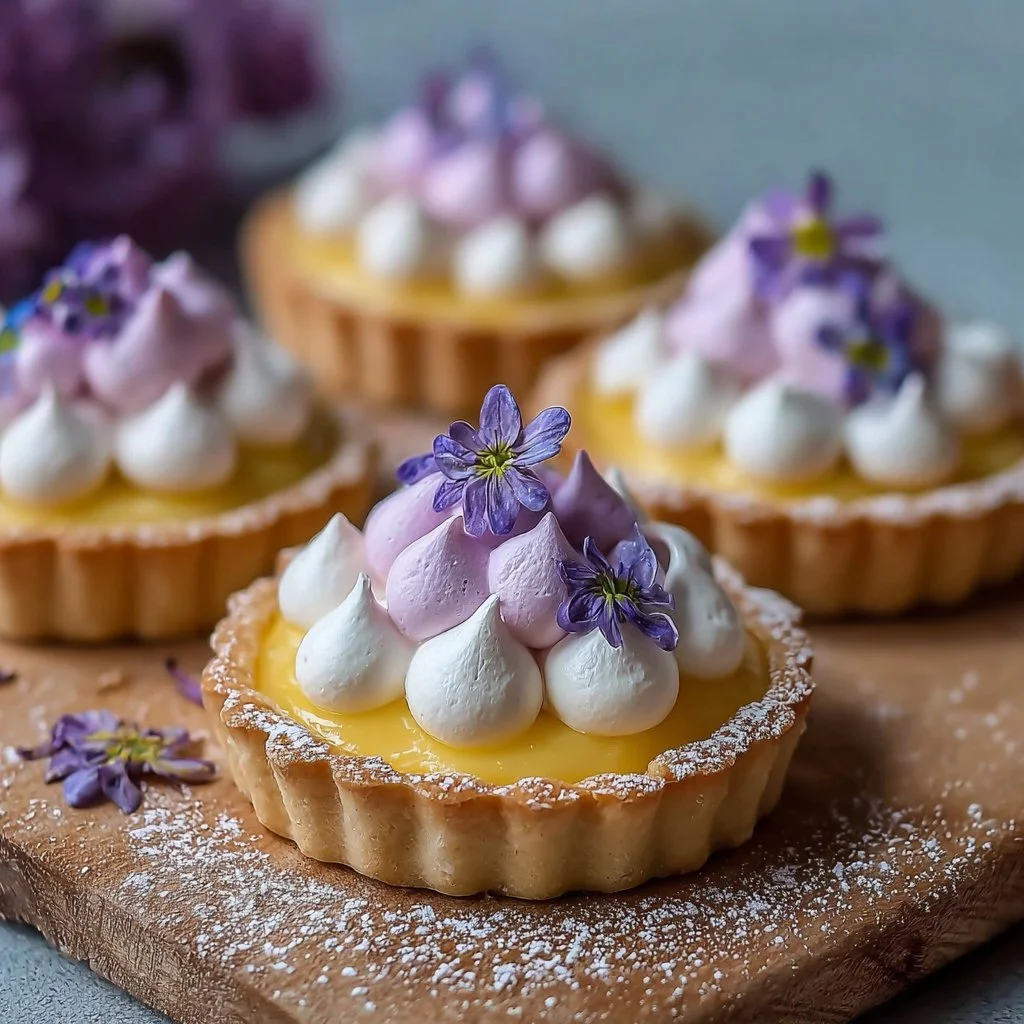
Mini Lemon Tart with Lilac Meringue
Ingredients
Method
- In a food processor, pulse the flour and powdered sugar until combined.
- Add the cold, cubed butter and pulse until the mixture looks crumbly with pea-sized pieces.
- Add the egg yolk and 1 tablespoon of cold water, pulsing until the dough starts to clump; add more water if too dry.
- Gather the dough, shape into a disc, wrap tightly, and chill for 30 minutes.
- Preheat the oven to 350°F (175°C).
- Roll the chilled dough and press into mini tart pans. Prick the bases, line with parchment, and fill with weights.
- Bake for 10–12 minutes until edges are golden. Remove weights and bake for 1–2 minutes more if needed. Let cool completely.
- In a saucepan, whisk together fresh lemon juice, lemon zest, sugar, and eggs until smooth.
- Cook over medium heat, stirring constantly, until thickened (8–10 minutes).
- Remove from heat, whisk in cubed butter until glossy. Cool slightly, pour into cooled tart shells, and chill for 1 hour to set.
- Place a heatproof bowl over simmering water, whisk egg whites, sugar, and cream of tartar until warm and sugar dissolves.
- Beat on high until glossy stiff peaks form (5–7 minutes). Fold in vanilla and food coloring.
- Pipe the meringue onto tarts, toast peaks with a kitchen torch, and garnish with flowers if using.