
Spring is here and the kitchen smells like nostalgia — warm, tender cake with a hint of tang.
This Traditional Easter Buttermilk Cake is simple, reliable, and perfect for family gatherings.
It pairs perfectly with coffee, a dusting of powdered sugar, or a glossy glaze.
I love how this cake bridges old-fashioned baking with everyday practicality.
You’ll find tips and troubleshooting below so your first bake looks like it was made by a seasoned home baker.
If you like holiday baking, also try this Easter chocolate cookie cake for a rich companion dessert.
Why You’ll Love This Traditional Easter Buttermilk Cake
- Moist crumb that stays tender for days.
- Bright, gentle tang from buttermilk that balances sweetness.
- Straightforward ingredients you likely already have.
- Quick to mix and forgiving for new bakers.
- Scales easily for larger gatherings.
- Elegant served plain or dressed up with glazes.
The flavor is a lightly sweet vanilla cake with a subtle buttermilk tang and a fine, soft crumb.
Texture is the star: tender yet sturdy enough to hold a light glaze or sliced fruit.
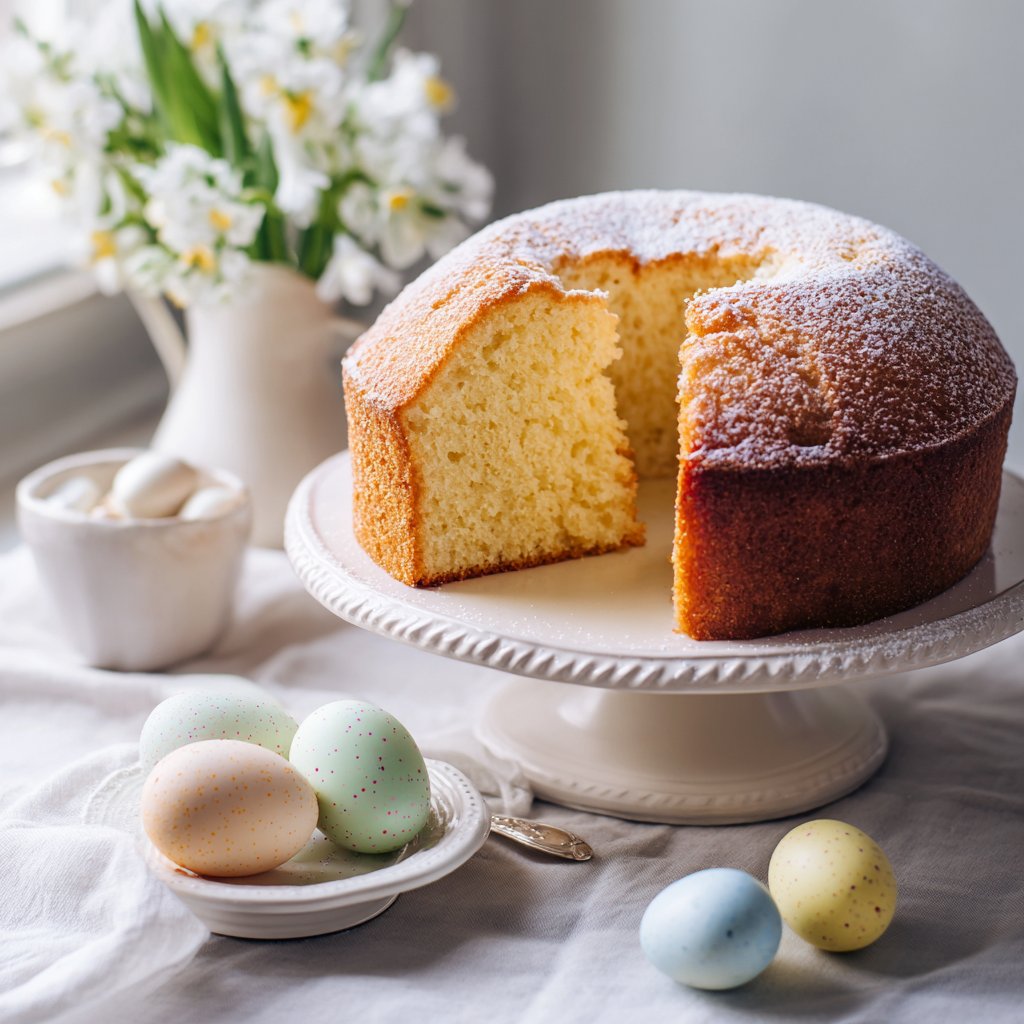
A simple dusting of powdered sugar makes it feel festive without overwhelming the delicate taste.
"5 stars — I made this for Easter brunch and everyone went back for seconds. Tender, not too sweet, and so easy." — A satisfied reader
Key Ingredients for Traditional Easter Buttermilk Cake
Buttermilk
Buttermilk is the acid that reacts with baking soda to lift the cake and add tang.
Buy cultured buttermilk from the dairy case for the best flavor and acidity.
If you substitute milk plus vinegar, expect slightly less tang and a different crumb; full-fat buttermilk gives the best moisture.
Unsalted butter
Butter provides richness, flavor, and helps with the cake’s tender crumb when creamed with sugar.
Choose high-quality, fresh unsalted butter and let it soften to room temperature for proper creaming.
If you use margarine or oil, the flavor and structure change; oil yields more moistness but loses the aeration butter provides.
All-purpose flour
AP flour gives the ideal protein level for a tender-but-structured cake.
Buy a fresh bag and measure by spooning into a cup and leveling, or weigh for accuracy.
Using cake flour will produce a finer, softer crumb, while bread flour makes the cake denser and chewier.
Large eggs
Eggs add structure, moisture, and help emulsify the batter for an even crumb.
Use large eggs at room temperature so they blend smoothly with the creamed butter and sugar.
Substituting with egg replacers can work but may reduce lift and richness; you’ll need to compensate with additional liquid or binding agents.
Full Ingredient List for Traditional Easter Buttermilk Cake
- 2 cups all-purpose flour
- 1 1/2 cups granulated sugar
- 1/2 cup unsalted butter, softened
- 1 cup buttermilk
- 3 large eggs
- 1 teaspoon vanilla extract
- 1 teaspoon baking powder
- 1 teaspoon baking soda
- 1/2 teaspoon salt
Step-by-Step Instructions for Traditional Easter Buttermilk Cake
Step 1: Preheat and prepare the pan
Preheat the oven to 350°F (175°C).
Grease and flour a 9×13-inch baking pan, tapping out the excess flour.
Pro Tip: The pan should look evenly greased with a thin dusting of flour; no bare shiny spots.
Step 2: Cream butter and sugar
In a large mixing bowl, beat the softened butter and granulated sugar until light and fluffy, about 3–5 minutes.
This step traps air, which helps create a tender, risen cake.
Pro Tip: When properly creamed, the mixture should be pale, slightly airy, and form soft ribbons when lifted with a spatula.
Step 3: Add eggs and vanilla
Add the eggs one at a time, beating well after each addition so they fully incorporate.
Stir in the vanilla extract until smooth.
Pro Tip: The batter should look glossy and smooth, not curdled; if it separates, add a tablespoon of flour and mix briefly.
Step 4: Combine dry ingredients
In another bowl, whisk together the flour, baking powder, baking soda, and salt until evenly combined.
This ensures the leaveners are distributed and prevents uneven pockets in the finished cake.
Pro Tip: The dry mix should be uniformly pale with no visible clumps of baking powder or soda.
Step 5: Alternate adding dry and buttermilk
Gradually add the dry ingredients to the wet mixture, alternating with the buttermilk, beginning and ending with the dry ingredients.
Mix until just combined; avoid overmixing to keep the crumb tender.
Pro Tip: The batter should be smooth and pourable, with no streaks of flour; a few small lumps are fine.
Step 6: Transfer batter to pan
Pour the batter into the prepared 9×13-inch pan and smooth the top with a spatula for an even bake.
Tap the pan gently on the counter to remove large air bubbles.
Pro Tip: The surface should be even and glossy, filling the pan to about three-quarters height.
Step 7: Bake until set
Bake for 30–35 minutes, rotating halfway if your oven runs hot, until a toothpick inserted in the center comes out clean.
Avoid opening the oven door repeatedly during the first 20 minutes to prevent collapse.
Pro Tip: The top should be lightly golden and spring back when touched; a clean toothpick indicates doneness.
Step 8: Cool before slicing
Allow to cool in the pan for 10 minutes before transferring to a wire rack to cool completely.
Cooling stabilizes the crumb and makes clean slicing easier.
Pro Tip: The cake should pull slightly away from the edges of the pan and feel just warm, not piping hot.
Step 9: Serve plain or garnish
Serve plain, dust with powdered sugar, or add a simple glaze or fresh fruit.
This cake keeps its texture well and makes a lovely base for decorations.
Pro Tip: A light dusting of powdered sugar should sit evenly on the surface without melting into sticky spots.
Expert Tips for Traditional Easter Buttermilk Cake
- Temperature tip: Always bring eggs and buttermilk to room temperature; cold ingredients reduce volume and can make the batter lumpy.
- Oven calibration: Use an oven thermometer; 350°F on the dial can vary by 10–25°F, affecting bake time and texture.
- Texture troubleshooting: If your cake is dense, you likely overmixed or measured flour too tightly. Lightly fold rather than vigorously beat when combining.
- Equipment tip: Use an aluminum or light-colored pan for even browning; dark pans brown the edges faster.
- Common mistake: Adding leaveners directly to wet ingredients can cause uneven rise. Always mix baking soda and powder with dry flour first.
- Flavor boost: Toasting a pinch of flour in a dry skillet before using can deepen the cake’s flavor without changing texture.
- Scaling advice: For a thicker cake, use a 9-inch square pan and increase bake time; for thinner slices, a sheet pan reduces bake time.
- Decorating tip: For a glossy finish, brush a thin simple syrup (1:1 sugar to water) on the warm cake before adding a glaze to lock in moisture.
Storage & Freezing for Traditional Easter Buttermilk Cake
Room temperature storage works for up to 2 days in a cool, dry place.
Wrap tightly with plastic wrap or place in an airtight cake carrier to prevent drying.
Refrigerator storage: keep in an airtight container for up to 5 days.
Chill only if you’ve added perishable toppings like fresh cream or fruit.
Freezer storage: wrap slices individually in plastic wrap and place in a freezer-safe bag or container for up to 2 months.
For whole cake, wrap tightly in plastic and a layer of foil to avoid freezer burn.
Thawing: move frozen slices to the fridge overnight or leave at room temperature for 1–2 hours.
Reheating: warm slices in a 300°F oven for 8–10 minutes or microwave a single slice for 15–20 seconds to revive softness.
Variations & Substitutions for Traditional Easter Buttermilk Cake
Lemon-Buttermilk Glaze
Add the zest of one lemon to the batter and brush with a lemon glaze made from powdered sugar and lemon juice.
This brightens the cake and adds a citrusy kick that pairs well with spring gatherings.
Vanilla Bean and Almond
Split a vanilla bean and swap half the vanilla extract for the seeds; add 1/2 teaspoon almond extract for depth.
The result is a more aromatic, bakery-style cake with warm nutty notes.
Berry-Strewn Buttermilk Cake
Fold 1 cup of fresh blueberries or chopped strawberries into the batter (tossed in a tablespoon of flour first).
The fruit releases juices that create moist pockets and a pretty, speckled interior.
Spiced Swirl Cake
Add 1 teaspoon cinnamon and swirl a cinnamon-sugar ribbon through the batter before baking.
You’ll get a marbled appearance and a cozy spice flavor without overwhelming the base cake.
Frequently Asked Questions About Traditional Easter Buttermilk Cake
Q: Can I use regular milk instead of buttermilk?
A: Yes, but convert by adding 1 tablespoon of white vinegar or lemon juice per cup of milk, let sit 5 minutes. The acidity helps activate the baking soda, but the tang and richness will be milder than true cultured buttermilk.
Q: My cake sank in the middle; what went wrong?
A: Sinking often results from underbaking, overmixing (which weakens the structure), or opening the oven door too soon. Check oven temp and bake until a toothpick comes out clean, and fold ingredients gently.
Q: How can I make this cake extra moist without changing flavor?
A: Use full-fat buttermilk and do not overbake. Brushing warm cake with a light simple syrup (equal parts sugar and water, simmered) adds moisture without altering flavor.
Q: Can I make this in a bundt pan or in cupcakes?
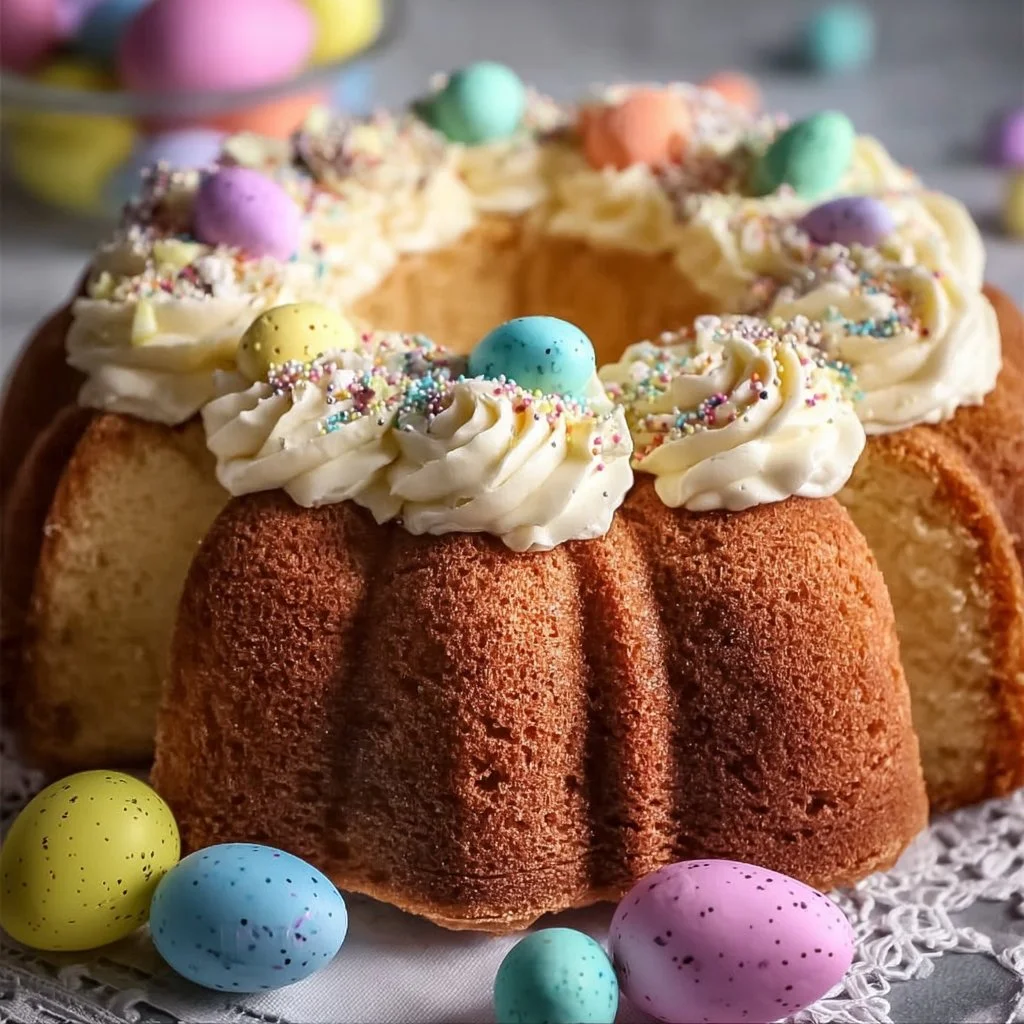
A: Yes. For a bundt, reduce oven temperature by 10–15°F and increase bake time by 10–15 minutes. For cupcakes, fill liners two-thirds full and bake 18–22 minutes.
Q: What’s the best way to get even slices and clean edges?
A: Cool completely before slicing. Use a sharp serrated knife and wipe it between cuts. For a polished look, chill the cake briefly to firm the crumb before cutting.
Final Thoughts on Traditional Easter Buttermilk Cake
This cake is an effortless classic that balances comfort and elegance.
If you enjoyed it, please leave a star rating in the recipe card below and pin this to Pinterest.
Conclusion on Traditional Easter Buttermilk Cake
For more Easter baking inspiration, check out this No-fail Easter Lamb Cake that pairs well on a holiday table.
If you’re planning a brunch spread, these sweet recipes for Easter brunch offer complementary flavors and ideas.
To see regional favorites and trends, read about the most searched for Easter dessert in the South.
Traditional Easter Buttermilk Cake
Ingredients
Method
- Preheat the oven to 350°F (175°C). Grease and flour a 9x13-inch baking pan, tapping out the excess flour.
- In a large mixing bowl, beat the softened butter and granulated sugar until light and fluffy, about 3–5 minutes.
- Add the eggs one at a time, beating well after each addition. Stir in the vanilla extract until smooth.
- In another bowl, whisk together the flour, baking powder, baking soda, and salt until evenly combined.
- Gradually add the dry ingredients to the wet mixture, alternating with the buttermilk, beginning and ending with the dry ingredients. Mix until just combined.
- Pour the batter into the prepared pan and smooth the top with a spatula.
- Bake for 30–35 minutes until a toothpick inserted in the center comes out clean.
- Allow to cool in the pan for 10 minutes before transferring to a wire rack to cool completely.
- Serve plain, dusted with powdered sugar, or topped with a simple glaze or fresh fruit.