
A warm, sticky pull-apart loaf that disappears by the end of the plate — Monkey Bread is pure comfort food made fast.
This version uses refrigerated biscuit dough so you can mix, bake, and serve in under an hour.
It’s an ideal weekend bake or last-minute brunch showstopper that everyone reaches for.
If you love easy classics, pair this with a simple yeast-free loaf or cookies for a full spread.
Try another quick bread for variety with my Irish soda bread recipe for an easy pairing.
Why You’ll Love This Monkey Bread Recipe
- Quick assembly with canned biscuit dough saves time without sacrificing flavor.
- Irresistible cinnamon-sugar crust on every bite.
- Gooey, buttery interior that pulls apart — perfect for sharing.
- No kneading or rising required; accessible for beginner bakers.
- Easy to adapt with nuts, chocolate, or fruity fillings.
- Bakes reliably in a loaf or Bundt pan for flexible presentation.
The taste is buttery, caramel-like, and warmly spiced from cinnamon and brown sugar.
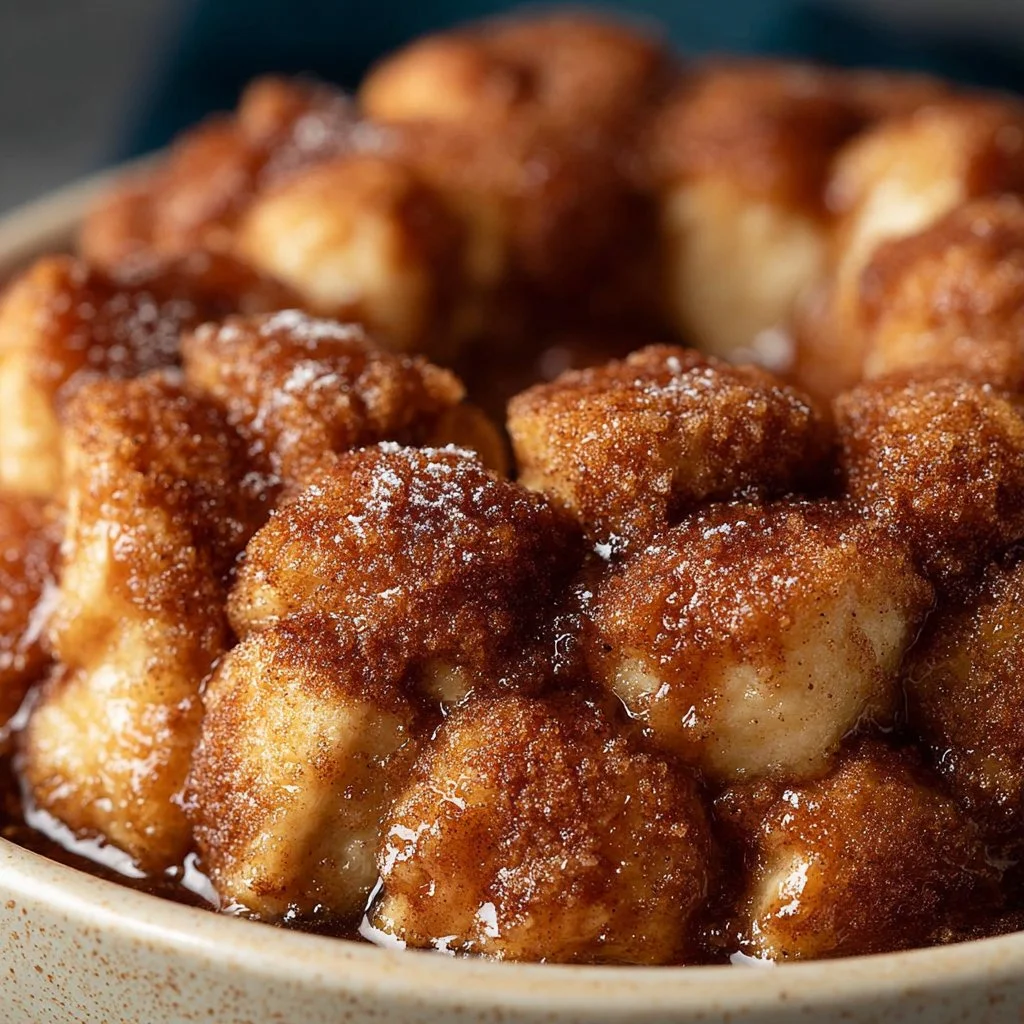
Texturally it’s a contrast: slightly crisp exterior pieces coated in a sticky sauce with soft, pillowy centers that tear apart easily.
"Absolutely decadent — I made this for brunch and it vanished in minutes. Easy to follow and perfectly balanced sweetness." — 5 stars
If you love buttery bites, this Monkey Bread delivers the same crowd-pleasing appeal with a cinnamon twist.
Key Ingredients for Monkey Bread Recipe
Ground cinnamon
Ground cinnamon gives the signature warm spice note that defines monkey bread. Choose a fresh jar for the brightest flavor; old cinnamon turns musty and flat. If you substitute with pumpkin pie spice, the loaf will taste more complex but lose the pure cinnamon profile.
Refrigerated biscuit dough (2 cans, 16 oz each)
Canned biscuits speed up prep and provide consistent texture and size for even baking. Look for flaky, but not overly dense, biscuits in the refrigerated aisle. Using homemade biscuit dough will work but may require slight size adjustments and a longer bake time.
Brown sugar (1/4 cup, packed)
Brown sugar melts into a sticky, caramel-like syrup when combined with butter and heat. Packed brown sugar adds moisture and molasses flavor; light vs. dark will shift caramel notes slightly. If you replace it with white sugar, the result will be less rich and less sticky.
Unsalted butter (3/4 cup; reduce to 1/2 cup for less oily finish)
Butter provides fat for the sauce and helps the brown sugar caramelize. Use unsalted so you control salt level. Substituting margarine or a lower-fat spread will alter both flavor and set of the glaze — it may be less rich and hold together differently.
Full Ingredient List for Monkey Bread Recipe
- 2 cans (16 oz each) refrigerated biscuit dough
- 1/4 cup brown sugar, packed
- 1/8 cup ground cinnamon
- 1/4 cup granulated sugar
- 3/4 cup unsalted butter (reduce to 1/2 cup for a less oily finish)
- 1/4 cup powdered sugar (for glaze)
- 1 tbsp milk (for glaze)
Step-by-Step Instructions for Monkey Bread Recipe
Step 1: Preheat and prepare the pan
Preheat your oven to 350°F (175°C).
Grease a deep-dish loaf pan or a standard Bundt pan thoroughly with butter or non-stick spray to prevent sticking.
Pro Tip: The pan should look evenly shiny and slick with butter or spray; no dry patches.
Step 2: Break biscuits into pieces
Open the cans of biscuits and break each biscuit into smaller pieces.
Roll them into balls roughly the size of 3 tablespoons each.
Pro Tip: The dough balls should be uniform and about golf-ball sized so they bake evenly and pull apart cleanly.
Step 3: Mix cinnamon sugar
In a medium bowl, whisk together the white granulated sugar and ground cinnamon until well combined.
This ensures every dough ball gets an even coating.
Pro Tip: The mixture should be uniformly speckled cinnamon — no clumps — and smell fragrant.
Step 4: Coat the dough balls
Roll each dough ball into the cinnamon-sugar mixture until it is completely and evenly coated.
Work quickly so the biscuit dough doesn’t become greasy from warming in your hands.
Pro Tip: Each ball should look evenly dusted with sugar and cinnamon; none should have bare dough showing.
Step 5: Layer first row and add brown sugar
Place a single layer of the coated dough balls into the bottom of the prepared pan.
Sprinkle half of the brown sugar over this first layer for pockets of caramelized sweetness.
Pro Tip: The first layer should cover the pan base fairly evenly with a light dusting of brown sugar on top.
Step 6: Add the second layer and more brown sugar
Add the remaining dough balls as a second layer.
Sprinkle the rest of the brown sugar over the top so the sauce forms between layers.
Pro Tip: The stacked balls should look compact but not squashed; brown sugar will sink into gaps as it melts.
Step 7: Melt and pour butter
Melt the butter in the microwave or on the stovetop.
Pour the melted butter evenly over the dough balls to bind the sugar into a sauce.
Pro Tip: After pouring, the surface should glisten and some butter should pool slightly between balls.
Step 8: Add extra cinnamon sugar for crunch
Sprinkle any leftover cinnamon-sugar mixture over the top for extra crunch and flavor.
This creates a little extra textured crust during baking.
Pro Tip: The top should look evenly sprinkled — not saturated — and smell strongly of cinnamon.
Step 9: Bake until golden
Bake for 45 minutes. Check for doneness; the top should be golden brown and the center should not be doughy.
If using a Bundt pan, a skewer inserted near center should come out mostly clean with a few moist crumbs.
Pro Tip: The top will be deep golden and the sauce will be bubbling between pieces when done.
Step 10: Make the glaze
While the bread cools slightly, whisk the powdered sugar and milk together to create a smooth glaze.
Adjust milk in tiny drops to reach a pourable, slightly thick consistency.
Pro Tip: The glaze should flow slowly off a spoon and hold a slight ribbon before settling.
Step 11: Glaze and serve
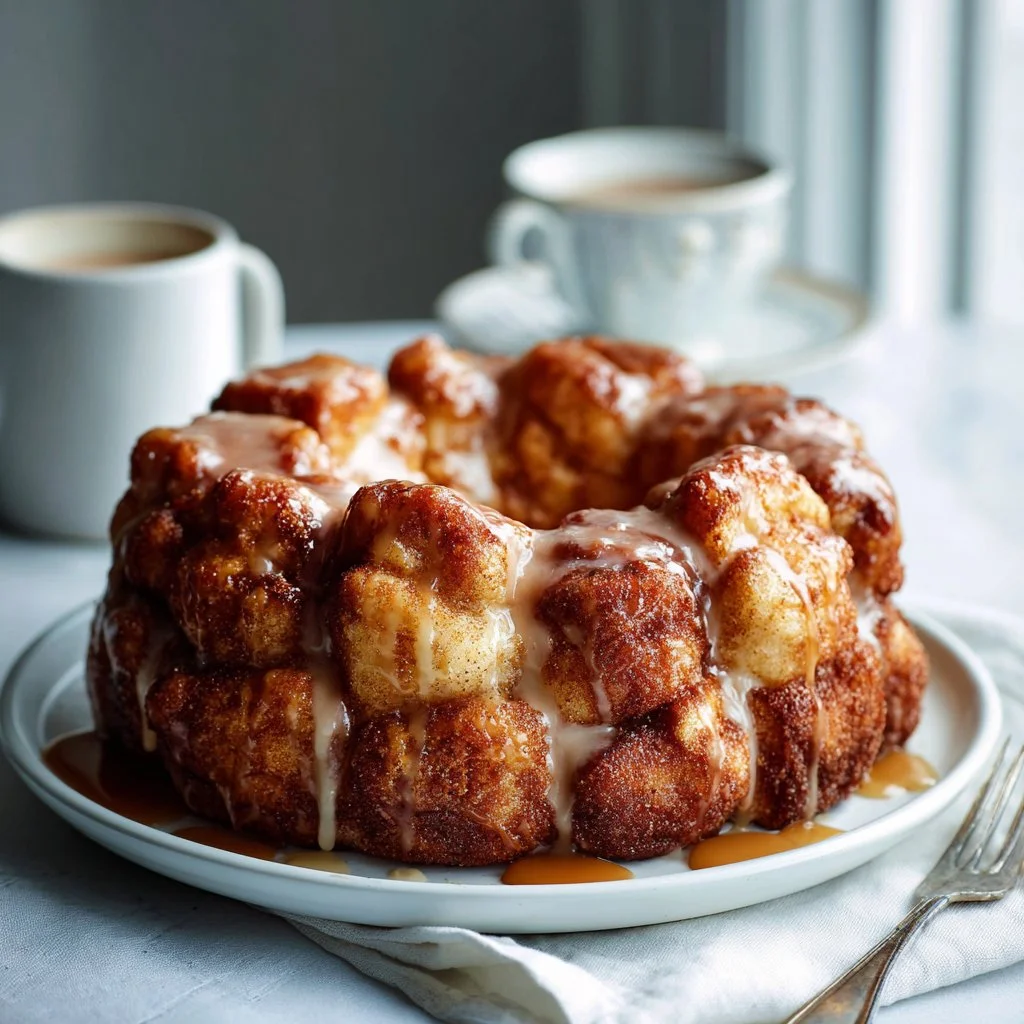
Drizzle the glaze over the warm monkey bread and serve immediately.
Pull apart the pieces while warm for the best gooey texture.
Pro Tip: The glaze should set but remain tacky; the loaf will look glossy and shiny when ready.
Pro Tip: For a visual how-to on shaping small dough pieces, see this playful dessert inspiration with cookies like Cadbury Egg Cookies that show uniform sizes and coatings.
Expert Tips for Monkey Bread Recipe
- Temperature tip: Bake at a steady 350°F (175°C). Lower temps yield under-baked centers; higher temps risk excessive browning.
- Butter control: Use 3/4 cup for maximum sauce; reduce to 1/2 cup if you want less oily pooling at the bottom.
- Even-size dough balls lead to even baking; aim for consistent 3-tablespoon portions.
- Pan choice: Use a Bundt for dramatic presentation or a deep-dish loaf for easier serving. Grease thoroughly.
- Doneness troubleshooting: If centers are doughy after 45 minutes, cover loosely with foil and bake 5–10 extra minutes.
- Texture troubleshooting: For chewier pieces, press balls gently together before baking; for crispier exterior, space them slightly.
- Equipment tip: A silicone spatula and nonstick spray or buttered pastry brush make greasing and glazing simpler.
- Common mistakes: Skipping the coating stops the signature crust; using cold butter can prevent brown sugar from melting into sauce properly.
For seasonal spreads and sweet plate ideas, you can pair with colorful treats like holiday M&M cookies for an eye-catching table.
Storage & Freezing for Monkey Bread Recipe
Fridge storage: Cool completely, then store in an airtight container for up to 3 days.
Reheat in a 300°F oven for 8–10 minutes to refresh the glaze and soften the interior.
Freezer storage: Flash-freeze individual pieces on a baking sheet, then transfer to a freezer bag for up to 3 months.
Label with date and press out excess air for best results.
Thawing: Thaw in the refrigerator overnight or at room temperature for 1–2 hours.
Reheat from frozen in a 300°F oven for 12–15 minutes covered with foil, then uncover for 3 minutes to crisp.
Best containers: Use airtight plastic or glass containers for fridge storage and heavy-duty freezer bags for long-term freezing.
Wrap first in plastic wrap to preserve moisture, then bag for the freezer.
Variations & Substitutions for Monkey Bread Recipe
Nutty Pecan Monkey Bread
Fold 1 cup chopped pecans into the brown sugar layers before pouring butter.
Results: crunchy nutty contrast and deeper caramel notes.
Chocolate-stuffed Monkey Bread
Press a small piece of chocolate or a few chocolate chips into each dough ball before coating.
Results: pockets of melted chocolate and richer, dessert-like bites.
Apple Cinnamon Monkey Bread
Toss 1 cup peeled, finely diced apples with a tablespoon of extra brown sugar and layer between the biscuits.
Results: fruity brightness and a softer, more jammy interior.
Savory Herb Monkey Bread (substantial twist)
Omit cinnamon-sugar and use garlic powder, rosemary, and grated Parmesan; replace glaze with melted butter and an herb brush.
Results: pull-apart savory loaf perfect for soups and stews.
Frequently Asked Questions About Monkey Bread Recipe
Q: Can I make monkey bread ahead of time?
A: Yes. Assemble the coated dough balls in the pan, cover tightly, and refrigerate up to 8 hours before baking.
Chill slows the butter and sugar but the bake time remains about the same, though you may need an extra 3–5 minutes.
Q: What pan is best for monkey bread, Bundt or loaf?
A: Both work. A Bundt creates a ring-shaped loaf with an impressive pull-apart presentation. A deep-dish loaf pan is easier to slice and serve to a crowd.
Baking times are similar; Bundt pans may take slightly longer if dense.
Q: Why is my monkey bread soggy at the bottom?
A: Too much butter or underbaking are common causes. Reduce butter to 1/2 cup for a less oily finish, and ensure the center reaches doneness (no raw dough).
You can place a baking sheet under the pan to help redistribute heat and reduce pooling.
Q: Can I use homemade biscuit dough instead of canned?
A: Yes, homemade dough works fine. Match the size of the pieces to about 3 tablespoons each so bake time stays consistent.
Homemade dough might be more variable in moisture, so monitor for doneness.
Q: How do I get a crispier outer layer?
A: Space balls slightly and use the extra cinnamon-sugar on top. Bake until a deep golden brown and consider a 1–2 minute broil at the end, watching carefully to avoid burning.
Final Thoughts on Monkey Bread Recipe
This Monkey Bread Recipe is an easy, crowd-pleasing bake that balances sticky caramel sweetness with tender, pull-apart texture.
If you enjoyed this recipe, please leave a star rating in the recipe card below and pin it to Pinterest for later.
For more takes on monkey bread, check out Pioneer Woman’s Easy Monkey Bread for a classic variation, browse a different easy version at Live Craft Eat’s Easy Monkey Bread Recipe, or compare techniques with the Best-Ever Monkey Bread at Mel’s Kitchen Cafe.
Monkey Bread
Ingredients
Method
- Preheat your oven to 350°F (175°C). Grease a deep-dish loaf pan or a standard Bundt pan thoroughly.
- Open the cans of biscuits and break each into smaller pieces. Roll them into balls about the size of 3 tablespoons.
- In a medium bowl, combine the granulated sugar and ground cinnamon.
- Coat each dough ball in the cinnamon-sugar mixture.
- Place a layer of dough balls in the prepared pan and sprinkle half of the brown sugar over them.
- Add the remaining dough balls as another layer and top with the rest of the brown sugar.
- Melt the butter and pour it over the layered dough balls.
- Sprinkle any leftover cinnamon-sugar mixture on top.
- Bake for 45 minutes until golden and bubbly.
- While cooling, whisk the powdered sugar and milk together to create a glaze.
- Drizzle the glaze over the warm monkey bread and serve immediately.