
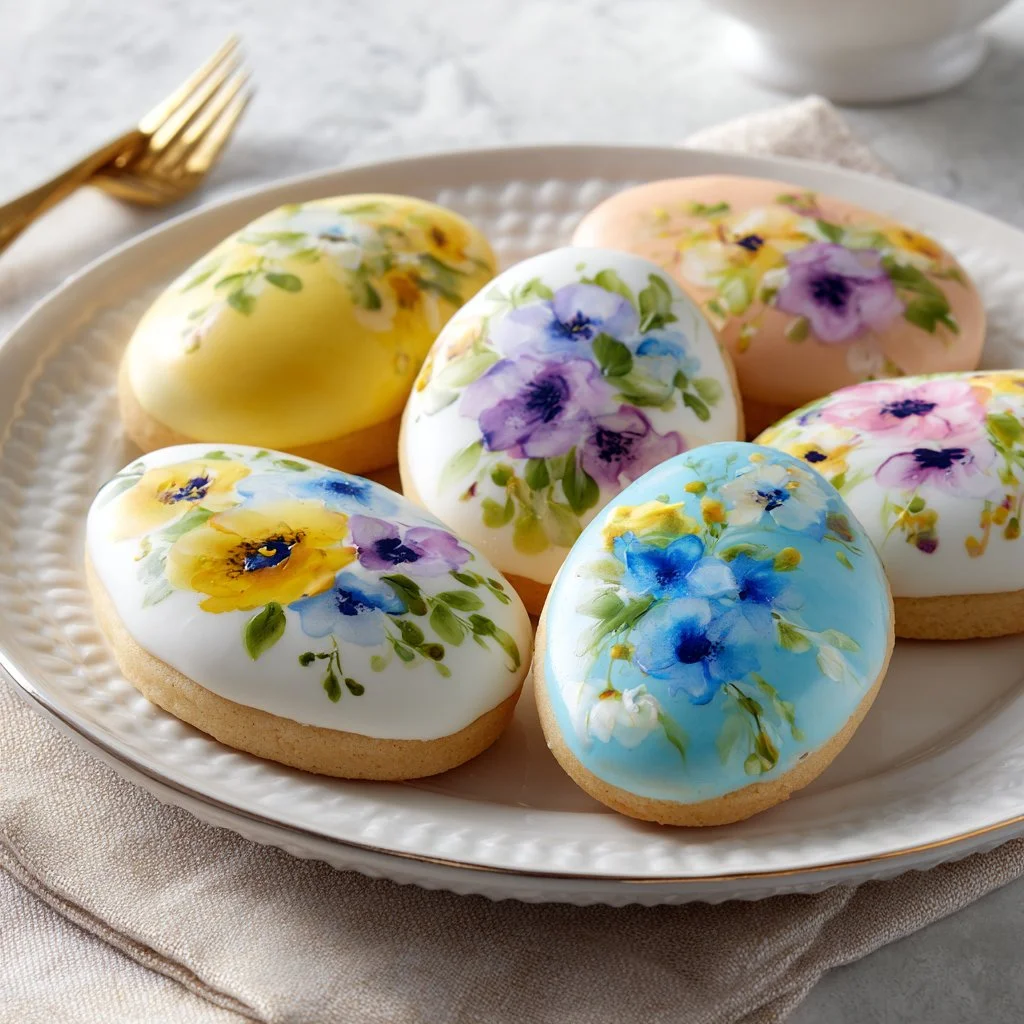
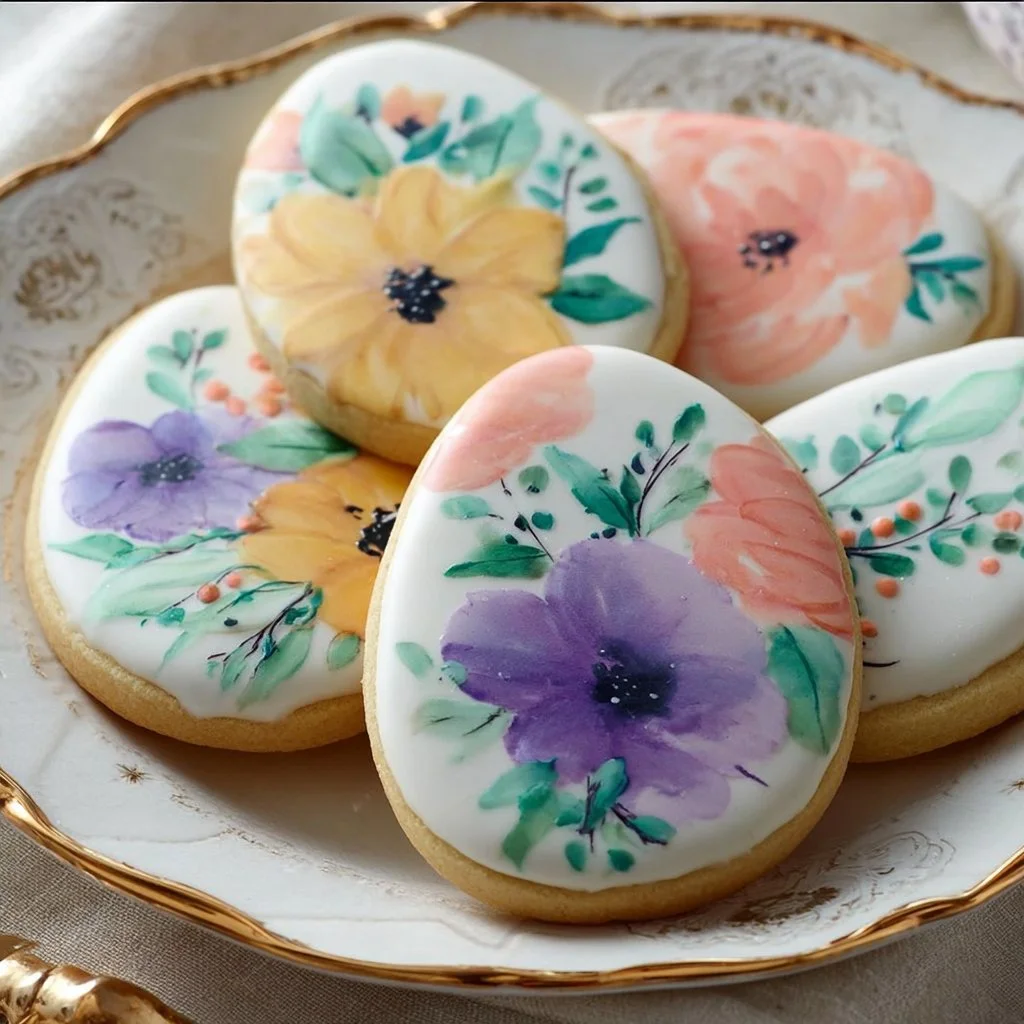
Bright, painterly florals meet buttery egg-shaped cookies in this easy, elegant Easter project. These cookies look like tiny canvases and taste like a tender, classic roll-out sugar cookie topped with silky fondant.
They’re approachable for confident beginners and fast enough for busy bakers who want an elegant holiday display. Try one, and you’ll understand why floral cookies keep showing up on spring dessert tables.
If you like other holiday cookie projects, you might enjoy the playful twist on jelly-stuffed cookies in this Cadbury Egg Cookies recipe I reference often: Cadbury Egg Cookies recipe.
Why You’ll Love This Watercolor Floral Easter Egg Cookies
- Quick visual impact with simple tools.
- No advanced piping skills required.
- Scalable for parties and cookie swaps.
- Gentle, spring-appropriate flavors.
- Fondant canvas keeps colors crisp.
- Easy to assemble ahead of time.
The finished cookie is tender and slightly crisp at the edge, with a smooth fondant layer that gives a clean background for the watercolor florals. The painted colors sit on top, so every bite starts with the sweet, soft fondant and finishes with the melt-in-your-mouth cookie beneath.
“Absolutely gorgeous and surprisingly easy — these were the hit of our Easter table. The watercolor effect makes each cookie look hand-painted. Five stars!” — Sarah M., reader
Key Ingredients for Watercolor Floral Easter Egg Cookies
Choose quality components and the technique becomes forgiving.
White fondant (24 oz. Decorator Preferred White Fondant)
White fondant gives a smooth, even canvas for watercolor painting. Buy a high-quality, rolled fondant designed for covering cakes; it’s more elastic and less likely to tear. If you substitute homemade marshmallow fondant, expect a slightly tackier surface and longer drying time.
Roll-out cookie dough (1 lb, chilled)
A stable roll-out cookie dough that bakes flat and holds edges is critical for matching fondant pieces. Use a recipe or store-bought dough labeled “roll-out” or “sugar cookie dough.” If you swap for a softer drop cookie, the fondant will shift and the shapes will not align.
Pure lemon extract (2 oz.)
Pure lemon extract thins the food coloring into a workable watercolor wash and adds a bright scent that complements the sweet fondant. Use pure extract for flavor clarity; water will thin paint but mute aroma. If you use alcohol (like vodka) the paint will dry faster but lose some lemon lift in aroma.
Clear piping gel or apricot glaze (10 oz.)
This creates an invisible adhesive layer between cookie and fondant and adds a slight shine. Apricot glaze adds a faint fruity scent and tackiness that helps heavier decorations stick. If you skip the glaze and use water instead, the bond will be weaker and may slip during transport.
Full Ingredient List for Watercolor Floral Easter Egg Cookies
- 1 lb Roll-Out Cookie Dough (chilled)
- 24 oz. Decorator Preferred White Fondant
- 1 oz. Lemon Yellow Icing Color
- 1 oz. Golden Yellow Icing Color
- 1 oz. Violet Icing Color
- 1 oz. Pink Icing Color
- 1 oz. Kelly Green Icing Color
- 1 oz. Sky Blue Icing Color
- 1 oz. Creamy Peach Icing Color
- 2 oz. Pure Lemon Extract
- 10 oz. Clear Piping Gel or Apricot Glaze
- Black FoodWriter® Extra Fine Tip Edible Markers
Step-by-Step Instructions for Watercolor Floral Easter Egg Cookies
Step 1: Prepare and bake cookies
Roll out your chilled roll-out cookie dough to 1/16 inch thickness on a lightly floured surface. Use an egg-shaped cutter to stamp out shapes, transfer them to a baking sheet, and bake according to your dough recipe until edges are barely golden. Cool the cookies completely on a non-stick cooling grid so they are fully set before topping.
Pro Tip: The cookie surface should look matte and feel firm to the touch when fully cooled; if it still feels warm, the fondant will sweat.
Step 2: Prepare the ‘paint’
In a palette or small bowls, place small dots of each icing color. Add a few drops of pure lemon extract to each color and mix until you achieve a thin, watercolor-like consistency that still holds pigment. Test on a scrap of fondant to ensure colors spread but don’t run into each other uncontrollably.
Pro Tip: The paint should glide like diluted watercolor—visible pigment but thin enough to feather at the edges.
Step 3: Paint the fondant
Roll out the white fondant to 1/16 inch thickness. Using a food-safe round brush, paint rounded flower shapes approximately 1.5 inches across, placing them randomly across the fondant sheet. While each flower area is still wet, drop a different color or two into the center for a natural, blended bloom.
Pro Tip: Each painted petal should show subtle color gradation where the center dot blooms outward.
Step 4: Add greenery and dry
Mix Kelly Green paint to the same watercolor consistency and add 1–2 leaves per flower with short, curved brushstrokes. Allow the painted fondant to dry for 5–10 minutes, or until the surface is no longer tacky; you want it set enough to cut without smudging.
Pro Tip: The painted surface should feel dry to the fingertip but not rock-hard—if it’s tacky, the marker will smear.
Step 5: Detailing
Use a Black FoodWriter® extra fine tip edible marker to draw loose, gestural outlines around the flowers and leaves. Add tiny dots or short hatch marks in the centers to deepen the focal point—think quick, confident strokes rather than rigid lines.
Pro Tip: The marker should leave matte, crisp lines without dragging the paint; if the paint lifts, you dried it too long.
Step 6: Assemble
Use the egg cutter to cut shapes from the painted fondant sheet. Lightly brush the top of each cooled cookie with a thin layer of clear piping gel or apricot glaze, then gently press the fondant egg onto the cookie, smoothing from center outward to remove air pockets.
Pro Tip: After assembly, each cookie should have a seamless edge where fondant meets cookie with no visible gel squeeze-out.
For extra baking technique notes—like how different doughs behave—see this playful stuffed-candy cookie example that shares similar handling tips: Chocolate Chip Peep Stuffed Easter Cookies.
Expert Tips for Watercolor Floral Easter Egg Cookies
- Mind ambient temperature. Work in a cool room (65–70°F) so fondant doesn’t become sticky or droopy.
- Control paint hydration. Add extract dropwise; too much thins color beyond usefulness and can dissolve fondant sugar.
- Use soft, synthetic brushes. They hold liquid and give smoother strokes than natural hair brushes.
- Test colors on scrap fondant. Colors dry slightly lighter; test to avoid surprises.
- Keep fondant thin. 1/16 inch gives a delicate bite and prevents a gummy mouthfeel.
- Avoid overworking the fondant. Re-rolling repeatedly dries it out; wrap unused fondant tightly in plastic.
- Invest in a small cooling grid and offset spatula for transferring delicate cookies. These tools reduce breakage.
- Common mistake: pressing too hard when adhering fondant. Gently smooth from the center out to prevent trapped air and visible glue lines.
For troubleshooting texture or temperature problems you can compare techniques used in other soft cookie recipes like this Soft Eggnog Cookies recipe to adjust baking time and dough handling.
Storage & Freezing for Watercolor Floral Easter Egg Cookies
Room temperature storage: Place assembled cookies in a single layer in an airtight container, separating layers with parchment. They keep well for 3–4 days at cool room temperature away from direct sunlight.
Fridge storage: You can refrigerate for up to 1 week in an airtight container, but allow the cookies to come to room temperature before serving to avoid condensation on the fondant.
Freezing: For longer storage, freeze unassembled baked cookies flat in a single layer on a tray for 1 hour, then stack with parchment between layers inside a freezer-safe box. Freeze up to 3 months. When ready, thaw cookies completely at room temperature before applying piping gel and fondant.
Thawing and reheating: Thaw in the box until no condensation forms on the inner lid—this prevents sogginess. Do not microwave. If fondant feels too firm after thawing, let cookies rest at room temperature for 1–2 hours.
For inspiration on how decorated treats hold up in storage, check tips from similar decorated desserts like these Speckled Egg Easter Cupcakes.
Variations & Substitutions for Watercolor Floral Easter Egg Cookies
Pastel ombré eggs
Omit hand-painted florals and instead brush graduating washes of one color across the fondant for a soft ombré look. Use the same thinning method; result is more modern and simple.
Gold-leaf highlights
After painting and drying, apply small flakes of edible gold leaf to petal centers for luxe shine. The gold adds visual depth and makes the cookies appear boutique-level.
Stencil and airbrush
Use a floral stencil and airbrush or powdered color to speed up production. This produces cleaner, repeatable motifs but loses the hand-painted charm.
Royal-iced centers
Instead of edible marker detailing, pipe tiny royal icing dots or lines for raised texture in the flower centers. This creates a tactile contrast and holds up well during shipping.
Frequently Asked Questions About Watercolor Floral Easter Egg Cookies
Can I use food-grade alcohol instead of lemon extract for the watercolor paint?
Yes. Vodka or clear spirit evaporates faster and helps paint dry quickly, reducing smearing. However, it removes citrus aroma and flavor that lemon extract adds. For best flavor and workable drying time, mix a small test batch using lemon extract and one with vodka to see which you prefer.
How long should the painted fondant dry before cutting shapes?
Aim for 5–10 minutes for thin watercolor washes. The surface should not be tacky to the touch but can still be slightly pliable. Thicker paints or humid environments require longer drying—up to 20 minutes.
Will the black edible marker bleed on painted fondant?
If the paint is fully dry, the marker should draw crisp lines. If you notice feathering, the paint needs more drying time or was too watery. Use quick, confident strokes instead of dragging the tip.
Can I prepare fondant painted sheets ahead of time?
You can prepare painted fondant up to 24 hours ahead if stored flat in a cool, dry place and wrapped in food-safe plastic. Ensure they are completely dry before wrapping to prevent sticking and color transfer.
What glue is best to attach fondant to cookies for shipping?
Clear piping gel or apricot glaze are reliable adhesives. For long-distance shipping, double-check that the glaze has created a firm bond and pack cookies snugly with food-safe cushioning to avoid shifting.
Final Thoughts on Watercolor Floral Easter Egg Cookies
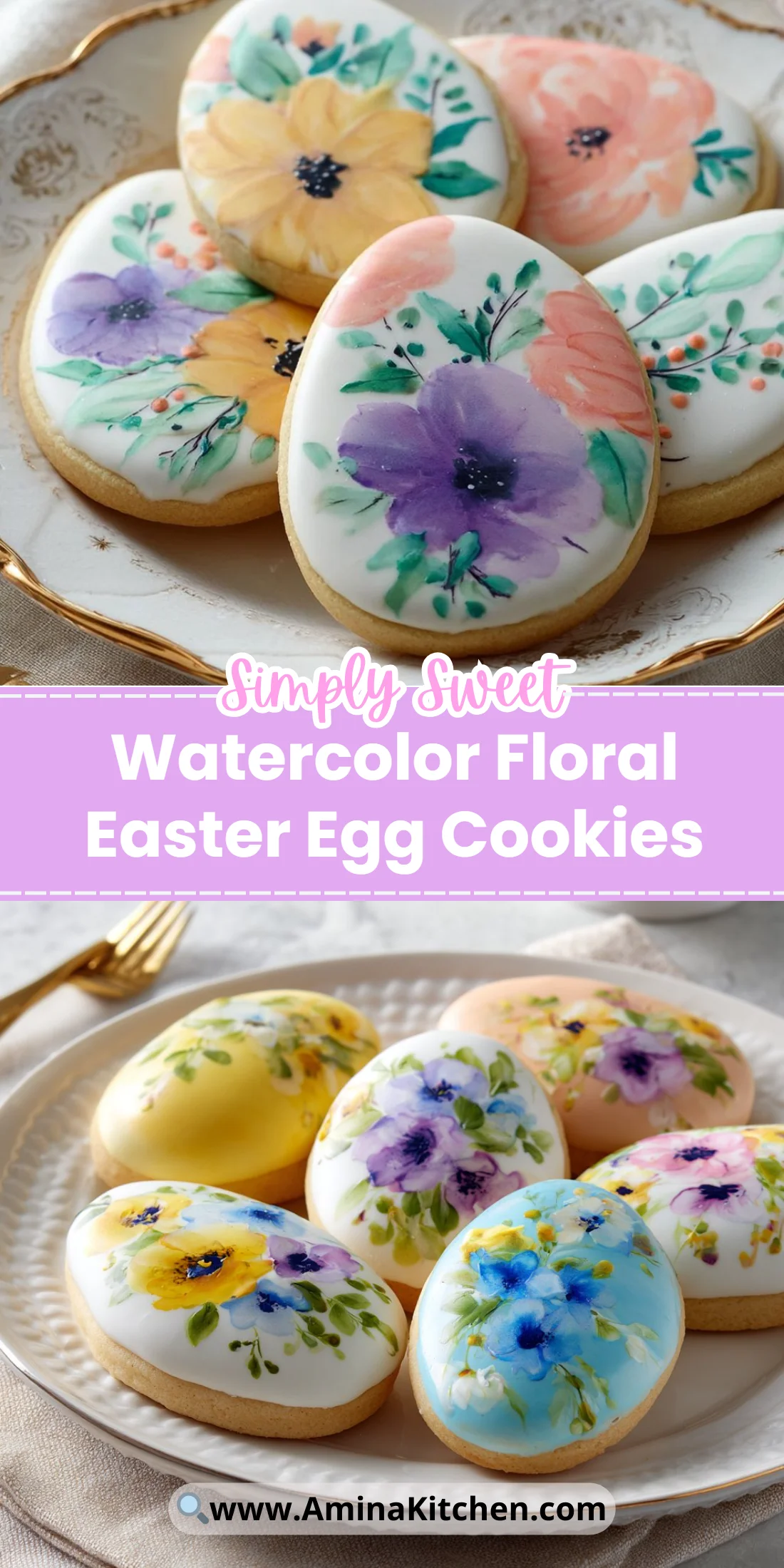
These Watercolor Floral Easter Egg Cookies merge simple materials with painterly technique for an elegant spring dessert that’s both approachable and impressive. If you loved the floral aesthetic, explore more decorated-cookie inspiration and tutorials linked below.
Please leave a star rating in the recipe card below and pin this post to Pinterest if you found the tutorial helpful.
For additional floral cookie ideas, see this detailed floral sugar cookie tutorial from Floral Bunny and Egg Sugar Cookies – Sprinkle Bakes.
If you’re curious about tattoo-paper floral egg techniques for mixed-media decoration, this project is a great companion: Beautiful floral Easter eggs {using tattoo paper} – It’s Always Autumn.
For a different hand-painted style applied to eggs rather than cookies, this watercolor tutorial gives transferable brush techniques: Hand Painted Watercolor Easter Eggs Tutorial.
Watercolor Floral Easter Egg Cookies
Ingredients
Method
- Roll out your chilled roll-out cookie dough to 1/16 inch thickness on a lightly floured surface. Use an egg-shaped cutter to stamp out shapes, transfer them to a baking sheet, and bake according to your dough recipe until edges are barely golden. Cool the cookies completely on a non-stick cooling grid.
- In a palette or small bowls, place small dots of each icing color. Add a few drops of pure lemon extract to each color and mix until you achieve a thin, watercolor-like consistency.
- Roll out the white fondant to 1/16 inch thickness. Paint flower shapes using a food-safe round brush and add different colors for a natural bloom effect.
- Mix Kelly Green paint to watercolor consistency and add leaves with short, curved brushstrokes. Allow the painted fondant to dry for 5–10 minutes.
- Use a Black FoodWriter® extra fine tip edible marker to add outlines around the flowers and leaves.
- Cut shapes from the painted fondant sheet, and gently press onto each cooled cookie using clear piping gel or apricot glaze.