
Creamy, deeply caramelized, and shockingly simple to make at home, this San Sebastian cheesecake is the kind of dessert that makes people ask for seconds before dessert plates are cleared.
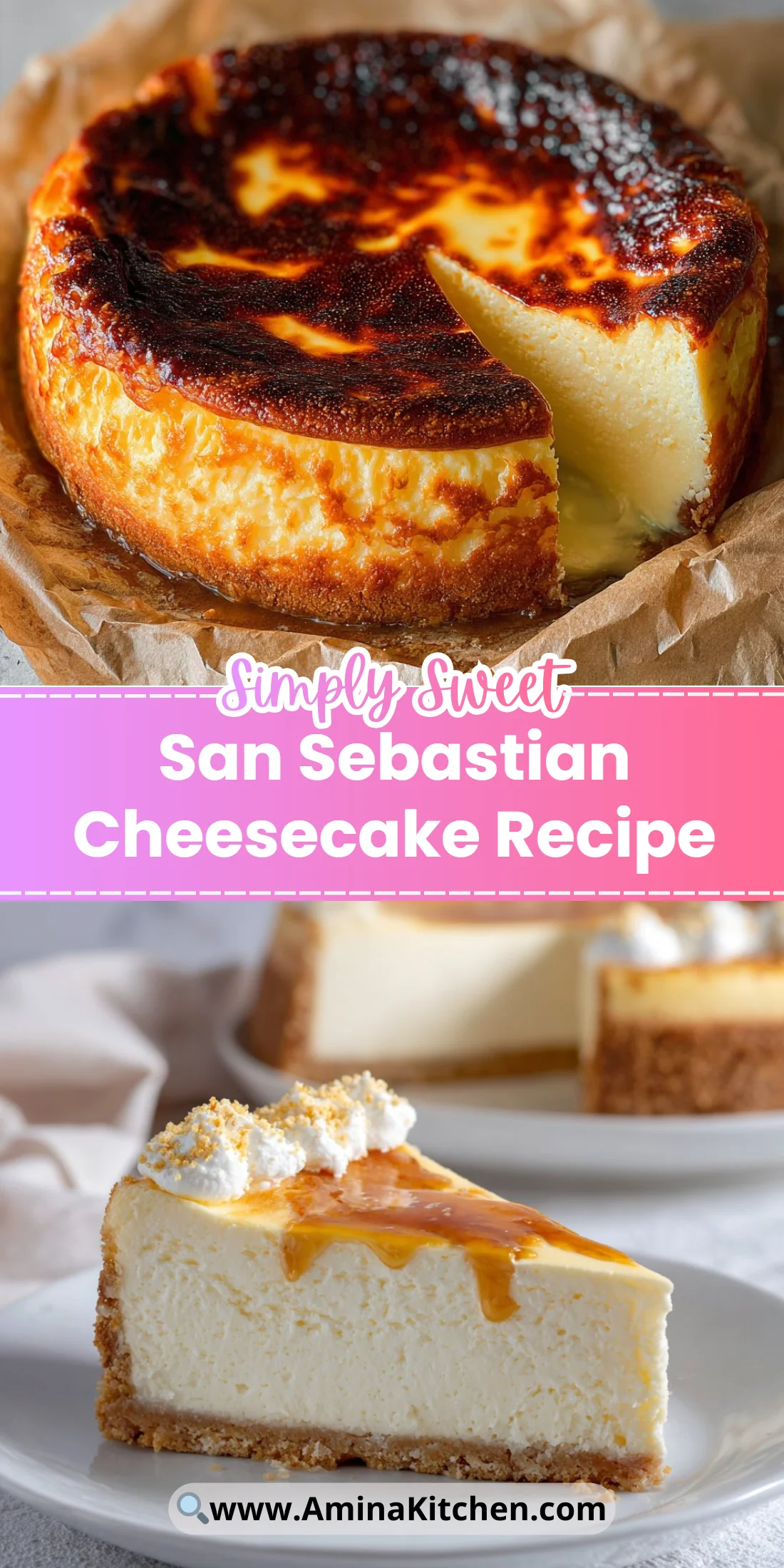
It’s rustic, with a scorched top and a molten center that wobbles like a crème brûlée.
You can make it in one bowl with four ingredients and a hot oven, which means big flavor with very little fuss.
Serve it room temperature for the best texture and dramatic presentation.
Why You’ll Love This San Sebastian Cheesecake Recipe
- Incredibly simple — only four pantry-friendly ingredients.
- Dramatic burnt top with a silky, custardy center.
- No water bath or complicated steps required.
- Quick bake time — ready in about an hour including cooling.
- Perfect for small gatherings and easy to scale up or down.
- Delivers bakery-quality results from a home oven.
The taste is rich and tangy from the cream cheese, balanced by a caramelized, slightly bitter top and a lusciously creamy interior. The texture ranges from molten in the very center to custard-like near the edges and a thin, chewy top that gives the classic Basque character.
“Five stars — I made this for guests and they thought it came from a patisserie. The top was perfectly dark and the middle was silk. Easiest impressive dessert ever.”
Key Ingredients for San Sebastian Cheesecake Recipe
Cream cheese (2 x 8oz bricks) – 16 oz
Full-fat cream cheese is the backbone of the cheesecake. Buy blocks, not the spreadable tub, and let them sit at room temperature so they soften evenly. Using low-fat or whipped varieties will change the texture and can make the cheesecake loose or grainy.
Granulated sugar – 3/4 cup (150g)
Granulated sugar sweetens and helps the top caramelize and darken. Use regular white sugar for the classic flavor and predictable browning. Substituting brown sugar will add molasses notes and change the color and moisture slightly.
Large eggs – 4 units
Eggs provide structure and creaminess; they set the custard as it cools. Use large eggs at room temperature to ensure even incorporation and a smooth batter. Replacing eggs with an egg alternative will prevent proper setting and produce a much softer, possibly runny center.
Heavy cream – 3/4 cup (180g)
Heavy cream lightens the batter and creates that silky, custardy mouthfeel. Choose heavy cream with at least 36% fat for stability and richness. Using half-and-half or milk will thin the batter and reduce richness, affecting both taste and how the center firms up.
Full Ingredient List for San Sebastian Cheesecake Recipe
- Cream cheese — 2 x 8 oz bricks (total 16 oz)
- Granulated sugar — 3/4 cup (150g)
- Large eggs — 4 units
- Heavy cream — 3/4 cup (180g)
Step-by-Step Instructions for San Sebastian Cheesecake Recipe
Step 1: Preheat and set the oven
Preheat your oven to 430°F (220°C). For best results, use the convection/fan setting if available to encourage even browning of the top.
Pro Tip: The oven should smell clean and hot; when fully preheated the interior will look bright and the heat will crisp the parchment quickly.
Step 2: Prepare the pan
Line a 6-inch round cake pan (3 inches tall) with two layers of parchment paper, ensuring it extends at least 2 inches above the rim on all sides so the batter can rise and the edges can char without spilling.
Pro Tip: The paper should fold smoothly inside the pan and extend above the rim in neat pleats; if it stands up and feels stiff it will help create a uniform edge when baked.
Step 3: Beat the cream cheese and sugar
In a stand mixer or large bowl, beat the softened cream cheese and sugar together until completely smooth and fluffy. Scrape the sides frequently to remove any lumps and ensure an even texture.
Pro Tip: The mixture should look glossy and smooth with no visible lumps; if it looks grainy, continue beating briefly and check the room temperature of the cheese.
Step 4: Add eggs one at a time
Add the eggs one at a time, mixing thoroughly and scraping the bowl down between each addition so the batter stays homogenous. Full incorporation prevents streaks and ensures the custard sets uniformly.
Pro Tip: After each egg the batter will look more fluid and glossy; it should never separate into watery and curdled parts.
Step 5: Fold in the heavy cream
Slowly pour in the heavy cream and mix on low speed until just combined. Avoid over-mixing to keep air out of the batter and maintain a dense, creamy texture.
Pro Tip: The batter should be thick but pourable, sliding off a spatula in a slow ribbon; it should not be foamy or full of bubbles.
Step 6: Bake until deeply browned
Pour the batter into the prepared pan and bake for 25–30 minutes until the top is a dark amber, almost black in spots. Remove from the oven while the center is still very wobbly; residual heat will continue to set it.
Pro Tip: The top should be deeply colored and cracked but not burnt-smelling; the center will wobble like gelatin when gently shaken.
Step 7: Cool before unmolding
Cool completely in the pan on a wire rack before unmolding. Cooling slowly helps the interior finish setting and prevents the cake from collapsing.
Pro Tip: The cake will sink slightly as it cools and the surface will become texturally diverse — a firm rim with a soft, creamy center.
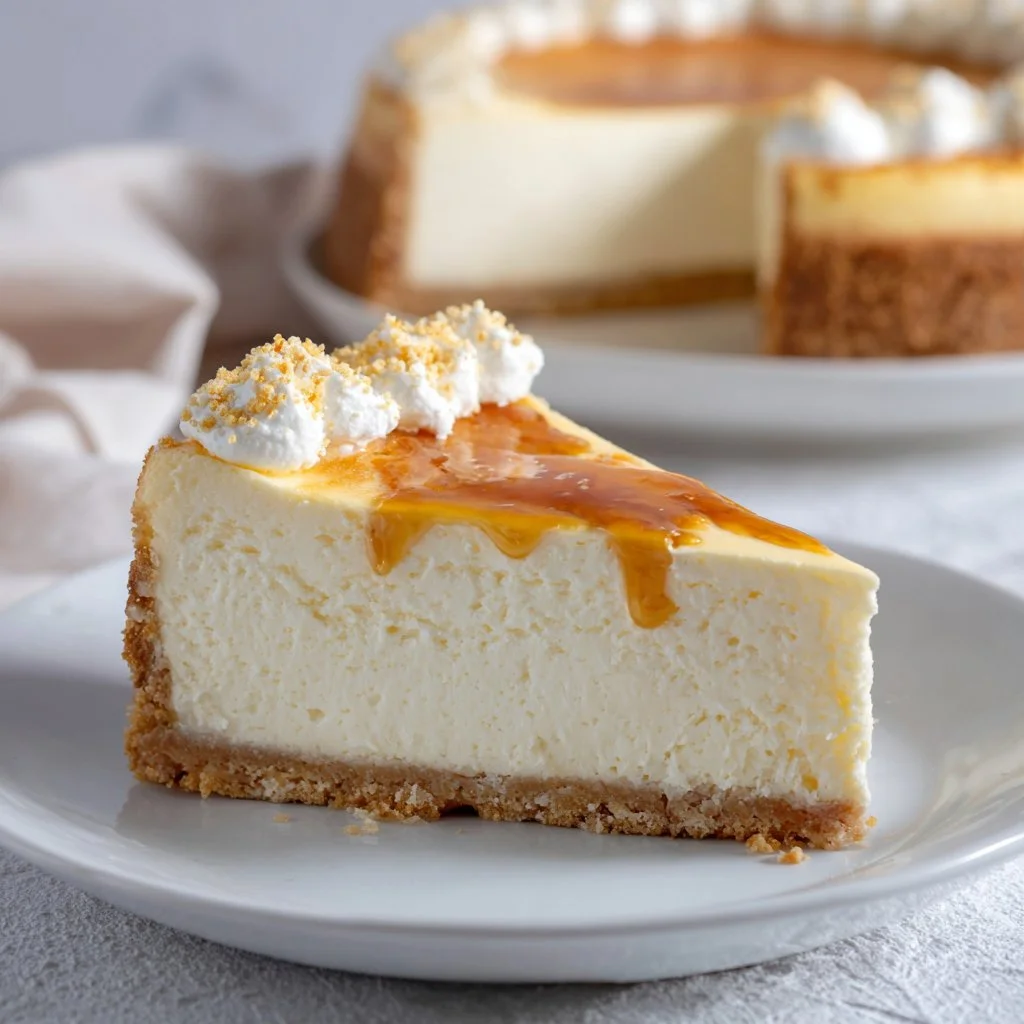
Expert Tips for San Sebastian Cheesecake Recipe
- Temperature tip: Use room-temperature cream cheese and eggs. Cold ingredients create lumps and uneven baking.
- Oven temperature tip: 430°F (220°C) is intentionally high to encourage the burnt top; lower temps will not produce the signature char.
- Texture troubleshooting: If the center is too runny after cooling, bake 3–5 minutes longer next time but watch the top so it doesn’t blacken excessively.
- Equipment tip: A 6-inch, 3-inch-tall pan concentrates heat and gives the right height; larger pans will alter bake time and texture.
- Common mistake: Over-whipping incorporates air, which leads to cracks and an unstable rise; mix just until combined.
- Caramelization control: If the top darkens too quickly, tent with foil for the last 3–5 minutes while still achieving a wobble in the center.
- Cooling tip: Let it cool in the pan at room temperature before refrigerating to avoid condensation that can make the top soggy.
- Serving tip: Bring to room temperature before serving for the creamiest texture and most pronounced flavors.
Storage & Freezing for San Sebastian Cheesecake Recipe
Refrigerator storage: Transfer the cooled cheesecake to an airtight container or wrap the pan in plastic wrap and store for up to 5 days. Short-term refrigeration preserves the creamy texture and prevents the top from absorbing odors.
Freezer storage: Wrap the whole cake tightly in plastic wrap, then in aluminum foil, or place individual slices between parchment and into a freezer-safe container. Freeze for up to 2 months for best quality.
Thawing: Thaw overnight in the refrigerator for best texture, then bring to room temperature for 30–60 minutes before serving. Thawing slowly prevents weeping and ensures the custard firms evenly.
Reheating: Warm slices for 10–20 seconds in the microwave on low power to soften slightly, or serve room temperature. Avoid high heat which will liquefy the center and ruin the structure.
Variations & Substitutions for San Sebastian Cheesecake Recipe
Vanilla bean twist:
Add the scraped seeds of one vanilla bean or 1 teaspoon of pure vanilla extract to the batter before baking. The result is a fragrance-forward version with warm aromatic notes while keeping the core texture intact.
Citrus-bright version:
Fold in 1 tablespoon of finely grated lemon zest or orange zest to the batter for a bright, zesty lift. The citrus oils cut the richness and provide a lively counterpoint to the charred top.
Chocolate marble:
Melt 2 ounces of dark chocolate and swirl into half the batter before pouring into the pan to create a marbled effect. This yields streaks of bittersweet chocolate through the creamy custard and a more decadent flavor profile.
Salted caramel topping:
Drizzle a thin salted caramel sauce over the cooled cheesecake and sprinkle with flaky sea salt. The sweet-salty contrast enhances the caramelized top and deepens the overall flavor without changing the interior texture.
Frequently Asked Questions About San Sebastian Cheesecake Recipe
1. How do I prevent my San Sebastian cheesecake from cracking?
Cracks are most often caused by over-mixing, over-baking, or rapid temperature changes. Mix just until smooth to avoid incorporating too much air. Remove the cake from the oven while the center still wobbles and cool it gradually in the pan on a wire rack. Avoid extreme temperature shifts like moving it from oven to refrigerator immediately.
2. Can I make this cheesecake in a larger pan?
Yes, but bake times and the final texture will change. A larger, shallower pan will produce a thinner cake that sets faster and may not have the same molten center. Scale the recipe proportions or accept a shorter bake time and slightly different balance between crust and center.
3. Why is my cheesecake grainy after baking?
Graininess usually comes from cold, poorly softened cream cheese or over-beating high-sugar mixtures. Ensure cream cheese is fully softened to room temperature and beat until smooth before adding eggs. If the batter shows small lumps, press it through a fine sieve or continue mixing gently until smooth.
4. Is the dark top burned or supposed to be that color?
The dark, almost blackened top is intentional and a signature of Basque-style or San Sebastian cheesecake. It should be deeply caramelized but not give off a charred, acrid smell. If the top smells strongly burnt, lower the oven temperature slightly next time or reduce the baking time by a few minutes.
5. Can I prepare the batter ahead of time?
You can prepare the batter and keep it chilled in the refrigerator for up to 24 hours in an airtight container. Bring it back to room temperature and stir gently before pouring into the pan to ensure an even texture and predictable bake.
Final Thoughts on San Sebastian Cheesecake Recipe
This San Sebastian Cheesecake Recipe is an effortless showstopper that balances rustic caramelization with a silky, custard-like interior. If you enjoyed it, please leave a star rating in the recipe card below and pin it to Pinterest for later.
For inspiration and different takes on the burned-top technique, check out this detailed background on San Sebastian Cheesecake (Burnt Basque Cheesecake). For an alternative recipe and step-by-step photos, I recommend reading the guide at Burnt Basque Cheesecake Recipe – Spanish Sabores. If you want another home baker’s perspective and troubleshooting notes, see San Sebastian Cheesecake (Basque-style) – Ana’s Baking Chronicles.
San Sebastian Cheesecake
Ingredients
Method
- Preheat your oven to 430°F (220°C).
- Line a 6-inch round cake pan with two layers of parchment paper that extend 2 inches above the rim.
- In a stand mixer, beat the softened cream cheese and sugar until smooth and fluffy.
- Add the eggs one at a time, ensuring each is fully mixed before adding the next.
- Fold in the heavy cream gently until just combined.
- Pour the batter into the prepared pan.
- Bake for 25–30 minutes until the top is deeply browned and the center is still wobbly.
- Cool completely in the pan on a wire rack before unmolding.