
Bright, nutty almond aroma. Soft centers that gently yield and rebound. A festive glaze with sprinkles that snaps just enough.
These cookies bake fast and store well. They feel homemade but look bakery-perfect.
Make the dough ahead or freeze balls for fresh cookies later. They’re a holiday staple that travels and plates beautifully.
Why You’ll Love This Soft Italian Christmas Cookies
– Soft, pillowy texture that stays tender for days.
– Bright almond flavor without being cloying.
– Quick dough that chills into perfect round mounds.
– Simple glaze that sets with a glossy finish.
– Kid-friendly decorating and great for cookie exchanges.
– Easy to scale for big batches.
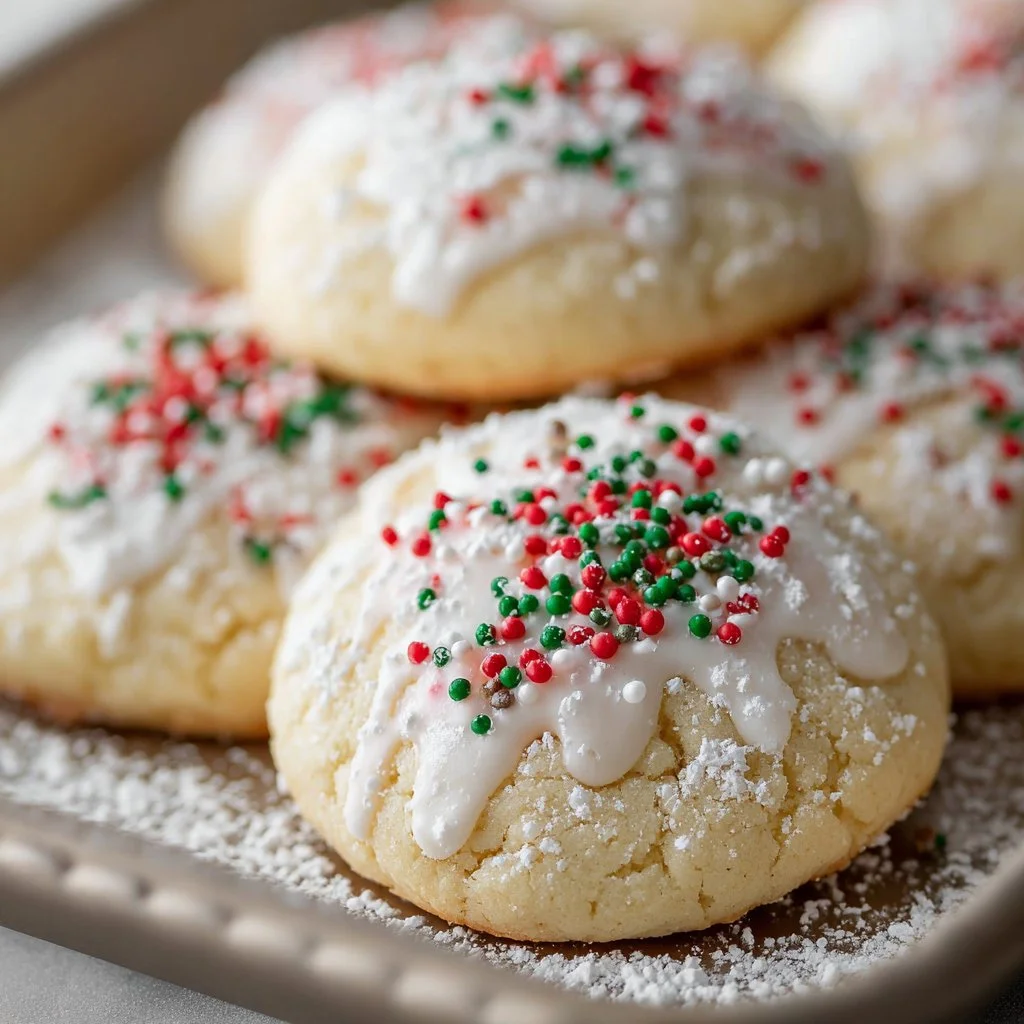
These Soft Italian Christmas Cookies offer a delicate crumb and soft, almost cake-like center with a thin, glossy glaze on top. The almond extract gives an unmistakable nutty note that pairs with a clean sweetness, while the short bake time keeps the centers tender and never dry.
“These are the best Christmas cookies I’ve made—soft, almond-forward, and everyone asked for the recipe. They held up all week.” — 5 stars
Key Ingredients for Soft Italian Christmas Cookies
All-purpose flour is the structure builder here. Choose a standard, all-purpose flour with about 10–12% protein for a tender crumb; sift or stir it before measuring to avoid packing. If you use bread flour the cookies will be chewier and denser, while cake flour will make them overly delicate and prone to fall apart.
Unsalted butter at room temperature gives richness and helps the dough cream to trap air for lift. Buy high-quality butter (82% butterfat) and allow it to soften until pliable but not greasy. Substituting margarine or a low-fat spread will change flavor and texture and often makes cookies flatter.
Large eggs at room temperature add moisture, structure, and shine to the dough. Warm eggs emulsify better with the butter and sugar, promoting a smooth batter that bakes evenly. If you use cold eggs, the dough can seize and the cookies may spread unpredictably.
Almond extract delivers the cookie’s signature flavor concentratedly; a little goes a long way. Use pure almond extract for the cleanest, most authentic taste rather than imitation. Substituting vanilla will produce a pleasant cookie but will lose the characteristic almond profile.
Full Ingredient List for Soft Italian Christmas Cookies
– All-purpose flour – 2 cups
– Baking powder – 1 tablespoon
– Kosher salt – 1/4 teaspoon
– Unsalted butter (room temperature) – 6 tablespoons
– Granulated sugar – 1/2 cup
– Large eggs (room temperature) – 2
– Almond extract – 2 teaspoons
– Powdered sugar (for glaze) – 1 1/2 cups
– Almond extract (for glaze) – 1 teaspoon
– Milk – 2-3 tablespoons
– Christmas sprinkles – as needed
Step-by-Step Instructions for Soft Italian Christmas Cookies
Step 1: Whisk dry ingredients together
In a medium bowl whisk the flour, baking powder, and salt until evenly combined. This distributes the leavening and salt so each cookie rises and seasons uniformly.
Pro Tip: The dry mix should look uniform with no streaks of baking powder; it will smell neutral and feel powdery.
Step 2: Cream butter and sugar
Beat the room-temperature butter and granulated sugar in an electric mixer until light and fluffy, about 2–3 minutes on medium speed. Proper creaming traps air, which gently lifts the cookies as they bake.
Pro Tip: When creamed correctly the mixture will look paler and slightly aerated, and you can see fine, consistent ribbons when the paddle is lifted.
Step 3: Add eggs one at a time
Add the eggs one at a time, mixing fully after each addition so the batter emulsifies and remains stable. This prevents separation and keeps the dough cohesive.
Pro Tip: The dough should look shiny and smooth after the eggs are incorporated, not curdled or broken.
Step 4: Stir in almond extract
Mix in the almond extract until fragrant, folding it into the batter so the flavor is evenly distributed. The extract is concentrated so a little provides plenty of aroma.
Pro Tip: Take a short sniff—the batter should give off a warm, unmistakable almond note without alcohol sharpness.
Step 5: Combine wet and dry ingredients
Gradually add the flour mixture to the wet ingredients and mix until just combined. Overmixing develops gluten and will make cookies tougher; stop when no streaks of flour remain.
Pro Tip: The dough should be cohesive, slightly tacky, and hold its shape when scooped.
Step 6: Chill the dough
Cover the dough and refrigerate for at least one hour. Chilling firms the butter for a rounded cookie shape and prevents excessive spreading in the oven.
Pro Tip: After chilling the dough should feel noticeably firmer and easier to roll into neat balls.
Step 7: Preheat oven and prepare baking sheet
Preheat the oven to 350°F and line a baking sheet with parchment paper. Proper preheating ensures even oven spring and consistent bake times.
Pro Tip: The oven should reach full temperature before baking; a quick thermometer check shows a steady 350°F.
Step 8: Shape the cookies
Roll dough into 1-inch balls and place them 2 inches apart on the baking sheet to allow room for a tiny bit of spread. Uniform sizing equals even baking across the batch.
Pro Tip: The balls should be smooth, even spheres with no cracks; they’ll flatten slightly while baking.
Step 9: Bake briefly
Bake for 8–10 minutes until the bottoms are barely golden; do not overbake. The cookies will look set on top but still soft to the touch in the center and firm slightly at the edges.
Pro Tip: The visual cue is a barely golden underside and a matte top—if the tops are brown, they’re overbaked.
Step 10: Cool completely
Cool the cookies completely on a wire rack before glazing. Cooling stabilizes the crumb so the glaze won’t melt into the cookie.
Pro Tip: Cooled cookies feel slightly springy and are not warm to the touch.
Step 11: Make the glaze
Whisk powdered sugar, almond extract, and 2–3 tablespoons milk together to create a thick glaze. Add milk a tablespoon at a time until the glaze is pourable but not runny.
Pro Tip: The glaze should coat the back of a spoon and fall in a slow ribbon.
Step 12: Dip and decorate
Dip cookie tops into the glaze, shake off excess, garnish with sprinkles, and let set on parchment until fully firm. Work in small batches so the glaze sets shiny and smooth.
Pro Tip: The finished glaze will be glossy, slightly firm to the touch, and hold sprinkles without bleeding.
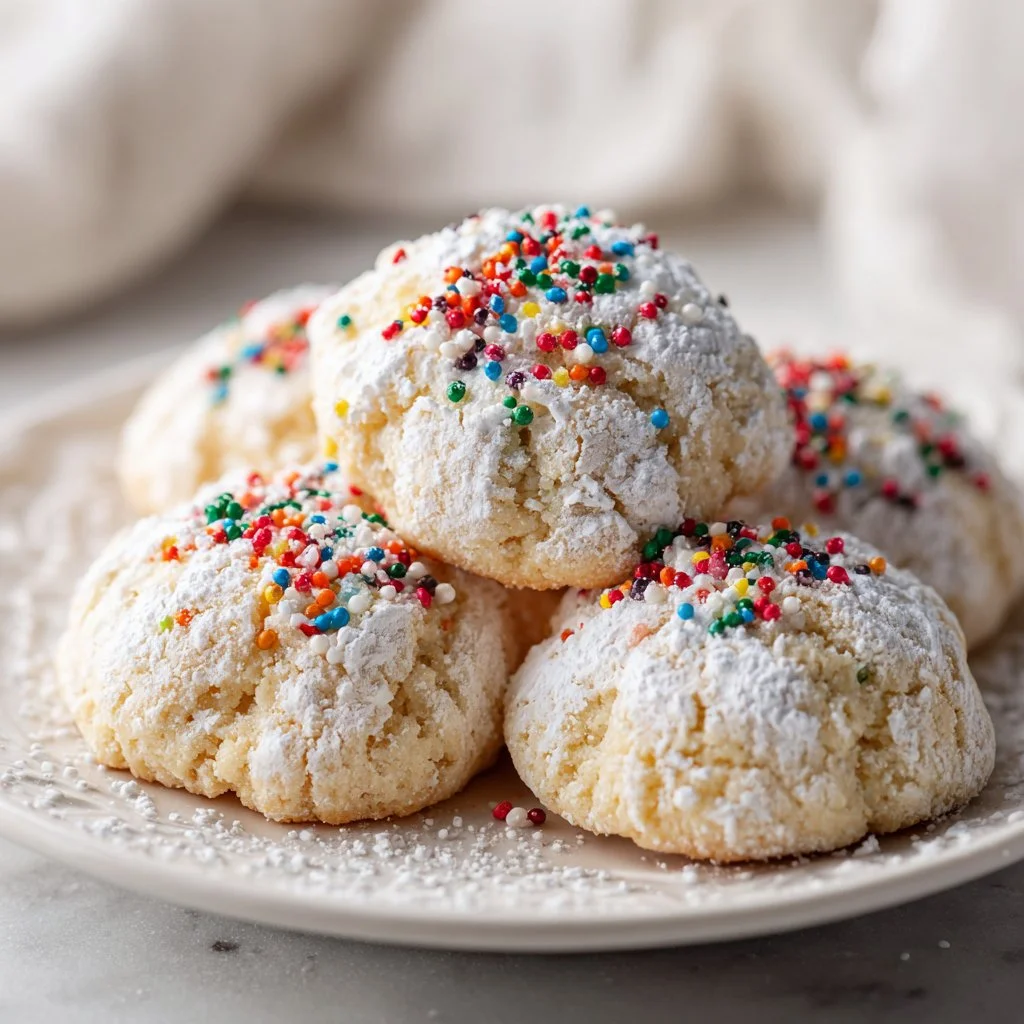
Expert Tips for Soft Italian Christmas Cookies
– Chill the dough at least one hour to prevent spreading and to concentrate flavors.
– Use room-temperature eggs and butter for best emulsion and even texture.
– Do not overmix after adding flour; stop when no streaks remain to avoid toughness.
– Measure flour by spooning into the cup and leveling or weigh for accuracy.
– Bake on parchment or a silicone mat to protect bottoms and promote even browning.
– Rotate the baking sheet halfway through the short bake if your oven has hot spots.
– For a softer cookie, err on the shorter bake time; watch the bottoms for a barely golden cue.
– Avoid too-thin glaze; it will run off. Thicker glaze sets faster with a glossy finish.
Storage & Freezing for Soft Italian Christmas Cookies
Room-temperature storage: Store glazed cookies in a single layer or separated by parchment in an airtight container for 3–4 days. Avoid stacking while glaze is tacky.
Fridge storage: Place unglazed cookies in an airtight container and refrigerate up to 7 days. For glazed cookies, chill only if your climate is very warm; condensation can dull the glaze when returning to room temp.
Freezer storage: Freeze baked, unglazed cookies in a single layer on a sheet until firm, then transfer to a freezer-safe bag or container for up to 3 months. To freeze dough, roll into balls, freeze on a tray, then bag for up to 3 months.
Thawing and reheating: Thaw frozen baked cookies at room temperature about 30–60 minutes. Warm in a 300°F oven for 3–5 minutes to refresh softness if needed; do not glaze until fully thawed. For frozen dough balls, bake from frozen adding 1–2 minutes to bake time.
Best containers: Use airtight plastic or glass containers for refrigerated storage and heavy-duty freezer bags or rigid containers for long-term freezing. Separate layers with parchment.
Variations & Substitutions for Soft Italian Christmas Cookies
Almond-Orange: Replace 1 teaspoon of almond extract with 1 teaspoon orange zest; add a tablespoon of orange juice to the glaze. Result: brighter, citrus-accented cookies that balance the almond.
Vanilla & Spritz: Omit almond extract and add 2 teaspoons pure vanilla extract instead; finish with colored sanding sugar. Result: classic, crowd-pleasing flavor that’s milder and very adaptable for kids.
Lemon Glaze Twist: Keep the dough the same but swap the glaze almond extract for 1/2 teaspoon lemon extract and use 2 tablespoons lemon juice instead of milk. Result: a tangy, glossy topping that cuts sweetness and adds freshness.
Chocolate-Dipped: Prepare as written, then dip half of each cooled cookie in melted semisweet chocolate and let set. Result: richer, more decadent cookies with a crisp chocolate shell and soft interior.
Frequently Asked Questions About Soft Italian Christmas Cookies
Q: How do I prevent these cookies from spreading too much?
A: Chill the dough for at least one hour; this firms the butter so the cookies keep their shape. Also measure flour accurately—too little flour causes excess spread. Bake on a well-chilled, ungreased sheet lined with parchment and avoid over-creaming the butter and sugar.
Q: Can I make the dough ahead of time?
A: Yes. The dough freezes well either as a whole log or shaped into 1-inch balls on a sheet tray. Wrap tightly and freeze up to 3 months. When ready to bake, you can bake from frozen—add 1–2 minutes to the bake time.
Q: Why did my cookies turn out dry and crumbly?
A: Overbaking or overmixing after adding flour are the usual culprits. Check oven temperature with an oven thermometer and remove the cookies when the bottoms are barely golden. Also ensure you didn’t accidentally increase flour when measuring.
Q: How do I make the glaze glossy and smooth?
A: Use sifted powdered sugar and add milk slowly until it reaches a thick but pourable consistency. A drop of light corn syrup (optional) can enhance shine and set time. Dip cookies while they’re completely cool for the best finish.
Q: Can I substitute almond flour or gluten-free flour?
A: Substituting almond flour requires recipe adjustment—the fat content is higher and will produce a denser, wetter dough; start with a partial substitution and reduce butter slightly. For gluten-free all-purpose blends, choose a 1:1 cup-for-cup blend designed for baking and add a teaspoon of xanthan gum if the blend lacks binding agents.
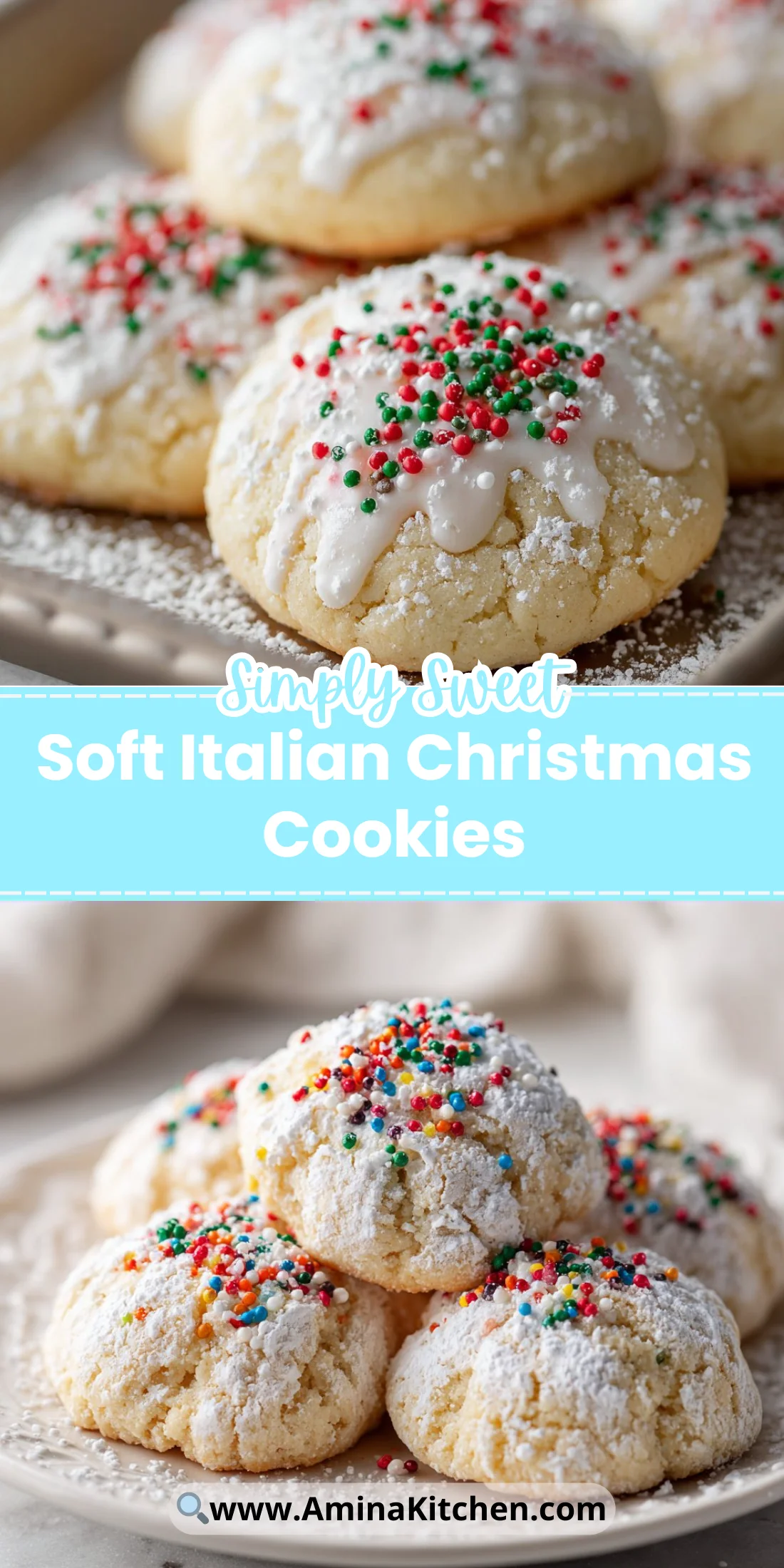
Final Thoughts on Soft Italian Christmas Cookies
If you want another take on this classic, try the Italian Christmas Cookies Recipe (Super-Soft!) – The Kitchn or the elegant twist at Italian Christmas Cookies | Ella Claire & Co., and for a chewy version take a look at Italian Christmas Cookies – Gonna Want Seconds.
If you made these Soft Italian Christmas Cookies, please leave a star rating in the recipe card below and pin this to Pinterest to save for holiday baking.
Soft Italian Christmas Cookies
Ingredients
Method
- Whisk the dry ingredients (flour, baking powder, and salt) together in a medium bowl until evenly combined.
- Cream the softened butter and granulated sugar in an electric mixer until light and fluffy, about 2–3 minutes.
- Add the large eggs one at a time, mixing fully after each addition.
- Mix in the almond extract until fully incorporated.
- Gradually add the dry flour mixture to the wet ingredients and mix until just combined.
- Cover the dough and refrigerate for at least 1 hour.
- Preheat the oven to 350°F and line a baking sheet with parchment paper.
- Roll the chilled dough into 1-inch balls and place them 2 inches apart on the baking sheet.
- Bake for 8–10 minutes until the bottoms are barely golden and the tops are set but soft.
- Cool the cookies completely on a wire rack before glazing.
- Whisk together powdered sugar, almond extract, and milk to create a thick glaze.
- Dip the tops of the cooled cookies into the glaze, shake off excess, and garnish with sprinkles.
- Let the glazed cookies set on parchment until fully firm.