
Warm, crackly crust and a tender, slightly sweet crumb — Irish soda bread is comfort in loaf form. This version studded with currants is rustic, fast, and perfect with butter or a strong cup of tea.
No yeast, no time-consuming rises — just one bowl, a few simple ingredients, and an oven. Read on for science-backed tips, troubleshooting visuals, and ways to make this loaf your own.
Make it for breakfast, a last-minute gathering, or when you want bakery flavor without the fuss. It holds up well and freezes beautifully.
Why You’ll Love This Irish Soda Bread with Currants
- Ready in under an hour from start to oven.
- No yeast or proofing required — reliable every time.
- Buttermilk creates a tender crumb with a subtle tang.
- Currants add concentrated bursts of sweetness and chew.
- Rustic crust with a classic cross cut that crisps beautifully.
- Great for slicing thick for breakfast or thin for sandwiches.
- Easy to adapt with mix-ins or whole-grain swaps.
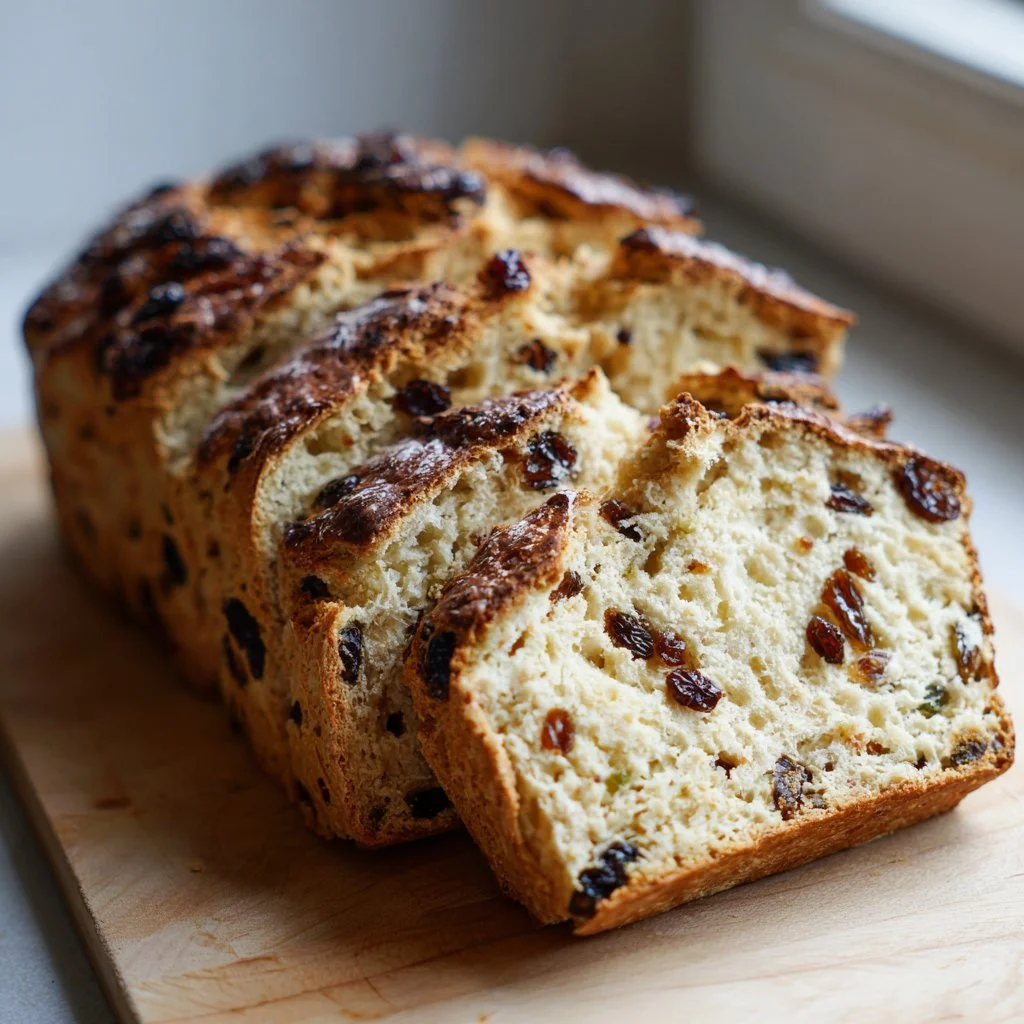
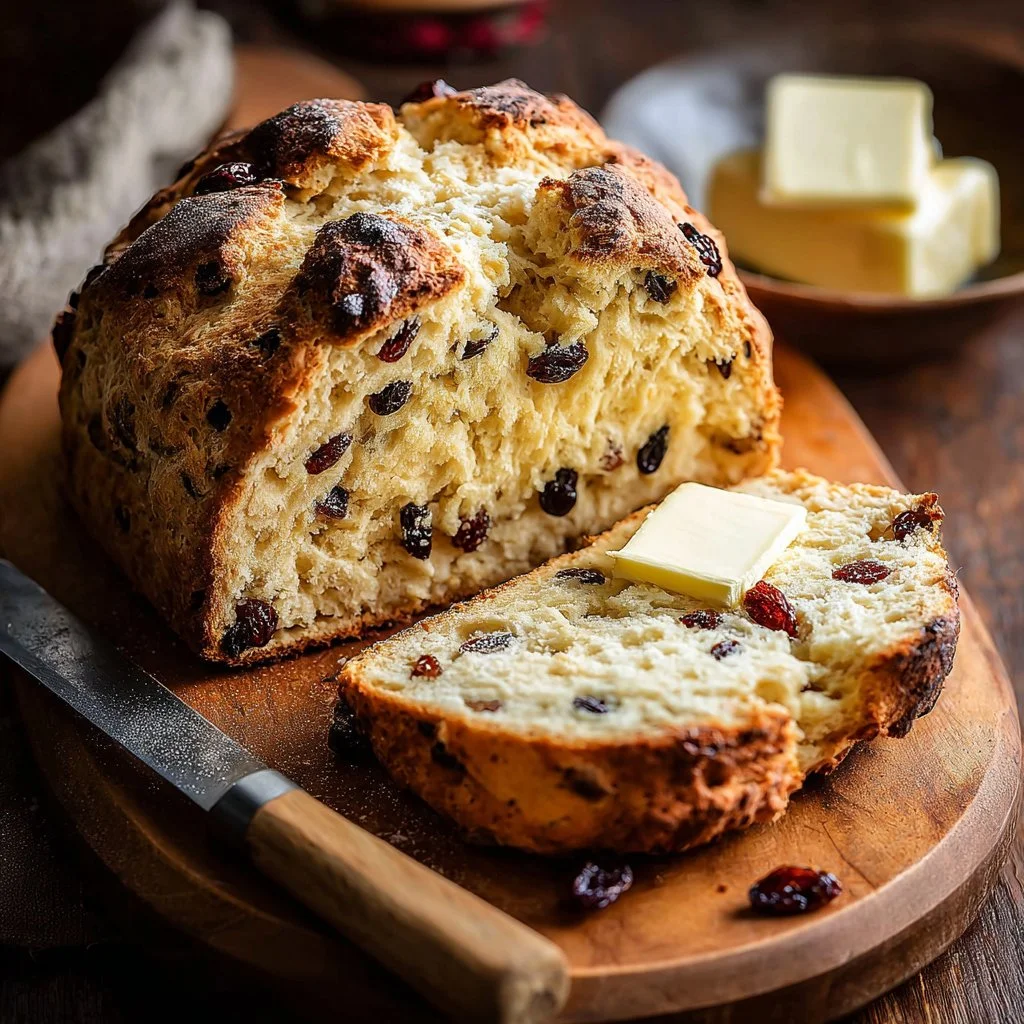
The taste is lightly sweet and tangy from the buttermilk, with pockets of chewy currants and a buttery note from the small cubes of butter. Texture-wise, expect a dense but tender interior contrasted by a deeply browned, crunchy crust that gives a satisfying snap when sliced.
“Absolutely delightful — warm, tangy, and not too sweet. The crust was perfect and the currants popped with flavor. Best soda bread I’ve made at home.” — 5★ reader review
Key Ingredients for Irish Soda Bread with Currants
All-purpose flour
All-purpose flour provides structure through gluten while still keeping the loaf approachable and tender. Buy a reputable brand labeled “all-purpose” and spoon-and-level your cups for accuracy. Substituting whole-wheat will add nuttiness and density; reduce to half whole-wheat for a lighter result.
Baking soda
Baking soda is the sole leavening agent and reacts instantly with the acid in buttermilk to give rise to the loaf. Use fresh baking soda (check the date) for full lift; an expired box yields a flat, heavy bread. If you replace it with baking powder, you’ll need more — and the flavor will be different because powder includes acid and fillers.
Buttermilk
Buttermilk supplies acid to activate the baking soda and adds moisture and tang. Use cultured buttermilk for the best flavor and consistency; if unavailable, sour milk (milk + vinegar/lemon) works in a pinch but lacks depth. Replacing with plain yogurt thinned with milk is possible, but adjust quantities to match the original liquid volume.
Currants (or raisins)
Currants deliver concentrated, tart-sweet bites that balance the tang of the buttermilk. Buy plump, dark currants or moist raisins and rinse if dusty; avoid rock-hard dried fruit. Swap with chopped dried cranberries or currant-free mixed peel for different flavor profiles.
Full Ingredient List for Irish Soda Bread with Currants
- All-purpose flour — 4 cups
- Sugar — 1 tablespoon
- Salt — 1 teaspoon
- Baking soda — 1 teaspoon
- Butter, cubed — 4 tablespoons
- Currants or raisins — 1 cup
- Large egg, beaten — 1 unit
- Buttermilk — 1 3/4 cups
Step-by-Step Instructions for Irish Soda Bread with Currants
Step 1: Preheat the oven and prepare your pan
Preheat your oven to 425°F (218°C) and grease a skillet or baking sheet lightly so the loaf can slide and brown evenly. A preheated oven jump-starts the chemical rise from the baking soda and helps form a crisp crust quickly.
Pro Tip: The oven should be hot and steady; you should smell a warm, clean oven scent and feel the heat when briefly opening the door.
Step 2: Combine dry ingredients
In a large bowl, whisk together 4 cups of all-purpose flour, 1 tablespoon sugar, 1 teaspoon salt, and 1 teaspoon baking soda until uniform. Even distribution of the baking soda prevents uneven pockets of rise or off flavors.
Pro Tip: The dry mix should look pale and even, with no clumps of salt or baking soda visible.
Step 3: Cut in the butter
Work 4 tablespoons of cubed butter into the flour with your fingers until the mixture resembles coarse crumbs. Small, pea-sized pieces of butter remain visible; these melt in the oven to create flakiness.
Pro Tip: The dough should feel sandy and slightly cool; if it feels greasy, you’ve overworked the butter.
Step 4: Add the currants
Stir in 1 cup of currants or raisins until they are evenly distributed through the crumbly mix. Tossing dried fruit in a tablespoon of flour before adding helps prevent sinking to the bottom.
Pro Tip: The bowl should show dark spots of fruit throughout the flour mixture, not clumps or bare patches.
Step 5: Make a well and add wet ingredients
Make a well in the center of the dry mix, then pour in the beaten egg and 1 3/4 cups buttermilk. Pour slowly to control hydration and ensure a uniform dough.
Pro Tip: The center will appear glossy and wetter than the edges before you stir.
Step 6: Mix to a stiff dough
Use a wooden spoon to mix until the dough is too stiff to stir — it should hold together but not be sticky. Stop mixing as soon as combined to avoid gluten overdevelopment.
Pro Tip: The dough should feel firm and slightly tacky, not wet or batter-like.
Step 7: Shape the loaf
Turn the dough onto a lightly floured surface and gently shape into a round loaf. Do not over-knead; a few gentle folds to create surface tension are enough.
Pro Tip: The shaped loaf should be smooth on top with a little resistance when you press lightly.
Step 8: Score and bake
Place the loaf on the greased skillet or baking sheet and score a deep ‘X’ into the top. Bake for 35 to 45 minutes until the crust is golden brown and the bottom sounds hollow when tapped.
Pro Tip: The crust should be deeply golden and the hollow tap should echo; an internal thermometer should read about 195°F (90°C) if you prefer a precise check.
Step 9: Cool before slicing
Cool the loaf on a wire rack before slicing; the crumb continues to set as it cools. Slicing too early yields a gummy interior.
Pro Tip: The loaf will release a steady, warm aroma and the crust will firm up as it cools.
Expert Tips for Irish Soda Bread with Currants
- Temperature tip: Bake at 425°F (218°C) for an immediate oven rise and strong crust; lowering the temp will give a paler, softer crust.
- Ingredient freshness: Always check your baking soda’s date; stale soda gives poor lift and a flat loaf.
- Buttermilk substitution: If using milk + acid, mix and let sit 5 minutes; still expect slight flavor differences.
- Dough texture troubleshooting: Too wet — add a tablespoon of flour at a time; too dry — add a tablespoon of buttermilk.
- Equipment tip: Use a heavy cast-iron skillet or a rimmed baking sheet for even browning and a crisp base.
- Scoring and steam: Cut a deep X to allow controlled expansion; if the top browns too fast, tent loosely with foil.
- Common mistake: Overworking the dough causes toughness — stop mixing as soon as ingredients are combined.
- Visual doneness check: Aim for a deep golden crust and a hollow sound from the bottom when tapped.
Storage & Freezing for Irish Soda Bread with Currants
Room temp storage keeps the bread best for 1–2 days in a paper bag to retain crust crispness. For softer crust, wrap in plastic wrap after cooling.
Refrigerator storage: wrap tightly in plastic or an airtight container for up to 5 days. Refrigeration can dry bread, so reheat slices to revive texture.
Freezer storage: slice first for convenience, then wrap slices individually in plastic and place in a freezer bag or airtight container. Freeze up to 3 months for best quality.
Thawing: thaw slices at room temperature for 30–60 minutes, or reheat directly from frozen in a 350°F oven for 8–12 minutes.
Reheating: microwave for 15–20 seconds for a quick warm slice, or toast/oven-bake at 350°F for 8–12 minutes to restore crust and crumb structure.
Variations & Substitutions for Irish Soda Bread with Currants
Currant-Orange Soda Bread
Add the zest of one orange and substitute half the currants with chopped dried orange peel or candied zest. You’ll get bright citrus notes and an aromatic lift to the classic loaf.
Whole-Wheat Irish Soda Bread with Currants
Replace 1–2 cups of all-purpose flour with whole-wheat flour and increase buttermilk by a tablespoon if the dough feels dry. The result is heartier, nuttier, and slightly denser but still pleasantly rustic.
Savory Herb and Cheddar Soda Bread
Omit the sugar and currants; fold in 3/4 cup shredded sharp cheddar and 1–2 tablespoons chopped fresh herbs (thyme or chives). Expect a savory crumb that’s excellent with soups and stews.
Maple-Date Soda Bread
Swap currants for chopped dates and replace the tablespoon of sugar with 2 tablespoons of maple syrup, reducing buttermilk by 1–2 tablespoons to balance liquid. This yields a richer, sweeter loaf with caramel-like notes.
Frequently Asked Questions About Irish Soda Bread with Currants
Q: Can I use baking powder instead of baking soda for Irish soda bread?
A: Baking powder can be used but it’s not a direct 1:1 swap. Baking powder already contains acid, so you’ll need roughly 3 teaspoons of baking powder to replace 1 teaspoon of baking soda. Expect a slightly different flavor and a less immediate oven spring. If you substitute, omit any added acidic ingredients or reduce them to balance the reaction.
Q: How do I know when the soda bread is fully baked?
A: The classic tests are visual and tactile. The crust should be deep golden brown, and the bottom of the loaf should sound hollow when tapped. For precision, an internal temperature of about 195°F (90°C) indicates a fully baked loaf. If the top is browning too fast but the center is underdone, tent with foil and continue baking.
Q: My bread came out flat or dense — what went wrong?
A: Common causes are expired baking soda, too much liquid, or overmixing. Baking soda must be fresh and evenly distributed. The dough should be mixed just until combined; vigorous kneading develops gluten and yields a tough, dense loaf. Adjust flour or buttermilk by tablespoons if the dough is off.
Q: Can I make this recipe dairy-free or vegan?
A: Yes. Substitute the butter with cold vegan butter and replace buttermilk with unsweetened plant milk plus 1 tablespoon vinegar per cup to mimic acidity. Use a flax or chia “egg” (1 tablespoon ground seed + 3 tablespoons water) in place of the beaten egg. Expect a slightly different crumb and flavor but good results.
Q: Can I add seeds, nuts, or other dried fruit to the dough?
A: Absolutely. Fold in up to 1 cup total of seeds, chopped nuts, or alternate dried fruit. Toast nuts first for flavor and toss add-ins in a tablespoon of flour to prevent sinking. These variations adjust texture and taste but keep the same basic method.
Final Thoughts on Irish Soda Bread with Currants
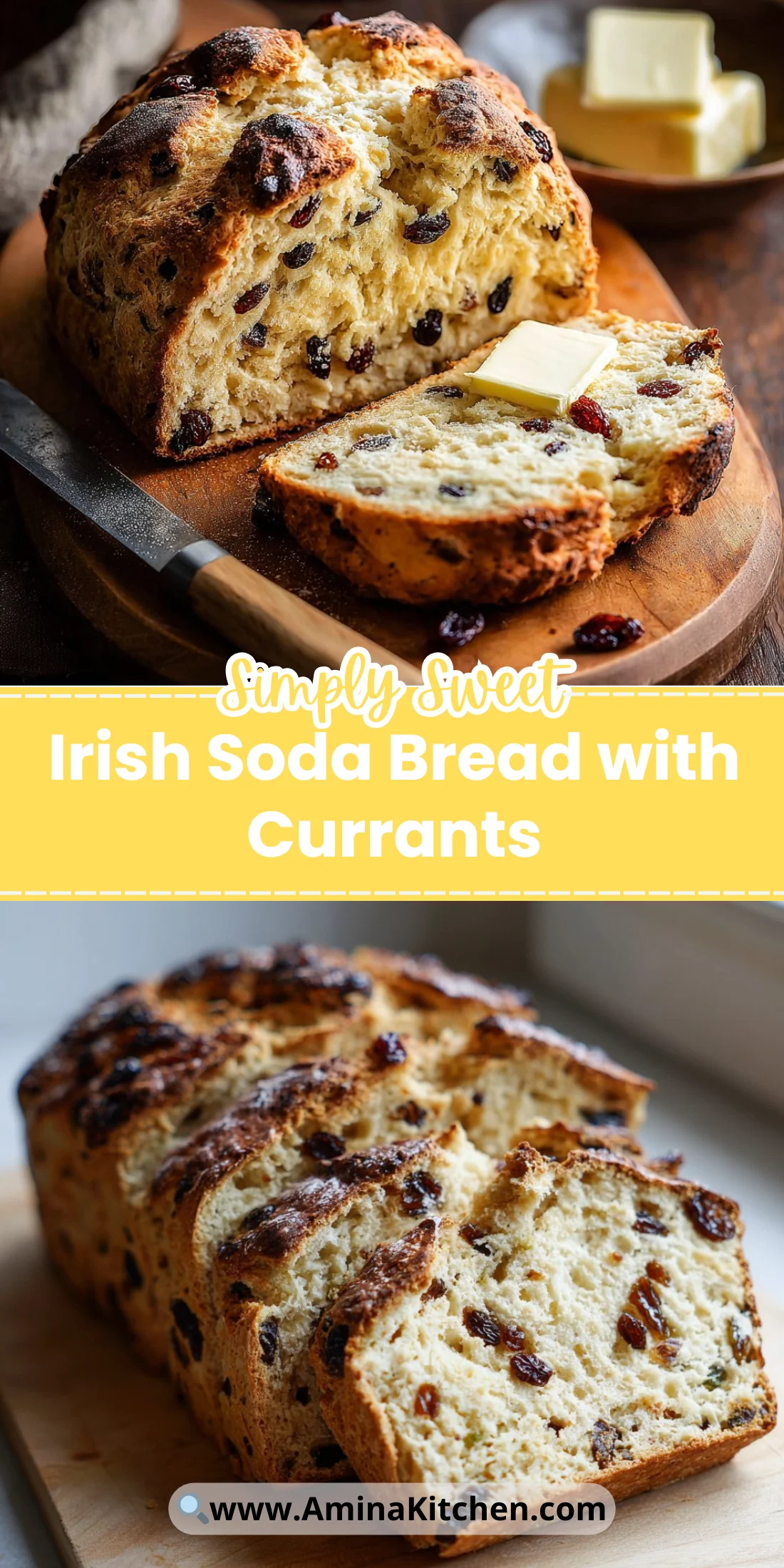
This Irish Soda Bread with Currants is fast, forgiving, and full of homey flavor. Try the tweaks and store extras for quick breakfasts or toasted sandwiches.
Please leave a star rating in the recipe card below and pin this loaf to Pinterest for later.
Conclusion: Irish Soda Bread with Currants
For a classic recipe reference and a slightly different technique, see this reliable version from Hummingbird Thyme.
If you want an easy, step-focused approach with currant notes, check the guide at International Desserts Blog.
For ideas on whole-grain or creative twists, Love and Lemons offers helpful variations in their Irish Soda Bread recipe.
Irish Soda Bread with Currants
Ingredients
Method
- Preheat your oven to 425°F (218°C) and grease a skillet or baking sheet lightly.
- In a large bowl, whisk together flour, sugar, salt, and baking soda until uniform.
- Work the cubed butter into the flour until it resembles coarse crumbs.
- Stir in currants or raisins until evenly distributed.
- Make a well in the center and pour in the beaten egg and buttermilk slowly.
- Mix until the dough is too stiff to stir and stop mixing to avoid gluten overdevelopment.
- Turn the dough onto a floured surface and shape it into a round loaf without over-kneading.
- Place the loaf on the skillet or baking sheet and score a deep 'X' on top.
- Bake for 35 to 45 minutes until golden brown and sounds hollow when tapped.
- Cool on a wire rack before slicing.